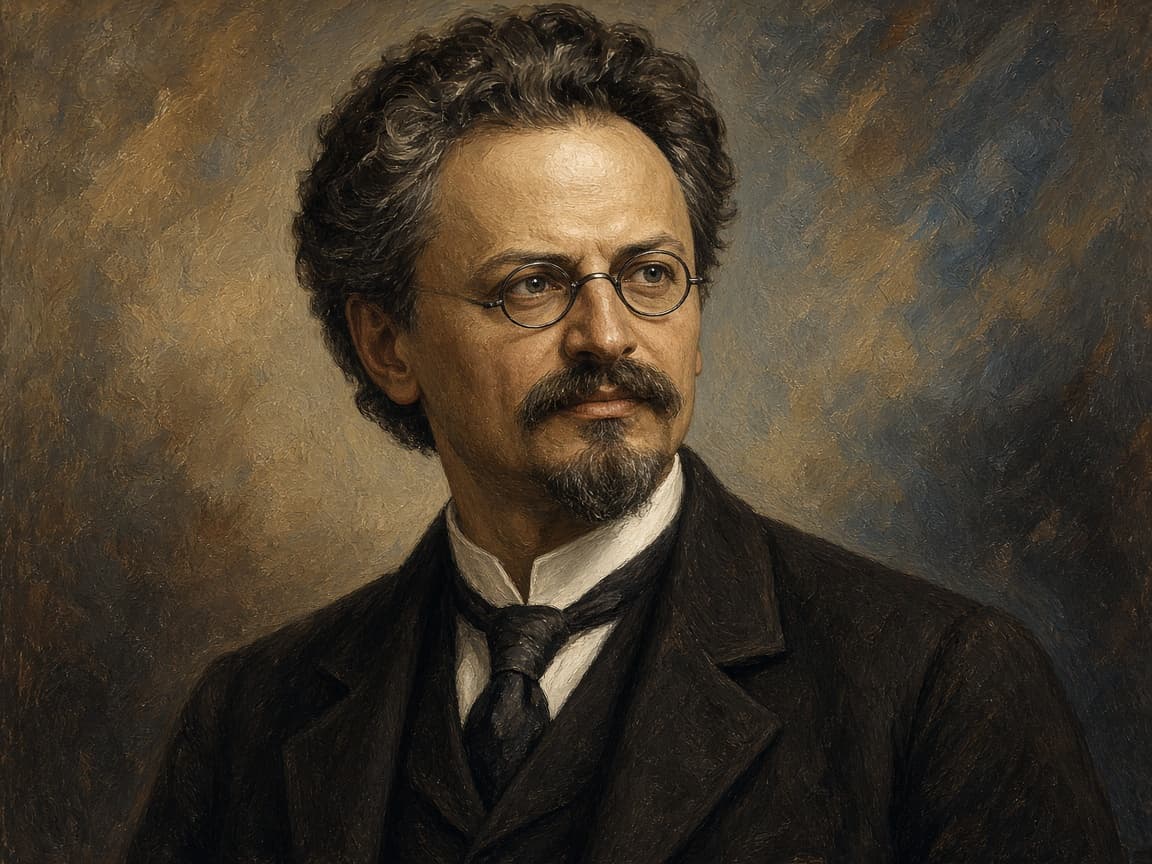
On this day: Leon Trotsky is assassinated in Mexico
On 20 August 1940, an agent of Stalin struck Leon Trotsky with an ice axe at his home in Coyoacan, Mexico. Trotsky died the next day, ending the Bolshevik revolutionary's exile.
Leon Trotsky was attacked on 20 August 1940 at his compound in Coyoacan, a neighborhood of Mexico City. An assailant struck him in the head with an ice axe or mountaineering pick. Trotsky survived briefly, spoke to police and died in a hospital on 21 August. The attacker, Ramon Mercader, was a Spanish communist acting under orders tied to Joseph Stalin's secret police. The murder closed the most famous chapter of Trotsky's life: revolutionary leader, Red Army founder, exiled critic of the man who had become the Soviet Union's dictator.
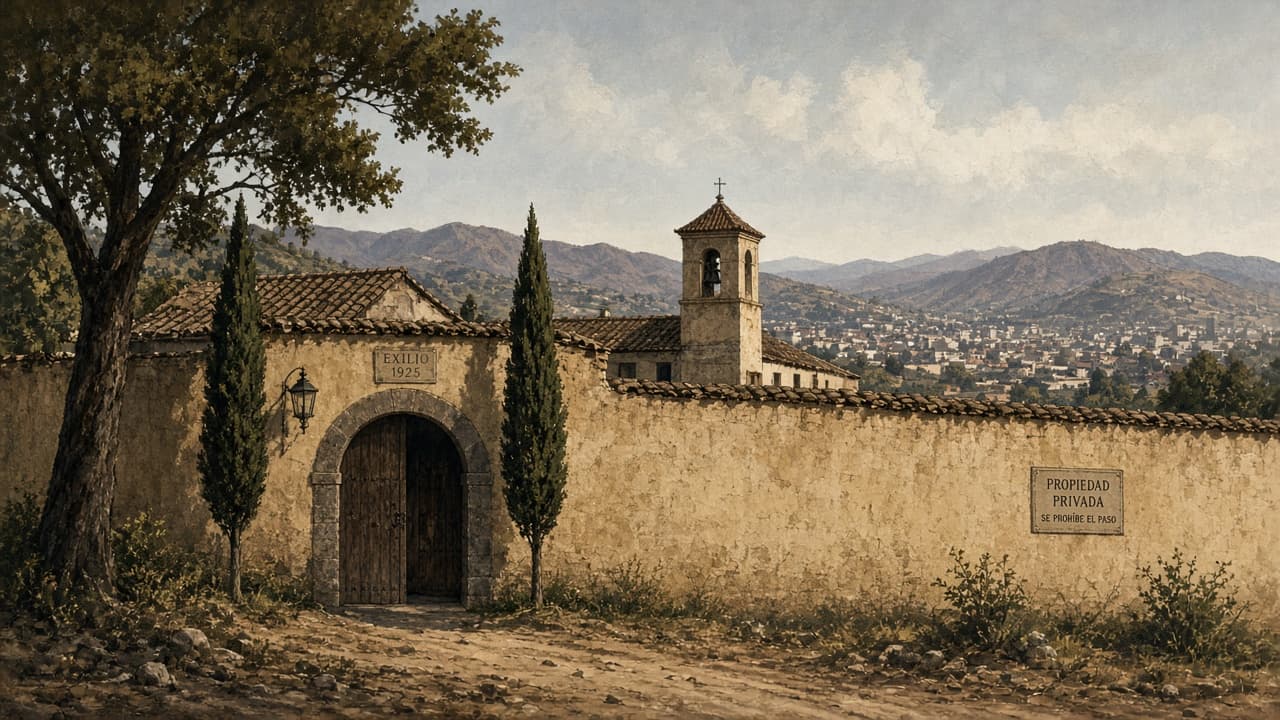
Leon Trotsky spent his final exile years in a fortified house in Coyoacán, Mexico City, writing, corresponding and arguing against Stalin's claim to Lenin's legacy. The study filled with books, dictation and guards who still could not stop every visitor with a false identity. On 20 August 1940, Ramón Mercader, an agent linked to Soviet intelligence, fatally wounded Trotsky with an ice axe during a private meeting. The room where he worked became a crime scene and later a museum. Ideas and surveillance shared the same desk until the blow landed.
Compound walls, watchtowers and police arrangements showed how seriously Trotsky and Mexican hosts took assassination threats after earlier armed raids on the property. Exile did not mean safety. It meant a smaller fortress inside someone else's country. Aftermath included Mercader's imprisonment, Stalinist celebration and a lasting split in socialist memory over Trotsky's theories versus his fate. Walking the exterior walls in the mind's eye explains why a political murder in a quiet suburb still registers as state violence across borders.

Who was Trotsky before the axe? Born Lev Davidovich Bronstein in Ukraine in 1879, he joined early Russian revolutionary circles, endured prison and exile and returned to play a central role in the 1917 Bolshevik seizure of power. He helped negotiate the Brest-Litovsk peace with Germany, organized the Red Army during the civil war and clashed with Stalin over policy and succession. After Lenin's death in 1924, Stalin outmaneuvered him. Trotsky lost power, was expelled from the party, exiled abroad and became the world's most prominent Marxist critic of Moscow from the left.
Stalin treated that criticism as a mortal threat. Show trials in the Soviet Union purged old Bolsheviks on fabricated charges. Many defendants were accused of plotting with Trotsky. Agents abroad hunted his followers. Trotsky moved from Turkey to France to Norway before Mexico granted asylum under President Lazaro Cardenas. Artists Diego Rivera and Frida Kahlo helped arrange his stay. The Coyoacan house was turned into a fortress with high walls, guards and steel shutters. Even so, Stalin's reach was long.
Mercader infiltrated Trotsky's circle posing as a sympathetic Belgian named Jacques Mornard. He gained access under the pretense of political discussion. On 20 August he asked Trotsky to read a document inside the study. When Trotsky turned to the desk, Mercader struck. Guards subdued the attacker. Trotsky, bleeding, insisted Mercader be kept alive for questioning. That detail fits a man who had spent decades arguing about history and responsibility even as his own was ending.
Mercader served twenty years in Mexican prison, refused to reveal his Soviet connection at trial and later was welcomed in Moscow as a hero. He lived into 1978. Declassified Soviet materials later confirmed the operation's Stalinist origin. For decades the killing shaped how left-wing movements split: some defended the USSR, others followed Trotskyist traditions that condemned Stalin as a betrayer of revolution. The argument was not academic in Latin America, Europe and Asia where exile newspapers and underground parties carried Trotsky's name.
Intellectually, Trotsky's writings on permanent revolution, fascism and bureaucracy outlived the man. Historians still dispute his programs and his responsibility for early Bolshevik violence. What the 1940 murder makes clear is Stalin's willingness to kill rivals abroad long after they lacked armies. The pattern continued in other assassinations and influenced how dissidents understood risk in the twentieth century.
The Coyoacan house is now a museum. Visitors see the study where the attack occurred, preserved with books and glasses as memorial objects. Tourism cannot erase the politics: a revolutionary who helped build a state that later hunted him. Mexico's asylum choice remains part of its twentieth-century identity as a refuge for contested figures, for better and worse.
For readers who know Trotsky only as a name in textbooks, 20 August 1940 is the date to anchor the biography. Not the October Revolution alone, not the civil war alone, but the moment Stalin's agent reached him in a guarded room far from Moscow. Exile did not mean safety. Ideas backed by a superpower's secret police could still cross oceans.
Western intelligence watched Mexico City nervously during the investigation. Soviet archives later confirmed what many suspected: the murder was state policy, not a lone fanatic. Trotskyist parties splintered further after 1940, debating whether any revolution could stay true without becoming Stalinism. The ice axe in the study became a symbol in that argument as durable as any pamphlet Trotsky wrote in exile.
Eagle Frame's takeaway: 20 August 1940 is when Leon Trotsky was fatally wounded in Coyoacan on Stalin's orders. Know his break with Moscow, know Mercader's infiltration and know why the murder still marks a fault line in left-wing history.