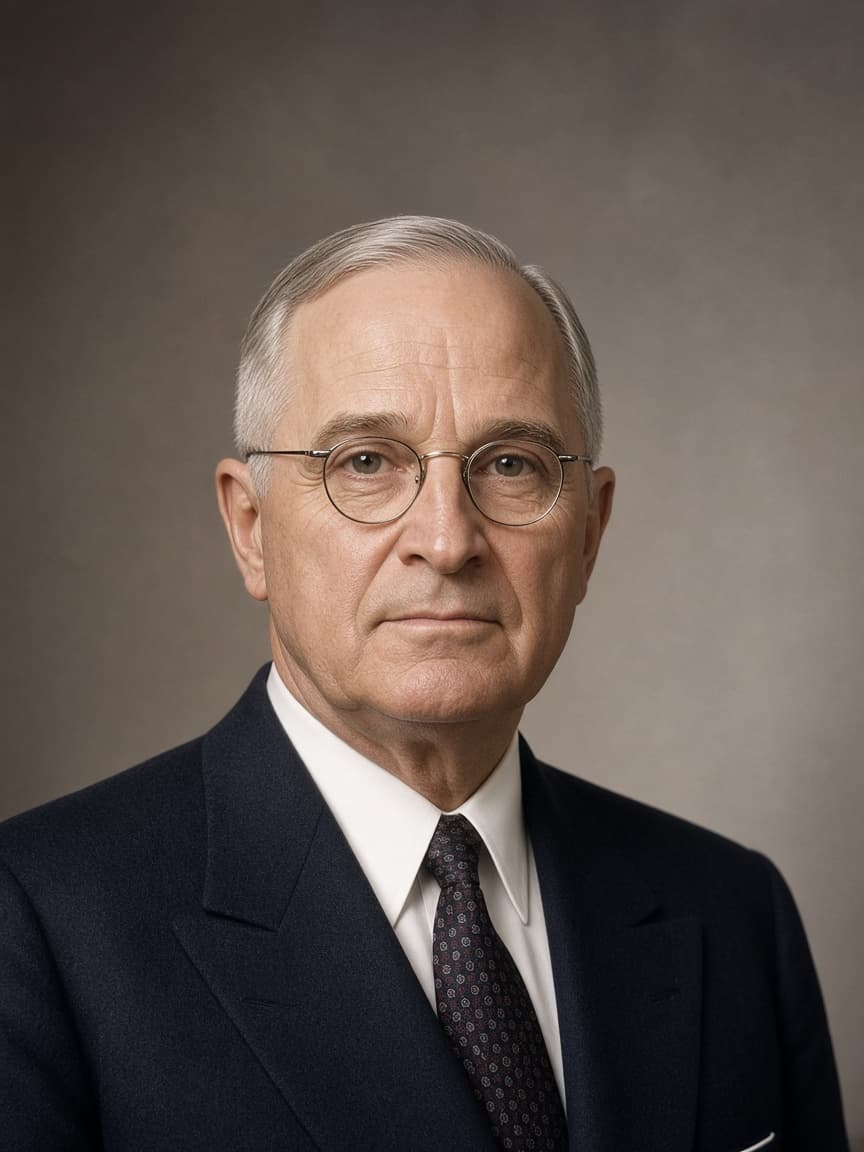
On this day: Truman orders the desegregation of the US military
On 26 July 1948, President Harry S. Truman signed Executive Order 9981, requiring equal treatment and opportunity in the armed forces regardless of race. Implementation took years, but it made the military one of the first large American institutions to integrate.
On 26 July 1948, Harry S. Truman signed Executive Order 9981. The operative sentence is short: "There shall be equality of treatment and opportunity for all persons in the armed services without regard to race, color, religion or national origin." The order did not use the word desegregation and it set no deadline. It still ended the formal policy, in place since the Revolution, of keeping Black Americans in separate units under white officers.
Truman signed a companion measure, Executive Order 9980, on the same day, requiring fair employment practice across the federal civil service. Together the two orders were the largest federal action on racial discrimination since Reconstruction. Congress had passed nothing. Southern Democrats controlled key committees and filibustered civil rights bills, including anti-lynching legislation, year after year. The executive order was the instrument available to a president who could not get a law.
The pressure behind the order came from returning veterans. More than a million Black Americans had served in the Second World War, in segregated units, often in labour and supply roles, and many came home to violence. The case that reportedly moved Truman most was Isaac Woodard, an Army sergeant still in uniform who was pulled off a bus in South Carolina in February 1946 and beaten blind by a police chief. An all-white jury acquitted the officer in under half an hour.
A. Philip Randolph, head of the Brotherhood of Sleeping Car Porters, applied direct political pressure. With a peacetime draft being debated in 1948, Randolph told a Senate committee and then Truman himself that he would counsel young Black men to refuse to register for a segregated army. That threat, in a year when the Cold War was hardening and the Berlin airlift had just begun, was serious. It was also an election year and Truman was widely expected to lose.
The politics were brutal. Truman's civil rights platform split the Democratic Party at its July 1948 convention. Southern delegates walked out and ran Strom Thurmond as the States' Rights Democratic candidate, the Dixiecrats, who carried four states. Truman won anyway in one of the great upsets in American electoral history, helped by Black voters in northern cities. The order was signed two weeks after the convention walkout.
Signing was not implementing. The order created the President's Committee on Equality of Treatment and Opportunity in the Armed Services, chaired by Charles Fahy, to work out how. The Navy and Air Force moved relatively quickly. The Air Force, newly independent in 1947, was largely integrated by 1950. The Army resisted hardest. General Omar Bradley, then Army chief of staff, said publicly that the Army was not a laboratory for social experiments and that it would change when the nation changed.
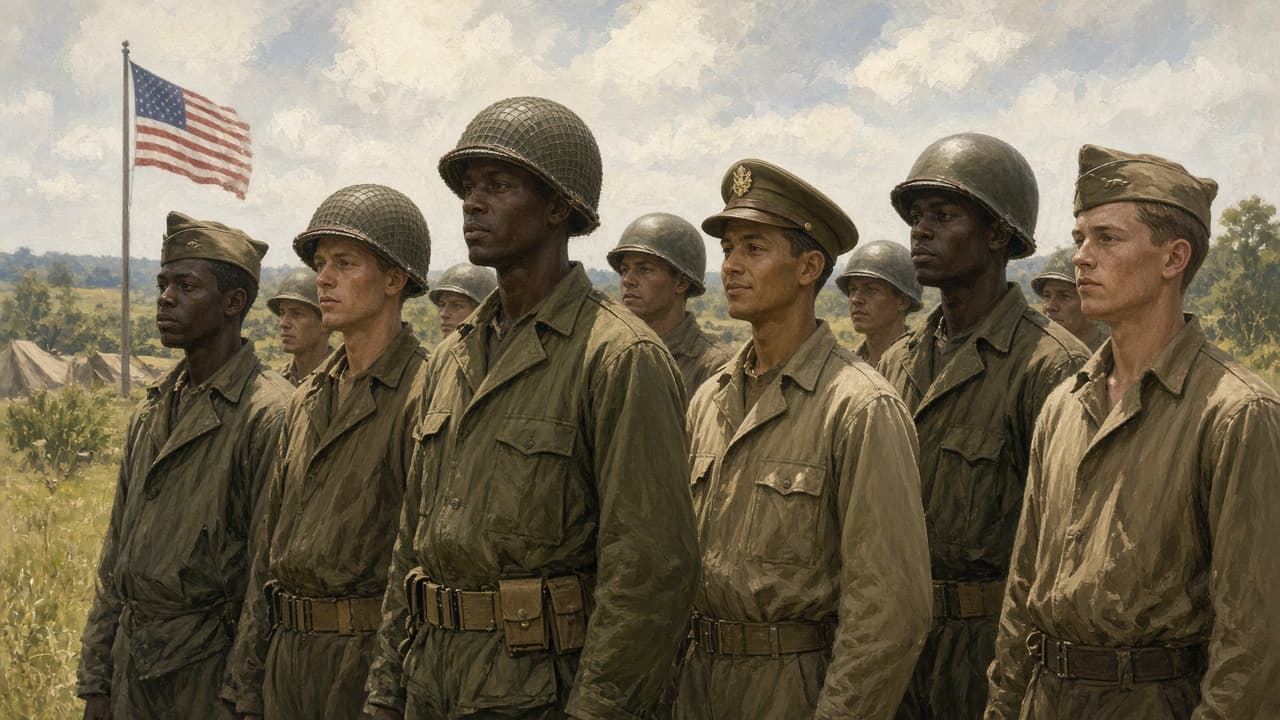
What forced the Army's hand was Korea. When war began in June 1950, replacement troops arrived faster than segregated units could absorb them, and commanders in the field began assigning Black soldiers to white units because the alternative was leaving holes in the line. Integration happened under combat pressure and, to the surprise of some officers, without the collapse in cohesion they had predicted. The all-Black 24th Infantry Regiment was deactivated in October 1951. The last segregated units were gone by 1954.
The military then became an unusual place in American life. By the 1960s a Black serviceman could command white subordinates, use the same mess and be promoted on the same schedule, at a time when in much of the country he could not sit at a lunch counter or vote without obstruction. That contrast was used repeatedly in civil rights arguments. It also created a pipeline of leadership: Colin Powell, who joined through ROTC in 1958, became chairman of the Joint Chiefs of Staff in 1989.
The record should not be over-polished. Formal equality in regulations did not end unequal discipline, promotion or assignment. Racial tension inside the services broke out repeatedly during the Vietnam era, including serious incidents aboard ships and at bases. Off-base housing near American installations stayed segregated for years until the Pentagon began using its contracting power against landlords in the 1960s. Studies into the 2000s continued to find disparities in military justice outcomes.
Executive Order 9981 also set a precedent about method. A president could change the conduct of a huge federal institution by order when Congress would not act. Later administrations used the same instrument on federal contractors, on women in combat roles and on the service of gay, lesbian and transgender Americans, with the accompanying weakness that what one order does another can undo.
Eagle Frame's takeaway: 26 July 1948 is the day the federal government committed on paper to an integrated military, and the following six years are when it actually happened. Remember both halves. The order came from veteran testimony, a threatened draft boycott and hard electoral arithmetic, and it took a war in Korea to make the Army comply.