On this day: al-Qaeda bombs US embassies in East Africa
On 7 August 1998, truck bombs went off minutes apart at the American embassies in Nairobi and Dar es Salaam. About 224 people died and thousands were hurt, and most of the casualties were Kenyan and Tanzanian civilians.
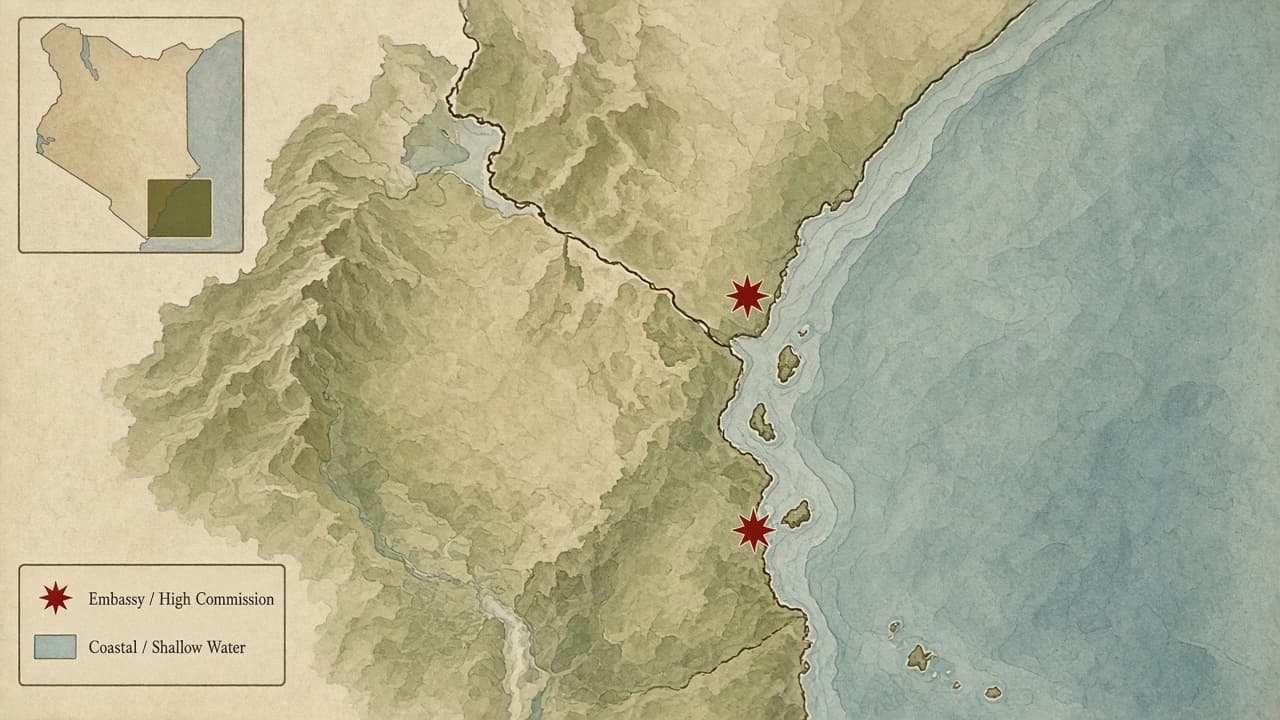
At about 10:35 on the morning of 7 August 1998, a truck loaded with explosives stopped at the rear car park of the United States embassy in Nairobi, on a corner where Haile Selassie Avenue meets Moi Avenue in the middle of the Kenyan capital. It was a Friday, the streets were full, and the buildings pressed against the embassy were ordinary working offices. Minutes later, roughly 700 kilometers to the south, a second truck detonated at the American embassy in Dar es Salaam, Tanzania. The near simultaneity was the point. Two bombs in two countries on one morning announced an organization with reach, patience and a willingness to kill large numbers of people who had nothing to do with the target.
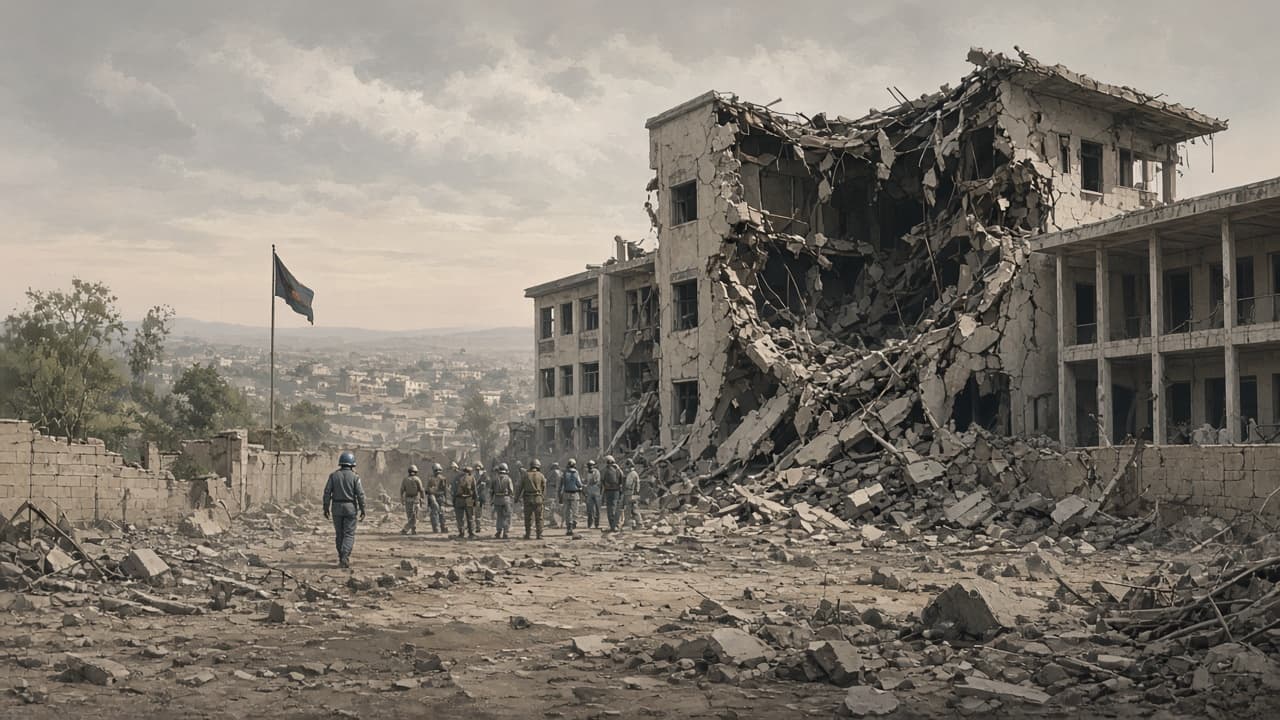
Nairobi took almost all of the harm. The blast sheared the back off the embassy, collapsed the neighboring Ufundi Cooperative House completely and blew out the glass front of the 22-story Cooperative Bank House next door. Because a warning shot and a grenade had been thrown at a guard first, people inside the surrounding buildings went to their windows to look, which is why so many of the injuries were eye wounds and facial lacerations from flying glass. About 213 people died in Nairobi, 12 of them Americans, and estimates of the injured run to roughly 4,000. Rescuers worked for days with hand tools and borrowed cranes. A secretarial student named Rose Wanjiku was pulled from the Ufundi rubble after more than four days and later died in hospital.
Dar es Salaam was less lethal only by accident. The embassy there sat back from the road behind a wall, and a parked water tanker absorbed part of the blast. Eleven people were killed, all of them Tanzanian, and about 85 were injured. In both cities the ratio of local dead to American dead was stark, and it framed how East Africans remember the day. The attacks were aimed at the United States, and they were paid for overwhelmingly by Kenyans and Tanzanians who worked as drivers, cashiers, guards, secretaries, street vendors and bank clerks.
Responsibility belonged to al-Qaeda, an organization most of the world had not yet heard named. Osama bin Laden, a Saudi construction heir who had helped fund and organise Arab fighters during the Soviet war in Afghanistan, had been expelled from Sudan in 1996 and was living under Taliban protection near Kandahar and Jalalabad. In February 1998 he and Ayman al-Zawahiri published a statement under the banner of the World Islamic Front calling for attacks on Americans anywhere, civilian or military. The declared grievance was the presence of American forces in Saudi Arabia, sanctions on Iraq and support for Israel. The chosen date carried a message of its own. American troops had begun deploying to Saudi Arabia on 7 August 1990, eight years to the day.
The operation had been years in preparation, which is the detail that most alarmed investigators afterwards. A cell had been established in Nairobi in the early 1990s under cover of charities and import businesses. Ali Mohamed, an Egyptian former army officer who had also served in the US Army at Fort Bragg, photographed the Nairobi embassy and briefed bin Laden on it. Wadih el-Hage ran logistics from Kenya. Explosives, a truck, safe houses and forged travel documents were assembled locally over months. One of the Nairobi bombers, Mohamed Rashed Daoud al-Owhali, jumped from the truck before detonation, survived and was picked up in hospital with bomb residue on his clothes and no plausible story. His interrogation opened the case.
President Bill Clinton ordered retaliation on 20 August under the name Operation Infinite Reach. Tomahawk cruise missiles launched from ships in the Arabian Sea and the Red Sea struck training camps near Khost in eastern Afghanistan and the al-Shifa pharmaceutical plant in Khartoum, Sudan. Bin Laden was not at the camps. The Sudan strike became a lasting controversy, because the claim that al-Shifa was producing precursors for the nerve agent VX rested on a single soil sample, the factory also made ordinary medicines and no persuasive public evidence was ever released. The strikes also landed three days after Clinton testified about Monica Lewinsky, which fed a cynicism about timing that blurred the security argument.
The courts took longer and did more. The FBI mounted what was then its largest overseas investigation, working alongside Kenyan and Tanzanian police. Bin Laden was indicted in the Southern District of New York in November 1998 and added to the FBI Ten Most Wanted Fugitives list in June 1999. In 2001 a New York jury convicted four men, including al-Owhali and Khalfan Khamis Mohamed, and all four received life sentences. Other suspects were captured over the following decade. Ahmed Ghailani was taken in Pakistan in 2004, held at Guantanamo Bay, then tried in a civilian court in 2010, where he was acquitted on all but one conspiracy count and still given life. Fazul Abdullah Mohammed, long the most wanted man in the region, was killed at a checkpoint in Mogadishu in 2011.
Inside the American government the bombings exposed a security problem that had been flagged and shelved. Ambassador Prudence Bushnell had written to Washington repeatedly about the Nairobi building, a 1970s block on a busy corner with no setback from the street, and had asked for a new site. She was told funds were not available. An accountability review board chaired by Admiral William Crowe found systemic under-investment in embassy protection and criticised the department for treating the standards written after the 1983 Beirut attacks as aspirations. The result was the largest embassy construction programme in American history, which is why so many US missions built since 1999 sit behind deep perimeters on the edges of capital cities rather than in their commercial centers.
The intelligence lesson was harder and came too late. The 9/11 Commission later traced a clear line from East Africa to 2001, and used the embassy plot to show that al-Qaeda planned on a multi-year horizon, favoured simultaneous strikes for shock value, and used charities, businesses and travel documents rather than state sponsors. The same signature appeared in the attack on the USS Cole in Aden in October 2000 and again on 11 September 2001. For three years after 1998 the United States had a court-tested picture of the organization that would attack New York and Washington, and never converted it into a strategy that stopped it.
Memory of the day is more present in Nairobi than in Washington. The site of the embassy is now the August 7th Memorial Park, with a wall bearing the names of the dead, a small museum and a piece of twisted structural steel left as it was found. Survivors campaigned for years over compensation, medical costs and lost sight and hearing, and many Kenyan claimants received far less than American victims. Annual commemorations are held in both cities. In Dar es Salaam a memorial garden marks the eleven Tanzanians killed at a gate they had been hired to watch.
Eagle Frame's takeaway: 7 August 1998 is the day al-Qaeda demonstrated its method in public, and the method mattered more than the manifesto. Two synchronised truck bombs, years of quiet local preparation and a casualty list made up mostly of African civilians told anyone paying attention what the next decade would look like.