On this day: Vesuvius buries Pompeii
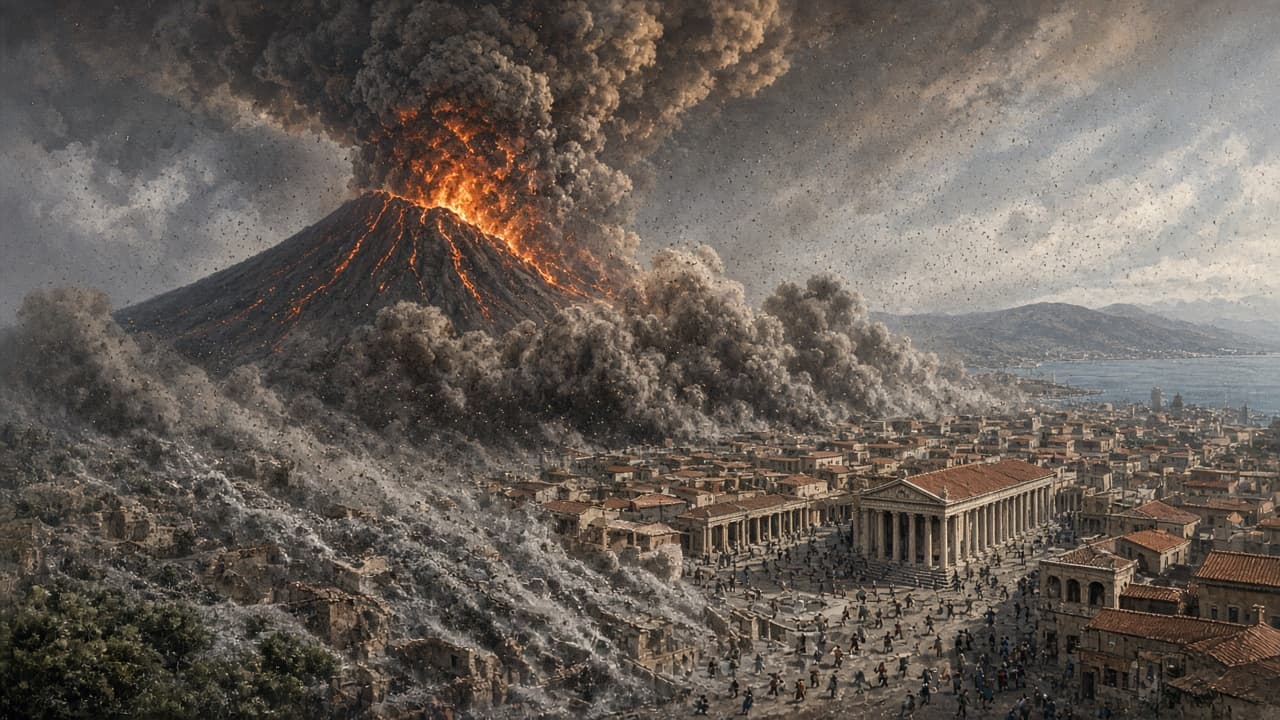
On 24 August 79, Mount Vesuvius erupted above the Bay of Naples. Ash, pumice and later pyroclastic flows buried Pompeii and Herculaneum. Pliny the Younger's letters still teach how the disaster unfolded.
On 24 August 79, according to the traditional calendar date preserved through Pliny the Younger's letters, Mount Vesuvius began a catastrophic eruption above the Bay of Naples. Towns that had lived for generations in the volcano's shadow, including Pompeii and Herculaneum, were buried under ash, pumice and fast-moving clouds of hot gas and rock. The disaster killed thousands and froze everyday Roman life under a mineral seal that archaeologists still open room by room.
Start with the mountain itself. Vesuvius is a stratovolcano: layered ash and lava built into a steep cone beside a crowded coast. Magma (molten rock) and dissolved gases sit under pressure in chambers below. When pressure finds a path upward, the volcano can throw rock fragments, ash and gas high into the sky instead of only oozing lava. That explosive style is what turned a summer day into a burial. The Bay of Naples offered trade, fish and fertile soil. Those same slopes were a warning written in older lava that few fully heeded.
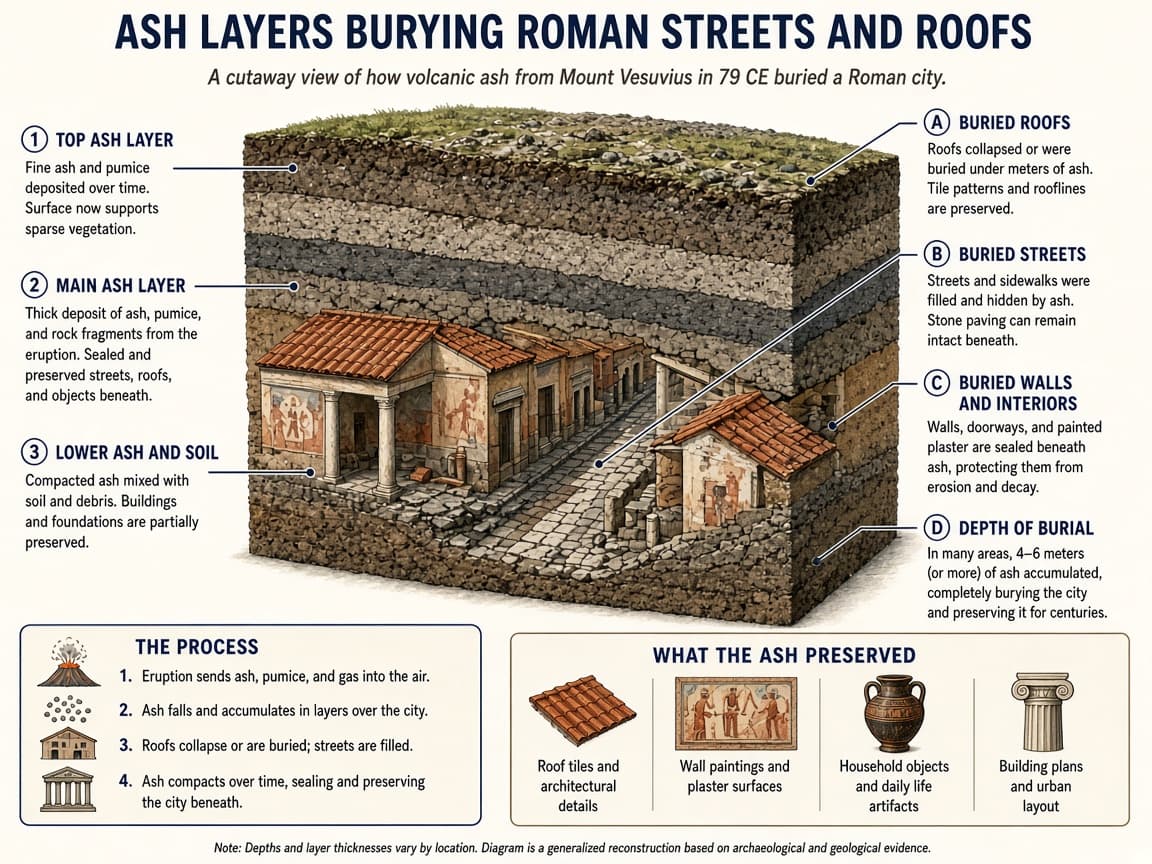
Vesuvius's burial of Pompeii was a layered process, not a single cartoon blast. Pumice fall clogged roofs until many collapsed under the weight. Hot ash and pyroclastic currents then swept streets and sealed bodies in cavities later cast in plaster by archaeologists. A cutaway of ash over houses shows why basements and upper floors failed differently and why organic details survived as voids. Geology here is a clock: each layer is an hour of terror frozen into stratigraphy researchers still read with care.
Pliny the Younger watched from across the Bay of Naples and later wrote letters describing the column of ash, the unnatural darkness and the death of his uncle, Pliny the Elder, during a rescue attempt by ship. Those letters remain primary evidence for dating and sequencing the eruption for modern science. Naming Pliny keeps the disaster tied to a human witness with a notebook, not only to silent ruins. Modern volcanology still teaches the Plinian eruption style from his description of the towering cloud.

Pliny the Younger was a young man staying across the bay at Misenum when the column rose. Years later he wrote two letters to the historian Tacitus describing what he saw and what happened to his uncle, the elder Pliny, who sailed toward the danger to help friends and to study the event. Those letters are among the earliest detailed eyewitness accounts of a major eruption. They give us the date tradition, the shape of the cloud "like an umbrella pine" and the mix of curiosity and terror that still feels modern. The elder Pliny died on that mission. The nephew survived to become a writer whose prose still trains volcanologists and classicists alike.
How the burial worked, in stages. First came a Plinian column: a tall jet of ash and pumice driven by expanding gas, named later after the elder Pliny's description. Fragments rained onto roofs. Streets filled. Some people fled along roads clogged with carts; others sheltered and hoped the fall would stop. Later, denser mixtures of hot gas, ash and rock raced downslope as pyroclastic flows and surges. Those clouds can move far faster than a person can run and kill by heat and suffocation. Herculaneum, closer to the volcano on the western side, was hit hard by such flows. Pompeii received deep ash and pumice fall plus later surges that finished many who had stayed behind walls that could not stop a cloud.
Pompeii was a busy Roman town with shops, baths, amphitheater seats and painted walls. Bread still sat in ovens. Graffiti joked on plaster. When excavators centuries later cleared rooms, they found voids left by bodies in the ash; plaster casts of those voids became famous because they show posture, not only bones. The site is not a theme park of death. It is a sudden archive of ordinary commerce, food, religion and family life under imperial Rome. Walking a street there is walking a paused sentence.
Herculaneum tells a related but different story. Hardened volcanic material sealed wooden furniture, food and even documents in ways Pompeii's looser ash did not always preserve. Together the two towns show how the same eruption can leave different fingerprints depending on wind, distance and flow paths. Visitors who walk both sites learn geology as much as art history. Smaller settlements around the bay share the same layered grave.
Scholars still debate fine points of the calendar date. Some archaeological clues hint the eruption may have fallen later in autumn than the traditional 24 August reading of Pliny's text. Eagle Frame keeps the catalog date readers expect while noting that science keeps testing the letters against seeds, clothing weights and inscription finds. The mechanism of burial is not in doubt. The exact day on a modern calendar is the open question worth watching as digs continue.
Modern Naples still lives with Vesuvius in plain sight. Monitoring networks watch earthquakes, gas and ground deformation because a future eruption would threaten millions. Museums display carbonized food and frescoes that survived heat that killed their owners. The 79 disaster is therefore both a travel story and a hazard lesson: beauty and risk share the same bay and memory is part of preparedness.
Eagle Frame's takeaway: 24 August 79 (in the Pliny tradition) is when Vesuvius turned ashfall and pyroclastic flows into a lasting archive of Roman life. Know the column, know the flows and know Pliny's letters and the ruins become a science lesson as well as a destination.