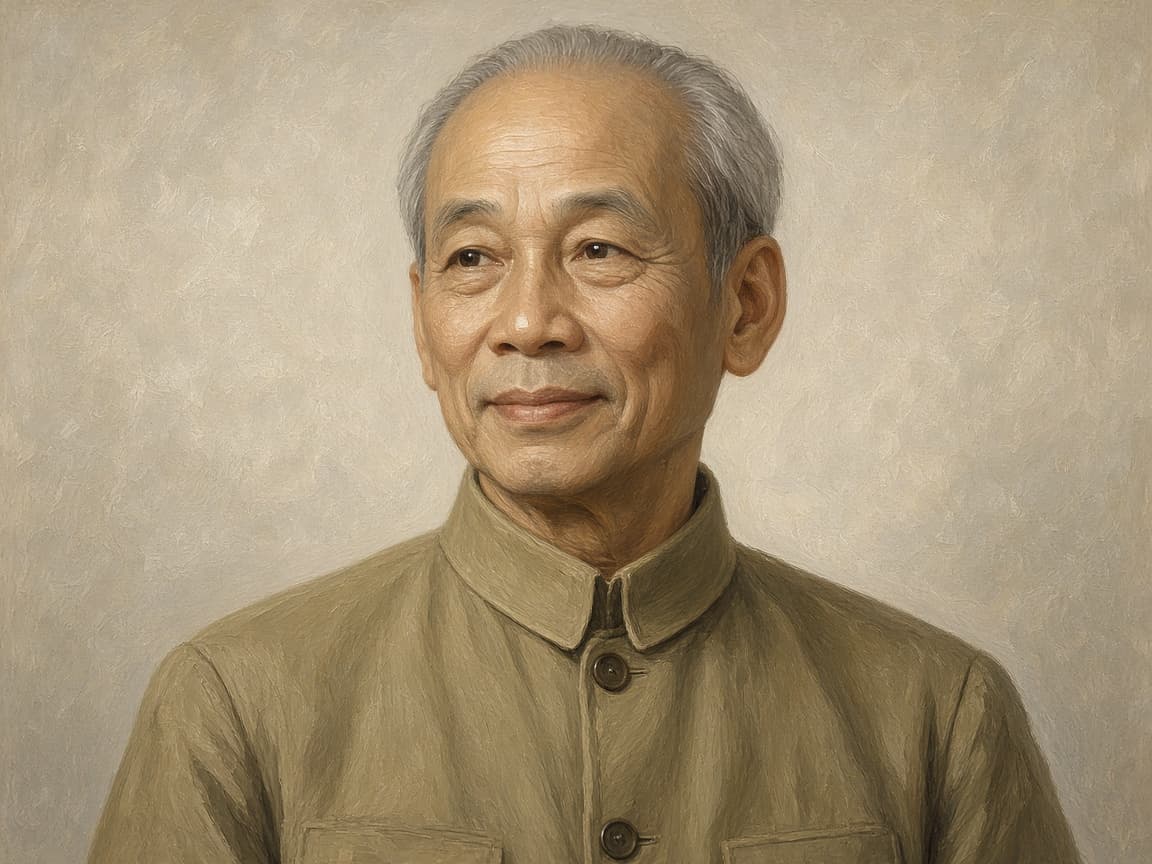
On this day: Vietnam declares independence
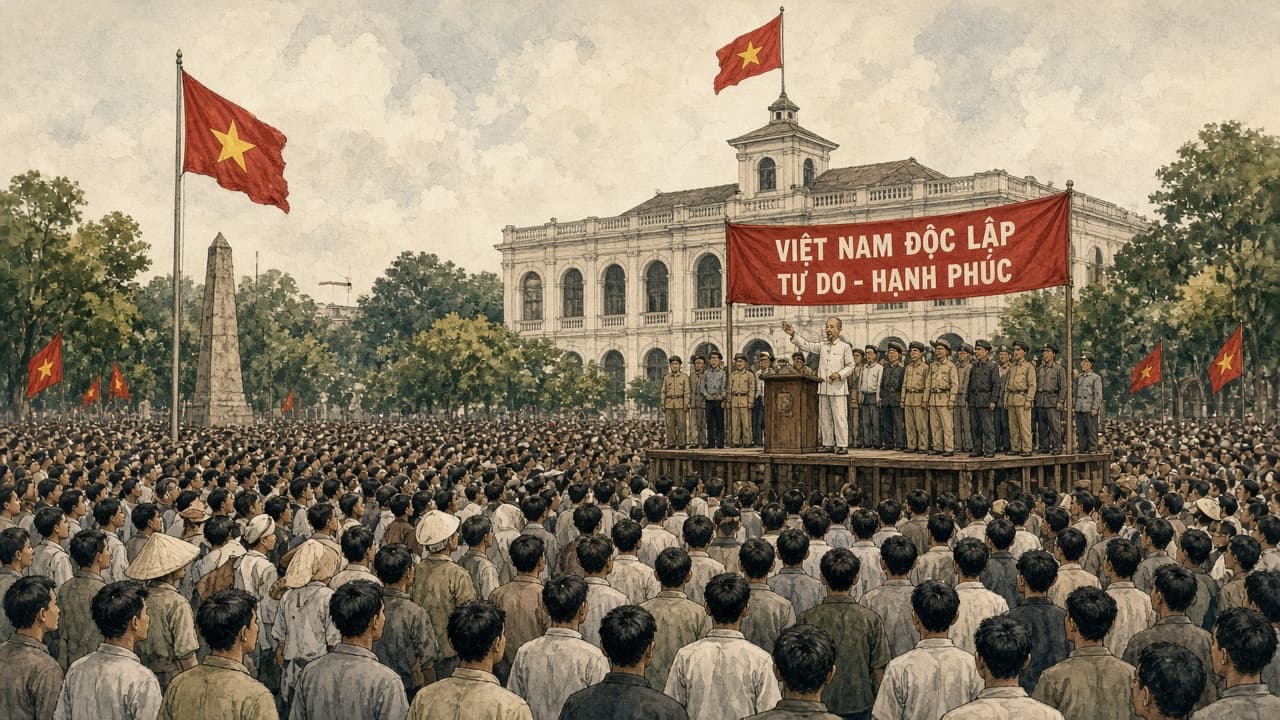
On 2 September 1945 in Hanoi's Ba Dinh Square, Ho Chi Minh proclaimed the Democratic Republic of Vietnam. The speech quoted American and French revolutionary language while rejecting colonial rule after Japan's wartime collapse.
On 2 September 1945, Ho Chi Minh stood before a crowd in Ba Dinh Square in Hanoi and declared the independence of Vietnam. The new state called itself the Democratic Republic of Vietnam. The timing was not accidental. Japan had just surrendered. French colonial power, weak after years of Vichy compromise and Japanese occupation, had not yet reasserted full control. A political vacuum opened. Vietnamese nationalists moved to fill it.
On 2 September 1945, Hồ Chí Minh proclaimed the Democratic Republic of Vietnam before a vast crowd in Hanoi's Ba Đình Square, quoting language of liberty that echoed both American and French revolutionary texts while condemning colonial rule. The gathering followed Japan's collapse and a power vacuum in Indochina. French authorities would return to contest the claim, leading toward the First Indochina War. The square that day was a nation announcing itself before the world finished redrawing Asia. Viet Minh organizers had prepared the crowd and the text during the power vacuum after Japan's surrender.
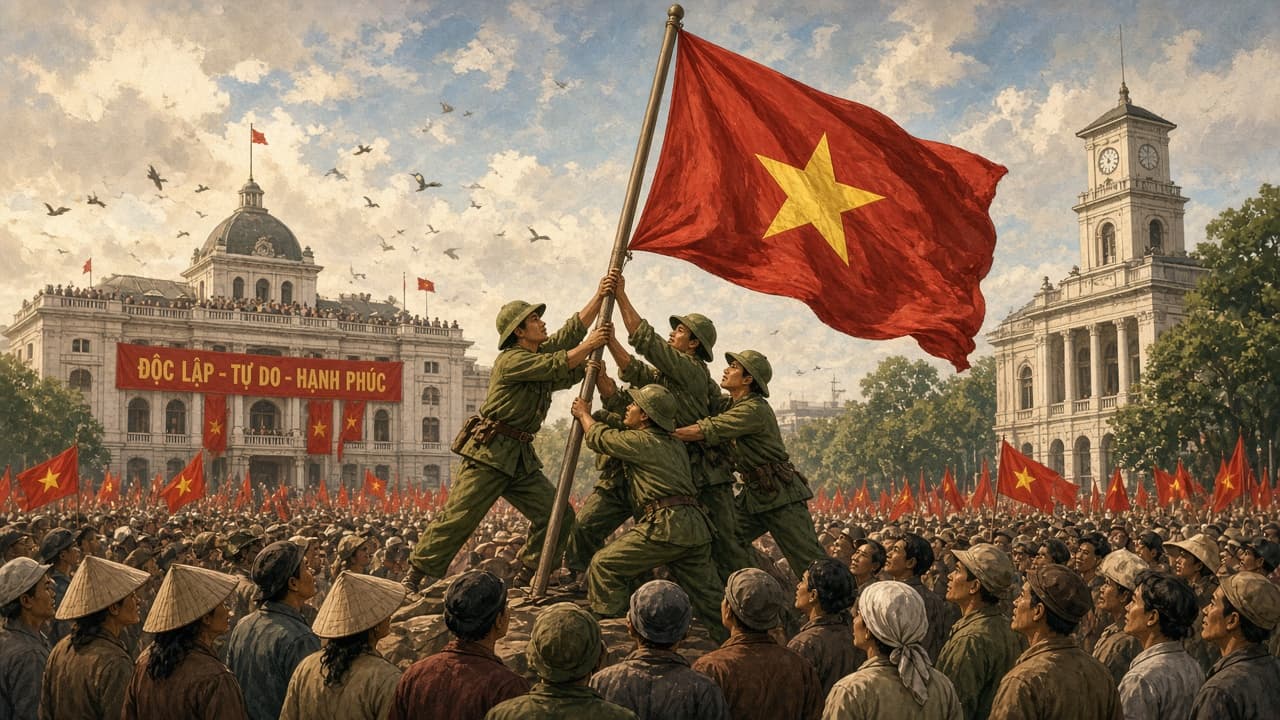
Raising Vietnam's flag over the proclamation ceremonies turned color and cloth into a claim against reimposed empire. Villagers, workers and activists who packed Ba Đình carried years of anticolonial organizing into one afternoon. Aftermath included negotiations, warfare and partition that the 1945 crowd could not yet see. Pairing the square with the flag raising keeps the declaration as both speech and ritual: words from a platform and a symbol lifted where people could cry and cheer together. Chinese and British occupying forces nearby complicated who actually held guns in the north and south.
Ho Chi Minh (born Nguyen Sinh Cung, later known by many aliases) had spent decades abroad as a communist organizer and anticolonial activist. He returned to lead the Viet Minh, a broad front that fought Japanese occupation and prepared for a postwar bid for power. In August 1945, as Japan collapsed, the Viet Minh seized cities in the August Revolution. The Ba Dinh proclamation was the public claim that followed those seizures.
The speech borrowed famous lines. It opened with language from the American Declaration of Independence about equality and rights, then echoed French revolutionary ideals of liberty. The rhetorical point was sharp: if those truths were universal, they applied to Vietnam against French empire. Listeners heard both nationalism and a bid for international sympathy, especially from the United States, which had talked about self-determination during the war. Rural organizing and propaganda networks built during the Japanese occupation gave the Viet Minh reach beyond Hanoi when the moment came.
France did not accept the claim. Within months and years, war returned as French forces tried to rebuild Indochina. The First Indochina War followed, ending with French defeat at Dien Bien Phu in 1954 and a temporary partition of Vietnam. Cold War rivalry then turned the conflict into a larger war involving the United States and other powers. The 1945 declaration sits at the root of that long arc, even though later battles look different on film.
For Vietnamese memory, 2 September became National Day. The date ties independence to the end of World War II rather than only to later battlefield victories. It also freezes a complicated portrait of Ho: anticolonial hero to many, communist revolutionary whose party would build a one-party state. Honest history holds the popular hunger for independence and the authoritarian path that followed without erasing either. International reaction in 1945 was mixed and often secondary to Europe and Japan. Great-power deals still treated much of Southeast Asia as colonial business. That gap between local declaration and global recognition helps explain why independence had to be fought for again after the speech. Words in a square did not automatically move armies or foreign ministries. Readers should place Ba Dinh beside the Missouri surrender on the same calendar day. One ceremony ended a world war among major Allies and Japan. The other began a national claim that would outlast empires and draw superpowers into a regional war. Same date, different theaters of unfinished politics.
The famine of 1945 in northern Vietnam, which killed large numbers under wartime extraction and chaos, also shaped the revolutionary moment. Anger at hunger and foreign domination fed support for whoever promised land, rice and dignity. Ideology mattered. So did empty bowls.
The crowd in Ba Dinh included workers, peasants, students and Viet Minh cadres who had spent August seizing offices and disarming demoralized Japanese units. Red flags and banners filled the square. Loudspeakers carried Ho's voice farther than any single throat could. The performance of nationhood mattered: a capital, a proclamation, a claim to speak for the whole country.
Allied occupation arrangements after Japan's fall complicated the picture. Chinese Nationalist troops entered the north to accept Japanese surrenders; British forces played a role in the south that often aided French return. The independence declared on 2 September therefore faced foreign armies almost immediately. Diplomacy and guerrilla war became twin tracks.
Ho's coalition rhetoric in 1945 sometimes soft-pedaled Marxism for nationalist unity. Land reform and party control hardened later. Tracking that evolution keeps readers from projecting the entire later Democratic Republic backward onto the square as if nothing changed.
Eagle Frame's takeaway: 2 September 1945 is when Ho Chi Minh declared Vietnam's independence in Ba Dinh Square as Japan's empire fell. Keep the August Revolution that made the speech possible beside France's refusal and the wars that followed. Read the borrowed American and French lines as a claim that colonial exceptions were finished.