On this day: the Watts uprising begins in Los Angeles
On 11 August 1965, a traffic stop in Watts sparked six days of unrest in Los Angeles. The uprising exposed police tension, poverty and a national argument about race and cities.
On 11 August 1965, a California Highway Patrol stop of Marquette Frye in the Watts neighborhood of Los Angeles turned into a street confrontation. Crowds gathered. Arrests followed. By nightfall the tension that had been building for years in Black Los Angeles neighborhoods spilled into six days of uprising, fire, looting and armed response. Official tallies later counted 34 dead, more than a thousand injured and thousands arrested. Property damage ran into the tens of millions of dollars in 1965 money.
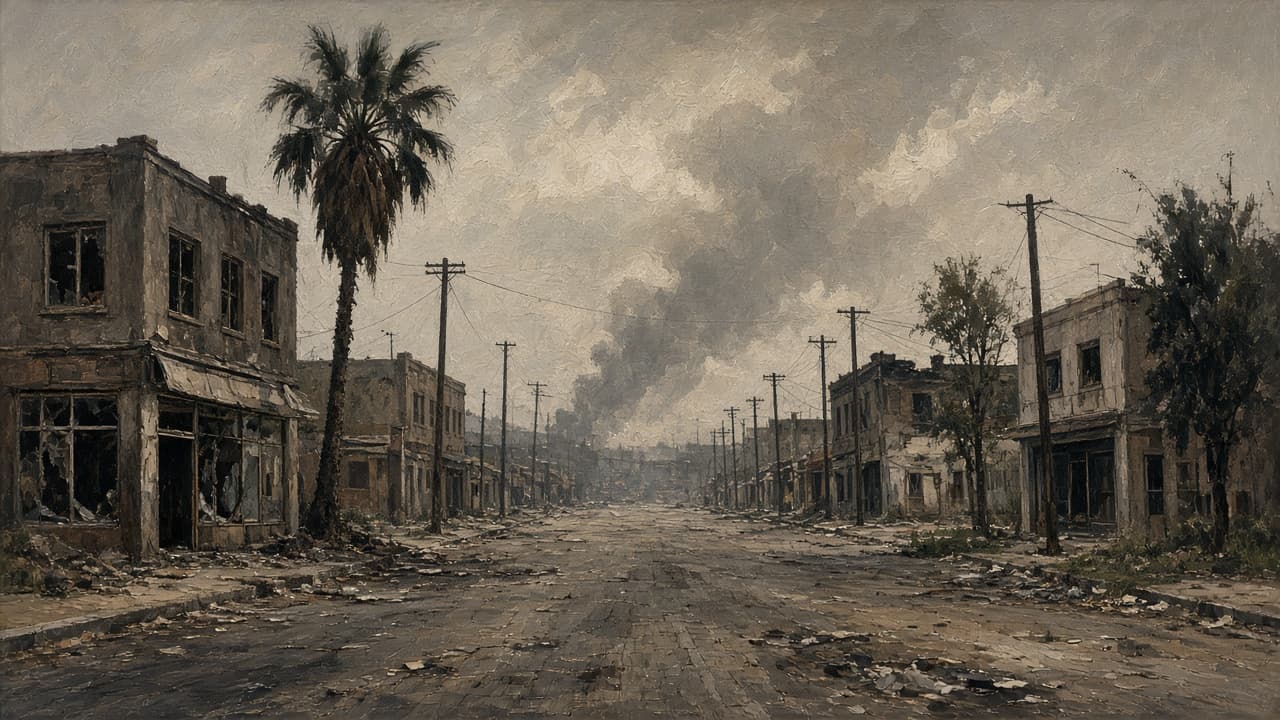
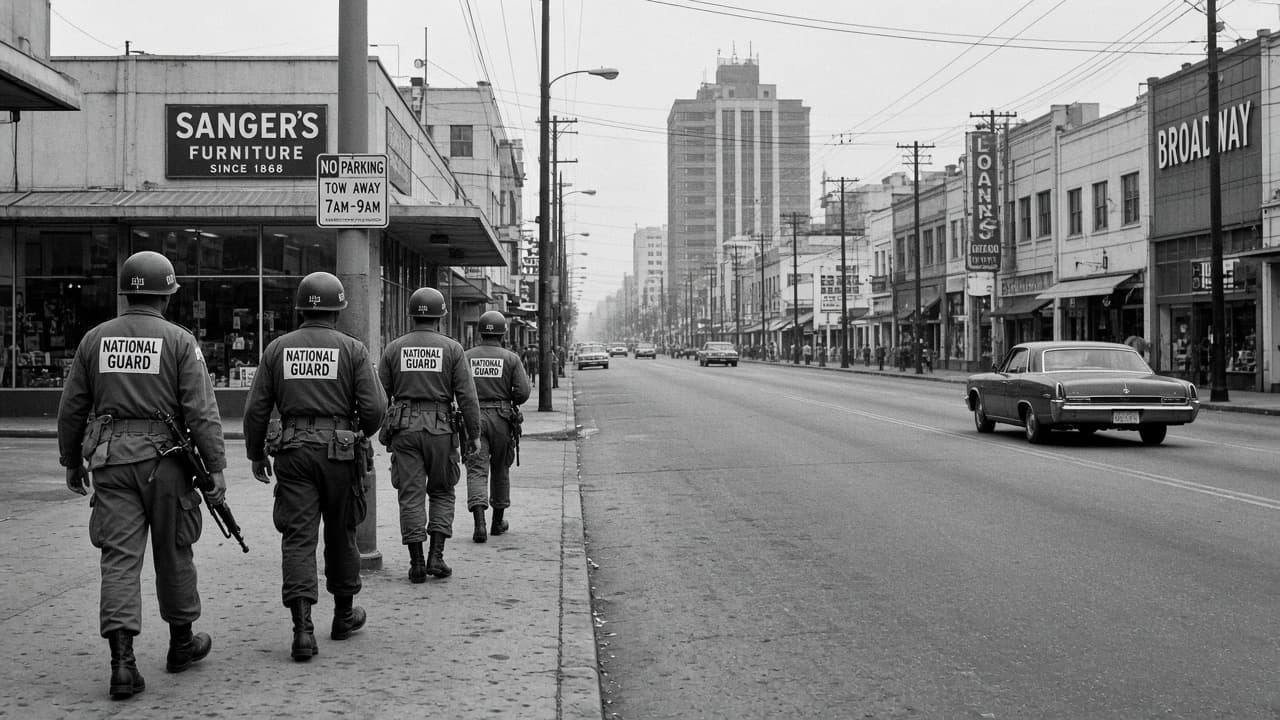
The Watts rebellion began on 11 August 1965 after a traffic stop in South Los Angeles escalated into days of unrest over police abuse, segregation, joblessness and neglected services. National Guard troops on city streets became the lasting visual of state response: rifles, jeeps and curfews in neighborhoods that felt occupied rather than protected. Officials called it a riot. Many residents described an uprising against everyday humiliation. Death, arrests and burned blocks followed before order returned. Curfews, mass arrests and burned storefronts filled after-action reports that still argue over causes.
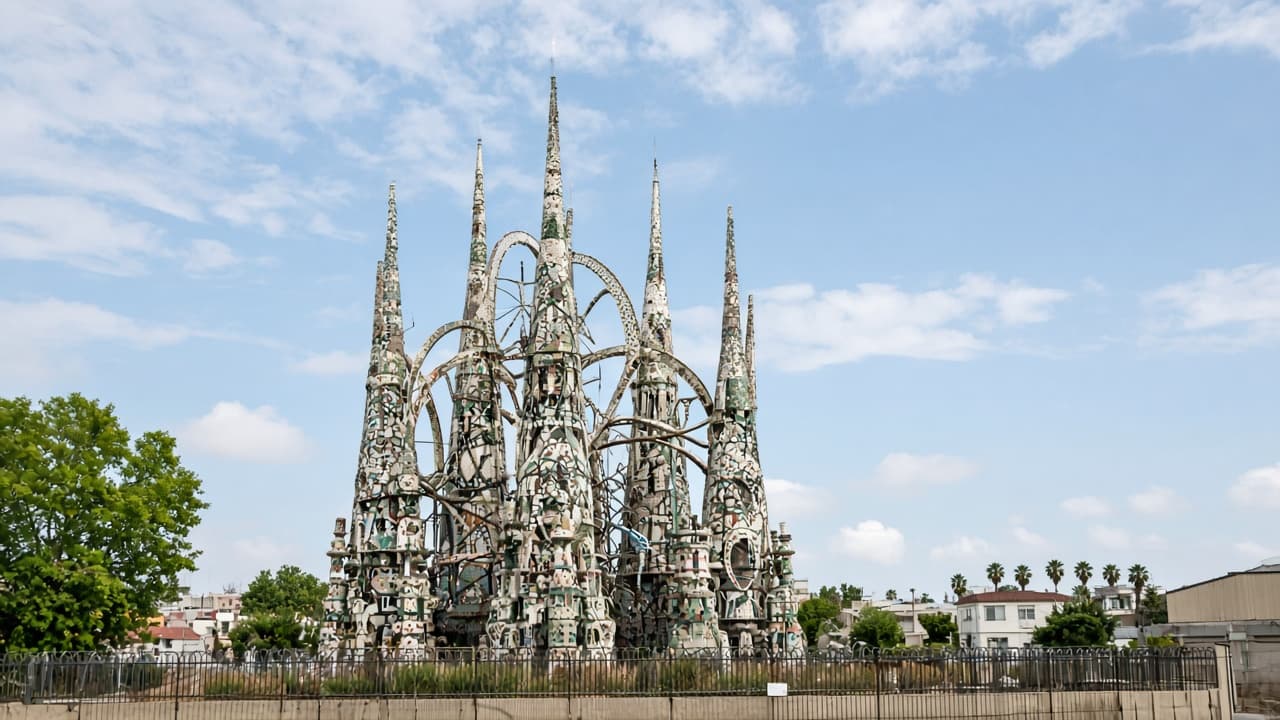
The Watts Towers (Simon Rodia's lattice spires of steel and found material) already stood as a landmark of community-made beauty in the same part of the city. Pairing the towers with Guard troops resists defining Watts only by smoke. The neighborhood had art, families and history before and after 1965. Investigations afterward named poverty and racism as tinder. Anniversaries should hold both the militarized street and the skyline landmark that still says the place is more than a headline. Federal poverty programs and local policing debates both claimed Watts as evidence for opposite cures.
Start with the stop itself. Frye, his brother and their mother were involved in an escalating roadside argument with officers. Neighbors watched. Rumors moved faster than facts. In a city where many Black residents already described police contacts as humiliating or dangerous, the scene became a spark on dry ground. The uprising that followed was not a single plan. It was a cascade of anger, opportunity, fear and retaliation across a landscape of overcrowded housing, job barriers and thin public services.
Watts and neighboring areas south of downtown were majority Black communities shaped by wartime migration, restrictive housing patterns and industrial job shifts. Schools, transit and recreation lagged. Unemployment for young Black men was high. The McCone Commission appointed after the unrest documented those conditions even as critics said it underplayed police misconduct. Knowing the socioeconomic map matters. Without it, the six days look like weather. With it, they look like pressure finally finding a crack.
As fires spread and crowds clashed with police, California called in the National Guard. Curfews and heavily armed patrols followed. News cameras showed burning blocks and soldiers on American streets, images that shocked viewers who had imagined civil rights conflict as mainly Southern. Watts made clear that Northern and Western cities carried their own racial order and their own flashpoints. The uprising did not invent that order. It made it undeniable on national television.
Civil rights organizations and local leaders split over language and strategy. Some called the events a riot born of criminal opportunity. Others insisted on "rebellion" or "uprising" to name political grievance. That vocabulary fight still matters because it decides whether the story is only about broken windows or also about broken promises. Both theft and structural anger were present. Honest history holds both without using one to erase the other.
Federal and state responses mixed short-term relief with longer studies. Job programs, housing talk and police-community initiatives followed in uneven waves. Many residents said little changed on the street where it counted. Later uprisings in other cities and later Los Angeles crises including 1992, sat in the same unfinished conversation about policing, work and dignity. Watts is therefore both a 1965 event and a recurring American question.
If you teach only one sequence, teach this one. A traffic stop on 11 August. Neighborhood confrontation. Six days of unrest and military-scale policing. A death and injury toll that still stuns. Commissions that named poverty and prejudice while politics argued about blame. The date belongs on the calendar beside Selma and Birmingham, not as a copy of those campaigns but as proof that the struggle also lived in California cities.
Media coverage often preferred flames to the quieter months of overcrowding and job searches that preceded them. That habit flattens cause into spectacle. Readers who want the full frame should pair the night images with the daytime map of housing covenants, school boundaries and patrol patterns that made a single stop combustible. History without that map turns tragedy into a random storm.
Eagle Frame's takeaway: 11 August 1965 is when a Los Angeles traffic stop ignited the Watts uprising. Know the six days of fire and force, know the deeper map of poverty and policing and know why the country still argues over what to call what happened.