How to get a better night’s sleep in seven days
Fix wake time first, then shape light, caffeine, food and a short wind-down. A week of steady habits beats one heroic early bedtime.
Sleep advice fails when it asks you to overhaul your life overnight. A better approach follows common sleep-hygiene ideas used in public-health guidance: a steady wake time, a dark cool quiet room, limits on late caffeine and alcohol, morning daylight and a short wind-down without screens in your face.
This is a seven-day practice plan, not a medical diagnosis or treatment. If you snore loudly, gasp in your sleep, fall asleep while driving or have ongoing insomnia, talk to a clinician. Chronic sleep problems can have medical causes that habits alone will not fix.
Expect partial progress in a week, not perfection. The goal is a repeatable schedule and fewer things that actively fight sleep. Keep a simple log: bedtime, wake time, caffeine cut-off and how rested you felt (1 to 5).
Work through the days in order. If you miss a day, resume; do not "punish" yourself with a tiny sleep window the next night. That usually backfires.
Step-by-step guide
Time: Seven days; about 30 to 60 minutes of wind-down each night
What you need
- Alarm you will actually obey
- Dark curtains or a sleep mask
- Notebook or notes app for a sleep log
- Optional: cool bedroom fan, white-noise source
Before you start
- This guide is general wellness information, not medical advice. Seek care for persistent or severe sleep problems.
- Do not combine sudden sleep restriction with safety-critical work (driving, heavy machinery) if you are already exhausted.
Step 01
Day 1: Lock a wake time and a realistic bed window
A steady wake time anchors your clock more than a heroic early bedtime you cannot keep.
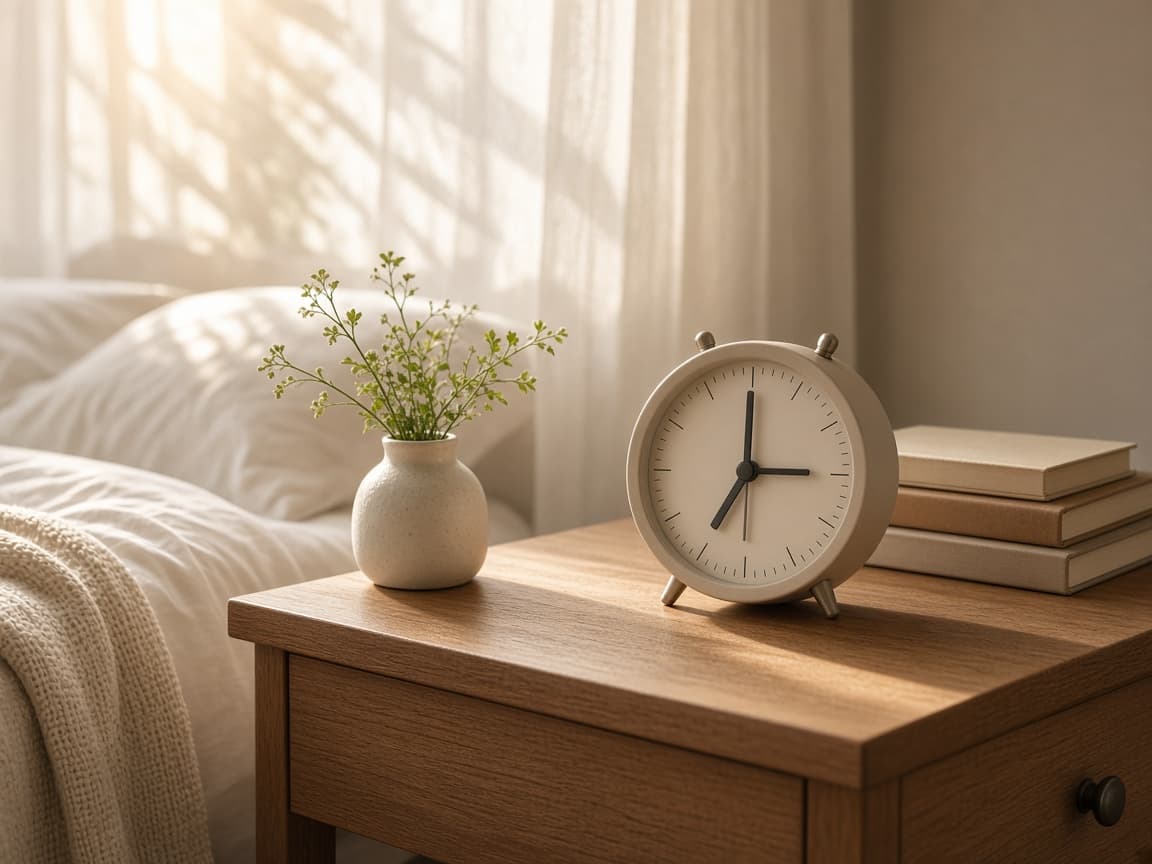
A consistent wake time is the first lever. Match bedtime to a window you can keep. Do this step in order
1a
Pick one wake time for the whole week
Choose a wake time you can keep on workdays and weekend days this week. Set the alarm and plan to get out of bed when it rings, even after a rough night.
1b
Count backward for a realistic bed window
Count roughly seven to nine hours before wake time. If you currently sleep at 1 a.m., do not jump to 10 p.m. tonight. Move earlier by 30 to 45 minutes and write both times on a card.
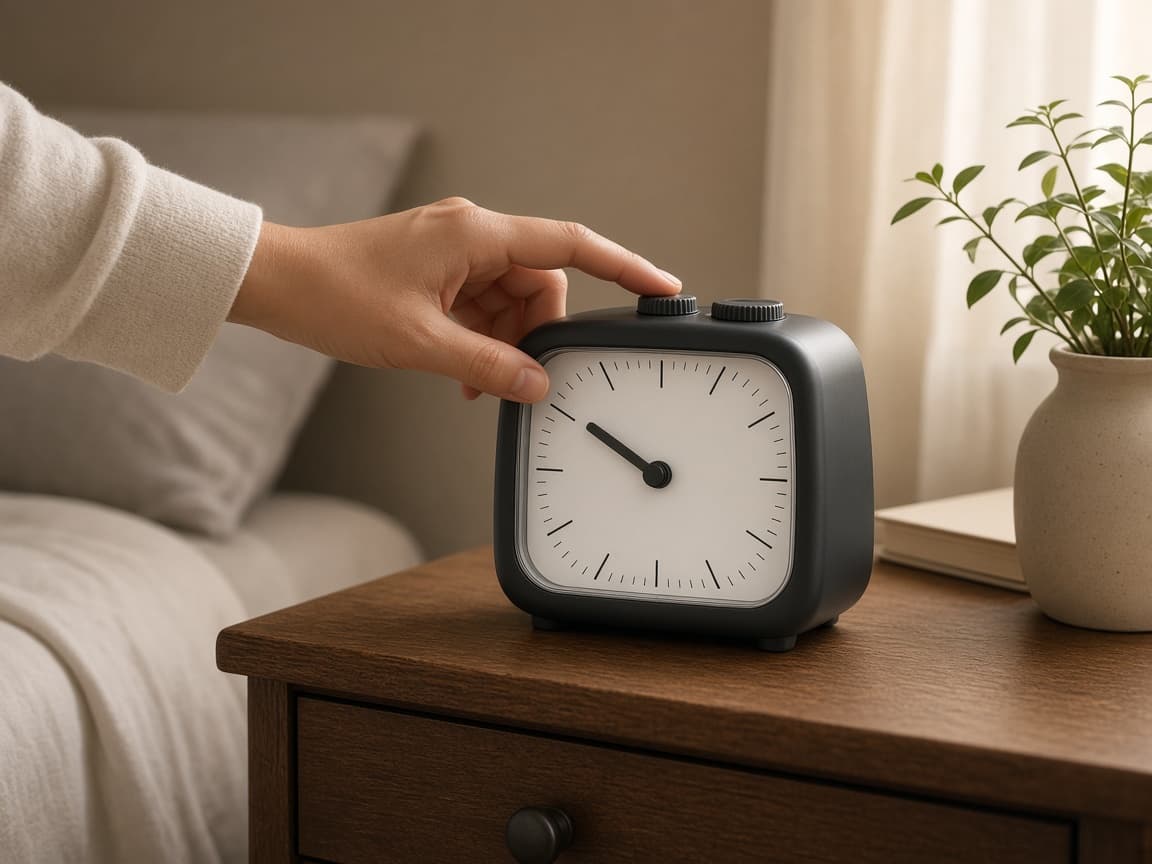
Shift bedtime in small steps you can actually hit. 1c
Protect the wake time on weekends too
Common mistake: sleeping until noon on Saturday and wondering why Sunday night feels impossible. Keep the wake alarm even if bedtime slipped. Resume the bed window the next night without punishing yourself.
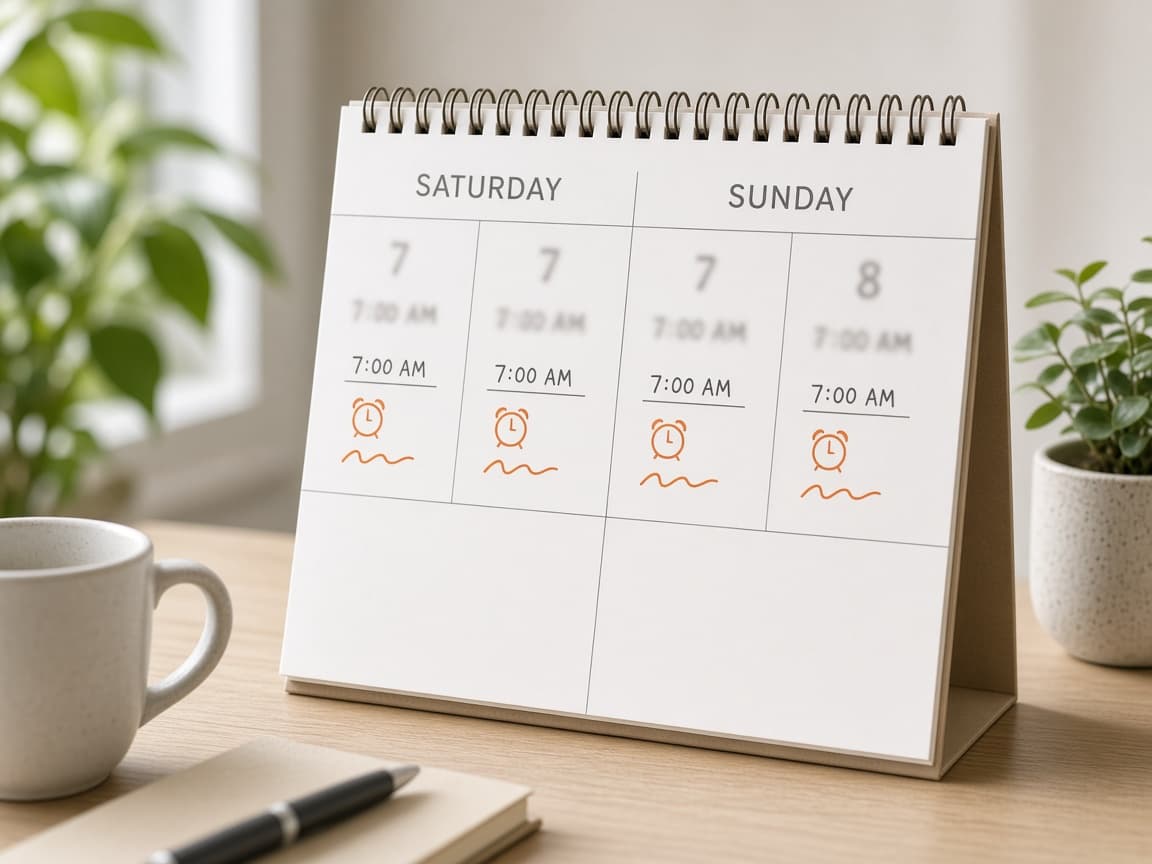
Weekend sleep-ins undo the clock you set on Monday.
Step 02
Day 2: Make the room dark, cool and quiet
The bedroom should cue sleep: darker, cooler and quieter than the rest of your evening space.
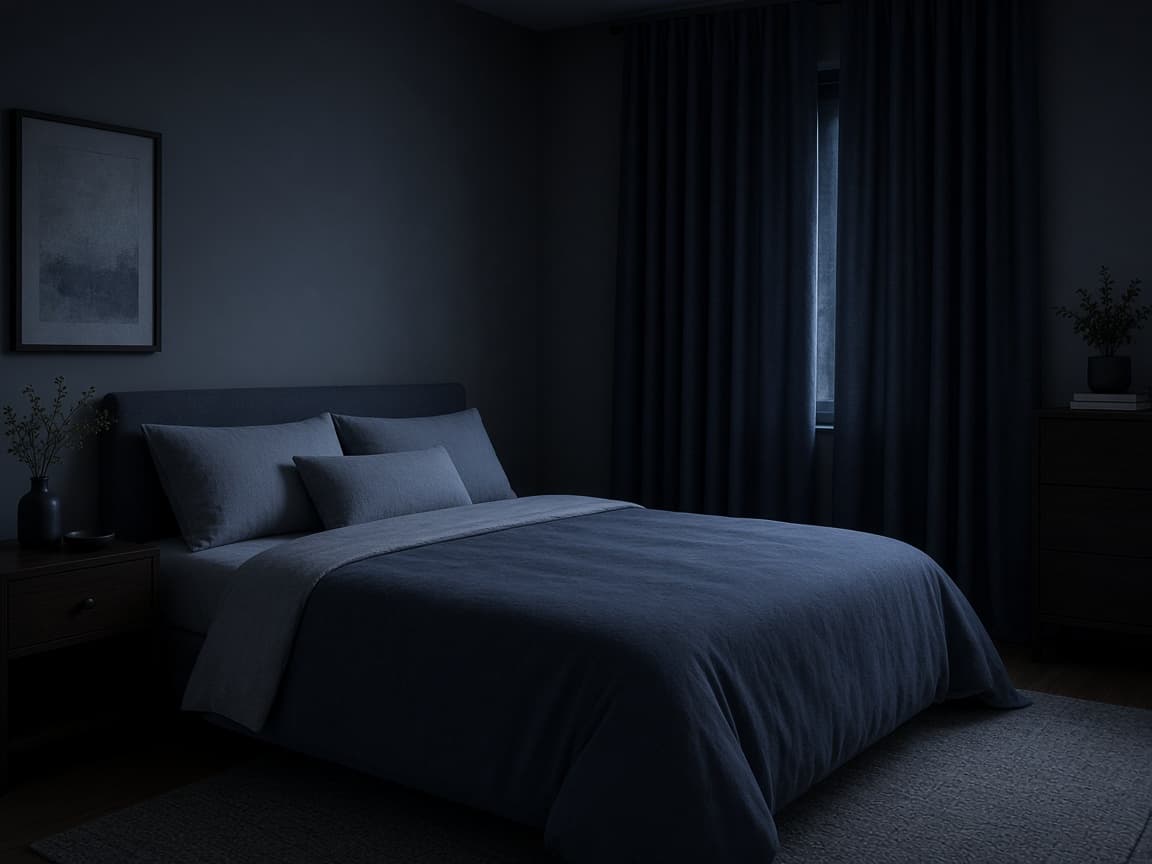
Dark, cool and quiet beats a perfect mattress with a glowing laptop on the sheets. Do this step in order
2a
Kill light leaks and cover glowing LEDs
Stand in the room with lights off. Close curtain gaps, cover charger LEDs or use a mask. Even small glows can nudge some people awake.
2b
Cool the room and steady the noise
Aim for a bedroom that feels slightly cool rather than warm and stuffy. Use a fan if needed. Add earplugs or low white noise if the street or neighbors are loud.
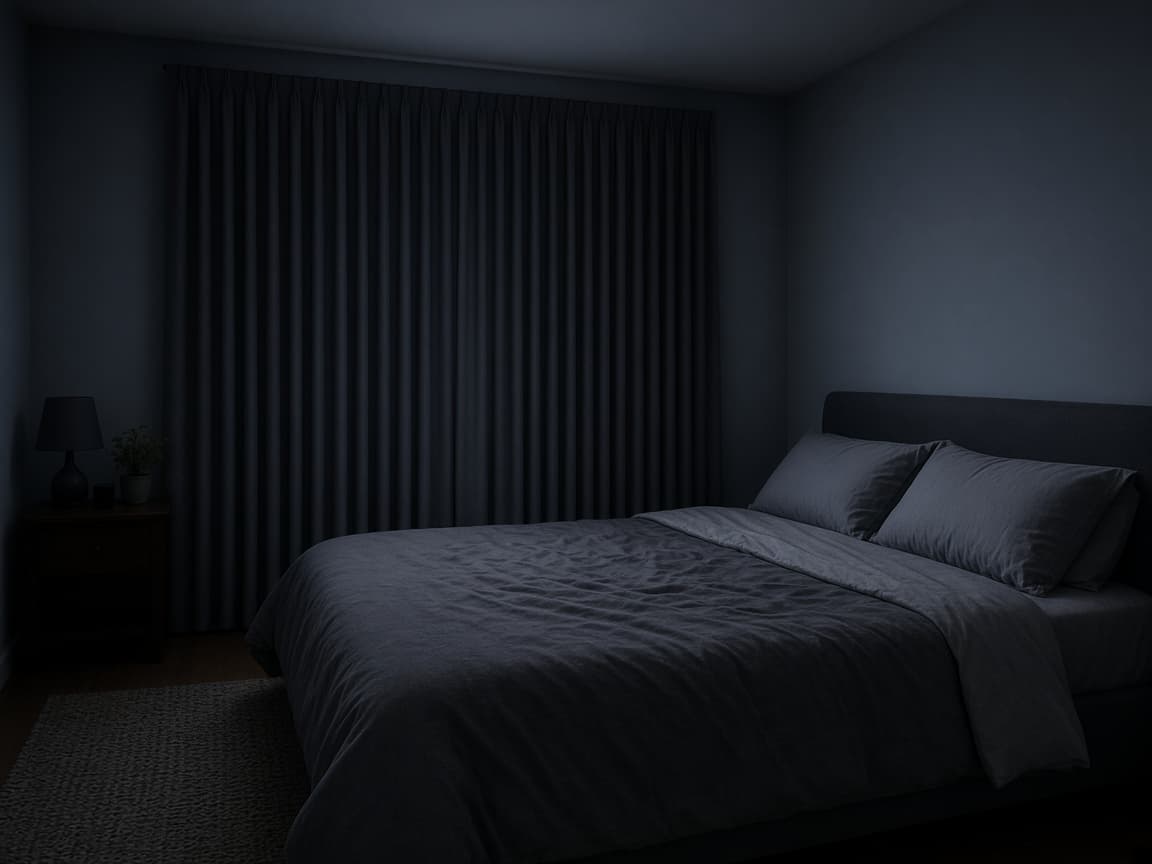
Cool air and steady sound beat a stuffy, stop-start night. 2c
Clear the bed of daytime clutter
Remove laptops and laundry so the bed cues sleep. Agree on light and noise rules with a partner on a different schedule. Common mistake: watching bright shows in bed and expecting the same spot to feel like a cave five minutes later.

A clear bed is a stronger sleep cue than willpower alone.
Step 03
Day 3: Set caffeine, alcohol and late-meal cut-offs
Schedule stimulants and heavy meals away from bedtime so your wind-down is not fighting chemistry.

Late caffeine, alcohol and heavy meals are common sleep saboteurs you can schedule around. Do this step in order
3a
Set a caffeine cut-off six to eight hours before bed
Pick a last-coffee time at least six to eight hours before lights-out, earlier if you are sensitive. Switch to water or herbal options after that. Put the cut-off on your phone calendar for this week.
3b
Keep alcohol and heavy meals earlier
Alcohol can make you drowsy and then fragment sleep later. Avoid it close to bedtime for this experiment. Finish heavy meals earlier in the evening. If you need a snack, keep it small and earlier than lights-out.

Early meals leave digestion out of the sleep window. 3c
Log how late coffee and food felt
Note caffeine time and late meals in your sleep log. Common mistake: an iced coffee at 4 p.m. and a mystery about midnight alertness. Your log will make the pattern obvious.

The log turns late habits from mysteries into edits.
Step 04
Day 4: Get morning daylight and daytime movement
Daylight and movement set the same clock you are trying to reset at night.

Morning light and daytime movement support the same clock you are trying to reset at night. Do this step in order
4a
Get outdoor light within an hour of waking
Take a short walk or sit near a bright window with your coffee. Daylight helps sleepiness arrive on time at night. If you work nights, talk with a clinician about light timing instead of forcing this daytime plan.
4b
Schedule repeatable daytime movement
Add a walk, bike ride or workout you can repeat. Finish intense sessions a few hours before lights-out when hard exercise leaves you wired. Consistency matters more than a perfect workout.

Movement earlier in the day supports night sleep better for many people. 4c
Avoid an all-day dim indoor stretch
Common mistake: staying indoors under dim light all day and then blaming only the mattress. Even brief outdoor light helps. Open blinds at midday if you cannot leave the building.

Dim days make night timing harder to set.
Step 05
Day 5: Install a 30 to 60 minute wind-down
A short, boring wind-down tells your brain the day is closing. Keep screens and email out of this block.

A short, boring wind-down tells your brain the day is closing. Do this step in order
5a
Dim the lights and start on a fixed clock
Begin 30 to 60 minutes before lights-out. Dim lamps, lower overhead lights and put the wind-down on your calendar like any other appointment. The consistent start time matters as much as the activities.
5b
Pick one calm activity and a short brain-dump
Choose stretch, paper reading, a shower, laying out tomorrow's clothes or writing worries on paper so they are not looping in your head. Do not turn the block into a second work session. Keep the activity boring on purpose.
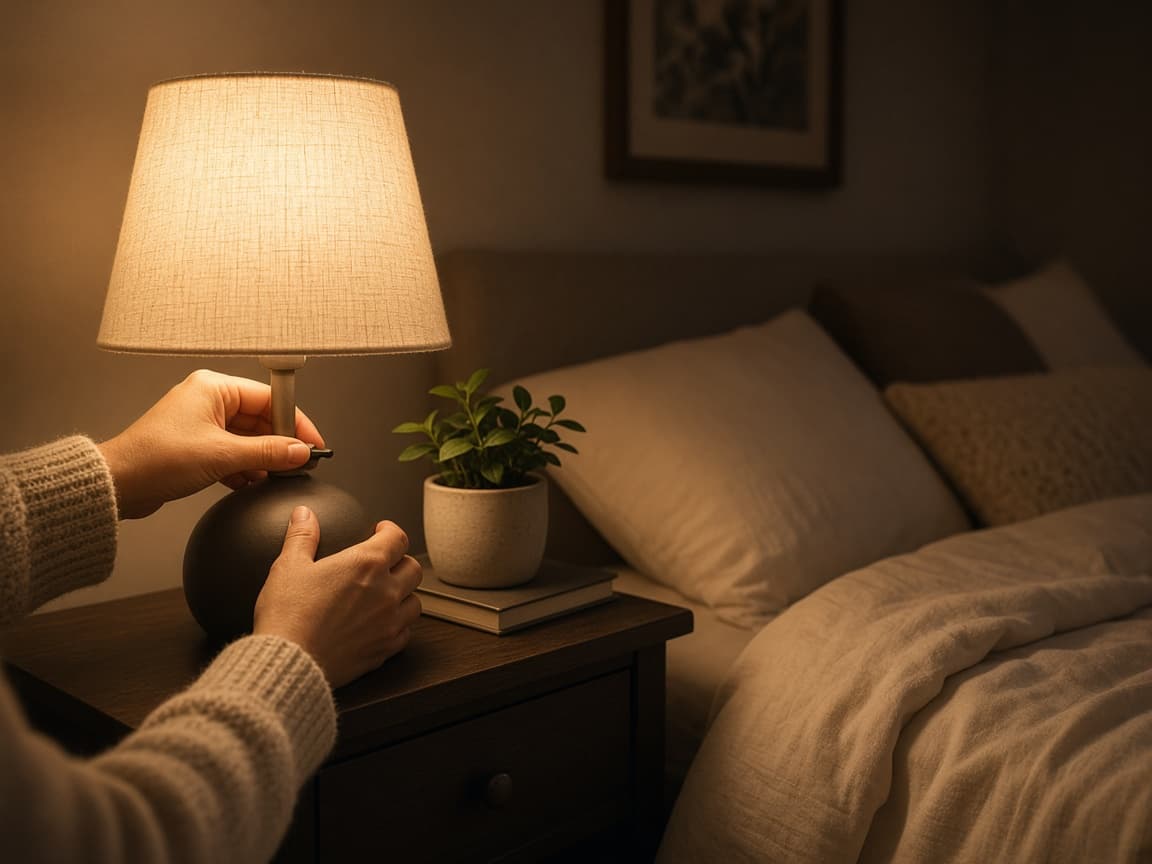
Pick calm tasks. Save problem-solving for daylight. 5c
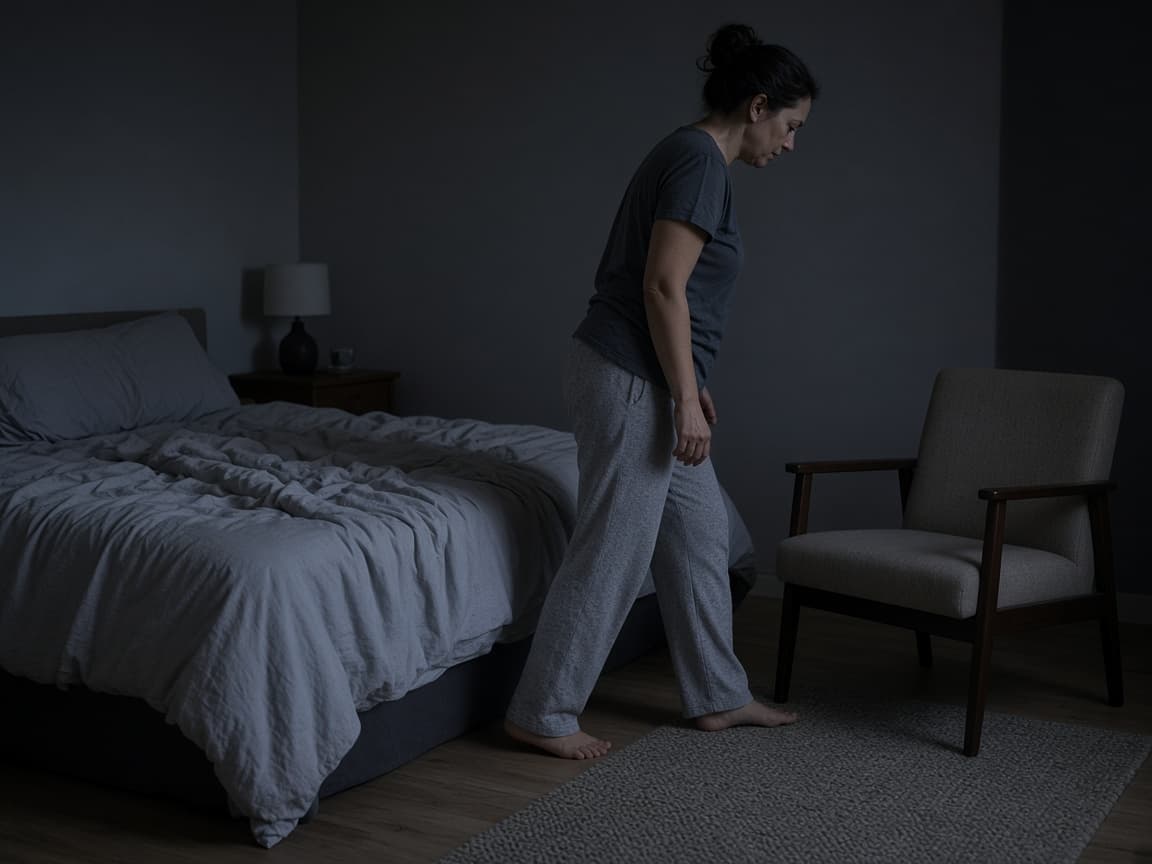
If you cannot sleep, leave the bed in low light
After about 20 minutes awake, get up in low light. Do something calm until you feel sleepy, then return to bed. Cover or turn away the clock so you are not scoring every minute.

Beds are for sleep. Clock-watching belongs somewhere else. 5d
Ban email and "just one more" work tabs
Common mistake: turning wind-down into one more inbox pass. Close work apps before the block starts. If a thought feels urgent, write it on the brain-dump list and leave it until morning.
Email during wind-down teaches your brain the day never ends.
Step 06
Day 6: Get screens out of the sleep equation
If the phone is not in your hand, midnight scrolling gets much harder.
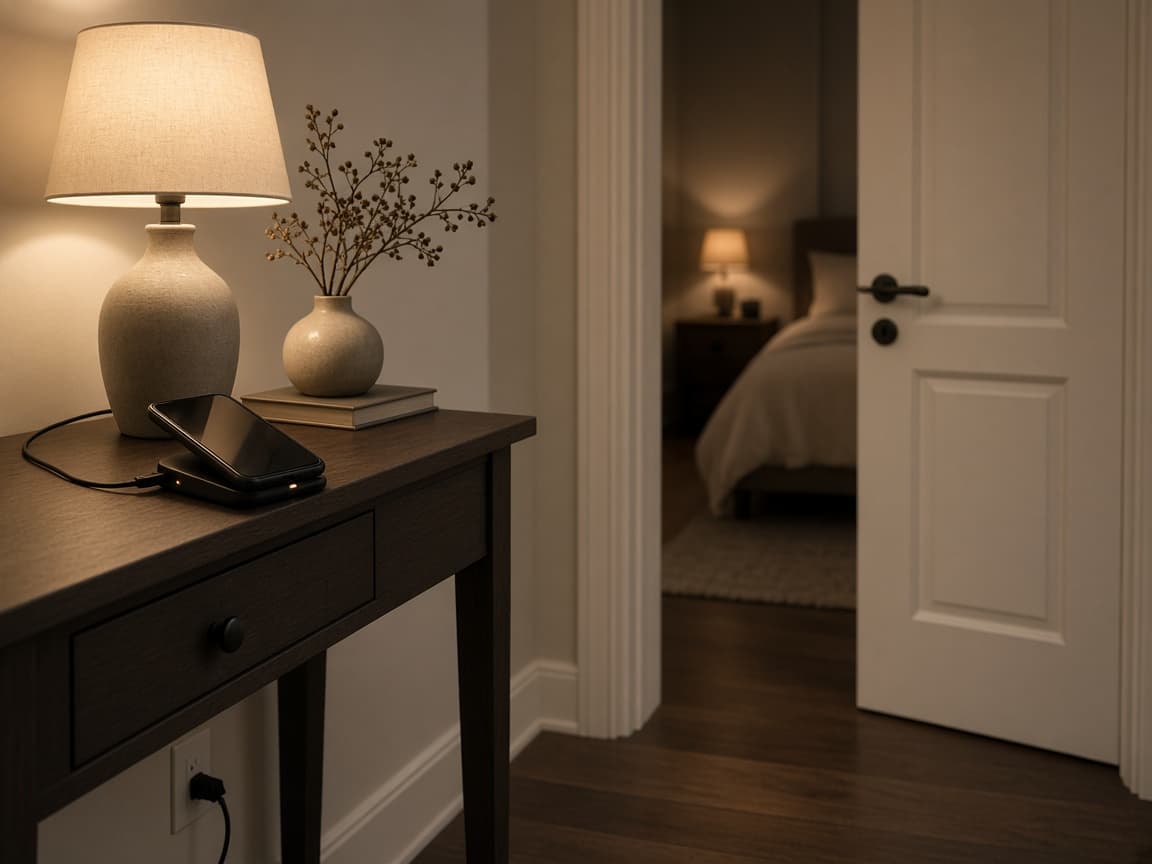
If the phone is not in your hand, midnight scrolling gets much harder. Do this step in order
6a
Charge the phone outside arm's reach
Put the charger on a dresser or in another room. Use a basic alarm clock if you need one. Standing up to shut off an alarm across the room also helps you leave the bed at wake time.
6b
If the phone must stay nearby, lock it down
Enable Do Not Disturb, try grayscale and keep the phone face down. Move scrolling to earlier in the evening or cut it for this experiment. Bright feeds delay sleep even when you swear you are only checking the time.
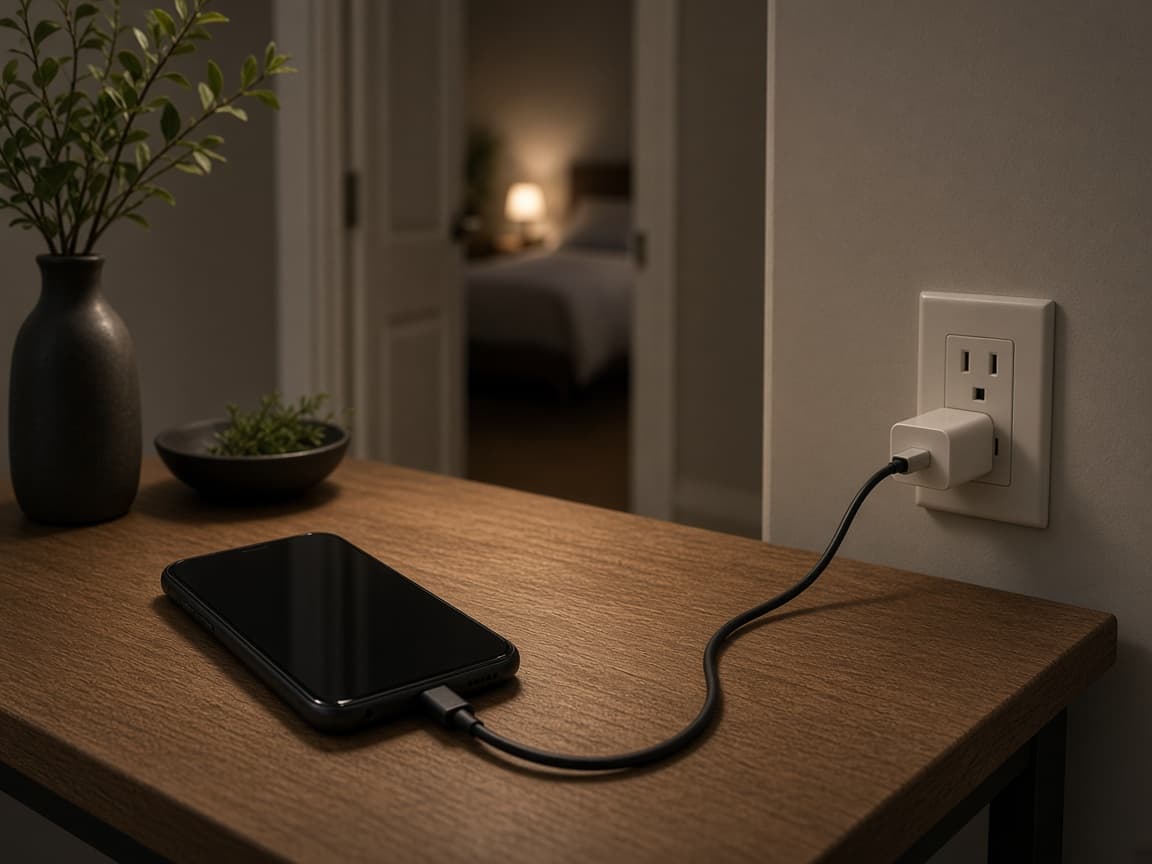
Harder-to-use phones are easier to ignore in bed. 6c
Drop the podcast-plus-chat loophole
Common mistake: saying you only use the phone for podcasts while also opening three chat apps in the dark. Pick audio without a bright screen or skip the phone entirely during wind-down.

One loophole is enough to undo the screen rule.
Step 07
Day 7: Review the log and keep the parts that worked
Keep the two or three rules that helped. Drop the rest for now instead of quitting everything.
Keep the habits that helped, then seek clinical advice if serious problems remain. Do this step in order
7a
Read the week for patterns that actually helped
Note the earliest caffeine that still hurt sleep, the wind-down you completed and the wake time you kept. Circle the two or three rules that correlated with better mornings.
7b
Plan next week with the same wake time
Copy the wake time forward. Keep the room rules and cut-offs that worked. If sleep is still poor despite solid habits or you notice loud snoring or gasping, book a medical conversation.
Habits that helped deserve another week, not a reset to zero. 7c
Do not scrap the plan after one late night
Common mistake: calling the week a failure because one night slipped, then abandoning the wake time that was working. Resume the next day. This guide is practice, not a diagnosis or cure.

One miss is data. Quitting is optional.
Done when
- Fixed wake time set for all seven days
- Caffeine and alcohol cut-offs chosen
- Bedroom darker, cooler and quieter
- Wind-down block on the calendar
- Phone charging outside the bed reach
Eagle Frame’s takeaway: better sleep in seven days comes from a fixed wake time, a calmer room and fewer late stimulants, not from one heroic early night. Keep the habits that helped and talk to a clinician if warning signs or ongoing insomnia remain. This plan is practice, not a diagnosis.