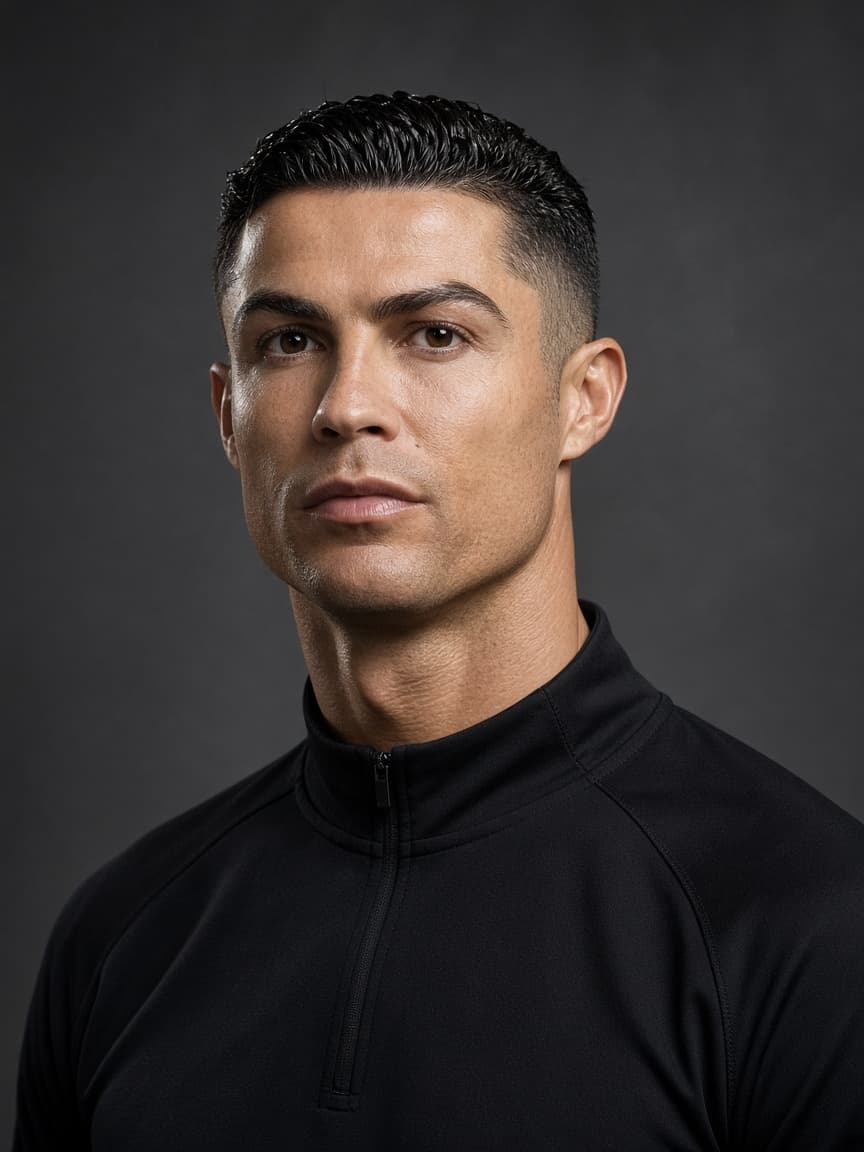
Cristiano Ronaldo: the Madeira boy who turned obsession into a career record
From a cramped house in Funchal to Sporting, Manchester United, Real Madrid, Juventus and Al-Nassr. Five Ballon d'Ors, five Champions Leagues, a Euro 2016 title and more than 900 career goals.
Cristiano Ronaldo is the most relentlessly engineered footballer of his era. He was not the most naturally gifted player of his generation and he has never pretended otherwise. What separated him was an appetite for repetition that bordered on strange, a willingness to rebuild his own game three times as his body changed and a refusal to accept that a career should end at 33. He is still playing professionally in 2026, past forty, with more than 900 career goals behind him.
He was born Cristiano Ronaldo dos Santos Aveiro on 5 February 1985 in Funchal, on the Portuguese island of Madeira, and grew up in the Santo António neighbourhood. His father, José Dinis Aveiro, was a municipal gardener and part-time kit man at the local club Andorinha. His mother, Maria Dolores dos Santos, worked as a cook and cleaner. The family of six lived in a small tin-roofed house. His father struggled with alcoholism for most of Ronaldo's childhood and died in 2005, aged 52, while Ronaldo was at Manchester United. Ronaldo has spoken about never having had a conversation with him as an adult and has been publicly teetotal since.
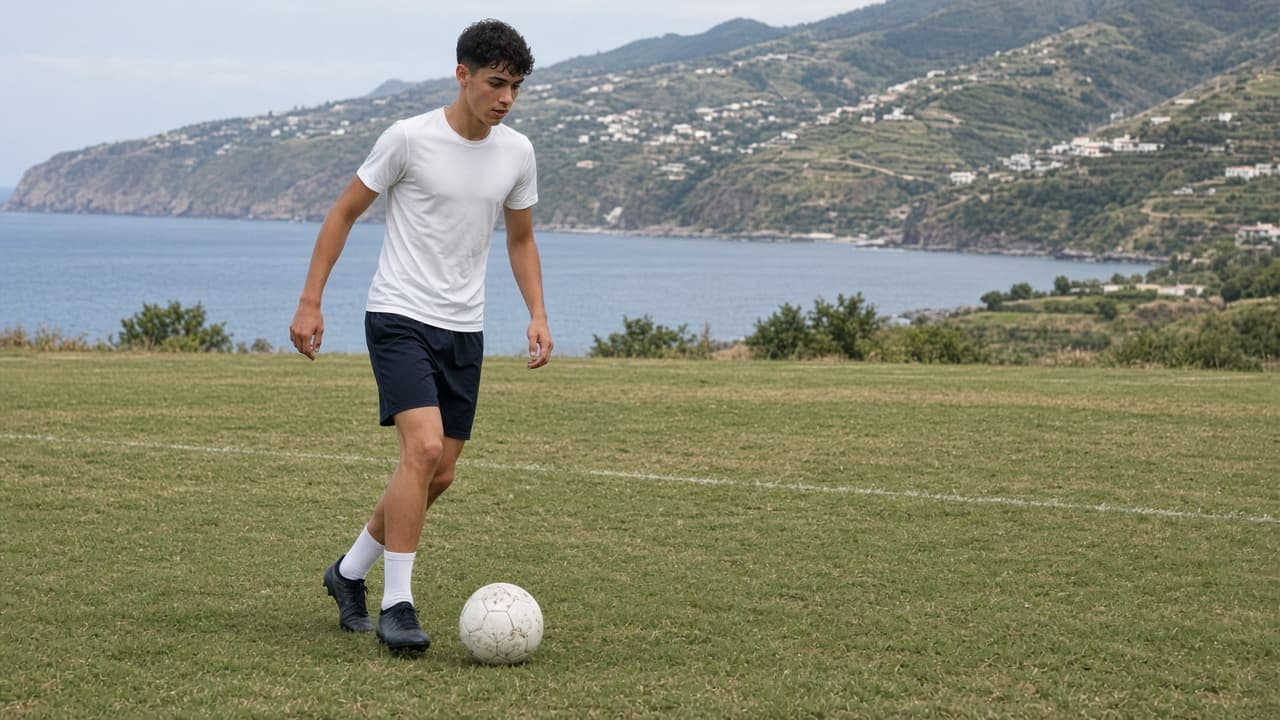
He played for Andorinha, then for Nacional on the island, and at twelve he flew alone to Lisbon for a trial at Sporting CP. He was accepted into the academy and moved into the club dormitory, homesick and mocked for his island accent. At fifteen he was diagnosed with a racing heart. He had a cardiac procedure using a laser to cauterise the affected tissue and was back in training within days. Sporting pushed him through their age groups faster than usual, and he made his first-team debut in 2002 at seventeen.
The move that made him came from one friendly. On 6 August 2003 Sporting hosted Manchester United at the opening of the Estádio José Alvalade, and Ronaldo spent ninety minutes running at the United full-back John O'Shea. The players reportedly told Alex Ferguson to sign him on the flight home. United paid around £12.24 million, then a record for a teenager in English football, and Ferguson gave him the number seven shirt previously worn by George Best, Eric Cantona and David Beckham. It was a heavy piece of cloth to hand a boy from Funchal.
The first years at Old Trafford were all trickery and few end products. Ferguson drilled the showmanship into effectiveness, and by the 2006-07 season Ronaldo was the best attacking player in England. United won three consecutive Premier League titles from 2007 to 2009. In 2007-08 he scored 42 goals in all competitions, a preposterous return for a winger, and headed the opening goal in the Champions League final against Chelsea in Moscow, which United won on penalties. He collected his first Ballon d'Or at the end of 2008. He left United in 2009 with 118 goals in 292 appearances and three league titles, an FA Cup and a Champions League medal.
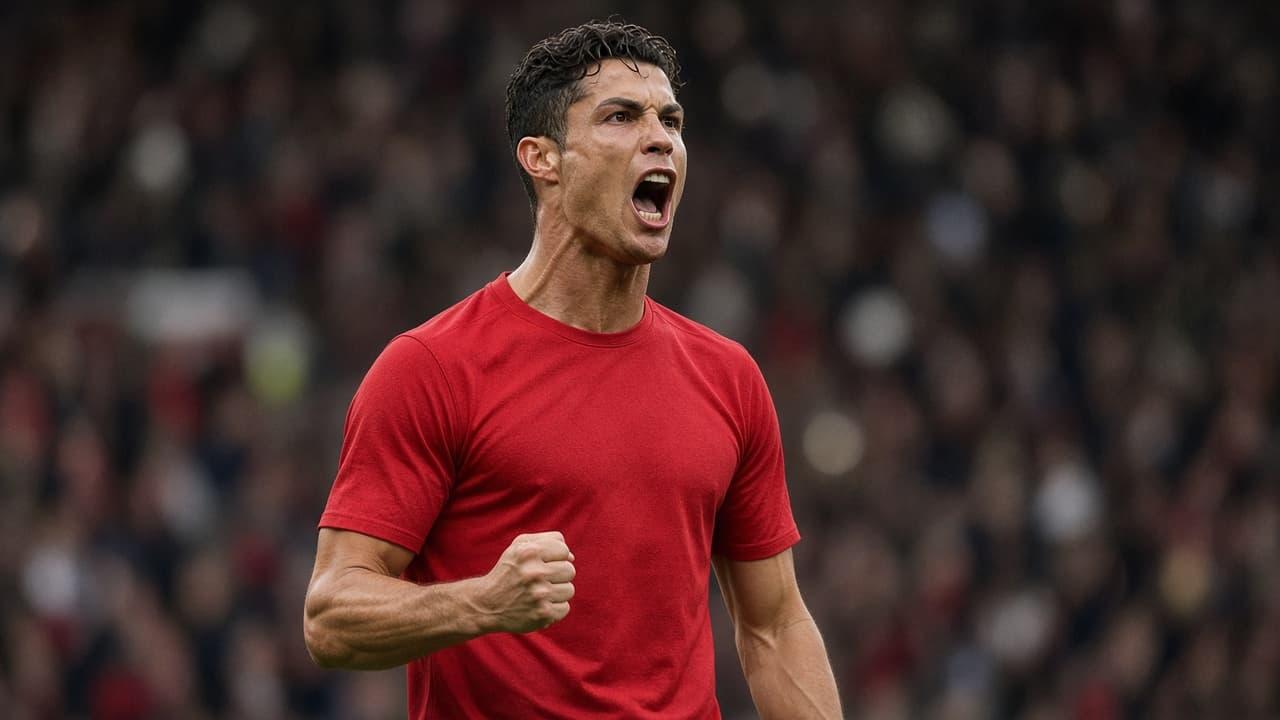
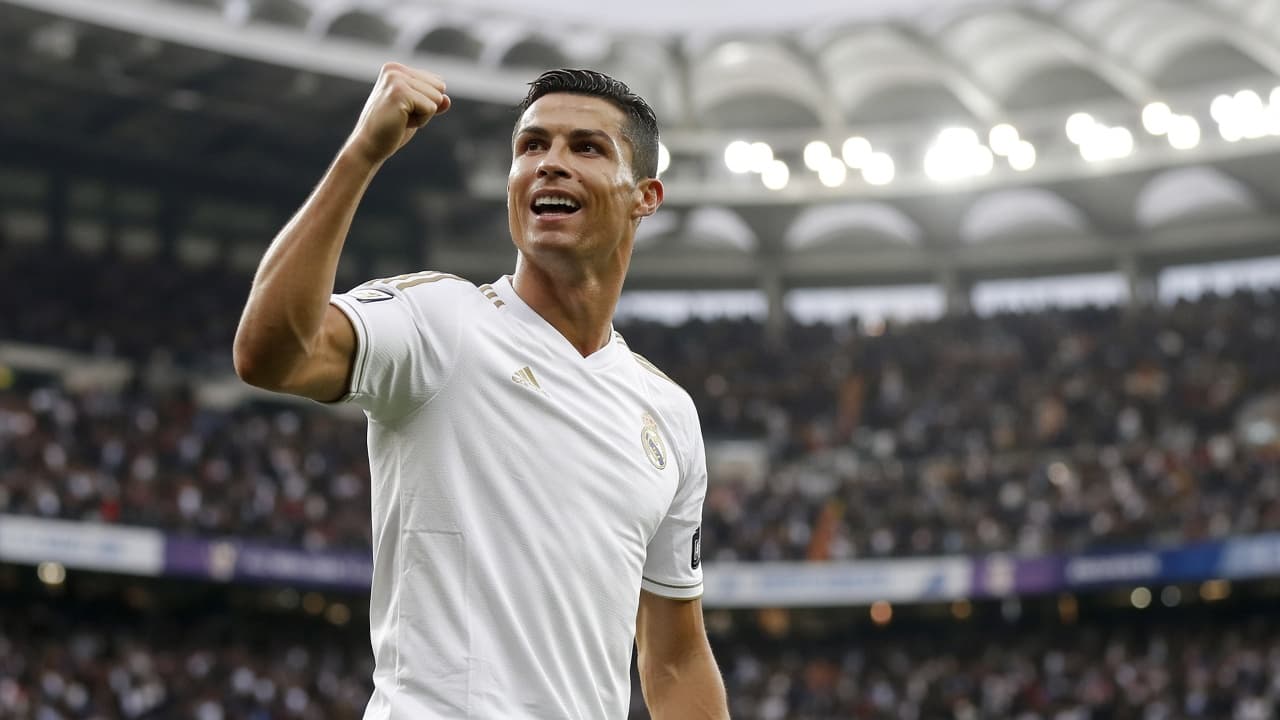
Real Madrid paid a world record fee of about £80 million in the summer of 2009, and what followed is arguably the most productive nine years any forward has had at one club. He scored 450 goals in 438 appearances in all competitions, a rate above one per game, and remains Real Madrid's all-time leading scorer. He won two La Liga titles, two Copas del Rey and four Champions Leagues, including La Décima in 2014 and three consecutive titles from 2016 to 2018. Four of his five Ballon d'Or awards came in this period, in 2013, 2014, 2016 and 2017, in a decade-long duel with Lionel Messi that defined the sport for a generation of fans.
Portugal took longer. He debuted for the national team in 2003, lost the Euro 2004 final on home soil to Greece as a teenager in tears and carried the label of a player who could not deliver for his country. That ended in France in 2016. Portugal scraped through the group stage, ground their way to the final and then lost Ronaldo to a knee injury in the twenty-fifth minute against the hosts. He spent extra time on the touchline effectively coaching, and Portugal won 1-0 through Eder. He added the inaugural UEFA Nations League in 2019 on home ground and another Nations League title in 2025. He also holds the record for most international goals in men's football, a total that has climbed beyond 140.
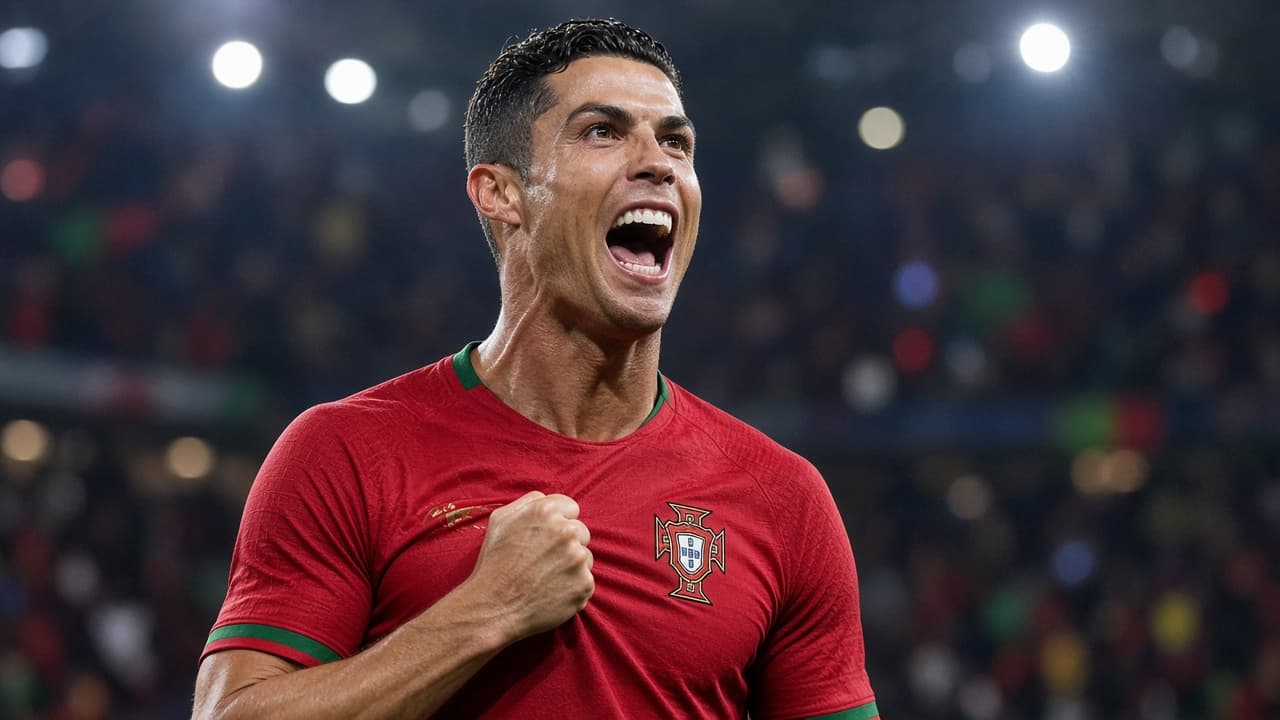
The later club moves were a study in adaptation. He joined Juventus in 2018 for about €100 million, won two Serie A titles and a pair of domestic cups and scored consistently, though the Champions League run the club had bought him for never materialised. He returned to Manchester United in 2021 to a rapturous welcome and finished as the club's top scorer that season in a struggling team. The second spell ended badly, with a critical television interview in November 2022 and a mutual contract termination days before the World Cup in Qatar.
In December 2022 he signed for Al-Nassr in Saudi Arabia on a contract widely reported as the most lucrative in football history, and he extended it in 2025 through 2027. The move was mocked as a retirement payday and then quietly reframed as the start of a league-wide recruitment wave, with Karim Benzema, N'Golo Kanté and others following. Ronaldo kept scoring at a high rate in the Saudi Pro League and kept his Portugal place. On 5 September 2024 he scored his 900th career goal, for Portugal against Croatia in the Nations League, a milestone no other player has reached in the professional era.
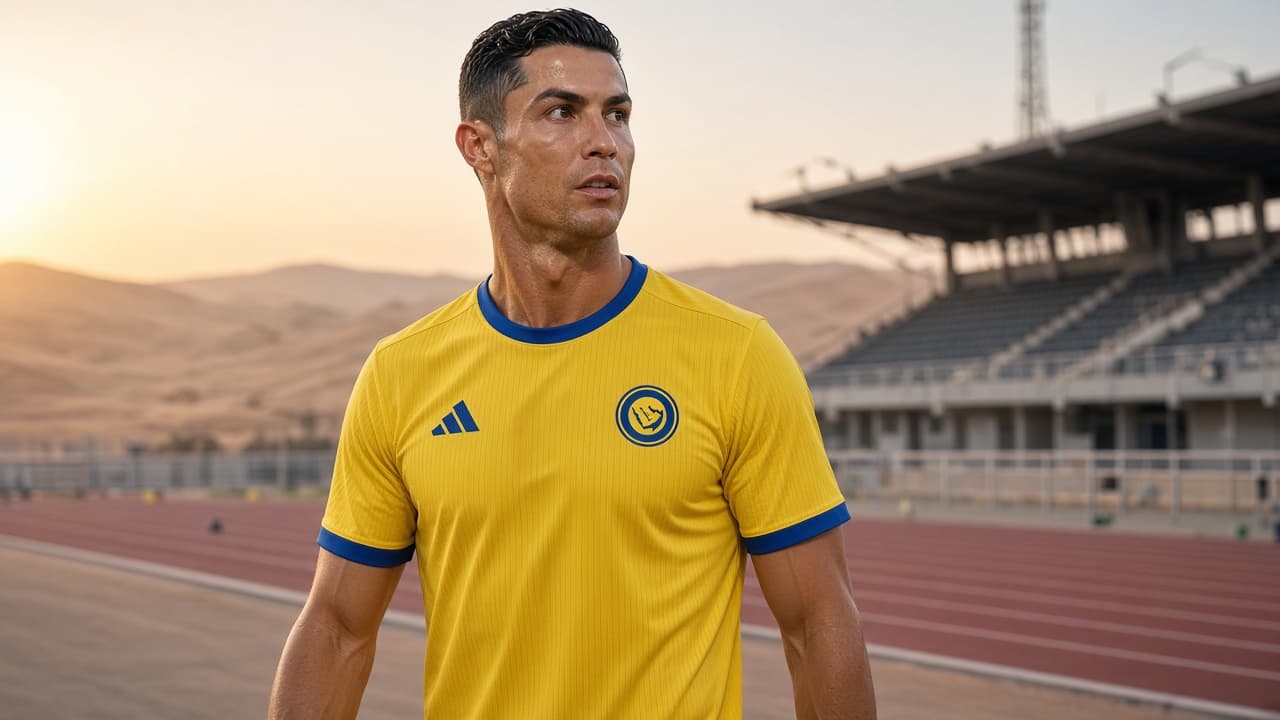
Off the pitch he built a business that does not depend on a club. The CR7 brand covers underwear, fragrance, hotels and a museum in Funchal, and Madeira's airport carries his name. He has been among the most followed people on social media for years, with an Instagram audience above 600 million, and Forbes has repeatedly ranked him as one of the highest-paid athletes in the world. His family life is largely conducted in public with his partner Georgina Rodríguez, whom he became engaged to in 2025, and their children. He has five surviving children, including twins born by surrogate in 2017 and a daughter born in 2022, whose twin brother died during birth. Ronaldo spoke about that loss at length and returned to play within weeks.
The record is not free of dispute. In 2018 the American woman Kathryn Mayorga alleged that Ronaldo had raped her in Las Vegas in 2009. Ronaldo denied the allegation and said the encounter was consensual. Prosecutors in Nevada declined to bring criminal charges in 2019, citing insufficient evidence to prove the case beyond reasonable doubt, and her civil lawsuit was dismissed with prejudice in 2022 over the conduct of her lawyer in handling leaked documents. He has also drawn criticism for tax settlements in Spain and for the political questions attached to his Saudi contract.
What to make of him depends on what you value. If it is peak artistry, others rank higher. If it is longevity, output and the ability to remake a playing style twice without losing goals, there is no comparison in the modern game. He turned himself from a stepover merchant on the Madeira coast into a penalty-box finisher who was still scoring in his forties, and he did it through a training regime that teammates at four clubs have described in almost identical terms. That is the lesson worth taking, whatever you think of the rest.