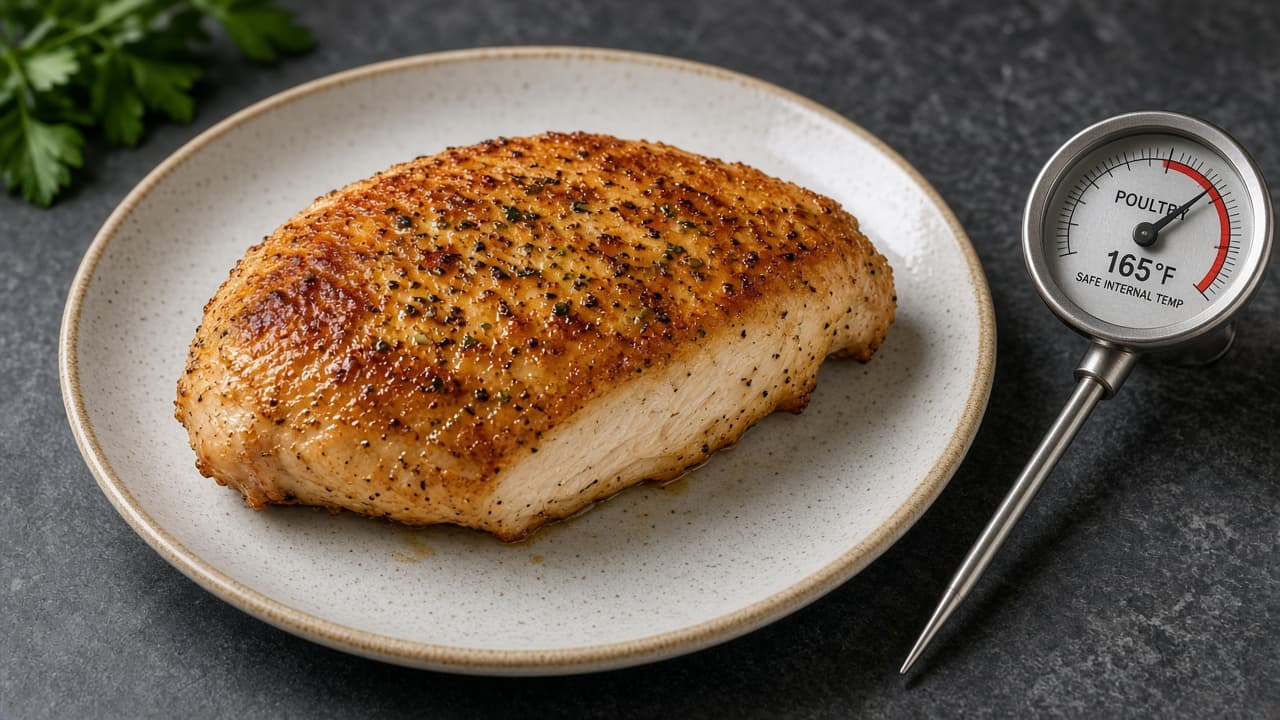
How to cook chicken breast
Season boneless chicken breasts, cook on the stove or in the oven and verify 165°F (74°C) in the thickest part. Rest a few minutes so juices stay in the meat instead of on the cutting board.
Chicken breast dries out when it overshoots safe temperature by a wide margin or when thick and thin ends cook at wildly different speeds. The fix is even thickness, moderate heat and a thermometer. Color alone is not a reliable safety check.
Food safety for poultry is clear: cook chicken to an internal temperature of 165°F (74°C) in the thickest part. This guide covers a pan method for weeknights and notes an oven option for hands-off batches. Both end with the same temperature check and a short rest.
Pound or butterfly thick breasts so they cook evenly. Pat dry, season with salt and pepper (and oil for the pan), then sear or bake until the thermometer reads 165°F (74°C). Rest 5 minutes before slicing across the grain.
You will need boneless skinless breasts, salt, pepper, a little oil, a skillet or sheet pan and an instant-read thermometer. Optional: garlic powder, paprika or a simple marinade. Keep raw chicken tools separate from ready-to-eat foods and wash hands after handling raw meat.
Step-by-step guide
Time: 25 to 35 minutes including rest
What you need
- 2 boneless skinless chicken breasts (about 6 to 8 oz / 170 to 225 g each)
- Salt and black pepper
- 1 to 2 tablespoons oil
- Heavy skillet (or sheet pan for oven method)
- Instant-read thermometer
- Tongs
- Optional: meat mallet or rolling pin and plastic wrap
Before you start
- Chicken is done and safe at 165°F (74°C) in the thickest part. Do not rely on color alone.
- Wash hands, boards and knives after raw chicken. Keep raw juices off salads and cooked food.
- Hot oil can spit. Pat chicken dry before it hits the pan.
Step 01
Prep for even cooking
Dry surfaces and even thickness keep the meat from drying on the thin end while the thick end catches up.
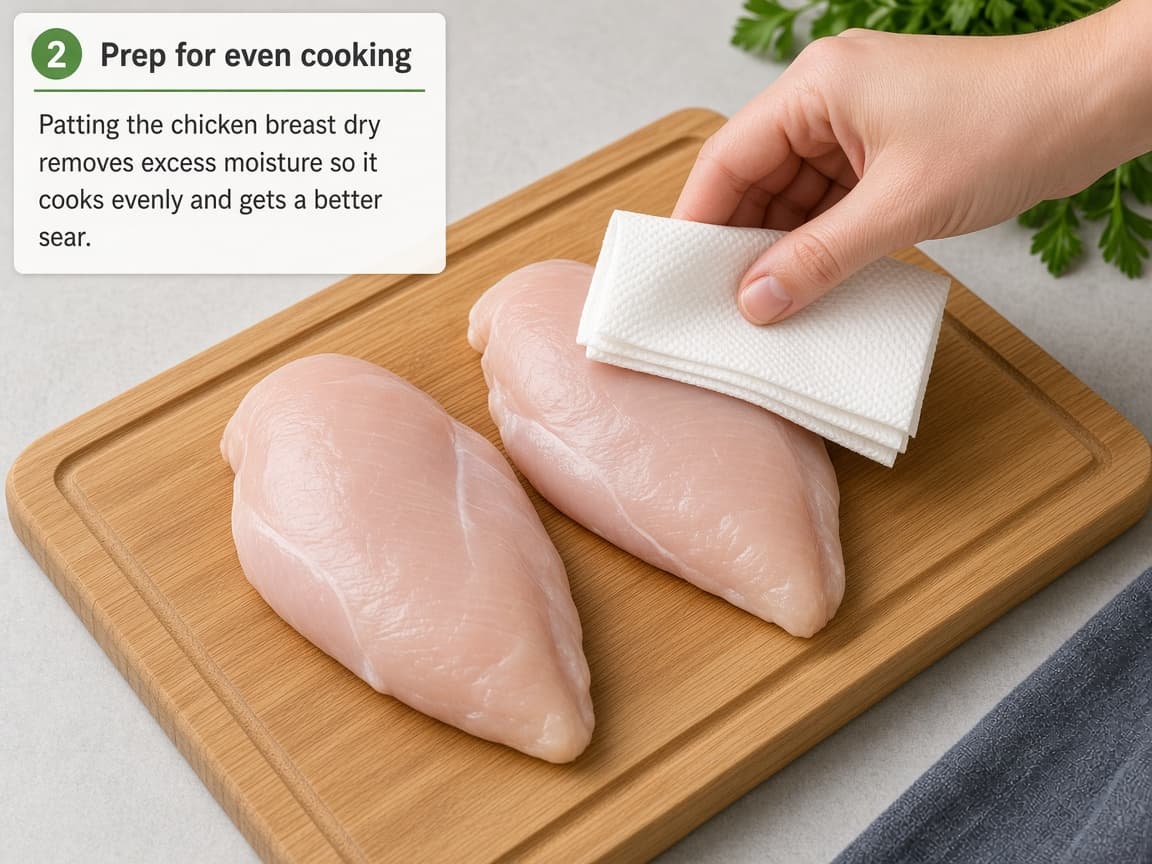
Illustrative: dry surfaces brown better and spit less in hot oil. Do this step in order
1a
Pat the chicken dry
Blot both sides with paper towels. Surface moisture steams instead of searing and can make oil pop.
1b
Even out thick ends
If one end is much thicker, place the breast between plastic wrap and pound gently to about ¾ inch (2 cm) even thickness or butterfly it open. Even pieces finish together.
1c
Season both sides
Salt and pepper both sides. Add garlic powder or paprika if you like. Season just before cooking unless you are using a longer marinade.
Step 02
Cook in a hot skillet (or bake)
Pan-sear for a browned exterior or bake for a more hands-off tray.
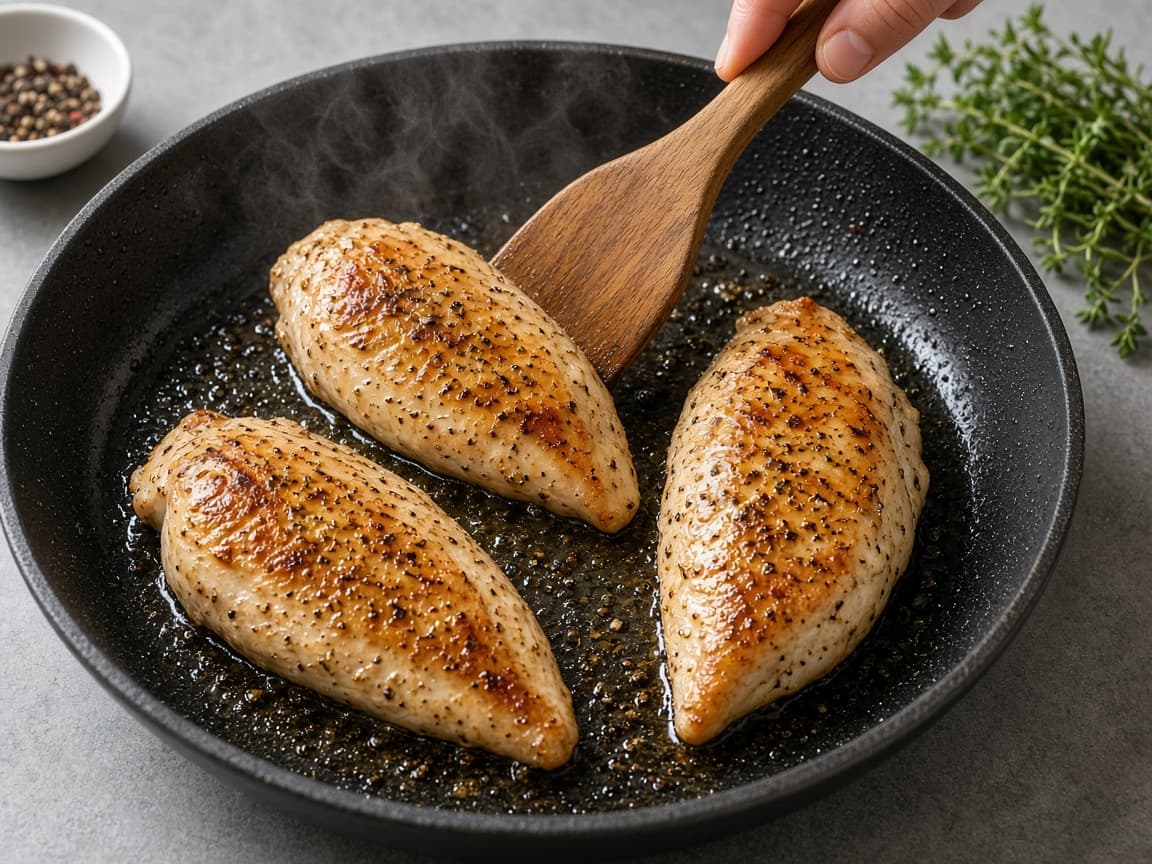
Illustrative: medium heat browns without scorching the outside first. Do this step in order
2a
Heat oil in a skillet over medium
Add 1 to 2 tablespoons oil to a heavy skillet over medium heat. When the oil shimmers, it is ready. Too hot and the outside burns before the center hits 165°F (74°C).
2b
Sear the first side without moving
Lay breasts in the pan and leave them 5 to 7 minutes until the underside is golden. Moving them early tears the crust and cools the pan.
2c
Flip and cook the second side
Turn with tongs and cook another 5 to 7 minutes. Thinner pieces finish faster. If the pan is smoking hard, lower the heat slightly.
2d
Oven option: 400°F (200°C) on a sheet pan
For baking, oil a sheet pan, add seasoned breasts and roast at 400°F (200°C) about 18 to 25 minutes depending on thickness. Still confirm 165°F (74°C) with a thermometer.
Step 03
Verify 165°F (74°C)
The thermometer reading is the finish line for safety and doneness.
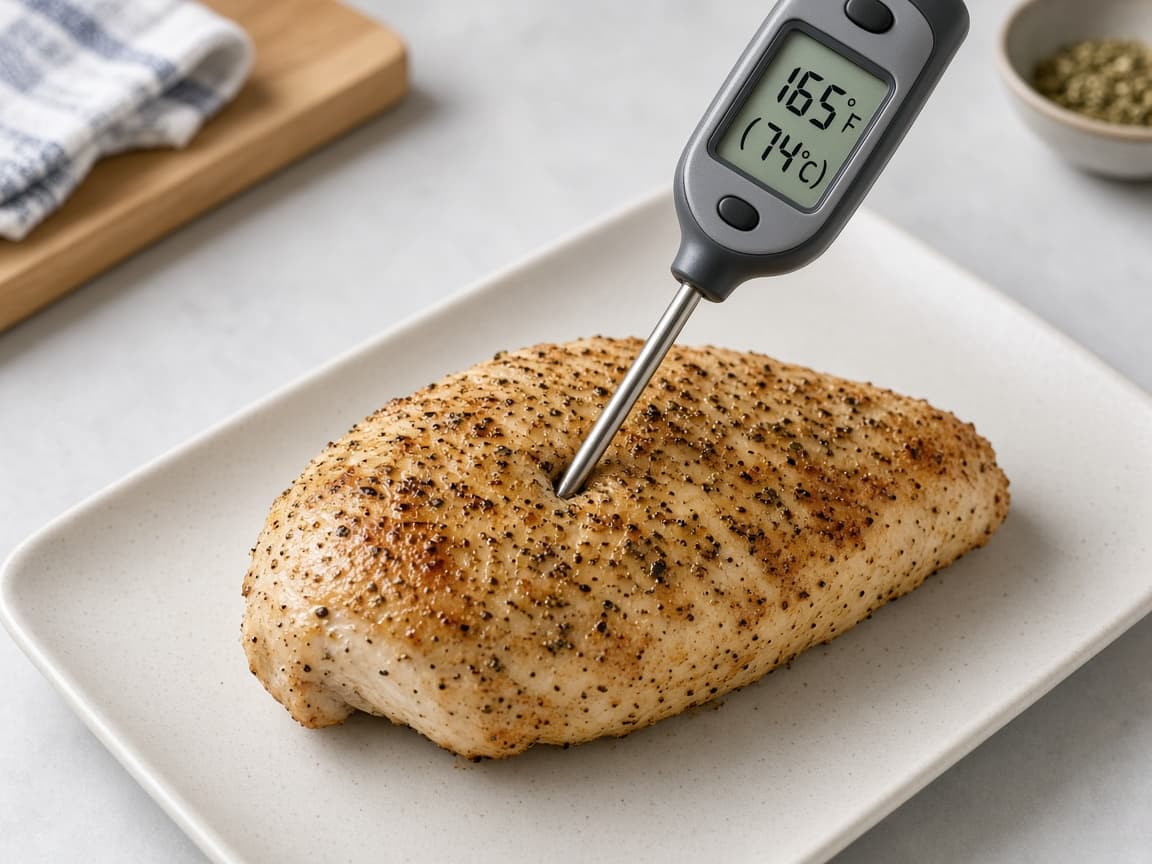
Illustrative: 165°F (74°C) in the thickest part means the chicken is safe to eat. Do this step in order
3a
Probe the thickest part
Insert an instant-read thermometer into the thickest area without touching the pan. Wait for a steady reading.
3b
Confirm 165°F (74°C)
Poultry is safe at 165°F (74°C). If you read lower, cook 1 to 2 minutes more and check again. Do not guess from pink juices alone.
3c
Move chicken to a clean plate
Transfer to a clean plate or board, not the one that held raw meat. Turn off the burner.
Step 04
Rest and slice
A short rest keeps juices in the meat when you cut.
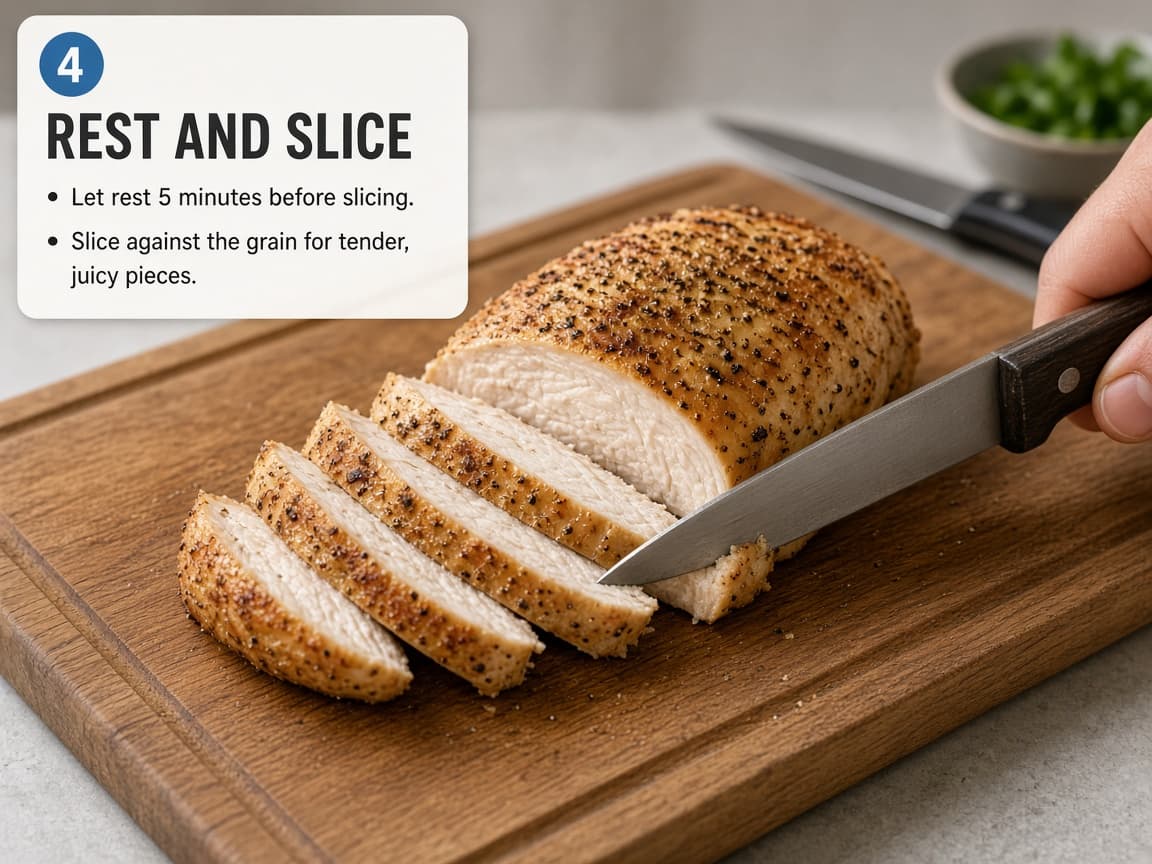
Illustrative: slice across the grain after a short rest. Do this step in order
4a
Rest about 5 minutes
Tent loosely with foil if you want. Resting lets juices redistribute so less liquid runs out onto the board.
4b
Slice across the grain
Look at the muscle fibers and cut across them into slices. Across-the-grain cuts chew more tender than long with-the-grain strips.
4c
Serve or store promptly
Serve hot or cool and refrigerate within 2 hours in a covered container for up to 3 to 4 days. Reheat until steaming hot.
Done when
- Breasts patted dry and evened in thickness
- Seasoned on both sides
- Cooked to 165°F (74°C) in the thickest part
- Rested about 5 minutes
- Sliced across the grain
Eagle Frame's takeaway: even thickness, cook until 165°F (74°C) in the thickest part, then rest before you cut. A thermometer beats guessing from juices or color every time.