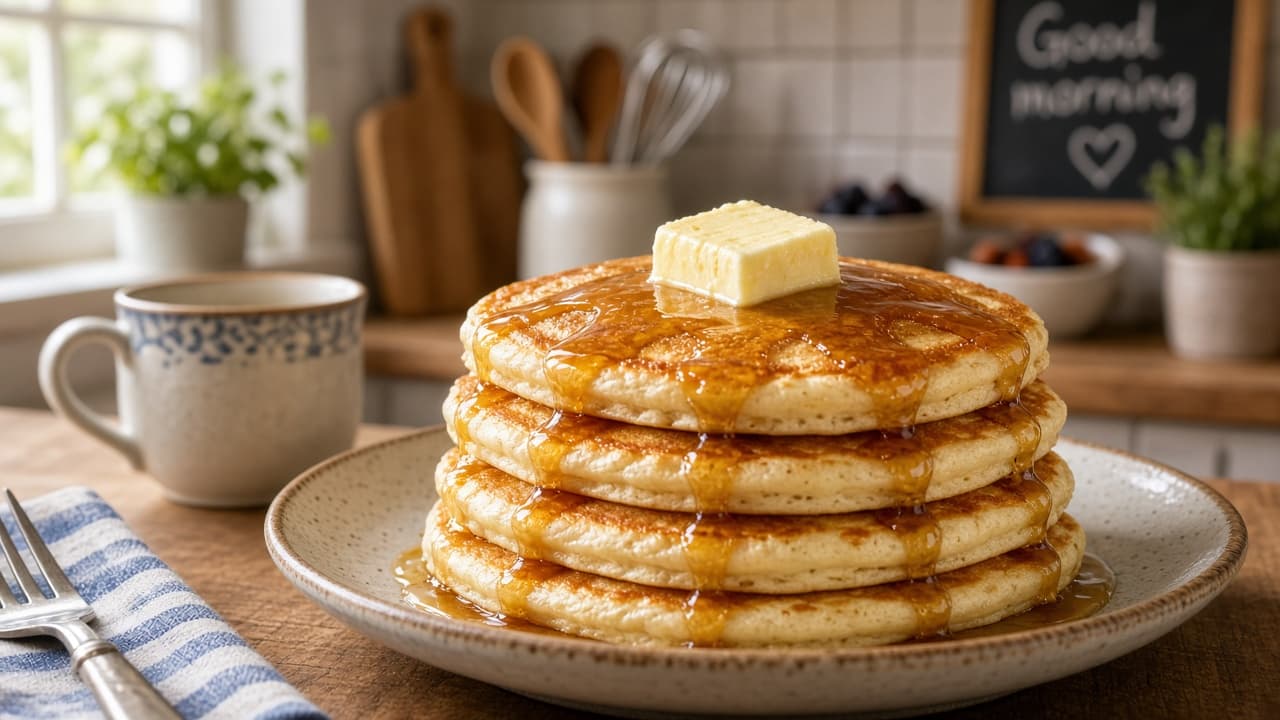
How to make pancakes
Whisk dry and wet ingredients separately, combine until just mixed and cook on a medium griddle. Flip when bubbles set on top for soft pancakes instead of tough ones.
Tough pancakes usually mean overmixed batter. Pale greasy ones usually mean a cool pan or too much fat. The weekday method is simple: mix dry, mix wet, combine gently and cook on steady medium heat.
This guide makes about 8 to 10 medium pancakes from a basic batter: flour, baking powder, salt, sugar, milk, egg and melted butter or oil. You can swap buttermilk for a tangier stack. Keep mix-ins like blueberries for the griddle, not a long stir in the bowl.
Lumps in the batter are fine. A smooth paste means you worked the gluten too hard. Heat the pan until a drop of water skitters, pour about ¼ cup batter per pancake and wait for bubbles on top before flipping once.
You will need two bowls, a whisk, a spatula and a nonstick skillet or griddle. Butter the pan lightly between batches. Serve with maple syrup, fruit or yogurt. Leftovers reheat in a toaster or low oven.
Step-by-step guide
Time: 25 to 30 minutes
What you need
- 1½ cups (190 g) all-purpose flour
- 3½ teaspoons baking powder
- 1 tablespoon sugar
- ¾ teaspoon salt
- 1¼ cups (300 ml) milk
- 1 large egg
- 3 tablespoons melted butter or oil, plus more for the pan
- Two bowls, whisk, spatula, griddle or nonstick skillet
Before you start
- Do not overmix. Stop when dry flour disappears. Small lumps are fine.
- Medium heat only. High heat browns the outside before the center sets.
- Flip once. Pressing pancakes with the spatula squeezes out loft.
Step 01
Mix dry and wet ingredients
Separate bowls keep you from overworking the batter when you combine.
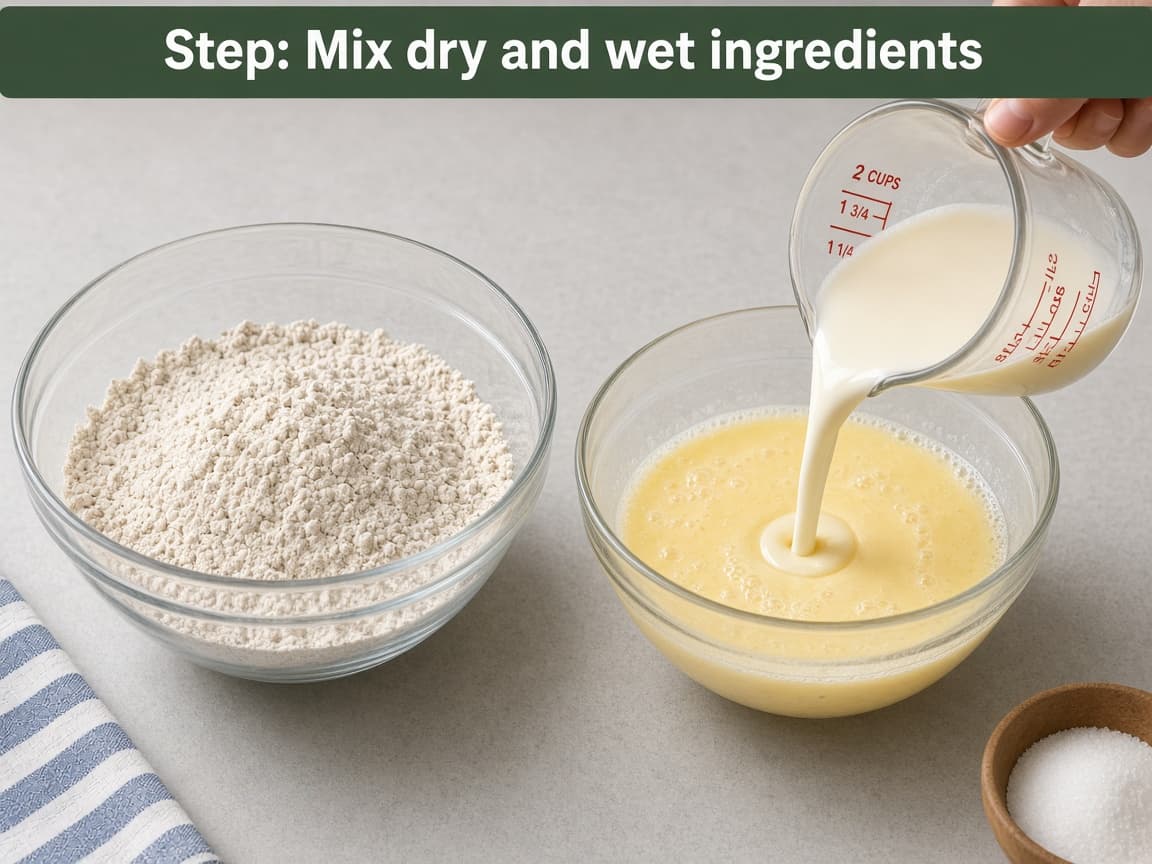
Illustrative: mix dry and wet apart, then bring them together gently. Do this step in order
1a
Whisk the dry ingredients
In a large bowl whisk 1½ cups (190 g) flour, 3½ teaspoons baking powder, 1 tablespoon sugar and ¾ teaspoon salt until evenly combined.
1b
Whisk milk, egg and fat
In a second bowl whisk 1¼ cups (300 ml) milk, 1 large egg and 3 tablespoons melted butter or oil until blended. Let hot melted butter cool slightly so it does not scramble the egg.
1c
Heat the griddle while you mix
Set a skillet or griddle over medium heat so it is ready when the batter is. A properly hot pan is as important as the recipe.
Step 02
Combine into a thick batter
Gentle mixing keeps pancakes tender.
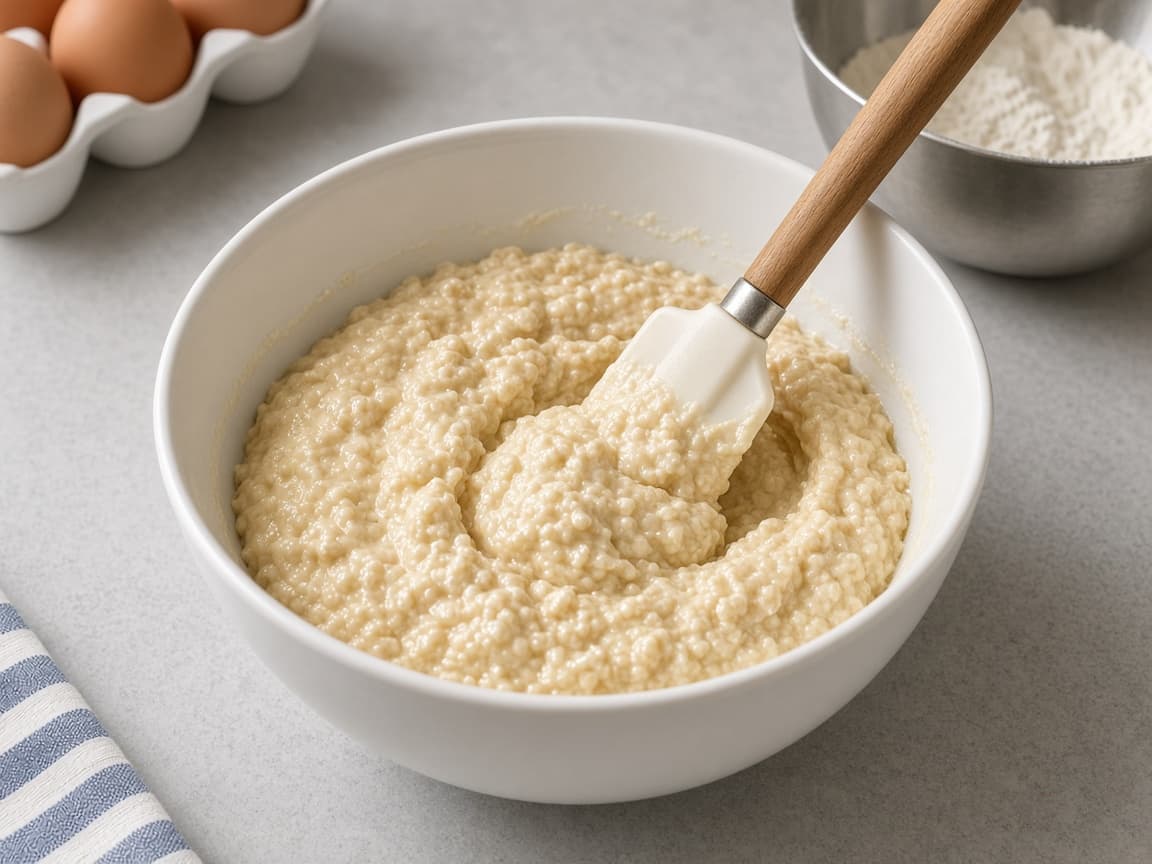
Illustrative: a few lumps are fine. Smooth paste means overmixed. Do this step in order
2a
Pour wet into dry
Make a well in the flour mix and pour in the wet ingredients. This helps you fold from the center outward.
2b
Stir until just combined
Use a spatula or whisk and stop as soon as dry flour disappears. Batter should be thick and pourable with small lumps. Rest 5 minutes if you want slightly taller cakes.
2c
Do not beat until perfectly smooth
Chasing a silky batter develops gluten and deflates loft. Common mistake: whisking hard for another minute after the flour is gone.
Step 03
Cook on medium heat
Steady heat and a light fat coat give even browning.
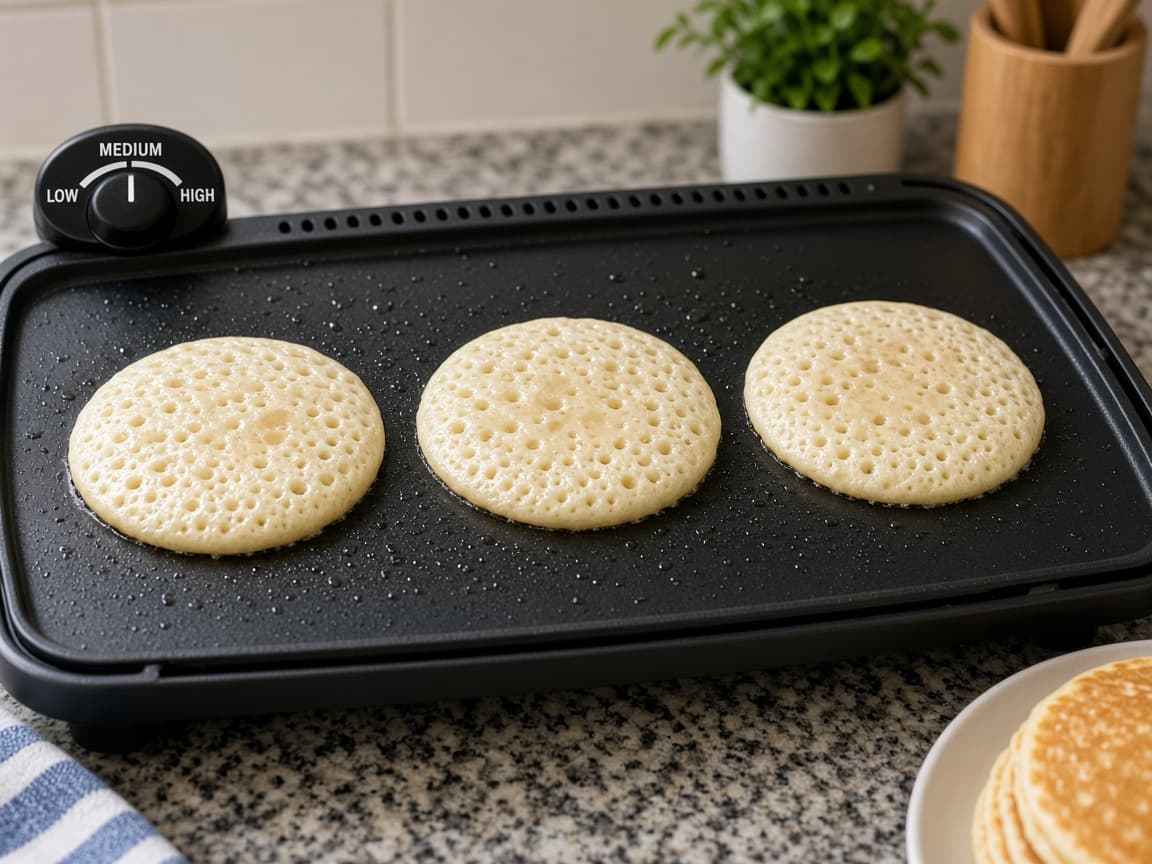
Illustrative: bubbles on top signal it is almost time to flip. Do this step in order
3a
Lightly grease the hot pan
Wipe a thin film of butter or oil on the surface. Too much fat fries the edges and leaves greasy cakes.
3b
Pour about ¼ cup batter per pancake
Use a ¼-cup measure or ladle. Leave space so pancakes do not merge. Adjust heat if the first one browns too fast or stays pale.
3c
Wait for bubbles that hold their shape
When bubbles form across the top and the edges look set (about 2 to 3 minutes), the underside should be golden. Peek with a spatula corner if needed.
3d
Test the pan with the first pancake
Treat the first cake as a heat check. If it is dark outside and raw inside, lower the heat. If it is pale after several minutes, raise the heat slightly.
Step 04
Flip once and finish
One confident flip finishes the cook without crushing the rise.
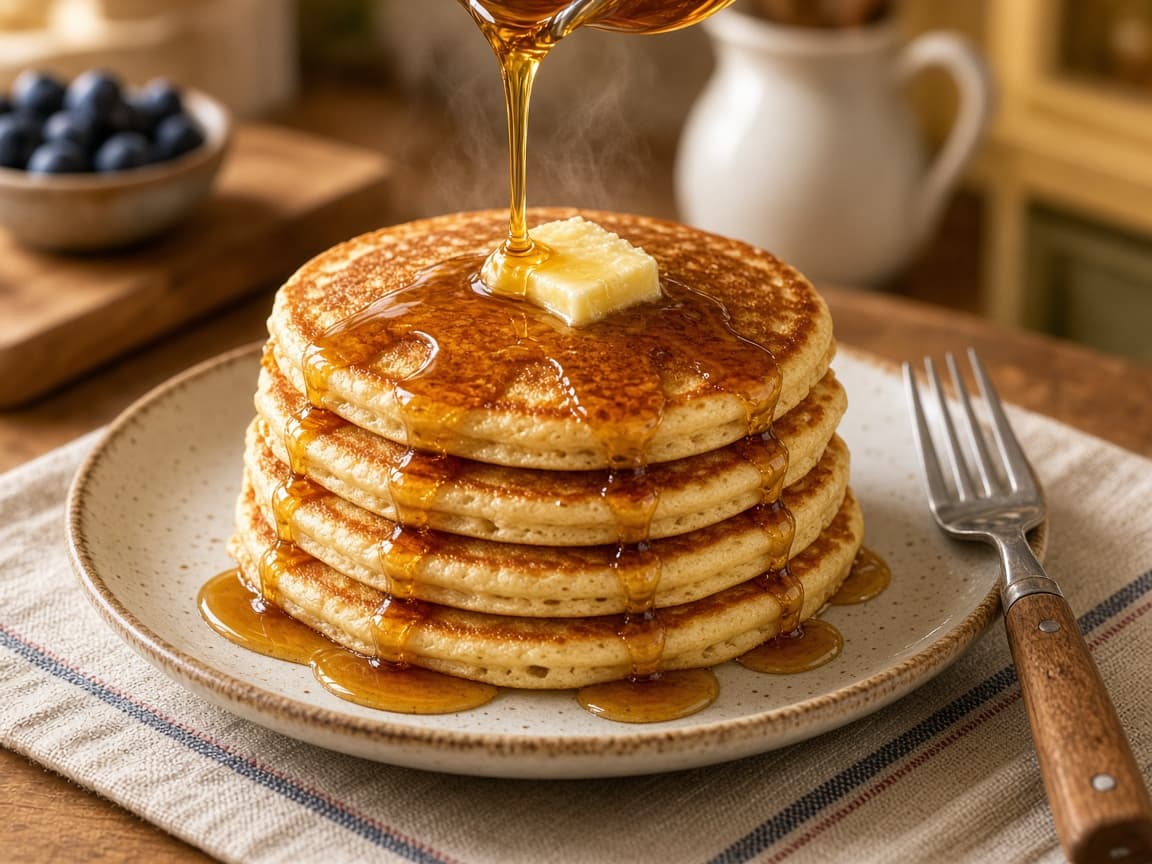
Illustrative: the second side needs less time than the first. Do this step in order
4a
Flip in one motion
Slide a spatula fully under the pancake and turn it. Cook the second side 1 to 2 minutes until golden. Do not press down.
4b
Keep finished pancakes warm
Move cooked pancakes to a plate in a 200°F (95°C) oven if you are making a full batch. Avoid stacking tightly under plastic or they steam soft.
4c
Serve with toppings
Add butter, maple syrup, fruit or yogurt. Refrigerate leftovers up to 2 days or freeze with parchment between cakes.
Done when
- Dry and wet mixed separately
- Batter combined until just mixed
- Pan at steady medium heat
- Flipped when bubbles set
- Golden on both sides
Eagle Frame's takeaway: mix wet into dry until just combined, cook on medium heat and flip when bubbles set on the surface. One flip and a short rest on the plate beat pressing the cakes flat with the spatula.