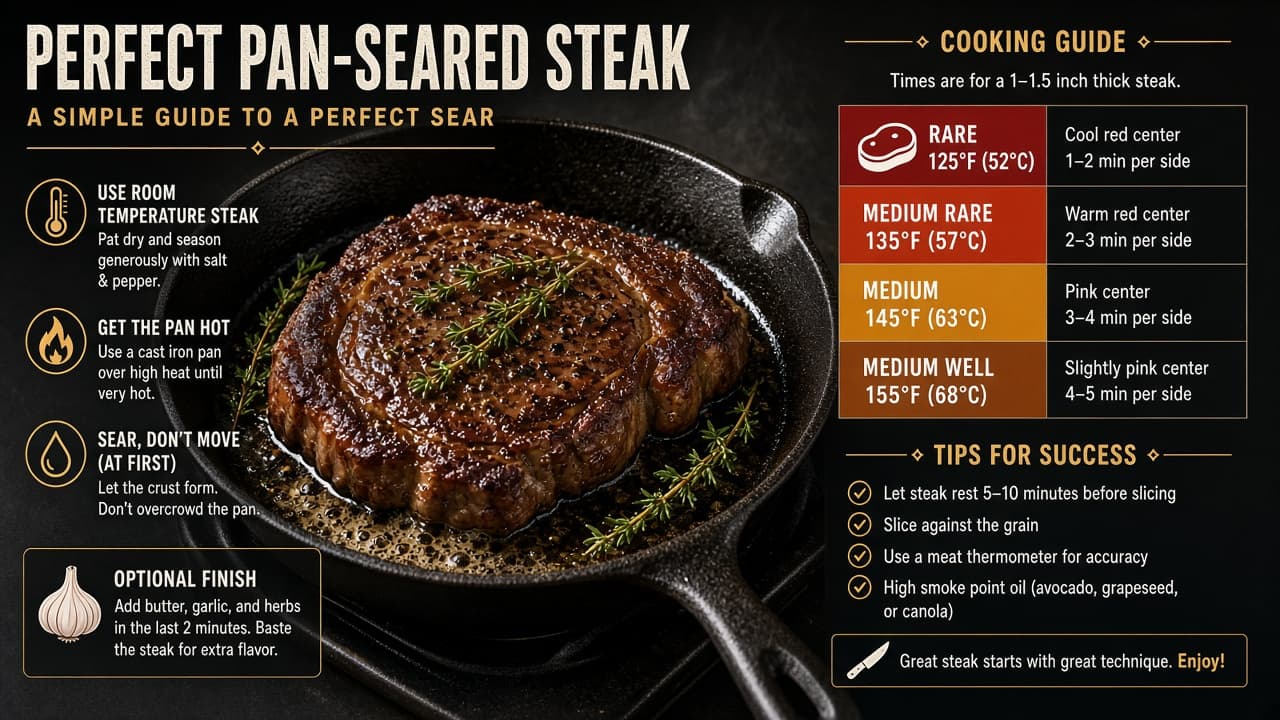
How to cook steak on the stove
Pat steak dry, season well and sear in a ripping-hot pan. Rest before slicing and use a thermometer for doneness: 130°F (54°C) medium-rare after resting toward about 135°F (57°C).
Stovetop steak rewards a dry surface, hard heat and a rest. Wet meat steams. A timid pan turns gray before a crust forms. Cutting too soon dumps juice onto the board instead of keeping it in the slice.
This guide is for a 1 to 1½ inch (2.5 to 4 cm) steak such as ribeye, strip or sirloin in a heavy skillet (cast iron works well). Bring the meat closer to room temperature for 20 to 30 minutes, pat dry, salt and pepper, then sear in a little high-smoke-point oil.
Doneness is temperature, not clock time alone. Pull for medium-rare around 130°F (54°C) and rest to about 135°F (57°C). Medium is about 140°F (60°C) pulling toward 145°F (63°C). USDA advises 145°F (63°C) with a 3-minute rest for whole cuts of beef. Cook ground beef to 160°F (71°C). Choose your target and measure.
You will need a heavy pan, tongs, oil, salt, pepper and an instant-read thermometer. Optional: butter, garlic and thyme for a quick baste at the end. Ventilate well. Searing makes smoke.
Step-by-step guide
Time: 30 to 40 minutes including temper and rest
What you need
- 1 steak, 1 to 1½ inches thick (ribeye, strip or sirloin)
- Kosher salt and black pepper
- 1 tablespoon high-smoke-point oil (canola, grapeseed or similar)
- Heavy skillet (cast iron preferred)
- Tongs
- Instant-read thermometer
- Optional: 1 tablespoon butter, smashed garlic clove, thyme sprig
Before you start
- Searing creates smoke. Turn on the fan and open a window.
- Hot oil can spit. Dry the steak well before it hits the pan.
- For whole cuts of beef, USDA recommends 145°F (63°C) with a 3-minute rest. Lower temps are preference choices with higher risk.
Step 01
Temper, dry and season
A dry salted surface is what browns hard in a hot pan.
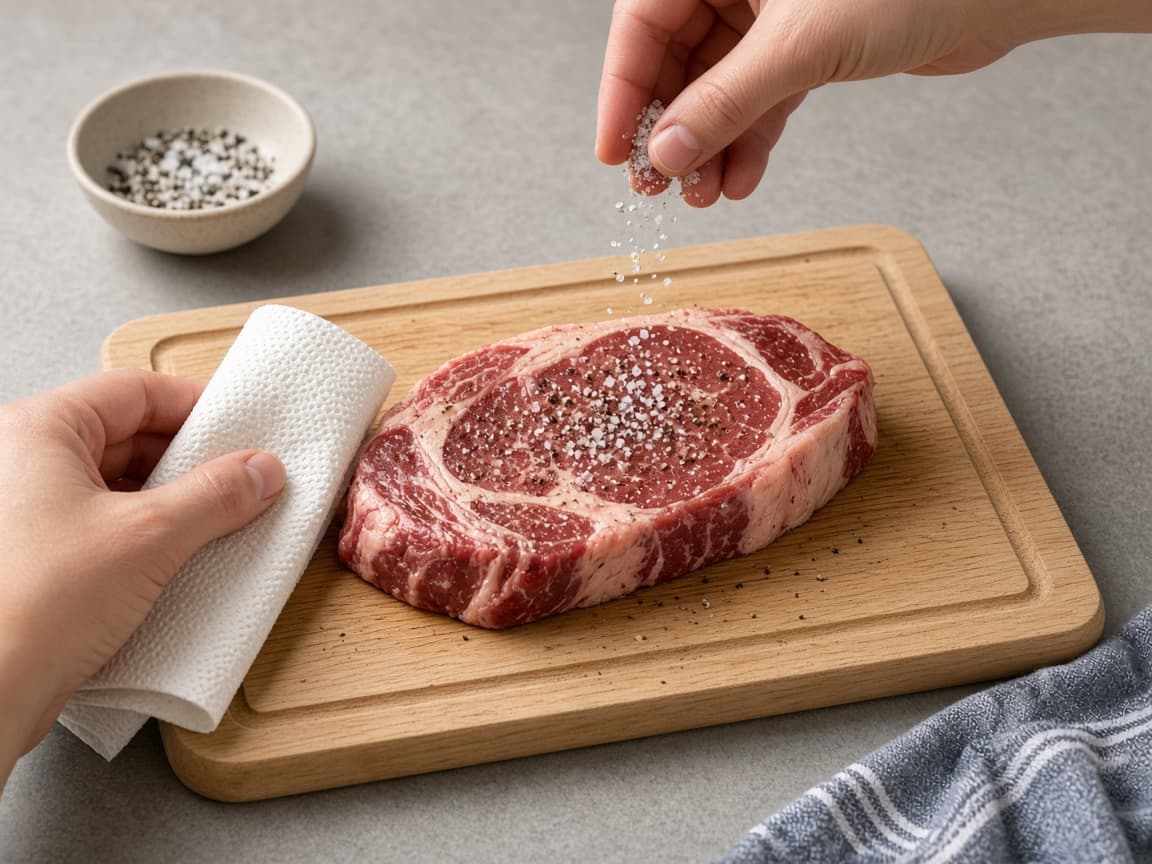
Illustrative: dry seasoning sticks and browns better than wet meat. Do this step in order
1a
Take steak out 20 to 30 minutes ahead
Let a fridge-cold steak sit on a plate at room temperature for 20 to 30 minutes. Ice-cold centers lag while the outside overcooks.
1b
Pat completely dry
Blot both sides with paper towels right before seasoning. Surface moisture blocks browning.
1c
Salt and pepper generously
Season both sides with kosher salt and black pepper. Press gently so seasoning sticks. Oil the pan, not a soaked steak.
Step 02
Heat the pan and sear
Hard heat builds the crust quickly.
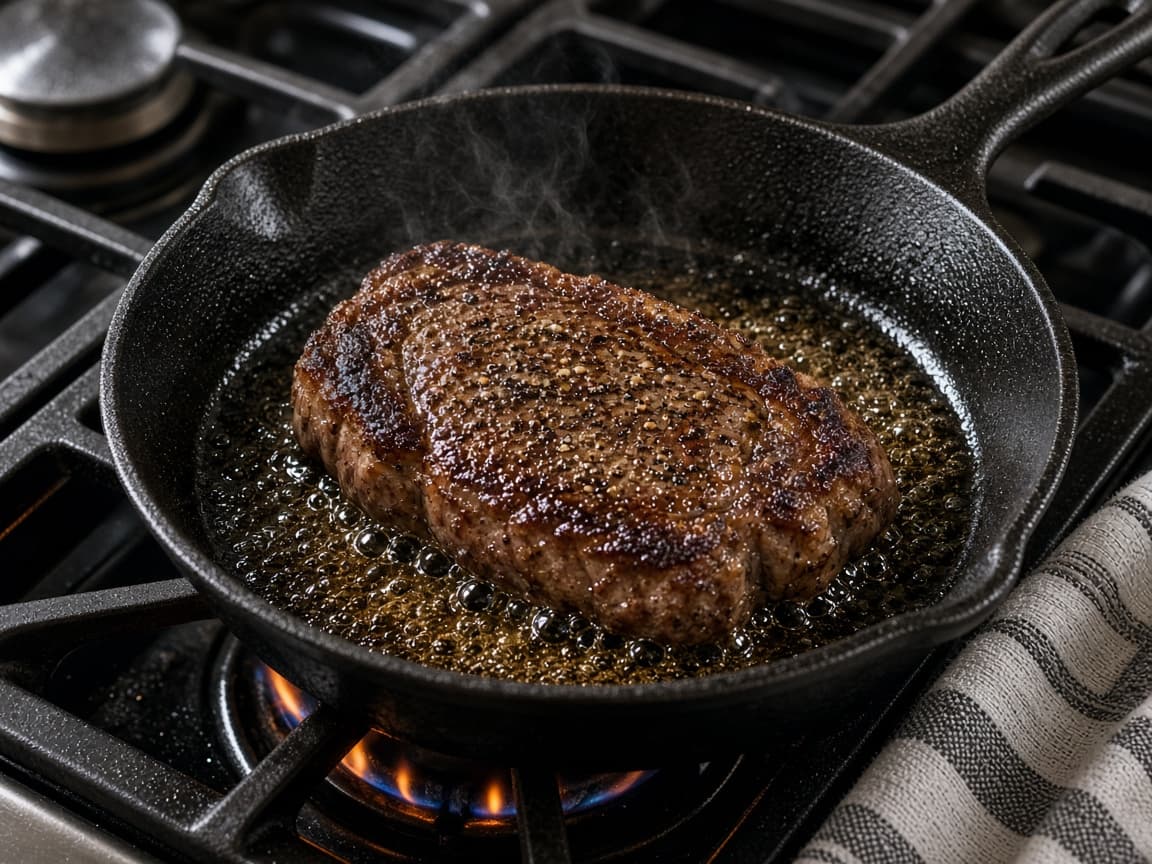
Illustrative: a ripping-hot pan is the point of stovetop steak. Do this step in order
2a
Preheat the skillet until very hot
Set a heavy pan over medium-high to high heat for a few minutes. Add oil and wait until it shimmers and flows easily.
2b
Lay the steak in and leave it
Place the steak away from you to avoid splash. Do not move it for 2 to 4 minutes until a deep brown crust forms. Peek once at a corner if needed.
2c
Flip and sear the second side
Turn with tongs and sear another 2 to 4 minutes. Sear the fat edge for 30 to 60 seconds if there is a thick fat cap.
2d
Optional butter baste
Lower heat slightly. Add butter, garlic and thyme. Tilt the pan and spoon foaming butter over the steak for 30 to 60 seconds.
Step 03
Check temperature
Pull the steak at your target knowing it rises a few degrees while resting.
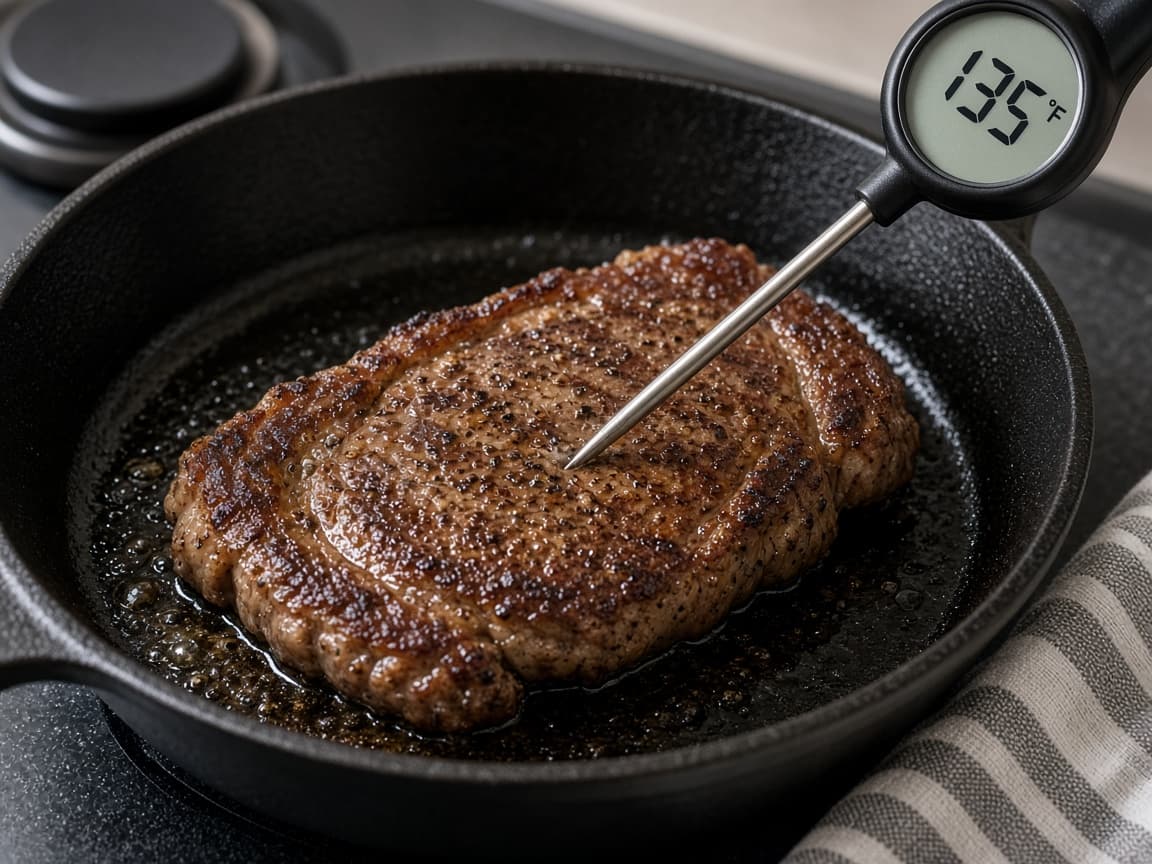
Illustrative: temperature beats cutting a peek hole in the middle. Do this step in order
3a
Probe the center from the side
Insert the thermometer into the thickest center. Avoid hitting the pan or a large fat pocket.
3b
Know common pull temperatures
Rough pull guides before rest: rare 120°F (49°C), medium-rare 130°F (54°C), medium 140°F (60°C). USDA whole-beef guidance is 145°F (63°C) with a 3-minute rest. Choose your target on purpose.
3c
Cook longer in short bursts if needed
If the crust is done but the center is low, lower the heat and flip every minute until you hit your number. Do not blast on high until the outside burns.
Step 04
Rest and slice
Resting keeps more juice in each slice.
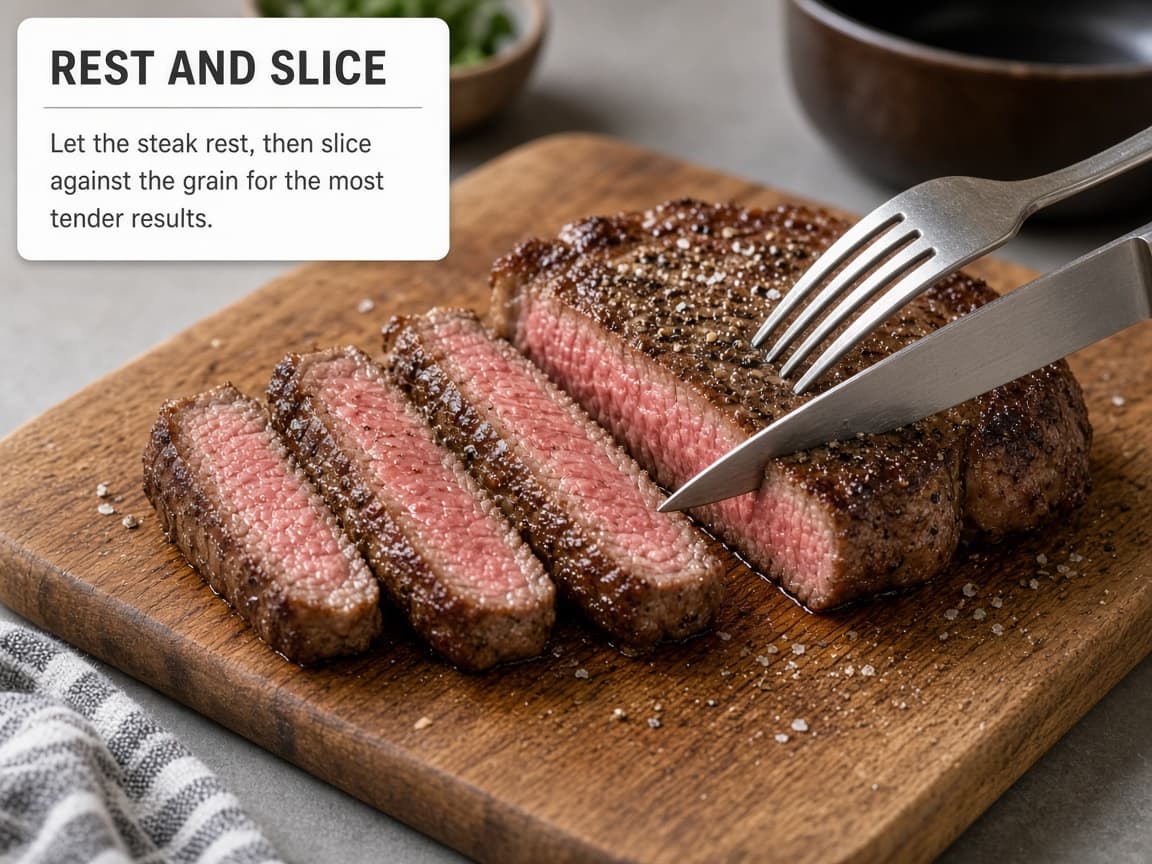
Illustrative: rest first, then slice against the grain. Do this step in order
4a
Rest 5 to 10 minutes
Move steak to a warm plate or board. Tent loosely with foil. Thicker steaks need closer to 10 minutes.
4b
Slice against the grain
Find the direction of the muscle fibers and cut across them. Against-the-grain slices chew more tender.
4c
Serve with pan juices
Spoon any rested juices over the slices. Serve immediately. Leftover steak is best cold in salads or gently reheated so it does not climb past your preferred doneness.
Done when
- Steak patted dry and seasoned
- Pan very hot before the sear
- Both sides deeply browned
- Thermometer hit your target
- Rested 5 to 10 minutes before slicing
Eagle Frame's takeaway: dry the steak, get the pan very hot, sear both sides and rest before you cut. Use a thermometer for the doneness you want and remember whole-muscle beef safety guidance is 145°F (63°C) with a short rest if you are cooking for food-safe medium.