How to lose weight (steady habits)
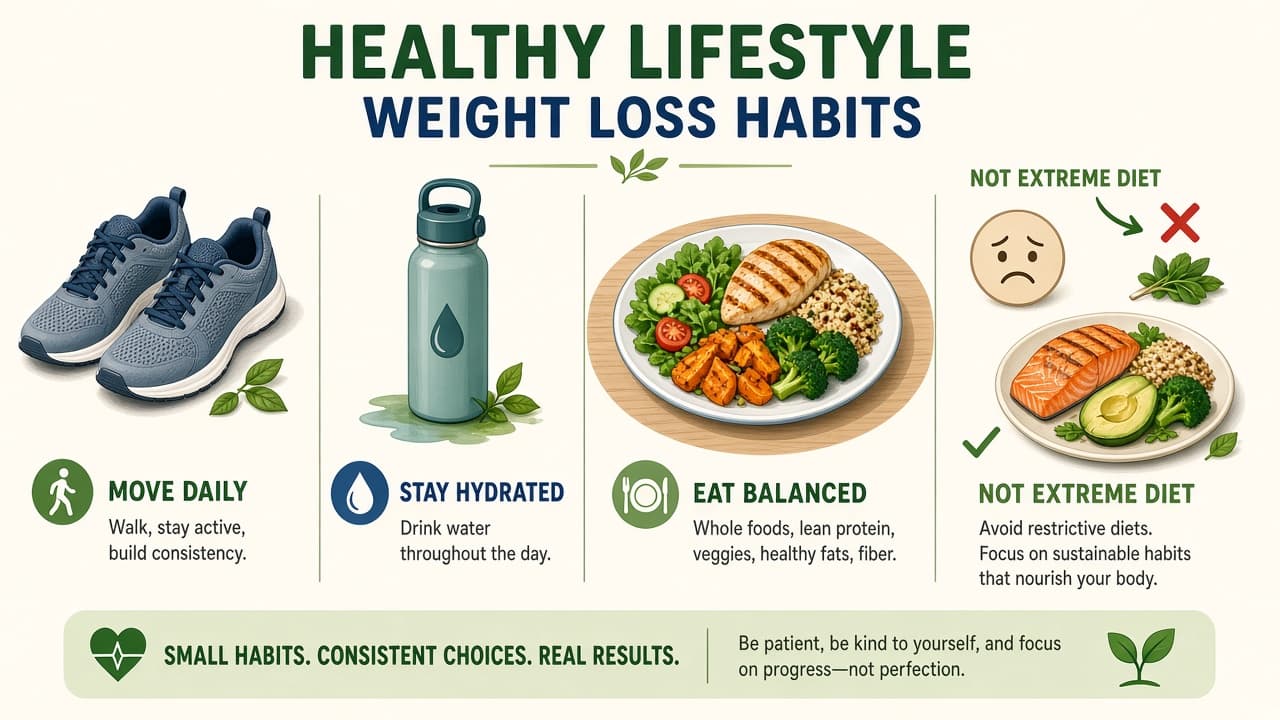
Build a sustainable calorie gap with protein-rich meals, daily walking, better sleep and patience. This is habit coaching, not a medical weight-loss plan.
Steady weight loss is usually a small calorie gap kept up for weeks, not a crash diet that lasts five days. Most people do better when they raise protein, walk more, sleep enough and track rough portions instead of chasing a miracle cleanse.
This guide is general wellness information. It is not a substitute for medical care. Talk with a clinician before you start a big diet or exercise change if you take medication, have a history of eating disorders, are pregnant or have another health condition. Sudden or unexplained weight change also needs clinical review.
Think in habits you can keep on a busy Tuesday. A plan that only works when life is quiet will not stick. Aim for gradual change: roughly half a kilogram to one kilogram (about one to two pounds) per week is a common public-health pace for many adults, but your clinician may set a different target.
You do not need a perfect week. You need repeatable meals, a daily movement floor and a way to notice when stress or alcohol quietly undoes the gap. Log simply. Adjust weekly. Ignore products that promise guaranteed fat burn without effort.
Step-by-step guide
Time: Two to four weeks to lock habits; ongoing for results
What you need
- Kitchen scale or measuring cups (optional but helpful)
- Notebook or notes app for a simple food and step log
- Comfortable walking shoes
- Grocery list built around protein, produce and fiber
Before you start
- Not a substitute for medical care. Seek clinician advice for personal targets, especially with illness, pregnancy, eating-disorder history or prescription drugs that affect weight.
- Do not use extreme restriction, detox teas or unlabelled fat-burner pills. Rapid loss can be unsafe.
- If you feel faint, lose weight without trying or develop binge-restrict cycles, stop DIY plans and get clinical help.
Step 01
Set a realistic gap and a way to measure it
Pick a modest deficit you can live with, then choose one tracking method you will actually use.
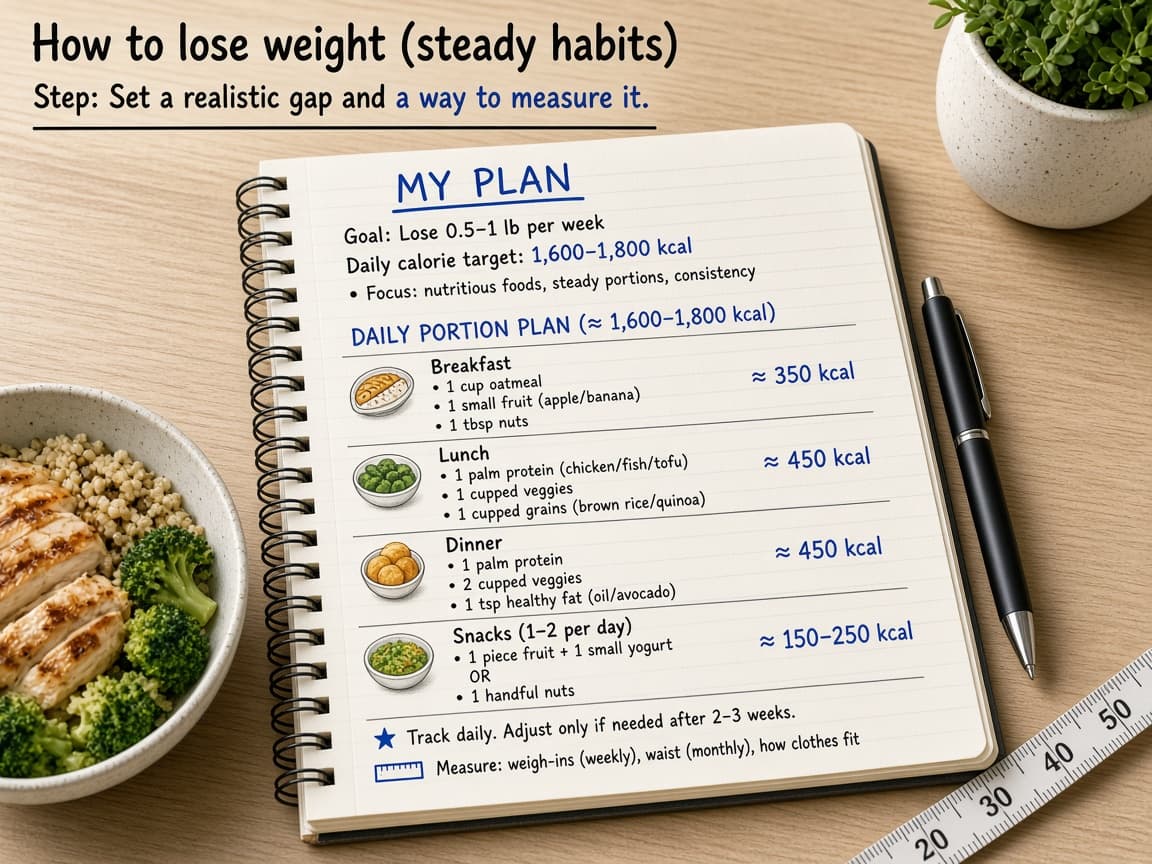
A written plan beats a vague promise to eat less. Do this step in order
1a
Estimate maintenance, then trim modestly
Many adults start by estimating maintenance calories (online calculators are rough) and cutting about 300 to 500 calories per day. If that feels too aggressive, cut less. Ask a clinician or registered dietitian for a personal number when health conditions apply.
1b
Choose one tracking method
Options include weighing food a few times a week, using a plate method (half vegetables, quarter protein, quarter starch) or logging meals in an app. Pick one. Switching methods every day hides the pattern.
1c
Weigh or measure once a week the same way
Use the same scale, same time of day and similar clothing. Daily weight swings from water and salt. Weekly averages tell a clearer story.
1d
Write a non-scale goal too
Add one habit goal such as 7,000 steps or protein at breakfast. Progress is more than the number on the scale.
Step 02
Build plates around protein, produce and fiber
Food quality and fullness matter as much as the calorie math.
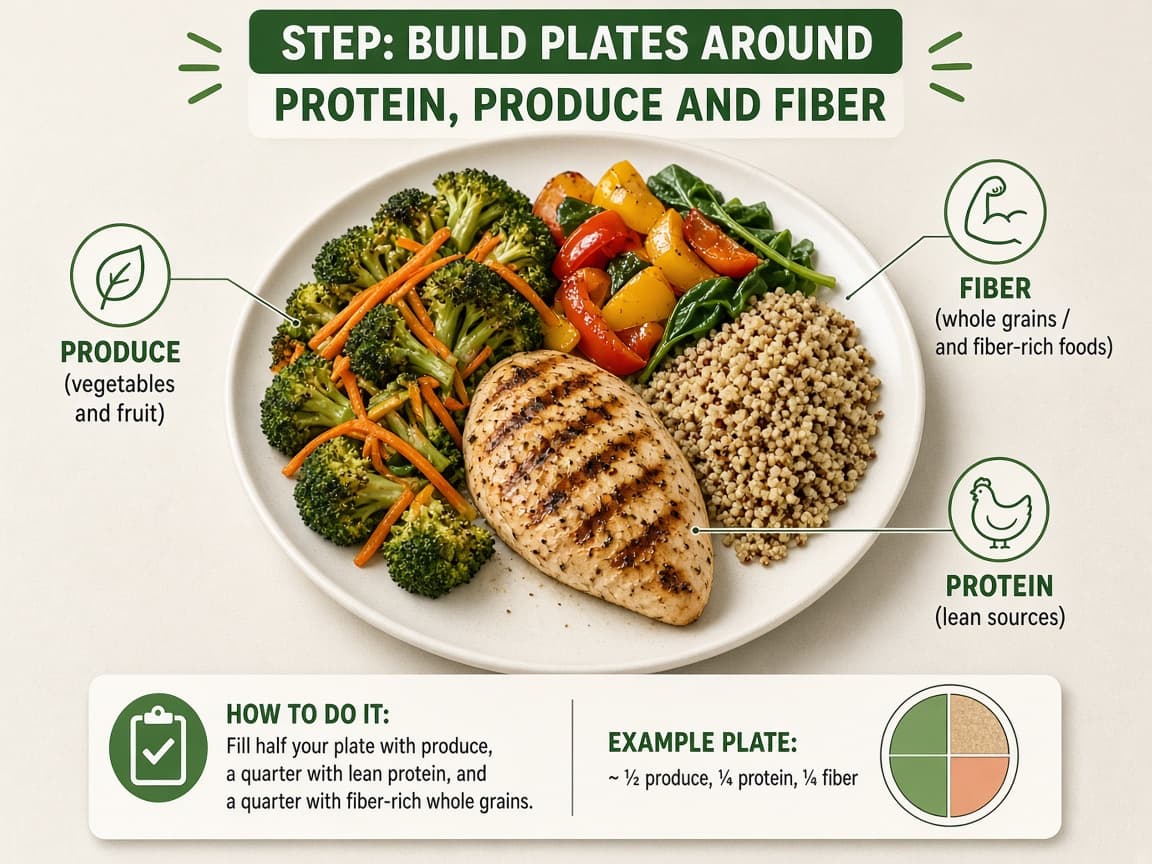
Protein and fiber make a smaller calorie budget feel workable. Do this step in order
2a
Put a protein source on most meals
Eggs, Greek yogurt, fish, poultry, tofu, beans or lean meat help satiety. Aim for a palm-sized serving at meals unless a clinician gives different guidance.
2b
Fill half the plate with vegetables or fruit
Volume without many calories helps. Keep a bag of frozen vegetables for nights you will not chop.
2c
Choose fiber-rich carbs and watch liquid calories
Favor oats, beans, fruit and whole grains over constant sweets. Soft drinks, juices and fancy coffee drinks often hide the deficit. Swap most drinks for water or unsweetened tea.
2d
Plan two backup meals for busy days
Decide now what you eat when tired: for example a grocery rotisserie chicken with salad or eggs on toast with fruit. Hunger plus no plan is how takeout erases the week.
Step 03
Move daily and protect sleep
Walking and rest support appetite control and recovery. They are not optional extras.
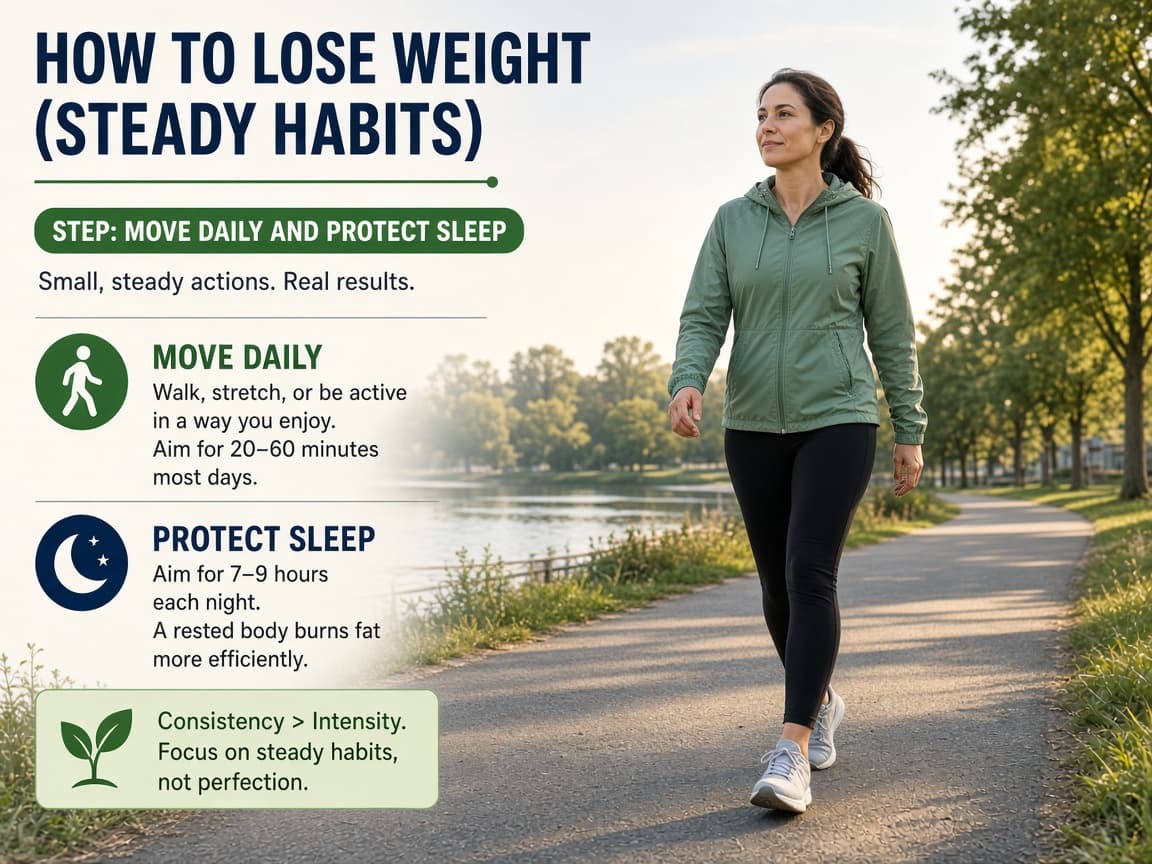
Daily walking is the most accessible movement base for many people. Do this step in order
3a
Set a daily step or walk floor
Start where you are and add about 1,000 to 2,000 steps or a 20 to 30 minute brisk walk most days. Strength training two days a week helps keep muscle while you lose fat if your clinician clears it.
3b
Keep sleep and stress in the plan
Short sleep and high stress often push late snacking. Protect a wind-down and a consistent wake time. See our sleep guide ideas if nights are chaotic.
3c
Limit alcohol while you are creating the gap
Alcohol adds calories and lowers food restraint. If you drink, count it honestly or pause during the first weeks of habit building.
3d
Stop if pain or red-flag symptoms appear
Chest pain, severe dizziness or joint pain that worsens with activity needs clinical care, not a tougher workout.
Step 04
Review weekly and adjust without panic
Plateaus are normal. Change one lever at a time and stay patient.
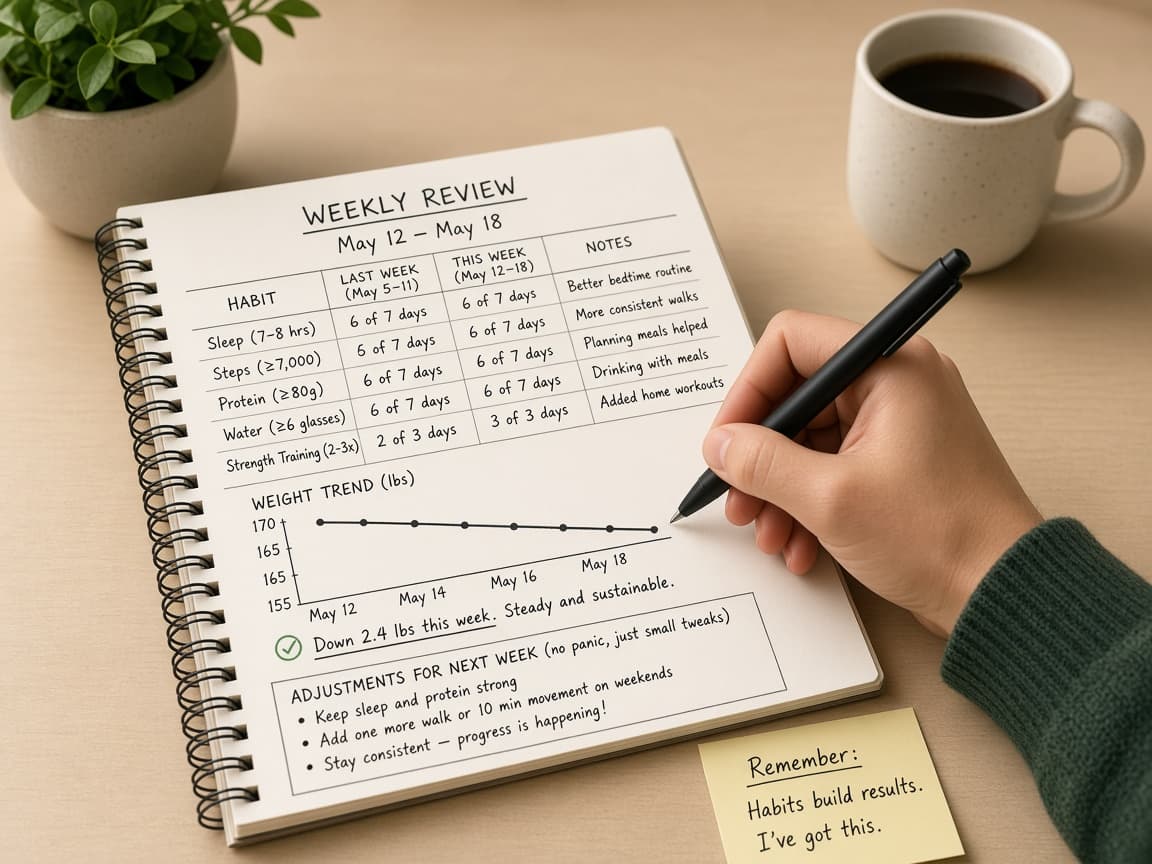
Weekly review turns frustration into a small adjustment. Do this step in order
4a
Look at the week, not one bad meal
Ask what went well three times. Keep those. Fix one friction point such as afternoon snacks or weekend brunches.
4b
Adjust portions or steps by a little
If weight is flat for two to three weeks and your log is honest, trim a small snack, add a short walk or tighten weekend portions. Do not slash another 1,000 calories overnight.
4c
Use clothes or photos if the scale stalls
Muscle gain, water retention and menstrual cycles can hide fat loss. How clothes fit still counts.
4d
Book clinical help when DIY is not enough
If you have obesity-related conditions, need medication review or keep cycling through extremes, a clinician or dietitian is the next step. This guide does not replace that care.
Done when
- Rough daily calorie or portion plan written down
- Protein source on most plates
- Daily walking target set
- Sleep window protected
- Weekly weigh-in or measurement routine chosen
Eagle Frame's takeaway: build a modest calorie gap with protein-forward plates, daily walking and steadier sleep, then review progress with patience. See a clinician when health history or medication makes DIY dieting unsafe. This article is habit coaching, not a diagnosis or prescription.