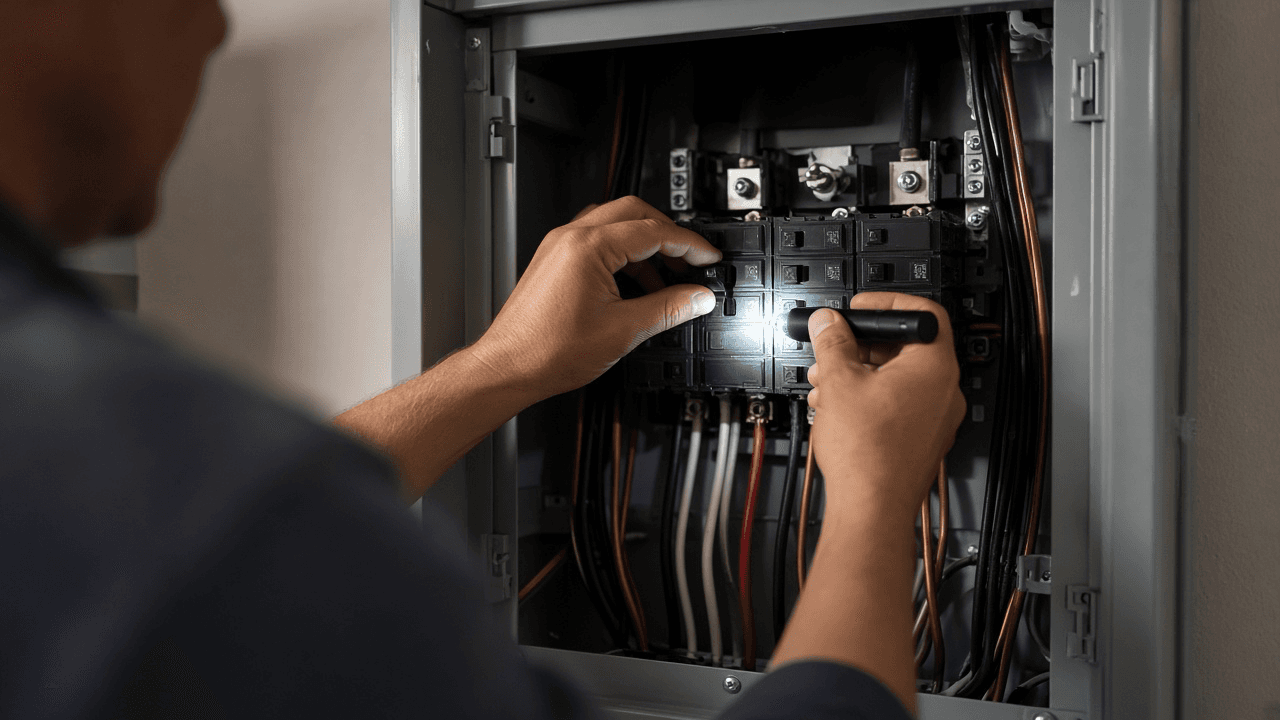
How to reset a circuit breaker
Restore power after a tripped breaker by switching off affected devices, finding the correct panel switch, pushing it fully off then back on and calling an electrician if it trips again.
A circuit breaker is a safety switch inside your electrical panel. When too much current flows on one circuit, the breaker trips to off to cut power before wires overheat. That is different from a blown fuse in older homes, but the idea is the same: protect the wiring and reduce fire risk.
Trips often follow a space heater, hair dryer, microwave and toaster running on the same kitchen circuit, or a faulty appliance, loose plug or damaged cord. Water near outlets in bathrooms and laundry rooms can also trip a ground-fault or arc-fault breaker. A single trip after a known overload is common. Immediate re-trips, buzzing, heat or smell are not.
Before you reset, unplug or switch off the devices on that circuit. Standing water, burning smell, buzzing from the panel or a breaker that feels hot means stop and call a licensed electrician. Do not force a breaker that will not stay on, and never swap in a higher amp rating to solve overloads.
Modern panels may mix standard breakers with GFCI or AFCI types that have a test button. Labels on the door map breaker numbers to rooms. A flashlight helps in a dark garage or closet panel. The Consumer Product Safety Commission says a trip should be investigated before the breaker is reset. An overload may be obvious, but a short circuit, damaged receptacle or failing appliance can produce the same warning.
A successful reset is only the start of the check. Restore one small load at a time and watch for heat, crackling, sparks, a sharp electrical smell or another trip. Leave the breaker off and call a licensed electrician if any warning returns, if the panel is damaged or if you cannot identify a safe cause.
Step-by-step guide
Time: 5 to 15 minutes if the trip was a one-time overload
What you need
- Flashlight for a dim panel area
- Non-contact voltage tester (optional, for confidence after reset)
- Phone to note which breaker controls which room
- Dry shoes and clear floor space in front of the panel
- Notepad or notes app for loads and labels
- Contact details for a licensed electrician
Before you start
- Do not touch the panel with wet hands or while standing in water.
- Burning smell, scorch marks or a hot breaker require an electrician, not another reset.
- A breaker that trips again immediately may indicate a serious fault.
- Never bypass a breaker or replace it with a higher amp rating on your own.
Step 01
Shut down loads on the dead circuit
Reduce the chance of an instant re-trip by removing what drew too much power.
Do this step in order
1a
Confirm which rooms lost power
Walk through every room that went dark and note lights, outlets and hardwired appliances that stopped. Check whether neighbors or the whole house are also out before you assume a single branch trip. Leave refrigerators and medical equipment alone unless you know they sit on the affected circuit and you have a safe backup plan.
1b
Unplug heat-heavy appliances
Unplug space heaters, kettles, irons, hair dryers, toasters and similar high-wattage devices by gripping the plug, not the cord. Switch wall lights off on the dead circuit so they do not all surge back at once. Keep suspect devices that sparked, smoked or shocked you unplugged for repair or replacement.
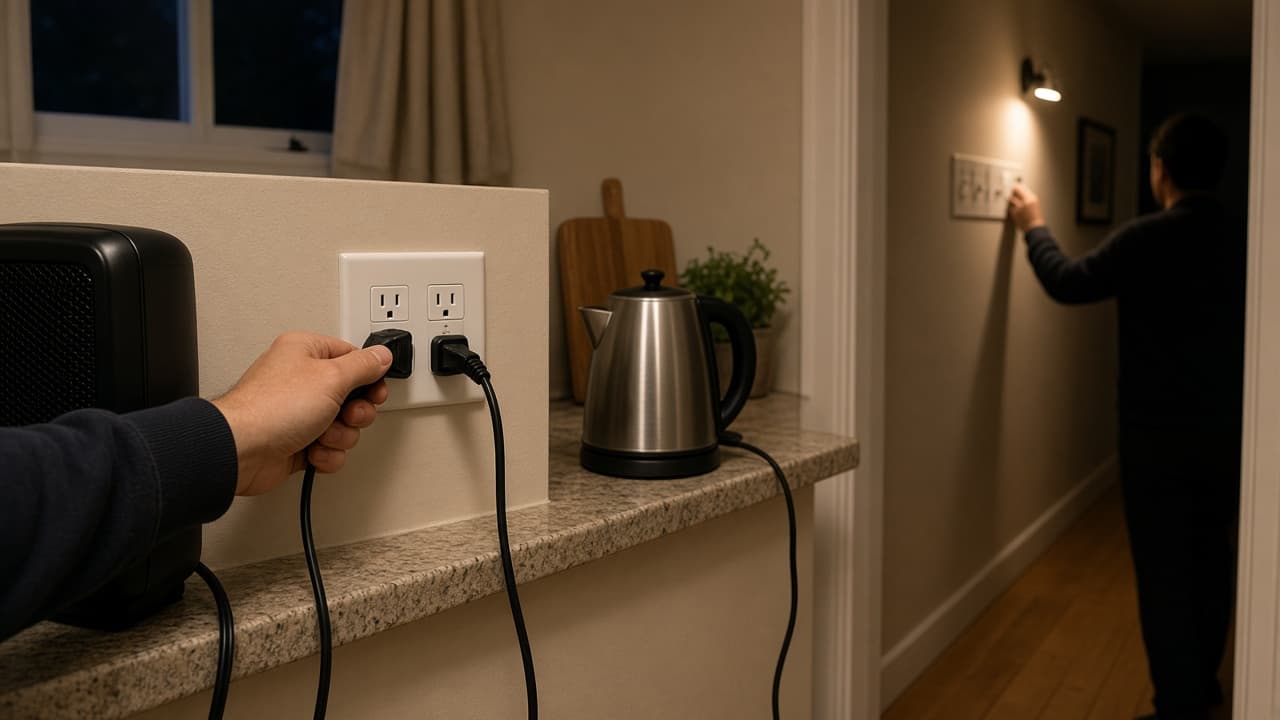
Pull the plug, not the cord, when you clear the circuit. 1c
Write down what was running when power dropped
List every heater, countertop appliance and tool that was on at the moment of the trip, including items in nearby rooms on the same circuit. That list helps you spot an overload later and gives an electrician a useful starting point if the breaker will not stay on. Do not move a suspect appliance to another circuit simply to see whether it trips again.
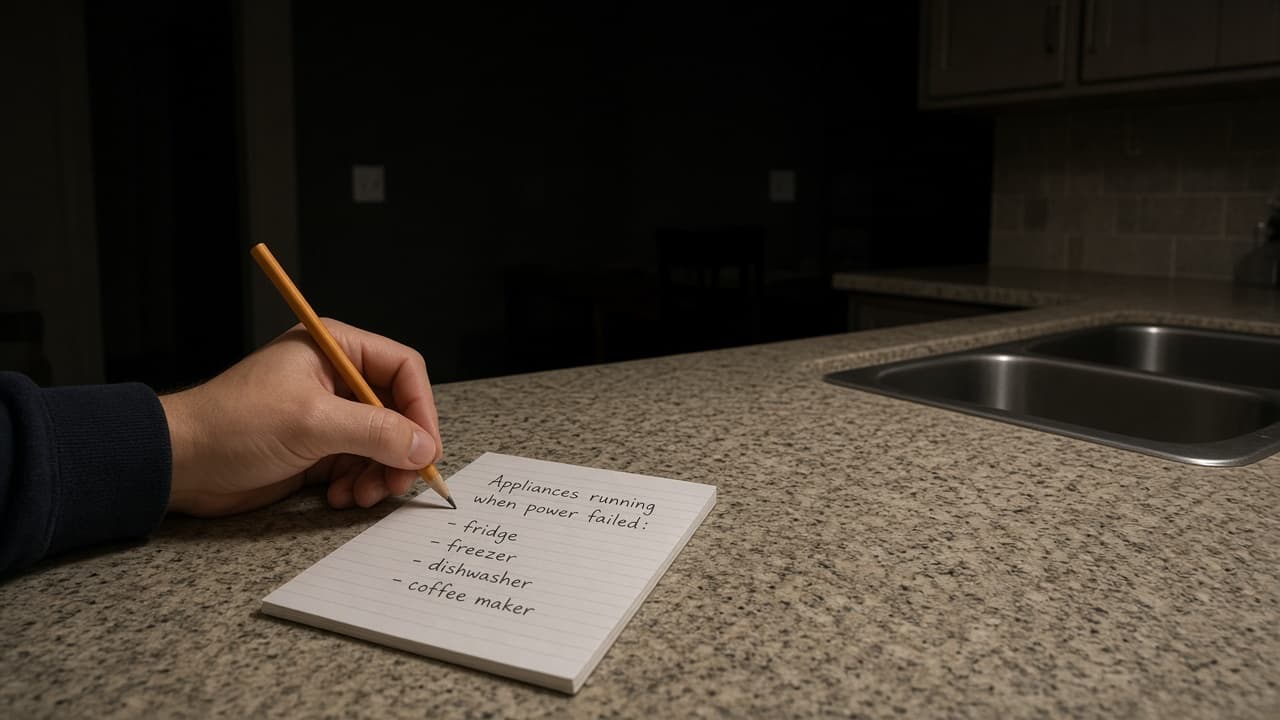
A short written list beats guessing after the lights return. 1d
Common mistake: squeezing toward a blocked or risky panel
Common mistake: rushing the panel while boxes, laundry and wet floors still block a clean exit. Move storage far enough to open the door fully, keep hands and shoes dry and use a flashlight rather than a candle. If the panel is smoking, sparking, buzzing loudly, surrounded by water or giving off a burning smell, leave it closed and call for professional help.
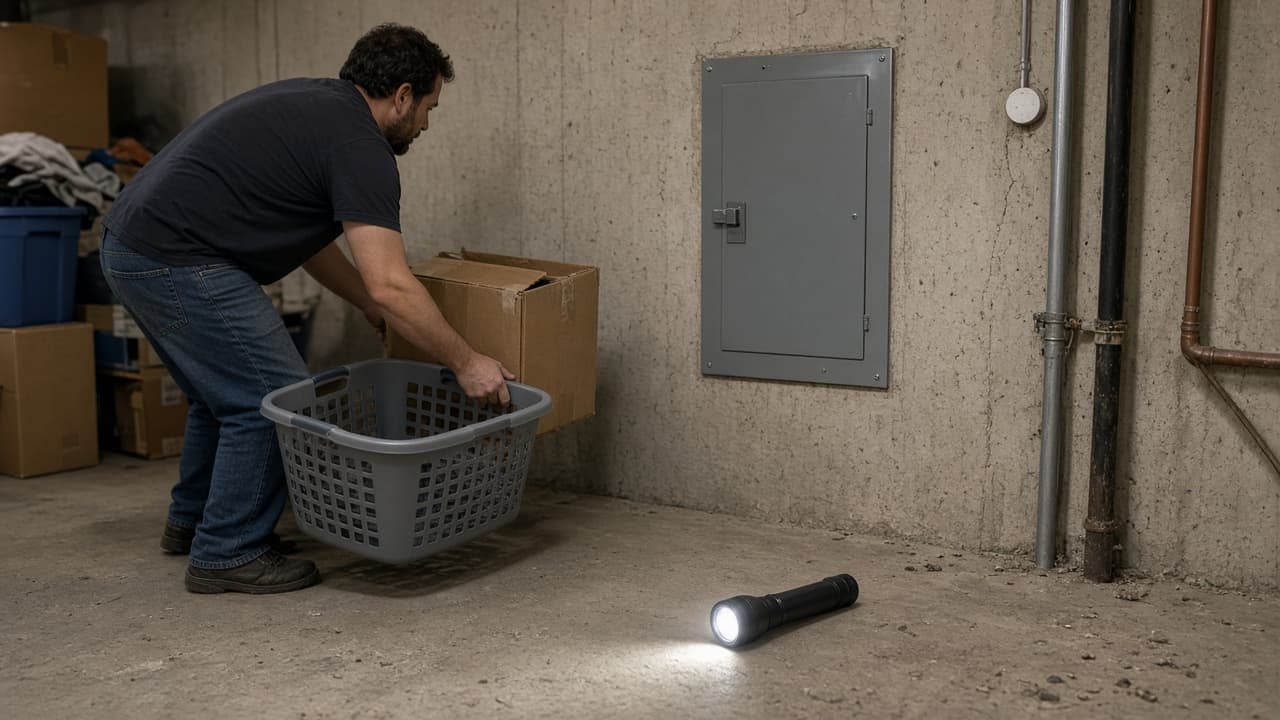
Clear a dry path before you open the panel door.
Step 02
Open the panel and find the tripped breaker
The tripped switch usually sits between full on and full off, or looks slightly loose compared with neighbors.
Do this step in order
2a
Open only the hinged outer door
Stand on a dry floor and open the hinged outer door only. Do not remove the screwed metal cover that hides live bus bars and wiring. If you cannot identify breakers without removing that cover, stop and call a licensed electrician.
2b
Read the directory with a flashlight
Shine a light on the circuit directory and match the dark room or appliance to a breaker number. Scan handles without touching wiring or screws. If labels are blank or wrong, treat identification as provisional and plan a proper mapping later with another adult.
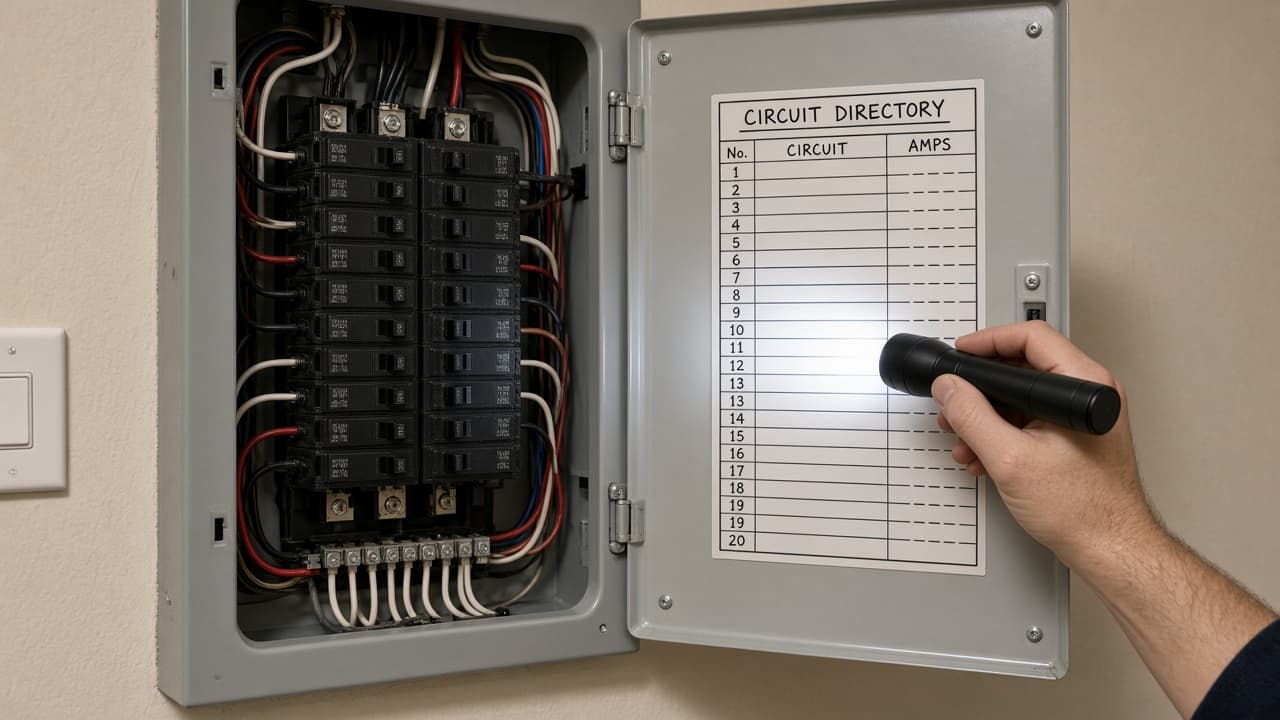
Match the dark room to a breaker number before you touch a handle. 2c
Find the handle that is not fully on
Compare every branch breaker with its neighbors. A tripped handle often rests in the middle and may feel springy rather than firmly latched. Some GFCI or AFCI breakers show a colored indicator, so follow the legend printed on that breaker before you move it.
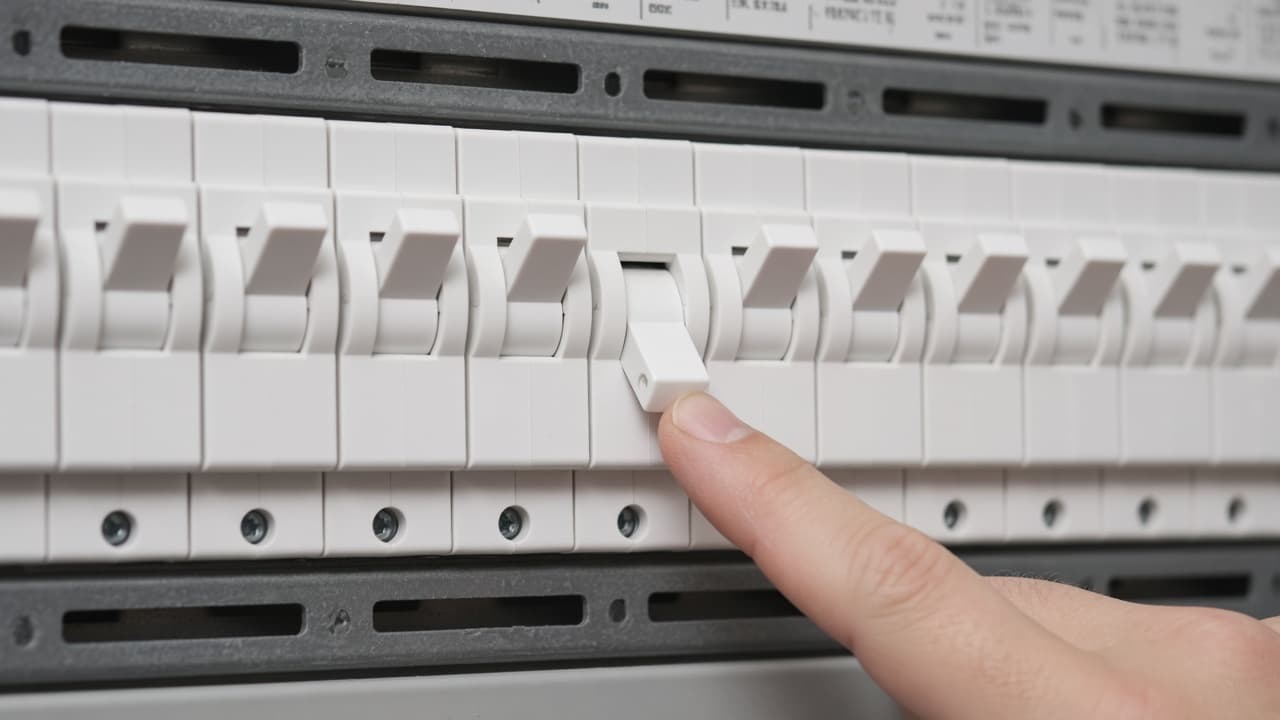
The odd handle is usually the tripped branch, not a random neighbor. 2d
Common mistake: flipping the main for one dark room
Common mistake: treating the large main breaker as the fix for a single dark kitchen or bathroom. The main controls the whole panel. If only part of the house is out, leave the main alone, check branch handles and nearby GFCI receptacles, and contact the utility only when neighbors and streetlights are dark too.
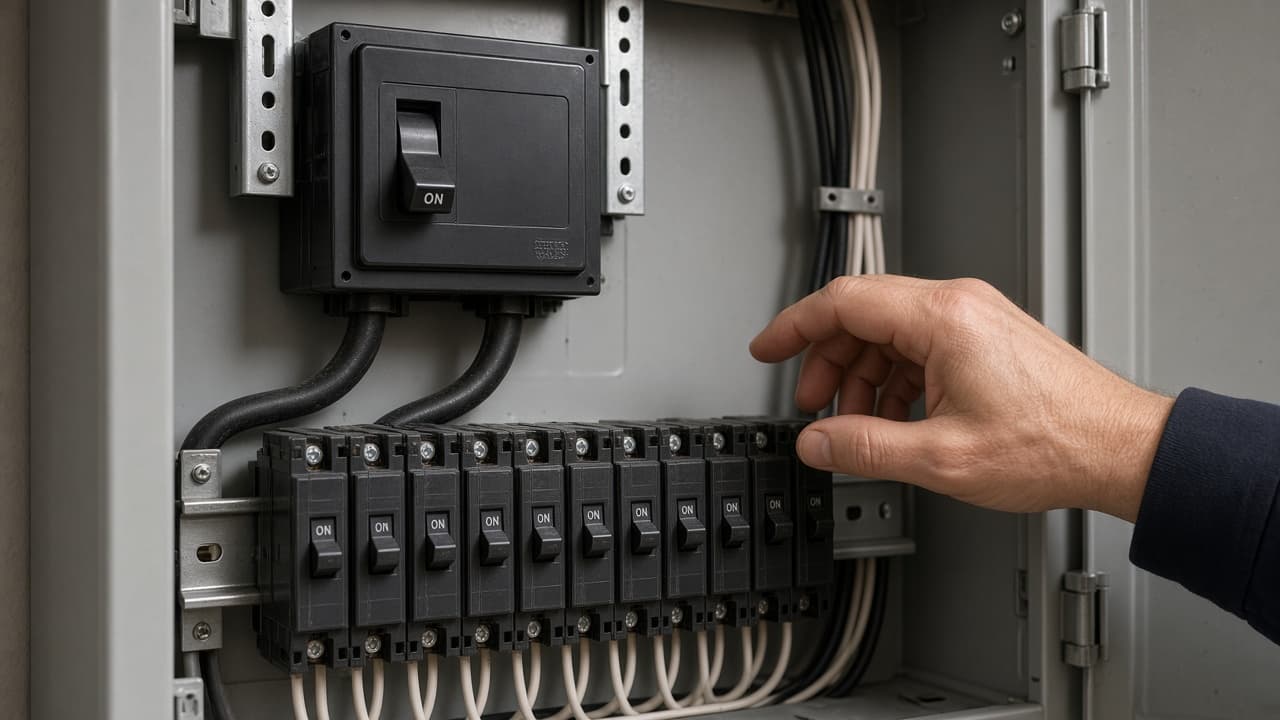
One dark room is a branch problem until proven otherwise.
Step 03
Reset the breaker with a firm off-then-on motion
Breakers need a deliberate push to off before they will latch on again.
Do this step in order
3a
Stand slightly aside and brace yourself
Stand on dry flooring with your face and body slightly to the side of the panel. Use one hand on the insulated handle only. Keep the other hand free and stay ready to step back if you see a flash or hear a loud crack.
3b
Push the tripped breaker fully to off
Move the handle all the way toward OFF until you feel a definite stop or click. Many designs will not reset unless they reach that full off position first. Do not force a handle that feels jammed, melting soft or extremely hot.
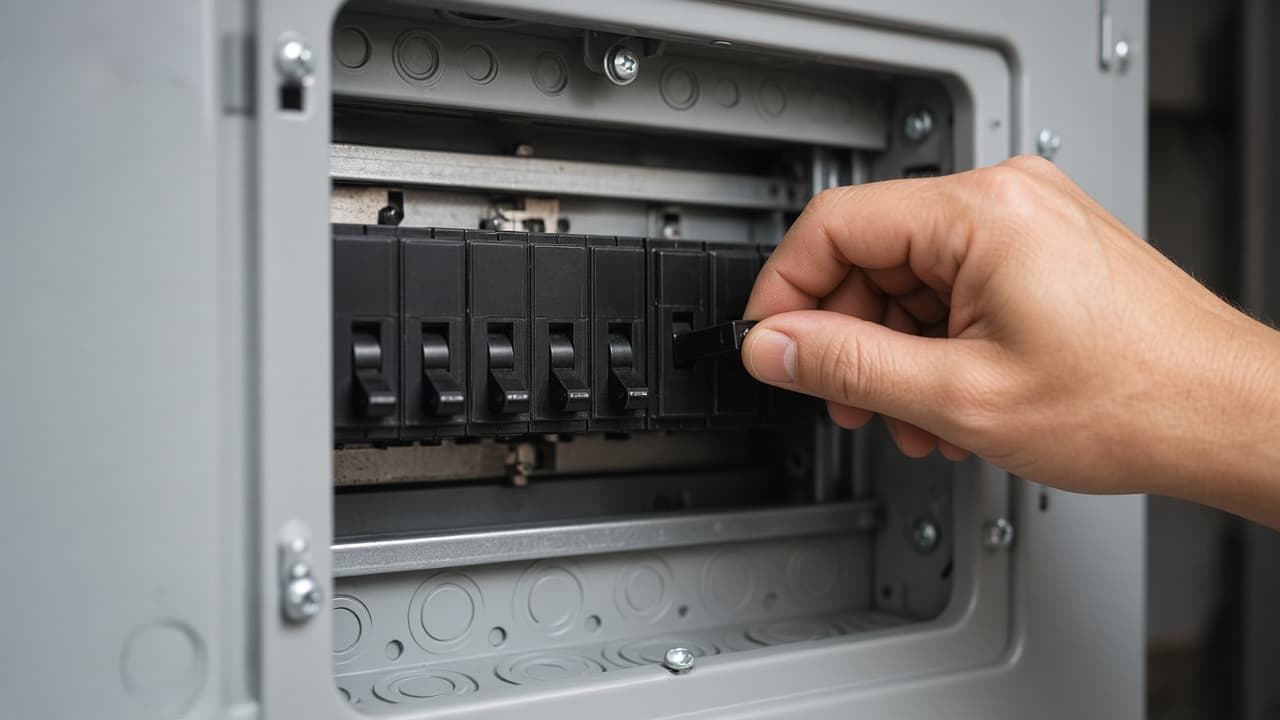
Full off comes before a successful latch back to on. 3c
Snap the breaker firmly to on
Move the handle to ON in one deliberate motion. It should click and align with the other on-position handles. If it springs back, feels loose or will not stay latched, leave it off and do not keep slamming it.
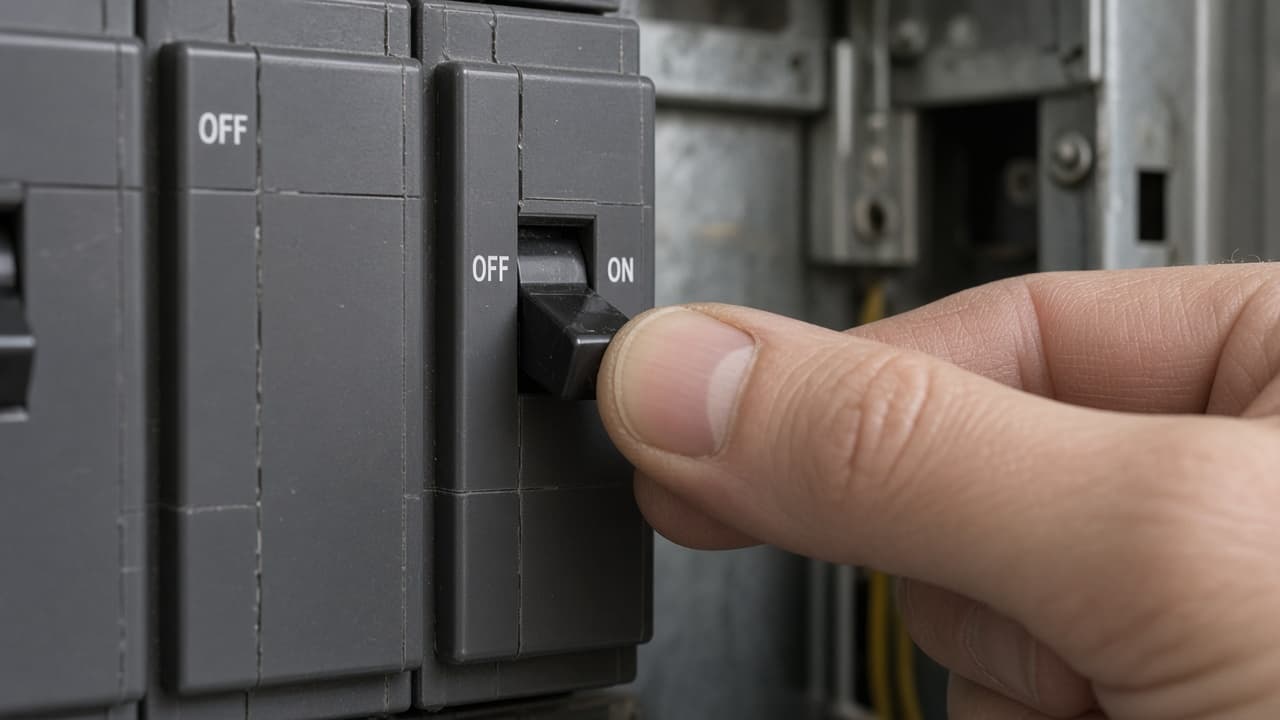
A clean latch should match the neighboring on handles. 3d
Common mistake: mashing TEST or RESET to force a fault away
Common mistake: treating the TEST or RESET buttons on a GFCI or AFCI breaker as a way to override a fault. Those buttons check protection. They are not a repair. If the handle will not hold after a proper off-then-on reset, leave the circuit off and call an electrician.
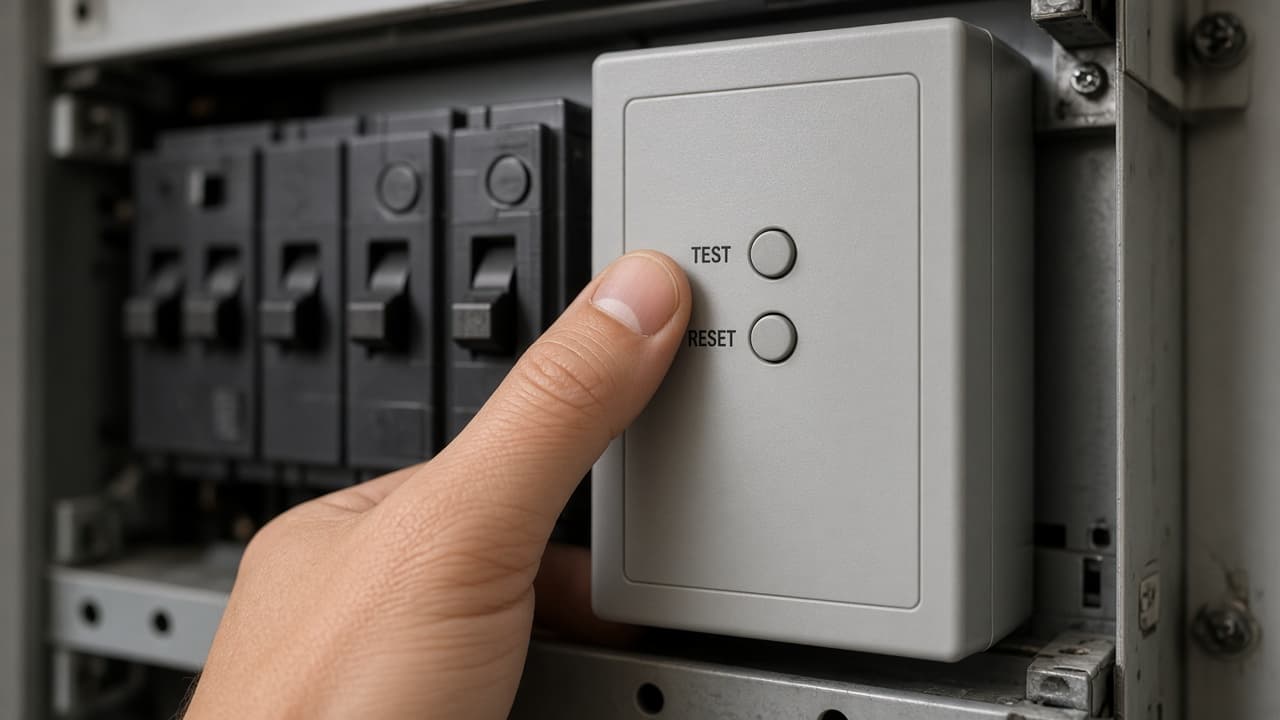
TEST confirms protection. It does not clear a serious fault.
Step 04
Pause, then restore power one load at a time
Bring devices back slowly and treat heat, smell or another trip as a stop sign.
Do this step in order
4a
Listen and smell with loads still off
Keep appliances unplugged for several seconds after the handle latches. The panel should stay quiet apart from normal faint equipment sounds, with no crackle, flash or new odor. Switch the breaker back off and call for help if anything seems abnormal.
4b
Test one light, then one appliance
Turn on a single light first, then reconnect one appliance at a time with a short pause between each. Feel plugs and cords for unusual warmth and watch the breaker. Stop immediately if one device causes another trip, noise, smell, heat or sparks.
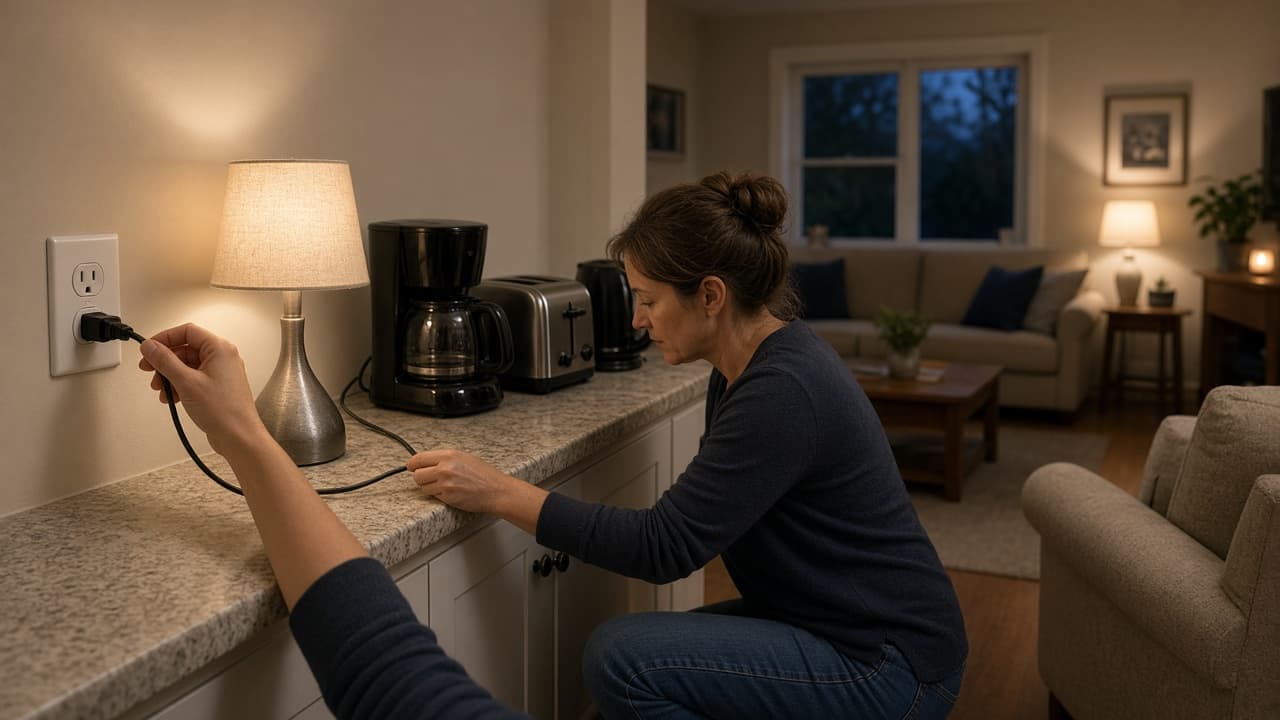
One device at a time makes the culprit easier to spot. 4c
Keep known overload pairs separated
If two heating appliances shared the circuit, keep one off and move high-wattage use to a different properly rated circuit later. Do not rely on extension cords as permanent wiring or run heaters through power strips.
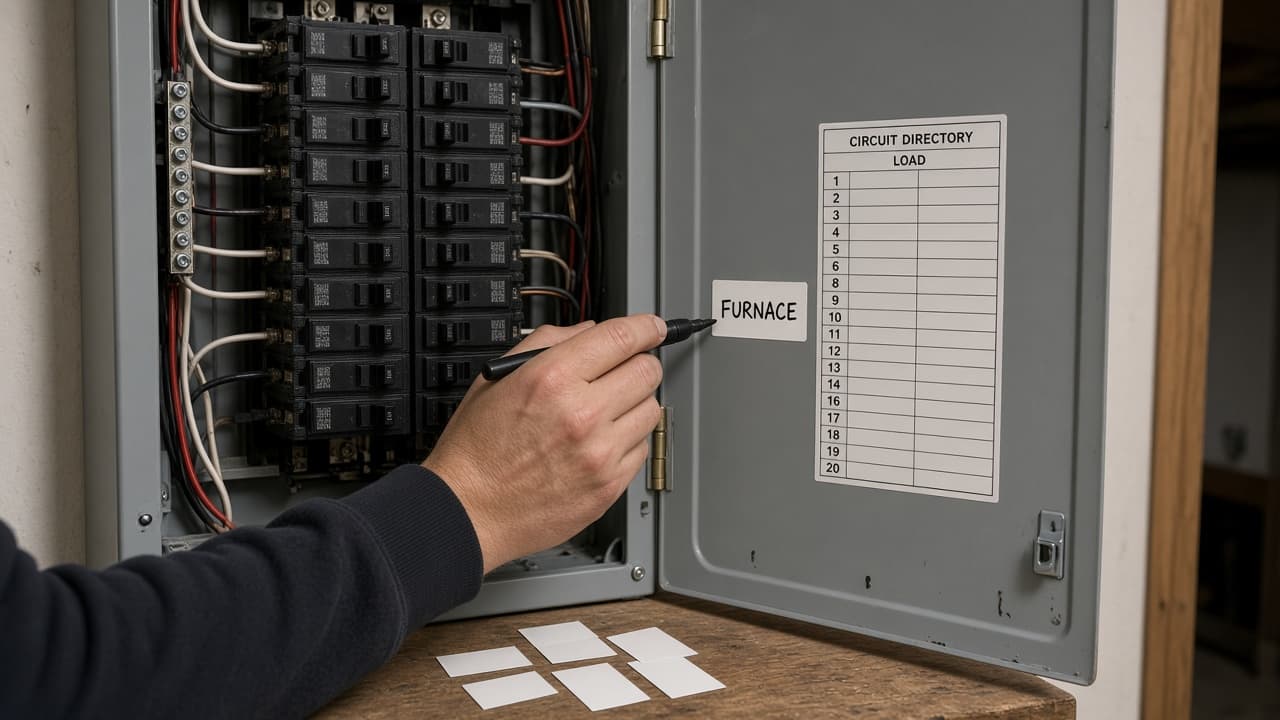
Clear labels turn the next trip into a shorter search. 4d
Common mistake: resetting again and again after a re-trip
Common mistake: treating a breaker that trips again as a nuisance to reset repeatedly. Leave it off, keep notes on what was plugged in and call a licensed electrician. Frequent trips can signal damaged wiring, a failing breaker or a dangerous appliance fault.
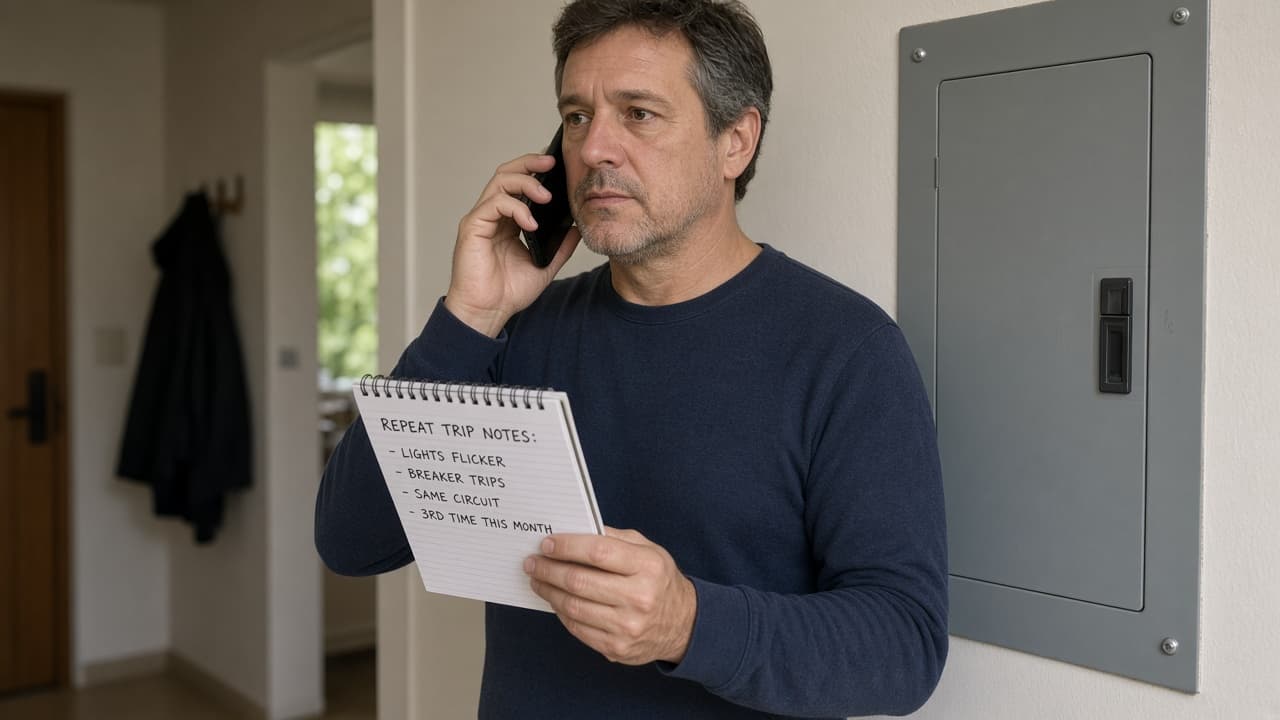
A third trip on the same circuit is a call, not another experiment.
Step 05
Check GFCI receptacles and other dead outlets
A dark bathroom, garage or outdoor outlet may sit downstream from a receptacle GFCI, not only a panel breaker.
Do this step in order
5a
Scan bathrooms, kitchens, garages and exteriors
If the panel breaker stayed on but one wet-area outlet is still dead, look for a receptacle with TEST and RESET buttons nearby or further along the same wall. Garage, basement and outdoor outlets often share one upstream GFCI.
5b
Unplug loads before pressing RESET
Unplug appliances on that outlet and related outlets first. Press RESET once with dry hands. If it clicks and power returns, restore one device at a time the same way you would after a panel reset.
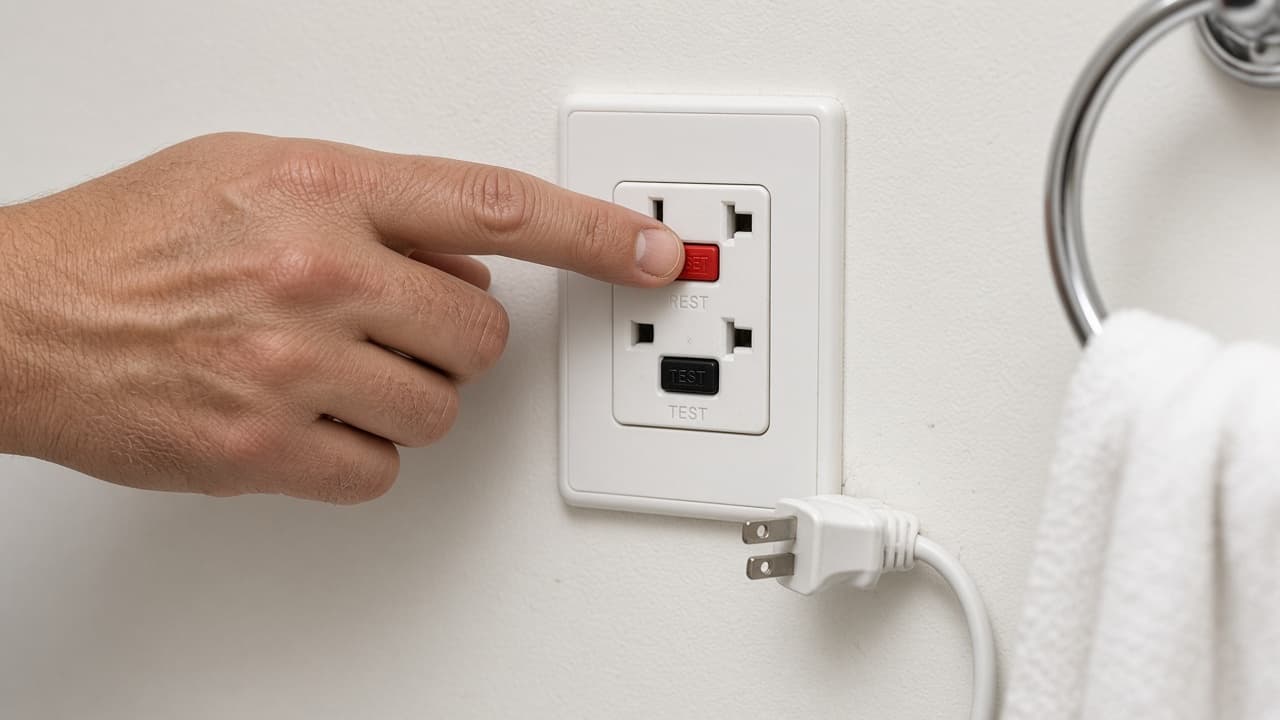
Unplug first, then press RESET once with dry hands. 5c
Map which outlets share the GFCI
After a successful reset, briefly test nearby outlets to learn which ones depend on that GFCI. Note them in your phone so the next outage is faster to diagnose. Do not defeat a GFCI with adapters that bypass the protected receptacle.
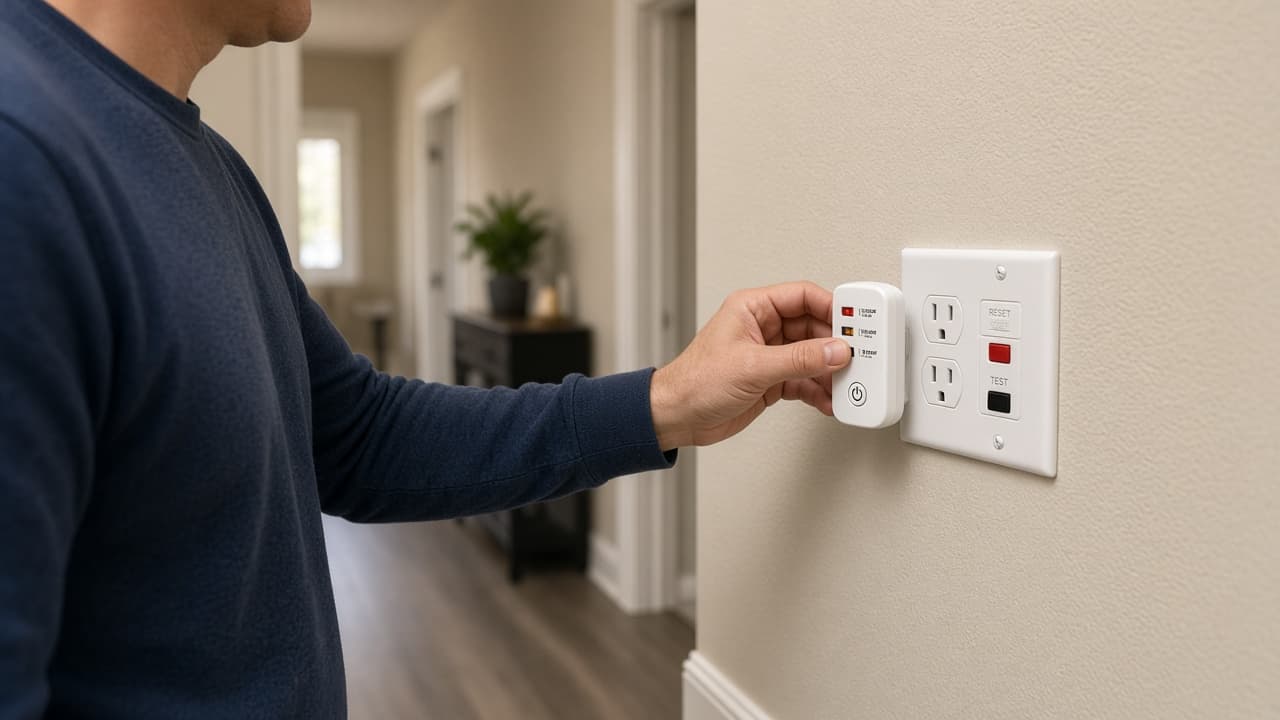
Shared GFCI protection often covers more than one faceplate. 5d
Common mistake: holding RESET while a fault is still plugged in
Common mistake: pressing and holding RESET with a wet appliance or damaged cord still connected. If RESET will not latch, leave those outlets unused and call an electrician. Forcing the button does not repair a ground fault.
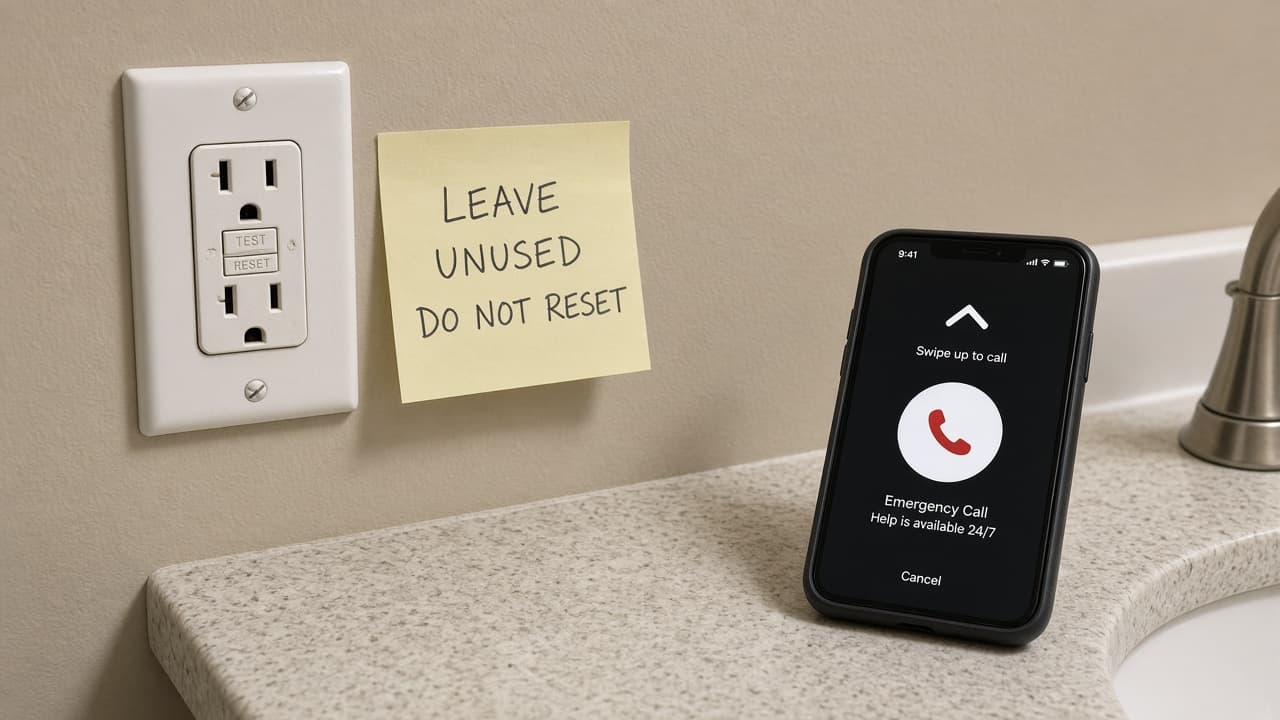
A GFCI that will not latch needs a pro, not more thumb pressure.
Step 06
Label unknown breakers for next time
Clear directory names turn the next outage into a short search instead of a guessing game.
Do this step in order
6a
Wait until power is stable before mapping
Do not map circuits during an active emergency if medical devices, freezers or work equipment must stay powered. Schedule labeling when another adult can watch lights and outlets while you operate one branch breaker at a time.
6b
Toggle one breaker and confirm the rooms
With a helper on a phone call, switch one branch breaker off briefly and note which lights and outlets die. Write clear room and appliance names in the directory without covering required panel warnings or manufacturer labels.
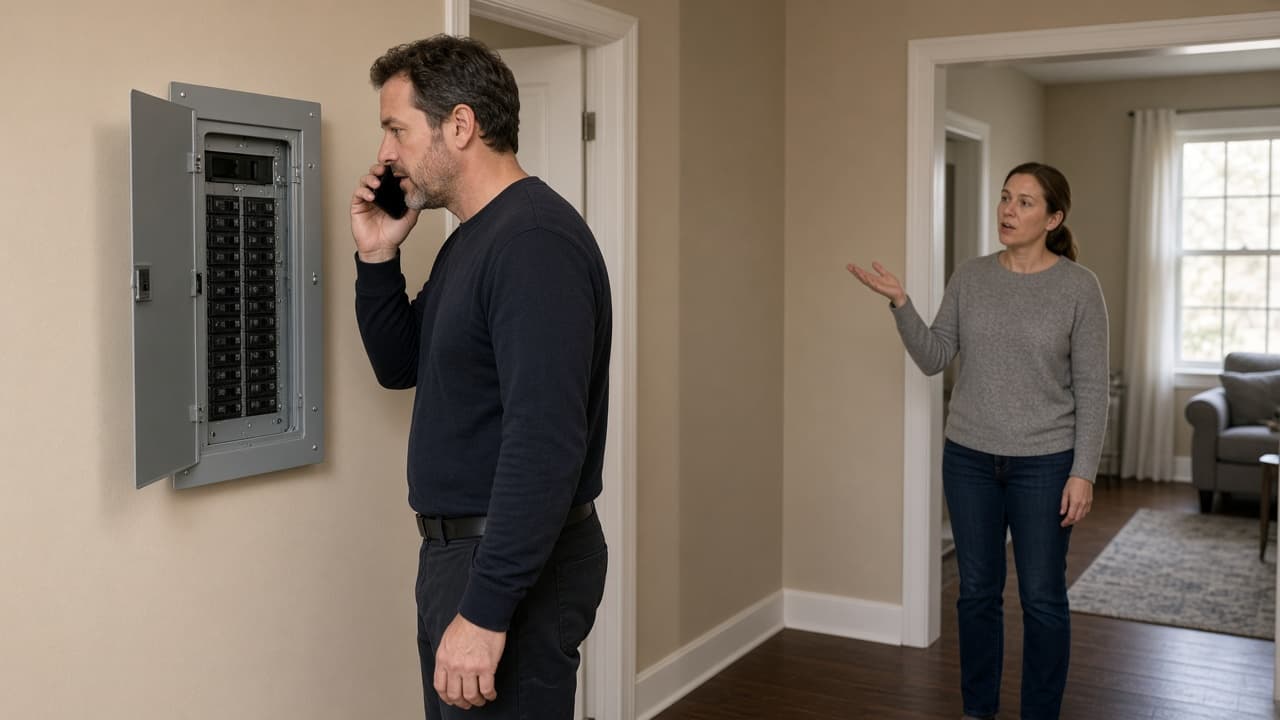
One person at the panel, one person reporting which rooms go dark. 6c
Mark multi-wire and shared circuits clearly
Note kitchens, laundry rooms and workshops that share breakers so future overloads are easier to prevent. Photograph the finished directory for your records. Replace torn or illegible cards rather than stacking sticky notes that fall off.
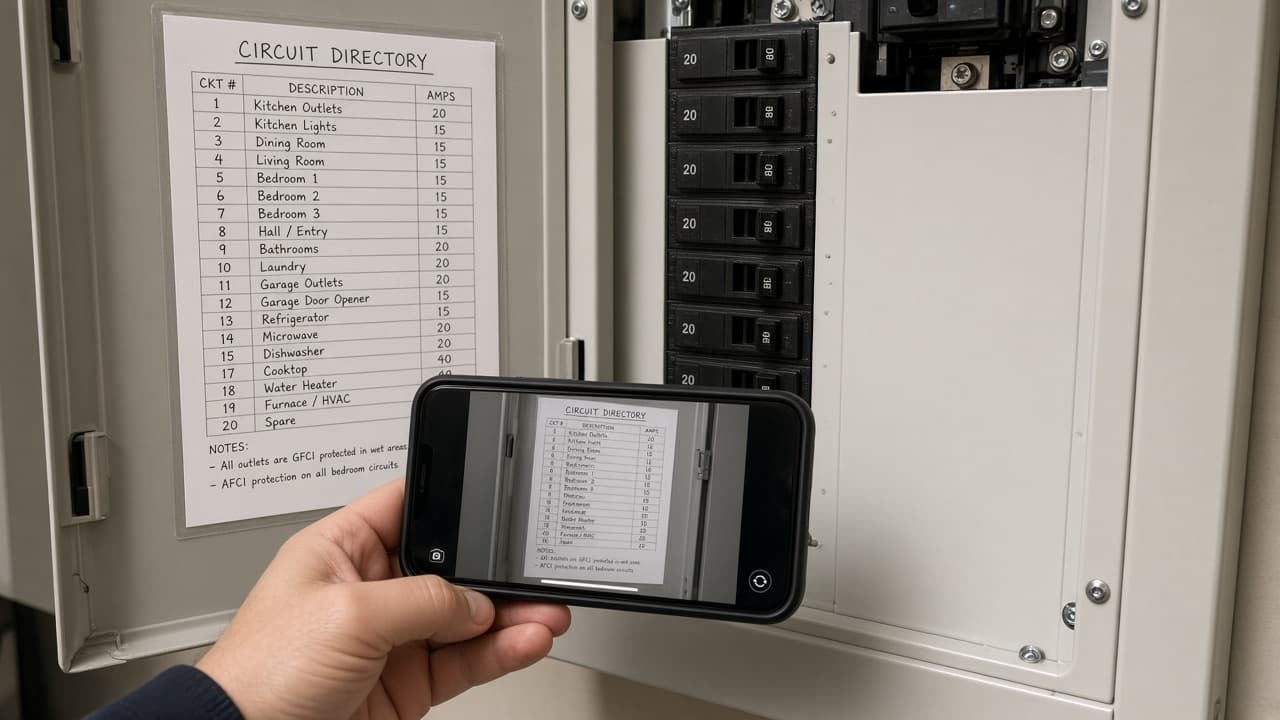
A photo of the directory helps when you are not standing at the panel. 6d
Common mistake: guessing labels without a live test
Common mistake: writing kitchen on three breakers because that feels likely. Untested labels send you to the wrong handle during the next trip. If you cannot map safely, hire an electrician to produce an accurate directory.
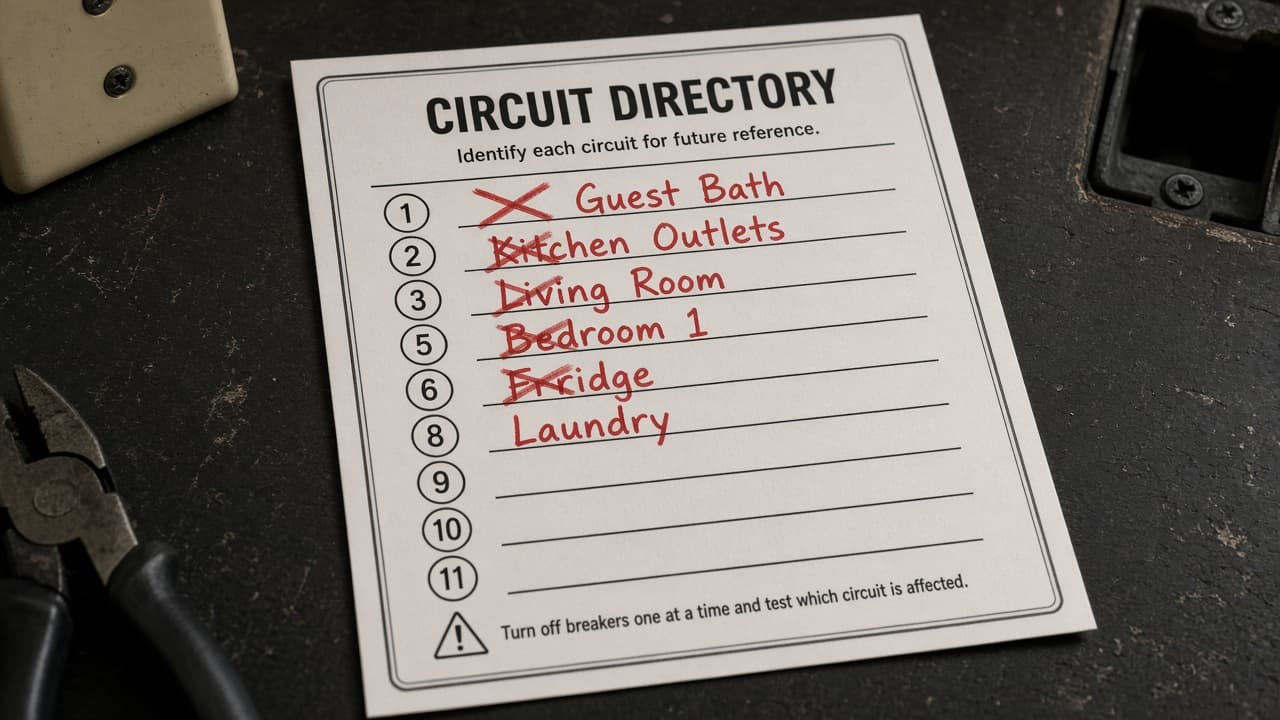
Guessed names are worse than blank lines when power is out.
Step 07
Plan safer loads and know when to stop DIY
A reset that holds is useful only if you also change the overload pattern that caused it.
Do this step in order
7a
Separate heaters and kitchen heat tools
Keep space heaters on their own properly rated outlets and avoid running microwave, toaster and kettle together on a circuit that already tripped. Permanent high loads deserve a dedicated circuit rather than a long-term power strip habit.
7b
Schedule professional help for mystery faults
Call a licensed electrician when trips continue, labels are missing, the panel shows heat damage or you smell burning. Ask them to check branch wiring, receptacles, connected equipment and the breaker itself rather than guessing from the living room.
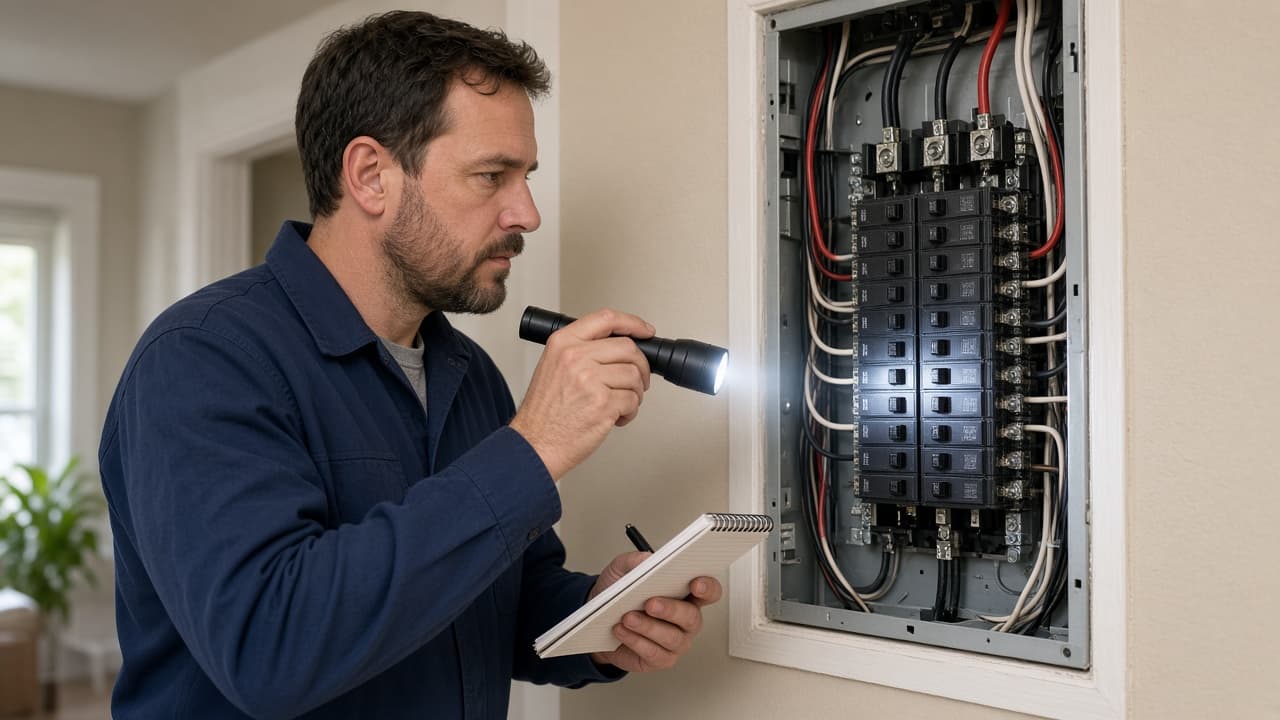
Mystery re-trips belong to a licensed electrician, not more DIY resets. 7c
Document the event for the visit
Save your load list, the breaker number, how many times it tripped and whether GFCI outlets were involved. That record shortens diagnosis. Keep children and pets away from the panel until the visit is complete.
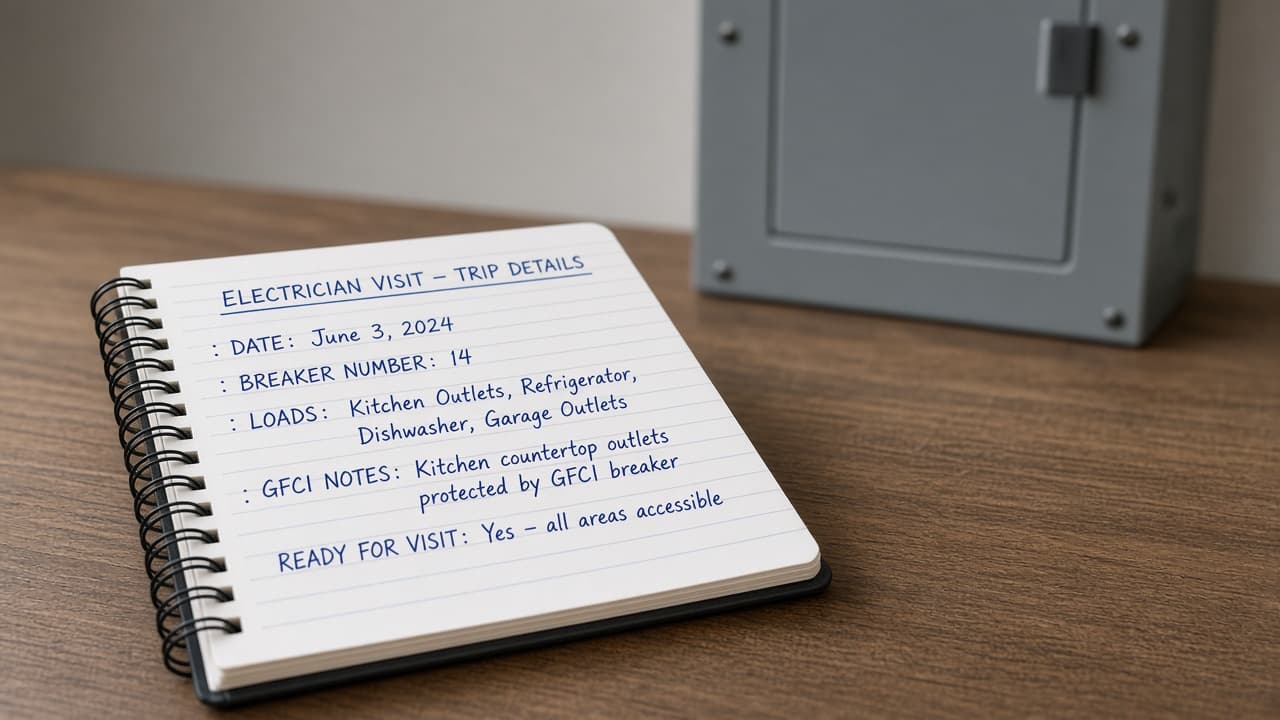
Dates, breaker numbers and loads make the service call faster. 7d
Common mistake: upgrading the breaker amp rating yourself
Common mistake: fitting a higher amp breaker so the old overload stops tripping. The wiring behind the wall may not be sized for that current, which raises fire risk. Leave breaker sizing changes to a licensed electrician after a proper evaluation.
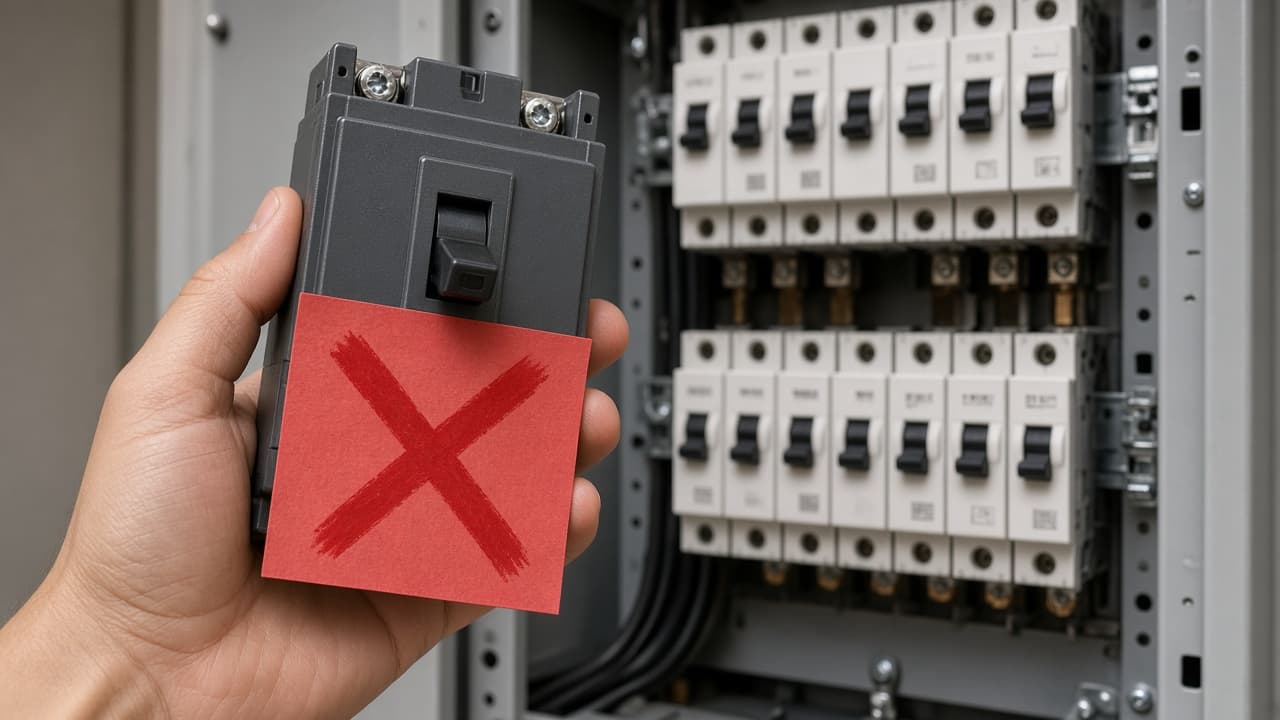
A bigger breaker is not a safe fix for undersized wiring.
Done when
- Unplug or switch off devices on the dead circuit
- Locate the correct panel (main house, garage or subpanel)
- Identify the breaker that is not fully on
- Push it to off, then firmly to on
- Listen for abnormal sounds before restoring loads
- Restore devices one at a time
- Call an electrician if it trips again or labels are missing
Eagle Frame's takeaway: turn off or unplug loads on the dead circuit, open the panel, push the tripped breaker firmly to off, then snap it to on. If power returns, plug devices back one at a time. If it trips again, leave it off and get professional help.