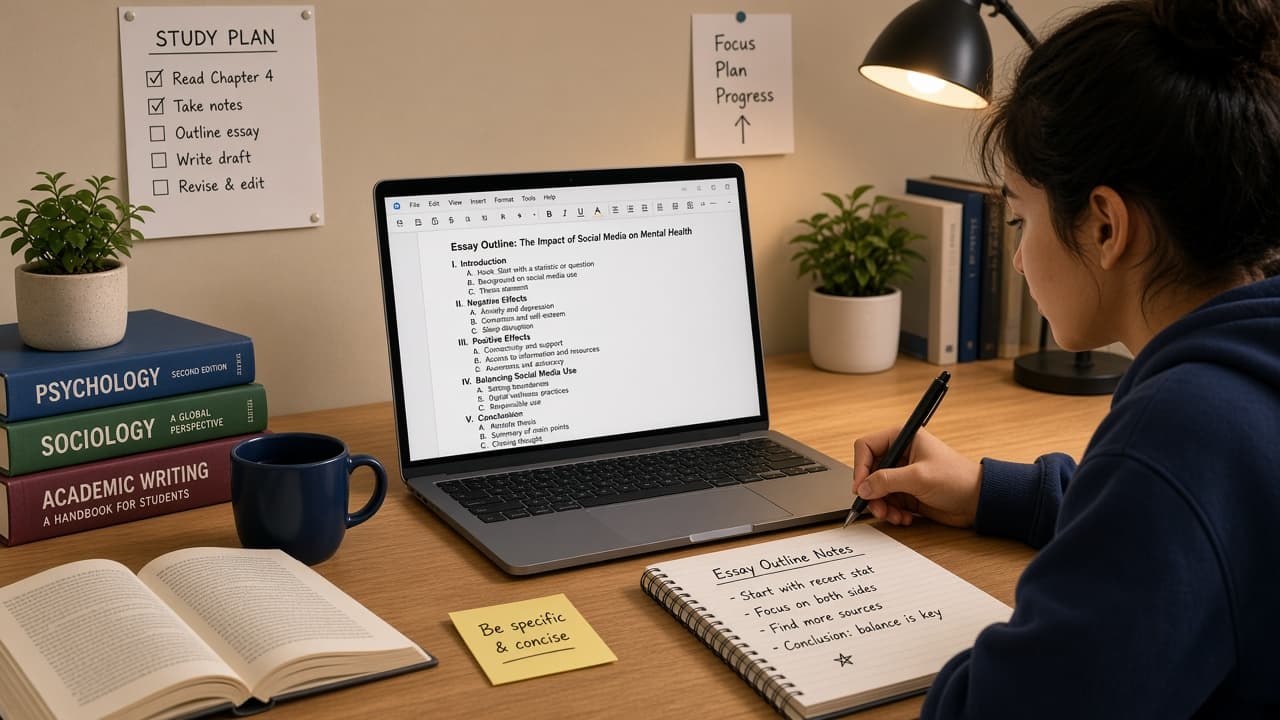
How to write an essay
Build a clear thesis, outline sections, draft with evidence and revise for structure and citations. A steady process beats a late-night panic dump.
An essay is a structured argument or explanation in prose. Teachers and readers expect a clear claim, evidence that supports it and a path from introduction to conclusion. The format changes by class (persuasive, analytical, compare-and-contrast), but the spine stays the same: thesis, reasoned body paragraphs and a finish that does not merely repeat the opener word for word.
Good essays are built, not summoned in one heroic sitting. You clarify the question, draft a thesis you can defend, outline the order of points, write a full draft with evidence and then revise for logic, clarity and citation rules your school or publication requires.
Start earlier than you want to. Even a short outline the night before drafting saves hours of wandering paragraphs. Keep sources organized as you go so the works cited page is not a midnight scavenger hunt.
This guide fits school essays and similar short nonfiction. It will not replace subject expertise or your instructor's rubric. When rules conflict, the assignment sheet wins.
Step-by-step guide
Time: 3 to 6 hours for a short school essay across two sittings; longer for research-heavy papers
What you need
- Assignment prompt and rubric
- Notes app or paper for outline
- Word processor
- Source list (articles, books or approved websites)
- Citation style guide your class requires (MLA, APA or other)
Before you start
- Do not paste AI or web text as your own work. Follow your school's academic integrity rules.
- Do not invent quotes or sources. Made-up evidence fails when anyone checks.
Step 01
Decode the prompt and draft a thesis
You cannot outline until you know what question you are answering.
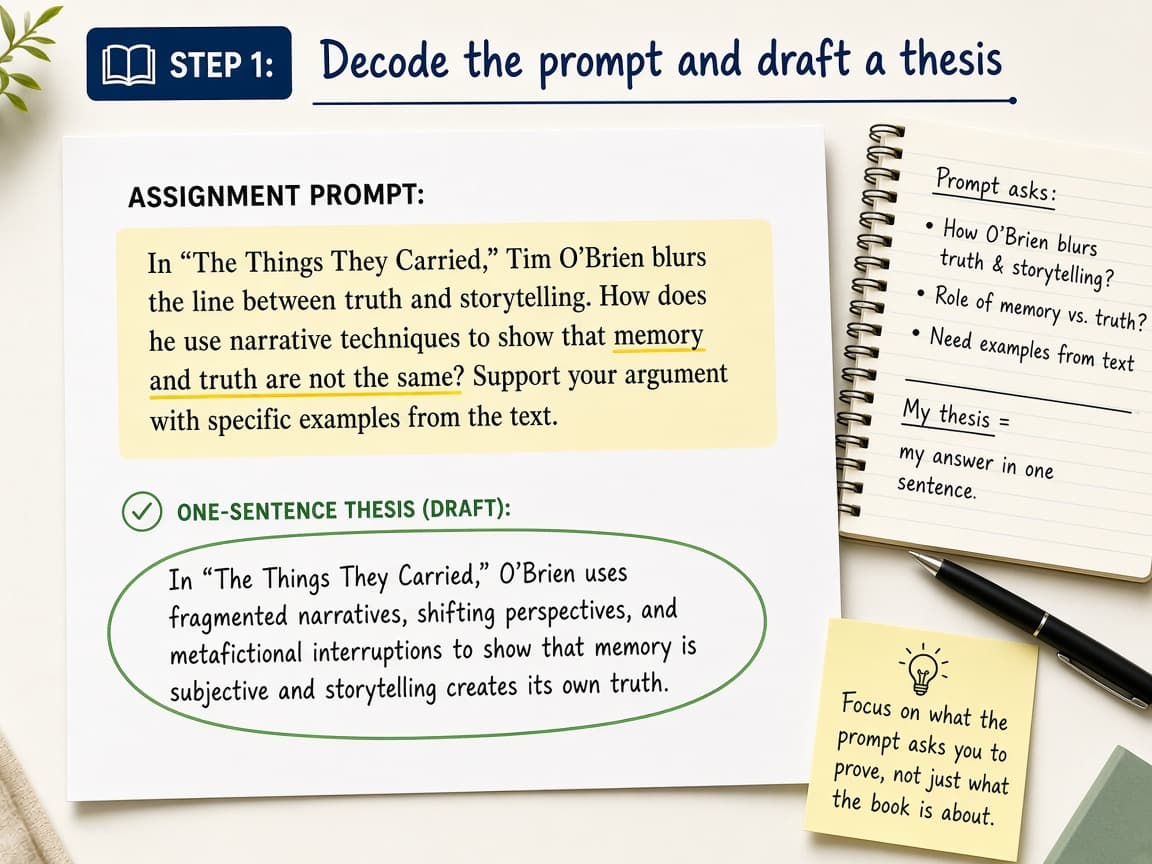
Underline the task verbs. Then write one sentence that states your answer. Do this step in order
1a
Mark task verbs and limits
Circle words like analyze, argue, compare, explain and evaluate. Note length, required sources and due date. If the prompt has multiple parts, list them so none disappear later.
1b
Brainstorm points before you polish prose
List possible claims and evidence in messy bullets. Cross out ideas you cannot support. Keep the strongest three to five for a short essay.
1c
Write a one-sentence thesis
State your main answer in one clear sentence. A useful thesis takes a position a reasonable person could discuss. Avoid a topic label like This essay is about pollution with no claim.
1d
Reject the floating topic sentence with no claim
Common mistake: treating the title of the subject as the thesis. Readers need your stance or explanatory claim, not a restated subject line.
Step 02
Build an outline that orders your points
Order turns a pile of notes into a path the reader can follow.
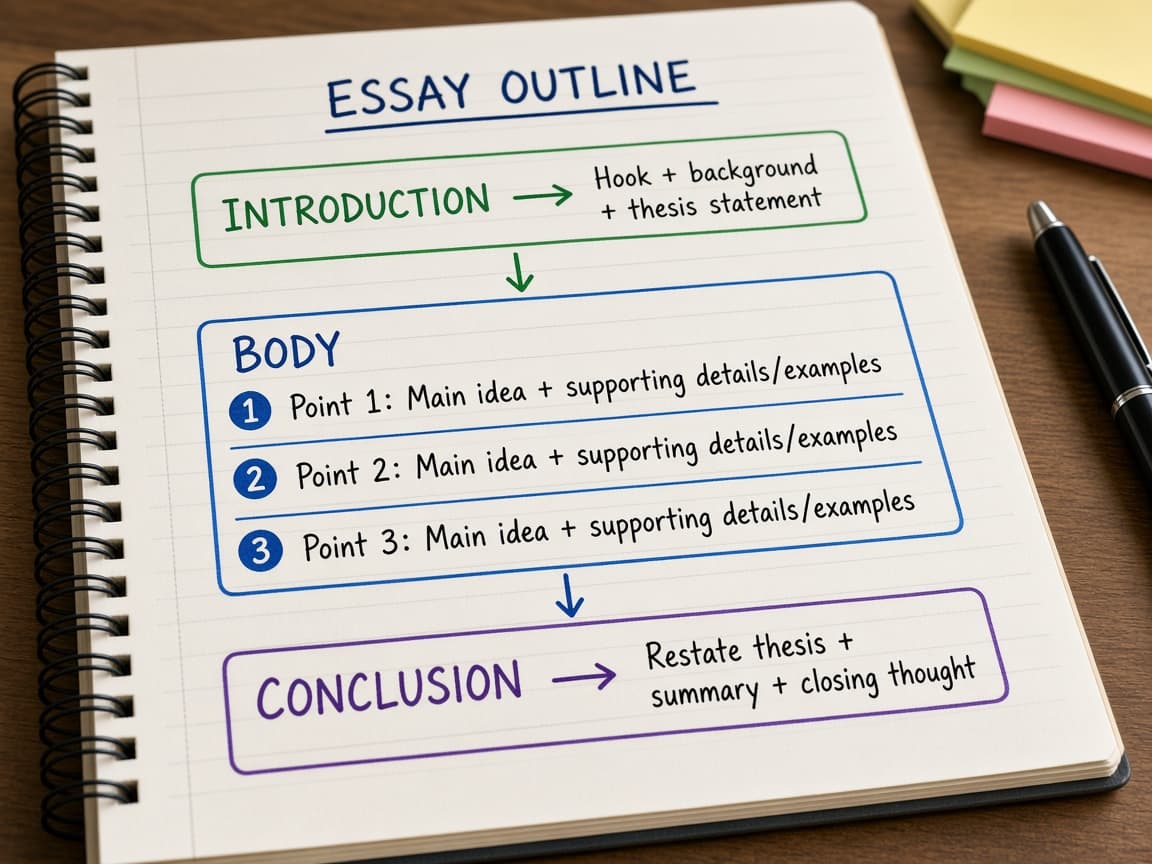
Map introduction, body points in order and a conclusion before you draft full sentences. Do this step in order
2a
List body points as short headlines
Under the thesis, write three to five point headlines. Each should support the thesis. Put the strongest or most foundational point where your rubric rewards attention.
2b
Attach evidence under each point
Add a quote, fact, example or data note under every headline. If a point has no evidence, replace it now. Note the source beside each piece of evidence.
2c
Plan introduction and conclusion jobs
Intro: hook lightly, context, thesis. Conclusion: synthesize without copying the thesis verbatim and leave a final implication or answer to so what. Do not add brand-new major claims in the last paragraph.
2d
Do not outline after a full panic draft only
Common mistake: writing five pages first then trying to discover the argument. A short outline first is faster than rewriting a wander.
Step 03
Draft with evidence and citations
Turn outline headlines into paragraphs that show proof, not just opinions.
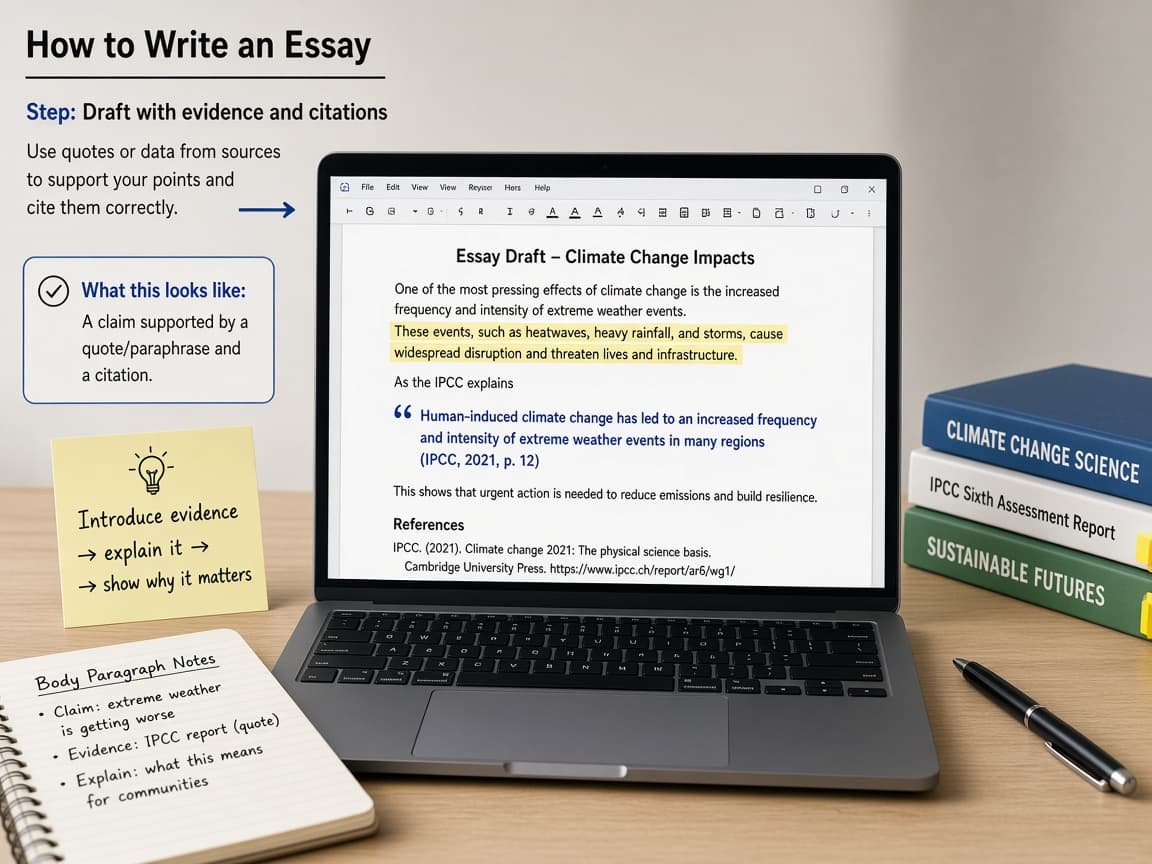
Write full paragraphs from the outline. Introduce evidence, explain it and cite it. Do this step in order
3a
Write body paragraphs in claim-evidence-explanation form
Open with a topic sentence tied to the thesis. Add evidence. Explain how the evidence supports the point. End with a link forward or back to the claim. Aim for coherence over fancy vocabulary.
3b
Integrate quotes instead of dumping them
Use short quotations or paraphrases with context. Never leave a quote alone as its own paragraph without your commentary. Cite every borrowed idea in the style your class requires.
3c
Draft introduction and conclusion after the body if stuck
Many writers draft body points first, then write a sharper intro. That is fine. Just return to align the thesis with what you actually argued.
3d
Do not pad with empty thesaurus words
Common mistake: replacing simple accurate words with vague fancy ones. Clarity grades better than fog. Say what you mean.
Step 04
Revise, format and do a final read
Revision is where a draft becomes an essay worth turning in.
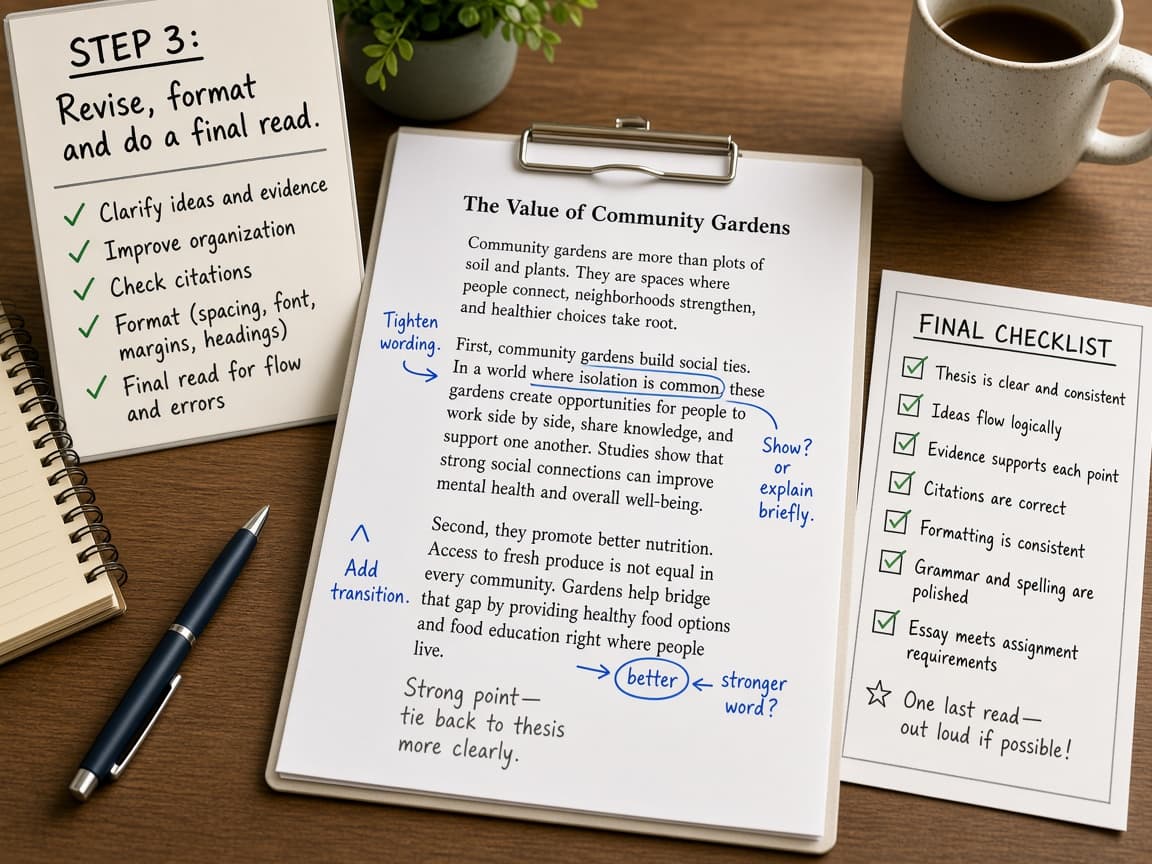
Check structure, evidence gaps, citations, formatting and a final read-aloud pass. Do this step in order
4a
Test every paragraph against the thesis
Ask whether each paragraph helps prove the thesis. Cut or move orphans. Fix topic sentences that drift. Strengthen transitions where the reader has to guess the link.
4b
Fix citations and the works cited or references list
Match in-text citations to the final source list. Follow MLA, APA or the assigned style exactly enough to satisfy the rubric. Incomplete citations are easy points to lose.
4c
Read out loud and run the rubric checklist
Read the essay aloud once. Catch missing words and clumsy sentences. Then walk the assignment rubric line by line before you submit.
4d
Reject the submit-without-title-page rush
Common mistake: blowing past formatting (name block, title, spacing, file name) after spending hours on ideas. Those details are part of the grade. Fix them while you still have time.
Done when
- Prompt and audience understood
- One-sentence thesis written
- Outline with ordered points
- Draft with evidence and citations
- Revised for structure, clarity and formatting
Eagle Frame's takeaway: invent less and build more. Lock a thesis, outline the points, draft with evidence and revise for structure and citations. A clear claim with supported paragraphs beats a long paper that never decides what it thinks.