Russia and North Korea open their first road bridge: why it matters
A new kilometre-long crossing over the Tumen River links Khasan and Rason. Officials call it friendship. Analysts see a quieter war logistics lane.
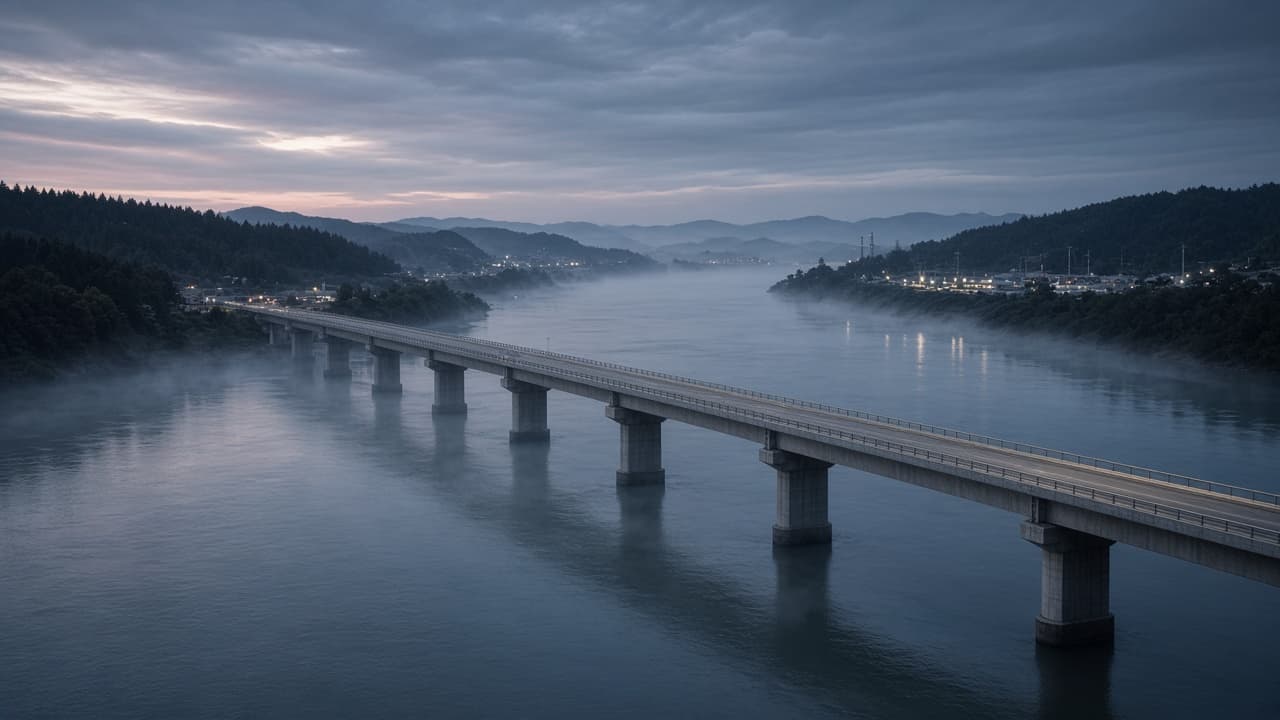
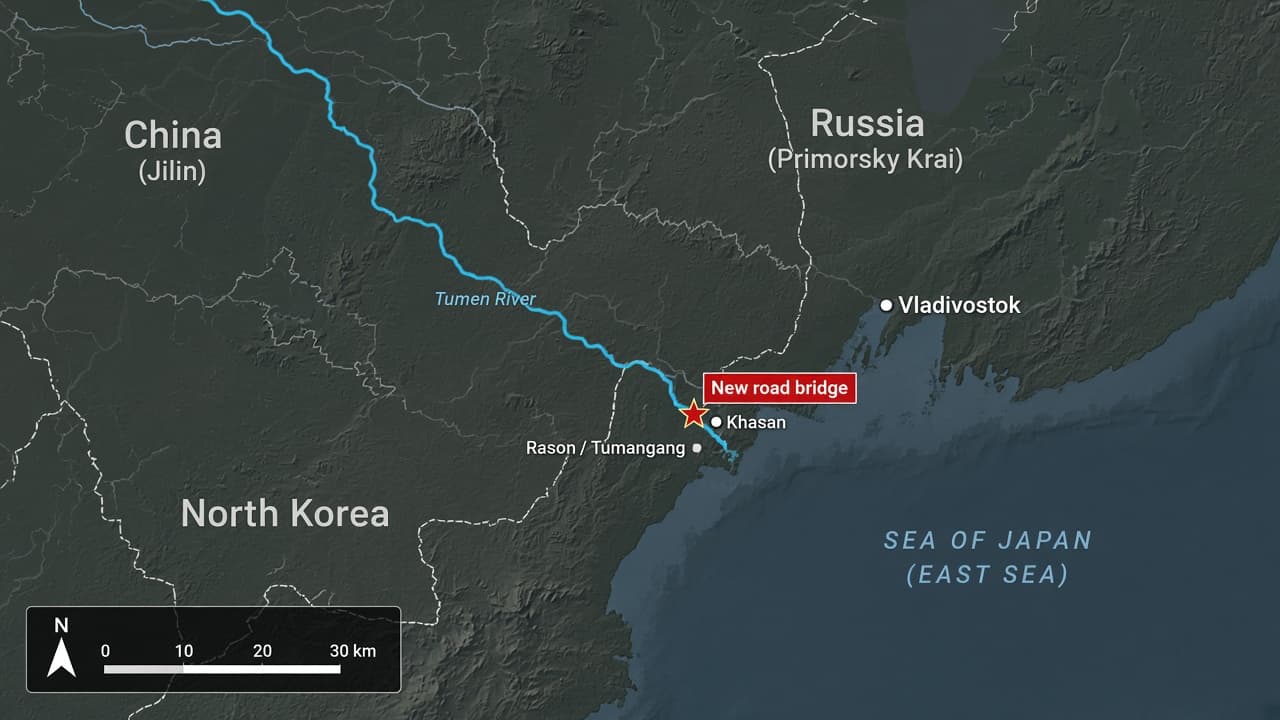
On 7 September 2026, Russia and North Korea opened their first purpose-built road bridge across the shared stretch of the Tumen River. The crossing links Khasan in Russia’s Primorye region with North Korea’s Rason area (also described as Tumangang on the Korean side). Officials on both banks cast it as a friendship project for trade, tourism and people-to-people traffic. Outside investigators and security analysts read the same concrete as a faster, harder-to-watch logistics lane for a wartime partnership.
What opened is simple to picture. The road span is about one kilometre long and carries two lanes. Russian statements put daily design capacity near 300 vehicles and more than 2,000 people through the new border facilities. Moscow says cargo will run first, with passenger traffic expected later in 2026. Pyongyang’s state media framed the bridge as serving personnel exchanges, tourism and trade. The structure is named for Yakov Novichenko, a Soviet officer credited in North Korean history with shielding Kim Il-sung from a grenade in 1946.
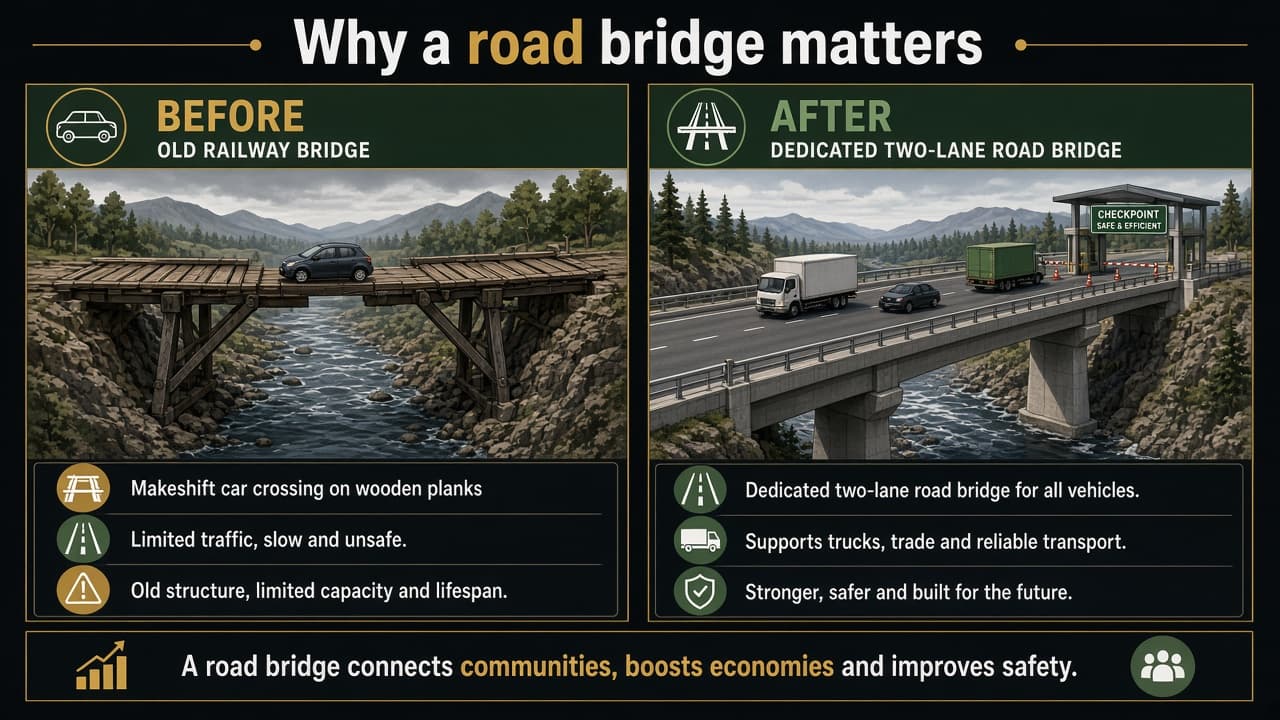
Why build it now? For decades the overland link was sleepy. A Friendship railway bridge from 1959 handled most land traffic. Cars could cross only by special arrangement, using wooden planks laid over the rail span. Air routes and sea shipments already existed. What changed after Russia’s full-scale invasion of Ukraine was political urgency. Putin’s 2024 visit to Pyongyang produced a comprehensive strategic partnership and an agreement to build this road bridge. Construction began in spring 2025 and finished in about 495 days. CSIS analyst Victor Cha told the BBC that the construction pace tracked a surge in trade driven largely by North Korean troops, weapons, munitions and labourers supporting Russia’s war.
How the logistics work is the part many readers miss. Rail is efficient but rigid. Wagons gather at known yards, follow fixed tracks and linger in open-source satellite imagery. Trucks are messier for watchers. They can disperse onto Russia’s Far East road network, including links toward the Ussuri Highway, and their cargoes are harder to tag from space. Ukrainian organisation Truth Hounds has argued that the bridge is intended primarily as a covert military logistics corridor: moving North Korean troops, construction brigades and officials into Russia while sending Russian technology and resources the other way. That is an allegation about purpose, not a public cargo manifest. Moscow and Pyongyang deny that framing and keep talking about trade and friendship.
Impact already shows up in numbers attached to the partnership, even before this road opened. South Korean estimates cited by the BBC put North Korean weapons transfers to Russia in the multi-billion-dollar range via ships and put thousands of North Korean troops fighting on Russian soil. Separate South Korean figures put about 10,000 North Korean workers in Russian construction and logging, often under student-visa cover despite UN bans on North Korean labour exports. Russian tourists have been allowed into North Korea since 2024 while most other nationalities remain shut out. A road bridge does not invent those flows. It makes land movement more flexible.
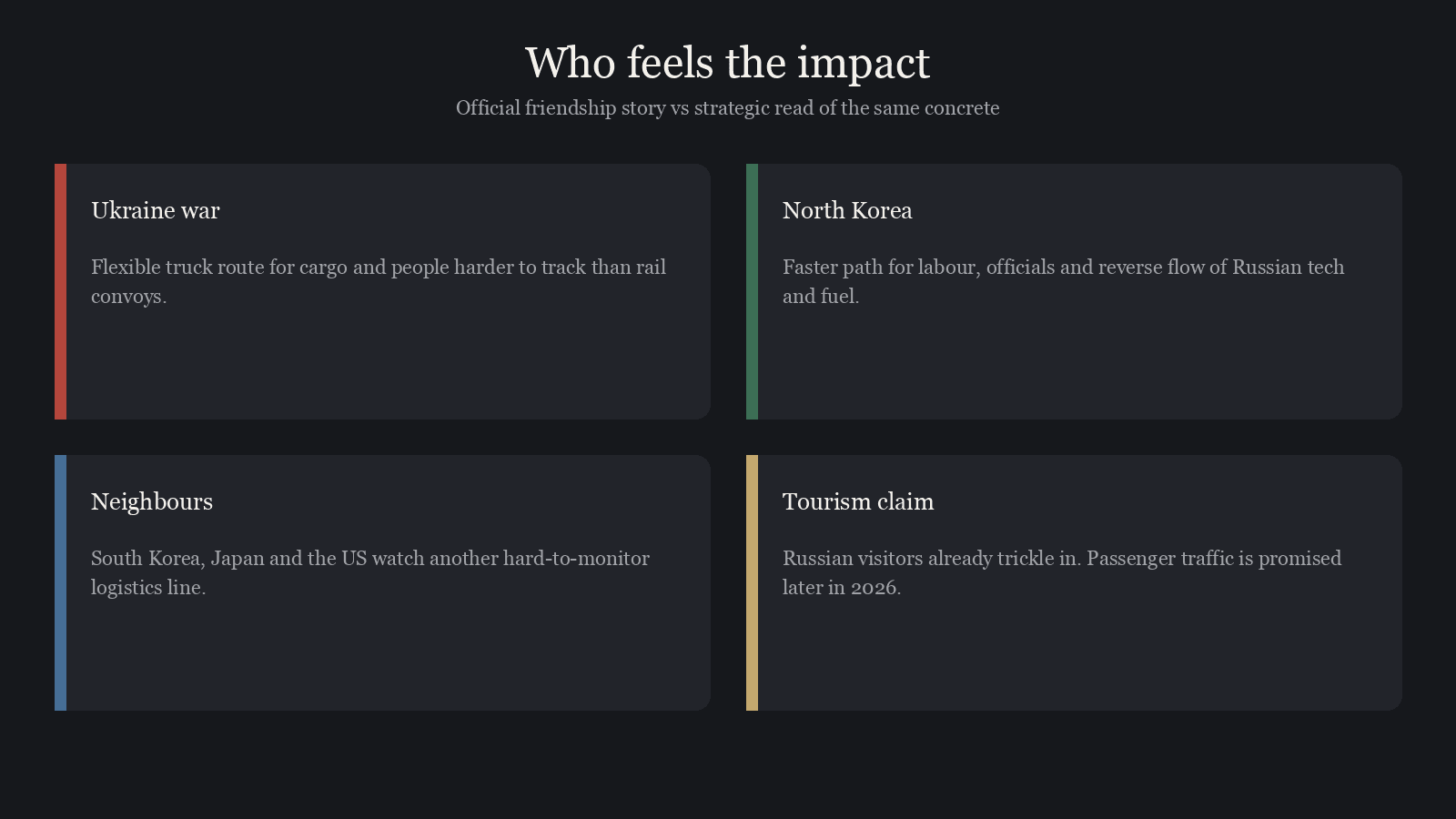
Who else should care? Ukraine and its partners will watch whether truck traffic rises beside rail and ship routes that already moved shells and missiles. South Korea and Japan will treat a denser Russia–North Korea land corridor as a sanctions and security problem on their doorstep. China sits next to the same river triangle and has its own interests in Rason and regional stability; a louder Moscow–Pyongyang axis is not automatically convenient for Beijing. The United States and Europe will see another piece of infrastructure that outlasts any single weapons shipment. For ordinary readers, the short lesson is that geopolitics often travels as asphalt: a border that was once one of the quietest in Asia is being rebuilt for wartime volume.
What to watch next is measurable. Does passenger traffic really open later in 2026, or does cargo dominate? Do open-source analysts see sustained truck columns, new depots or night movements around Khasan and Rason? Do sanctions monitors report more refined oil, dual-use tech or labour transfers moving the other way? A bridge can host tourists and still move ammunition. The policy fight will be over which use becomes normal.
Eagle Frame’s takeaway: the opening on 7 September is real infrastructure, not a rumour. Officials sell friendship and tourism. The strategic context is a wartime partnership that already moved weapons, workers and soldiers by sea and rail. A dedicated road makes that partnership faster and harder to film from orbit. Follow the trucks, not only the speeches.
On 7 September 2026, Russia and North Korea opened their first purpose-built road bridge across the shared stretch of the Tumen River. The crossing links Khasan in Russia’s Primorye region with North Korea’s Rason area (also described as Tumangang on the Korean side). Officials on both banks cast it as a friendship project for trade, tourism and people-to-people traffic. Outside investigators and security analysts read the same concrete as a faster, harder-to-watch logistics lane for a wartime partnership.
What opened is simple to picture. The road span is about one kilometre long and carries two lanes. Russian statements put daily design capacity near 300 vehicles and more than 2,000 people through the new border facilities. Moscow says cargo will run first, with passenger traffic expected later in 2026. Pyongyang’s state media framed the bridge as serving personnel exchanges, tourism and trade. The structure is named for Yakov Novichenko, a Soviet officer credited in North Korean history with shielding Kim Il-sung from a grenade in 1946.
Why build it now? For decades the overland link was sleepy. A Friendship railway bridge from 1959 handled most land traffic. Cars could cross only by special arrangement, using wooden planks laid over the rail span. Air routes and sea shipments already existed. What changed after Russia’s full-scale invasion of Ukraine was political urgency. Putin’s 2024 visit to Pyongyang produced a comprehensive strategic partnership and an agreement to build this road bridge. Construction began in spring 2025 and finished in about 495 days. CSIS analyst Victor Cha told the BBC that the construction pace tracked a surge in trade driven largely by North Korean troops, weapons, munitions and labourers supporting Russia’s war.
How the logistics work is the part many readers miss. Rail is efficient but rigid. Wagons gather at known yards, follow fixed tracks and linger in open-source satellite imagery. Trucks are messier for watchers. They can disperse onto Russia’s Far East road network, including links toward the Ussuri Highway, and their cargoes are harder to tag from space. Ukrainian organisation Truth Hounds has argued that the bridge is intended primarily as a covert military logistics corridor: moving North Korean troops, construction brigades and officials into Russia while sending Russian technology and resources the other way. That is an allegation about purpose, not a public cargo manifest. Moscow and Pyongyang deny that framing and keep talking about trade and friendship.
Impact already shows up in numbers attached to the partnership, even before this road opened. South Korean estimates cited by the BBC put North Korean weapons transfers to Russia in the multi-billion-dollar range via ships and put thousands of North Korean troops fighting on Russian soil. Separate South Korean figures put about 10,000 North Korean workers in Russian construction and logging, often under student-visa cover despite UN bans on North Korean labour exports. Russian tourists have been allowed into North Korea since 2024 while most other nationalities remain shut out. A road bridge does not invent those flows. It makes land movement more flexible.
Who else should care? Ukraine and its partners will watch whether truck traffic rises beside rail and ship routes that already moved shells and missiles. South Korea and Japan will treat a denser Russia–North Korea land corridor as a sanctions and security problem on their doorstep. China sits next to the same river triangle and has its own interests in Rason and regional stability; a louder Moscow–Pyongyang axis is not automatically convenient for Beijing. The United States and Europe will see another piece of infrastructure that outlasts any single weapons shipment. For ordinary readers, the short lesson is that geopolitics often travels as asphalt: a border that was once one of the quietest in Asia is being rebuilt for wartime volume.
What to watch next is measurable. Does passenger traffic really open later in 2026, or does cargo dominate? Do open-source analysts see sustained truck columns, new depots or night movements around Khasan and Rason? Do sanctions monitors report more refined oil, dual-use tech or labour transfers moving the other way? A bridge can host tourists and still move ammunition. The policy fight will be over which use becomes normal.
Eagle Frame’s takeaway: the opening on 7 September is real infrastructure, not a rumour. Officials sell friendship and tourism. The strategic context is a wartime partnership that already moved weapons, workers and soldiers by sea and rail. A dedicated road makes that partnership faster and harder to film from orbit. Follow the trucks, not only the speeches.