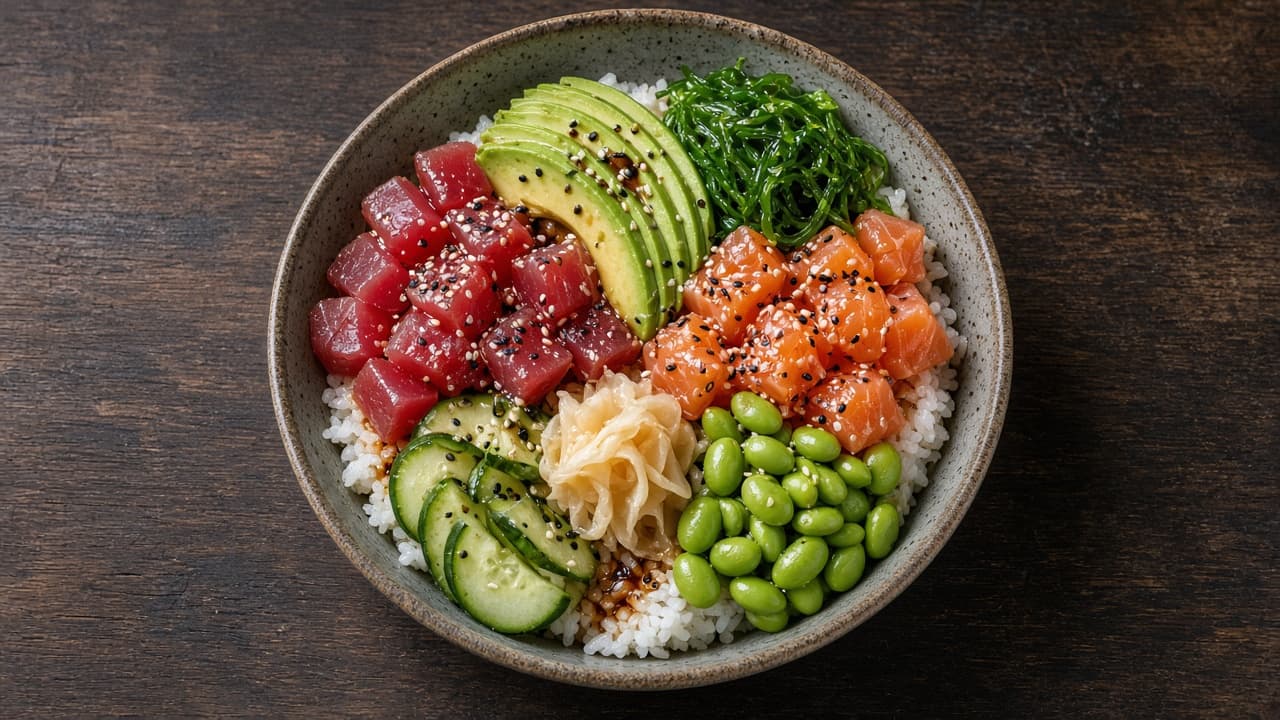
Why you should eat a poke bowl
Hawaiian roots, real protein and a meal you can build lighter or richer without losing the point. Here is how poke works, what it gives you and how to assemble a bowl worth repeating.
Poke is pronounced “poh-kay.” In Hawaiian it means to slice or cut crosswise. At its core it is cubed raw fish seasoned simply and eaten fresh. The modern poke bowl that spread from Hawaii into mainland shops and home kitchens adds a base, vegetables, sauce and crunch on top. That format is why the dish works so well as an everyday meal: you control protein, carbs, fat and flavor instead of guessing what is inside a wrapped lunch.
Traditional Hawaiian poke was fisherman food. Fresh reef fish or ahi, sea salt, limu (seaweed) and inamona (roasted kukui nut) were enough. Japanese influence later brought soy sauce, sesame oil and green onion into many local recipes. Grocery poke counters across Hawaii still sell it by the pound. The build-your-own bowl with rice, avocado, mango and spicy mayo is a newer mainland style. Both share the same idea: cut fish, season it well and eat it soon.
Why eat one? First, the protein. A typical 4-ounce (about 115 g) portion of raw ahi tuna is roughly 120 calories with about 25 to 26 grams of protein and very little fat. The same amount of raw salmon is closer to 180 to 200 calories with about 22 grams of protein plus more omega-3 fat. That is serious lunch fuel without deep frying. Shrimp, cooked crab mix, tofu and edamame keep the bowl open for people who skip raw fish.
Second, the micronutrient mix. Fish supplies EPA and DHA omega-3 fats linked to heart and brain support. Vegetables such as cucumber, carrot, cabbage, seaweed and edamame add fiber, potassium, vitamin C and plant protein. Avocado adds monounsaturated fat and potassium. Seaweed brings iodine and a salty marine note that needs less heavy sauce if you use it well. You are stacking foods that do different jobs instead of one dense fried item.
Third, energy you can tune. A poke bowl is not one fixed calorie count. Research summaries and shop guides usually place everyday bowls between about 400 and 900 calories depending on base size, sauce and fried toppings. A greens-heavy bowl with tuna, vegetables and ponzu can sit near 350 to 500 calories. A common rice bowl with ahi, avocado, edamame and a moderate shoyu-style sauce often lands around 500 to 700 calories with roughly 30 to 40 grams of protein. Load white rice, spicy mayo, eel sauce and crispy onions and you can pass 900. The dish is healthy when you build it that way. It is not magic if you treat the counter like a dessert bar.
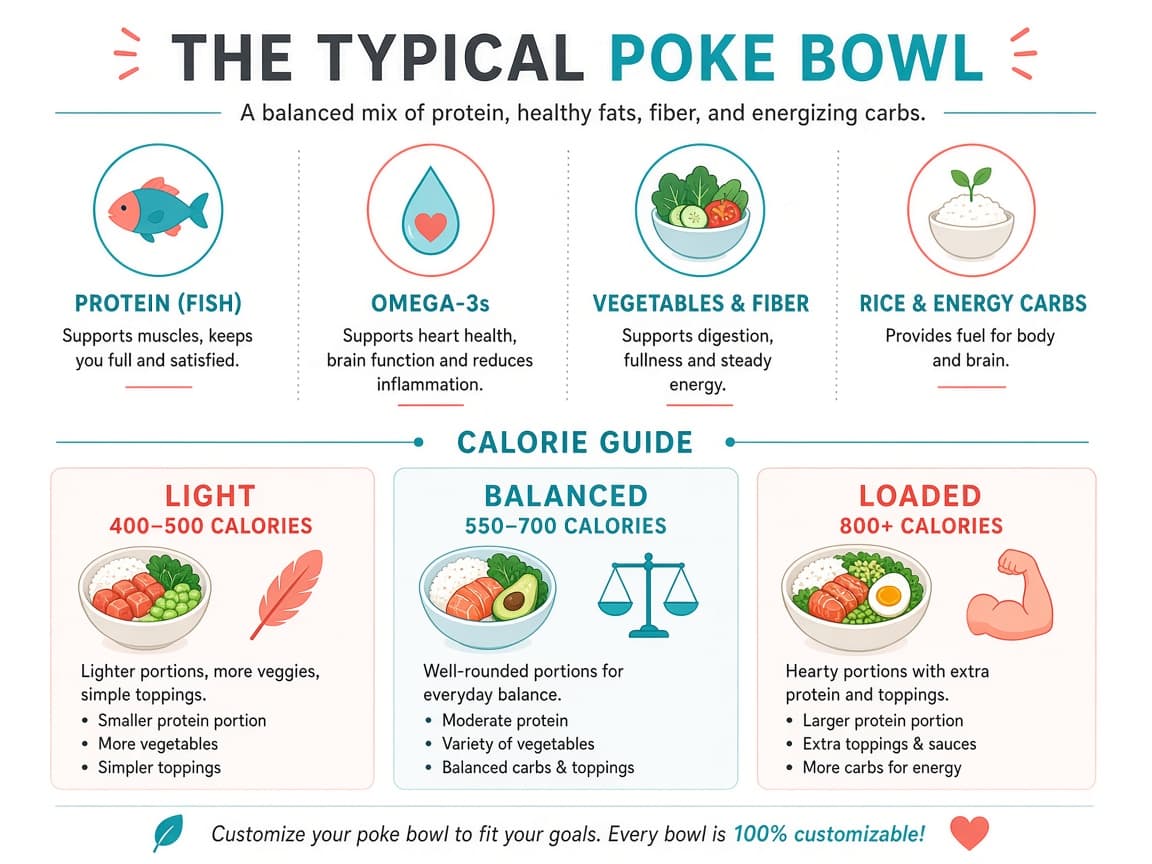
Here is a practical calorie map using common kitchen portions. Numbers are approximate estimates for home cooks, not lab assays. White rice, 1 cup cooked: about 200 to 205 calories. Brown rice, 1 cup: about 215. Quinoa, 1 cup: about 220 with more protein and fiber. Mixed greens, 2 cups: about 15 to 20. Ahi, 4 oz: about 120. Salmon, 4 oz: about 180 to 200. Firm tofu, 4 oz: about 90. Half an avocado: about 120. Edamame, ½ cup: about 90. Cucumber, ½ cup: about 10. Ponzu or light shoyu, 2 tablespoons: about 10 to 15. Spicy mayo, 2 tablespoons: about 180 to 200. That last line is why sauce choice changes the whole meal.
Energy for the day is not only the calorie total. White rice digests faster and suits a workout afternoon when you want quicker carbs. Brown rice or quinoa slows the curve with more fiber. Greens cut carbs if you already ate bread at breakfast. Salmon’s fat slows hunger more than lean tuna for some people. Pair the bowl with water, not a large sugary drink, if you care about the total energy load of the lunch break.
Steps at home. Only use sushi-grade fish (or fish clearly sold for raw eating) from a trusted fishmonger or grocery counter. Keep it cold the whole time. Rinse and cook short-grain rice, then cool it until warm, not steaming hot, so it does not cook the fish. Cube the fish into bite-size pieces and toss with a small marinade: low-sodium soy or tamari, a little sesame oil, sliced scallion and optional chili. Prep vegetables while the rice cools. Build the bowl base first, add protein, ring the mix-ins around the fish, drizzle one main sauce and finish with sesame. Eat soon. Leftover raw fish is not a great next-day office lunch.
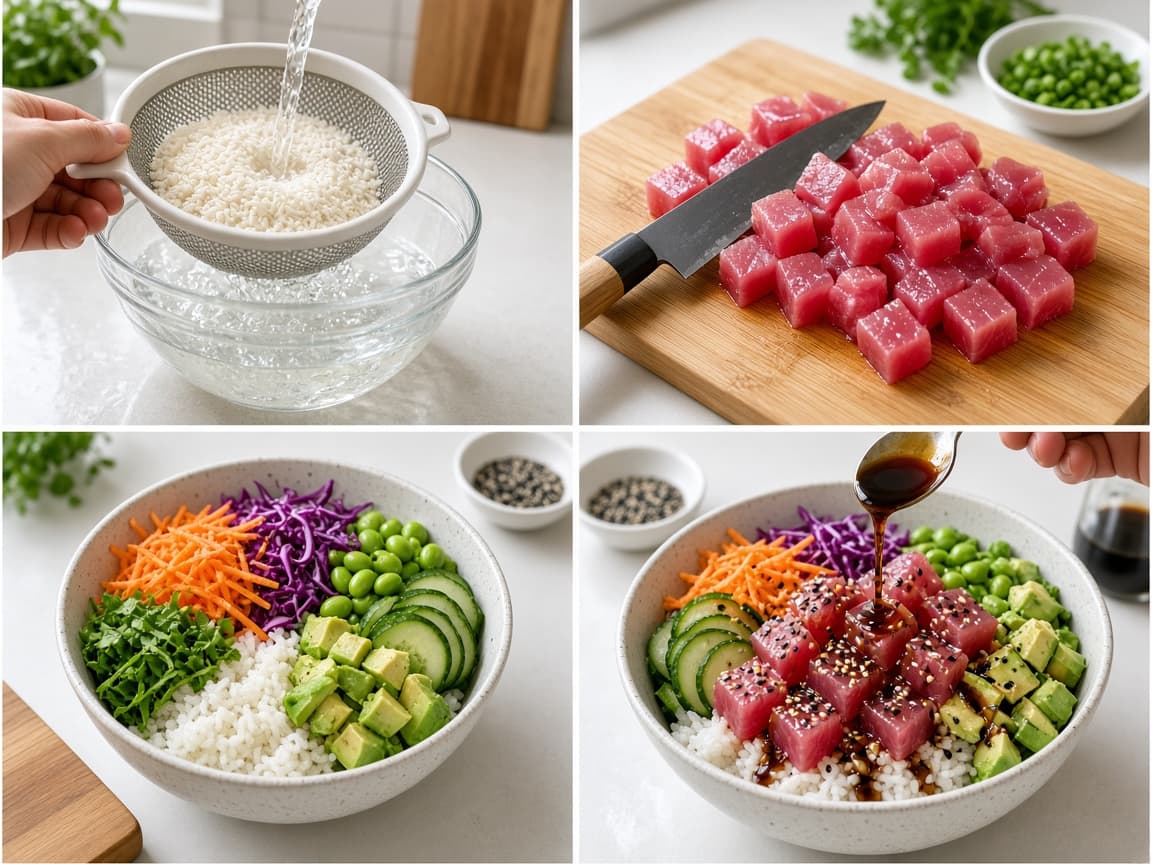
A strong everyday build looks like this. Base: ¾ cup cooked brown rice plus a handful of greens (about 160 to 180 calories from the grains). Protein: 4 oz ahi (about 120). Mix-ins: cucumber, edamame, carrot and seaweed (roughly 100 to 120). Fat: a few avocado slices, not a whole fruit (about 60 to 80). Sauce: 1 to 2 tablespoons ponzu or light shoyu (about 10 to 15). Sesame seeds on top. You land near 450 to 550 calories with high protein, color and crunch. Swap salmon for ahi and add about 60 to 80 calories while gaining more omega-3 fat.
Sushi-grade ingredients are not optional for raw poke. In plain terms, “sushi-grade” or “sashimi-grade” is a seller’s signal that the fish was handled for raw service: caught and processed cleanly, kept at safe cold temperatures and usually previously frozen hard enough to kill parasites that can live in wild fish. It is not a government stamp you can assume on every fillet in the cooler. Ask the fishmonger directly: is this sold for raw eating, and was it frozen to parasite-destruction standards used for sushi? If the answer is vague, do not cube it raw for a bowl.
Skip that standard and the food-safety risks rise fast. Ordinary fish meant only for cooking can carry parasites such as Anisakis worms and bacteria that cause foodborne illness, including Salmonella and Vibrio species linked to seafood. Raw fish that sat warm in a car, sat open on a counter or came from an unclear supply chain can also grow Listeria and other pathogens. Symptoms range from stomach cramps, vomiting and diarrhea to more serious illness. Pregnant people, young children, older adults and anyone with a weaker immune system face higher stakes and should choose cooked shrimp, baked salmon flakes, tofu or edamame instead of raw cubes.
Shop and cold-chain rules protect the bowl. Buy fish last at the store, bag it with ice if the trip home is long and refrigerate it immediately. Thaw frozen sushi-bound fish in the fridge, not on the counter. Use clean boards and knives so raw fish does not cross onto salad vegetables that will not be cooked. Eat the bowl the day you assemble it. If you cannot find sushi-grade fish, make a cooked poke-style bowl: sear or bake the fish, chill it, then assemble rice or greens, vegetables, sauce and crunch the same way. You keep the method and skip the raw risk.
Watch mercury separately from freshness. Bigeye and some large tunas run higher in mercury; salmon and smaller fish are usually better for frequent meals. Limit spicy mayo and sweet eel sauce if blood pressure or calories are the priority. Ask for sauce on the side when you order out. None of that replaces the first rule: raw poke only with fish sold and handled for raw eating.
Taste tips that keep you coming back. Salt the fish lightly and let vegetables carry freshness. Use mango or pineapple when you want sweetness instead of sugary glaze. Mix spicy mayo with ponzu half-and-half if you want cream without a full mayo pour. Add pickled ginger or kimchi for acid. Macadamia nuts nod to Hawaiian inamona without needing a specialty paste. The best bowl still tastes like fish and produce first, sauce second.
Compared with many fast lunches, a careful poke bowl wins on protein density, vegetable volume and control. A large burger meal can clear 800 to 1,000 calories with less micronutrient range. A cream-heavy pasta lunch often leans on refined starch and saturated fat. Poke is not automatically “clean.” It is customizable. That is the real reason to eat it: you can match training days, desk days and plant-based days with the same method.
Eagle Frame’s takeaway: eat poke because it is a clear meal system, not a trend label. Mind the sauce and rice portions, insist on sushi-grade fish for anything raw and switch to cooked protein when that standard is missing. Start with the balanced build above this week. Adjust the base to your energy needs and keep the fish cold. That is enough reason to make it a regular plate.
Poke is pronounced “poh-kay.” In Hawaiian it means to slice or cut crosswise. At its core it is cubed raw fish seasoned simply and eaten fresh. The modern poke bowl that spread from Hawaii into mainland shops and home kitchens adds a base, vegetables, sauce and crunch on top. That format is why the dish works so well as an everyday meal: you control protein, carbs, fat and flavor instead of guessing what is inside a wrapped lunch.
Traditional Hawaiian poke was fisherman food. Fresh reef fish or ahi, sea salt, limu (seaweed) and inamona (roasted kukui nut) were enough. Japanese influence later brought soy sauce, sesame oil and green onion into many local recipes. Grocery poke counters across Hawaii still sell it by the pound. The build-your-own bowl with rice, avocado, mango and spicy mayo is a newer mainland style. Both share the same idea: cut fish, season it well and eat it soon.
Why eat one? First, the protein. A typical 4-ounce (about 115 g) portion of raw ahi tuna is roughly 120 calories with about 25 to 26 grams of protein and very little fat. The same amount of raw salmon is closer to 180 to 200 calories with about 22 grams of protein plus more omega-3 fat. That is serious lunch fuel without deep frying. Shrimp, cooked crab mix, tofu and edamame keep the bowl open for people who skip raw fish.
Second, the micronutrient mix. Fish supplies EPA and DHA omega-3 fats linked to heart and brain support. Vegetables such as cucumber, carrot, cabbage, seaweed and edamame add fiber, potassium, vitamin C and plant protein. Avocado adds monounsaturated fat and potassium. Seaweed brings iodine and a salty marine note that needs less heavy sauce if you use it well. You are stacking foods that do different jobs instead of one dense fried item.
Third, energy you can tune. A poke bowl is not one fixed calorie count. Research summaries and shop guides usually place everyday bowls between about 400 and 900 calories depending on base size, sauce and fried toppings. A greens-heavy bowl with tuna, vegetables and ponzu can sit near 350 to 500 calories. A common rice bowl with ahi, avocado, edamame and a moderate shoyu-style sauce often lands around 500 to 700 calories with roughly 30 to 40 grams of protein. Load white rice, spicy mayo, eel sauce and crispy onions and you can pass 900. The dish is healthy when you build it that way. It is not magic if you treat the counter like a dessert bar.
Here is a practical calorie map using common kitchen portions. Numbers are approximate estimates for home cooks, not lab assays. White rice, 1 cup cooked: about 200 to 205 calories. Brown rice, 1 cup: about 215. Quinoa, 1 cup: about 220 with more protein and fiber. Mixed greens, 2 cups: about 15 to 20. Ahi, 4 oz: about 120. Salmon, 4 oz: about 180 to 200. Firm tofu, 4 oz: about 90. Half an avocado: about 120. Edamame, ½ cup: about 90. Cucumber, ½ cup: about 10. Ponzu or light shoyu, 2 tablespoons: about 10 to 15. Spicy mayo, 2 tablespoons: about 180 to 200. That last line is why sauce choice changes the whole meal.
Energy for the day is not only the calorie total. White rice digests faster and suits a workout afternoon when you want quicker carbs. Brown rice or quinoa slows the curve with more fiber. Greens cut carbs if you already ate bread at breakfast. Salmon’s fat slows hunger more than lean tuna for some people. Pair the bowl with water, not a large sugary drink, if you care about the total energy load of the lunch break.
Steps at home. Only use sushi-grade fish (or fish clearly sold for raw eating) from a trusted fishmonger or grocery counter. Keep it cold the whole time. Rinse and cook short-grain rice, then cool it until warm, not steaming hot, so it does not cook the fish. Cube the fish into bite-size pieces and toss with a small marinade: low-sodium soy or tamari, a little sesame oil, sliced scallion and optional chili. Prep vegetables while the rice cools. Build the bowl base first, add protein, ring the mix-ins around the fish, drizzle one main sauce and finish with sesame. Eat soon. Leftover raw fish is not a great next-day office lunch.
A strong everyday build looks like this. Base: ¾ cup cooked brown rice plus a handful of greens (about 160 to 180 calories from the grains). Protein: 4 oz ahi (about 120). Mix-ins: cucumber, edamame, carrot and seaweed (roughly 100 to 120). Fat: a few avocado slices, not a whole fruit (about 60 to 80). Sauce: 1 to 2 tablespoons ponzu or light shoyu (about 10 to 15). Sesame seeds on top. You land near 450 to 550 calories with high protein, color and crunch. Swap salmon for ahi and add about 60 to 80 calories while gaining more omega-3 fat.
Sushi-grade ingredients are not optional for raw poke. In plain terms, “sushi-grade” or “sashimi-grade” is a seller’s signal that the fish was handled for raw service: caught and processed cleanly, kept at safe cold temperatures and usually previously frozen hard enough to kill parasites that can live in wild fish. It is not a government stamp you can assume on every fillet in the cooler. Ask the fishmonger directly: is this sold for raw eating, and was it frozen to parasite-destruction standards used for sushi? If the answer is vague, do not cube it raw for a bowl.
Skip that standard and the food-safety risks rise fast. Ordinary fish meant only for cooking can carry parasites such as Anisakis worms and bacteria that cause foodborne illness, including Salmonella and Vibrio species linked to seafood. Raw fish that sat warm in a car, sat open on a counter or came from an unclear supply chain can also grow Listeria and other pathogens. Symptoms range from stomach cramps, vomiting and diarrhea to more serious illness. Pregnant people, young children, older adults and anyone with a weaker immune system face higher stakes and should choose cooked shrimp, baked salmon flakes, tofu or edamame instead of raw cubes.
Shop and cold-chain rules protect the bowl. Buy fish last at the store, bag it with ice if the trip home is long and refrigerate it immediately. Thaw frozen sushi-bound fish in the fridge, not on the counter. Use clean boards and knives so raw fish does not cross onto salad vegetables that will not be cooked. Eat the bowl the day you assemble it. If you cannot find sushi-grade fish, make a cooked poke-style bowl: sear or bake the fish, chill it, then assemble rice or greens, vegetables, sauce and crunch the same way. You keep the method and skip the raw risk.
Watch mercury separately from freshness. Bigeye and some large tunas run higher in mercury; salmon and smaller fish are usually better for frequent meals. Limit spicy mayo and sweet eel sauce if blood pressure or calories are the priority. Ask for sauce on the side when you order out. None of that replaces the first rule: raw poke only with fish sold and handled for raw eating.
Taste tips that keep you coming back. Salt the fish lightly and let vegetables carry freshness. Use mango or pineapple when you want sweetness instead of sugary glaze. Mix spicy mayo with ponzu half-and-half if you want cream without a full mayo pour. Add pickled ginger or kimchi for acid. Macadamia nuts nod to Hawaiian inamona without needing a specialty paste. The best bowl still tastes like fish and produce first, sauce second.
Compared with many fast lunches, a careful poke bowl wins on protein density, vegetable volume and control. A large burger meal can clear 800 to 1,000 calories with less micronutrient range. A cream-heavy pasta lunch often leans on refined starch and saturated fat. Poke is not automatically “clean.” It is customizable. That is the real reason to eat it: you can match training days, desk days and plant-based days with the same method.
Eagle Frame’s takeaway: eat poke because it is a clear meal system, not a trend label. Mind the sauce and rice portions, insist on sushi-grade fish for anything raw and switch to cooked protein when that standard is missing. Start with the balanced build above this week. Adjust the base to your energy needs and keep the fish cold. That is enough reason to make it a regular plate.