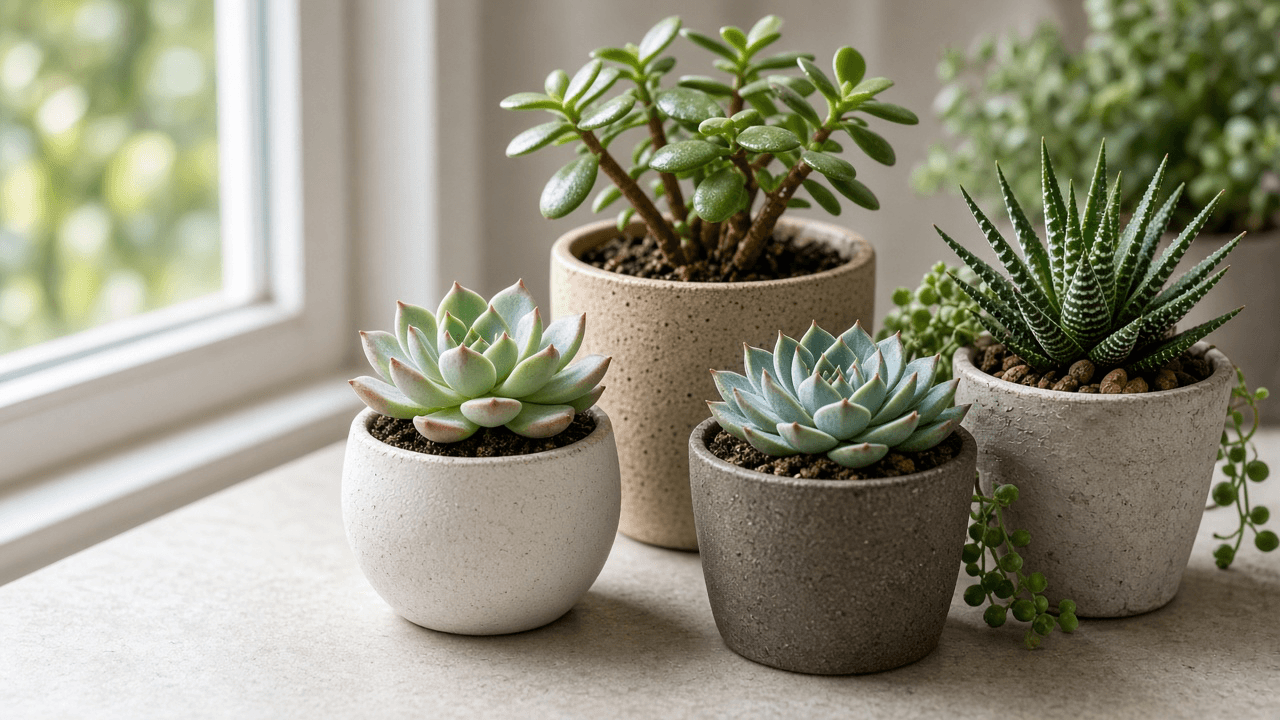
How to care for succulents
Give succulents bright light, gritty fast-draining soil and a soak-then-dry watering rhythm so leaves stay firm instead of mushy or shriveled.
Succulents store water in thick leaves and stems. That adaptation helps them survive dry spells, but it also means they hate sitting in wet soil. Most beginner trouble comes from too much water, too little light or heavy potting mix that never dries out.
Think of care as matching desert habits indoors: bright light for most of the day, a pot with a drainage hole and soil that drains in minutes after you water. A south or west window is ideal in the Northern Hemisphere. If leaves stretch pale and tall, the plant is asking for more light.
Water deeply, then let the soil go fully dry before the next soak. In summer that might be every week or two. In winter many succulents slow down and need water less often. Lift the pot: light weight and dry soil an inch down mean it is time. Yellow, translucent leaves often signal rot from overwatering.
Feed lightly during active growth with a diluted cactus fertilizer. Skip heavy feeding in winter. Repot when roots circle the pot or growth stalls, usually every year or two. Use a mix labeled for cacti and succulents or blend regular potting soil with coarse sand and perlite.
The Royal Horticultural Society notes that most desert succulents prefer bright light, dry air and free-draining gritty compost, but the label matters. Haworthias often prefer bright indirect light, while Christmas cacti come from humid forests and need filtered light plus more regular water. Identify the plant before applying desert care to every fleshy leaf.
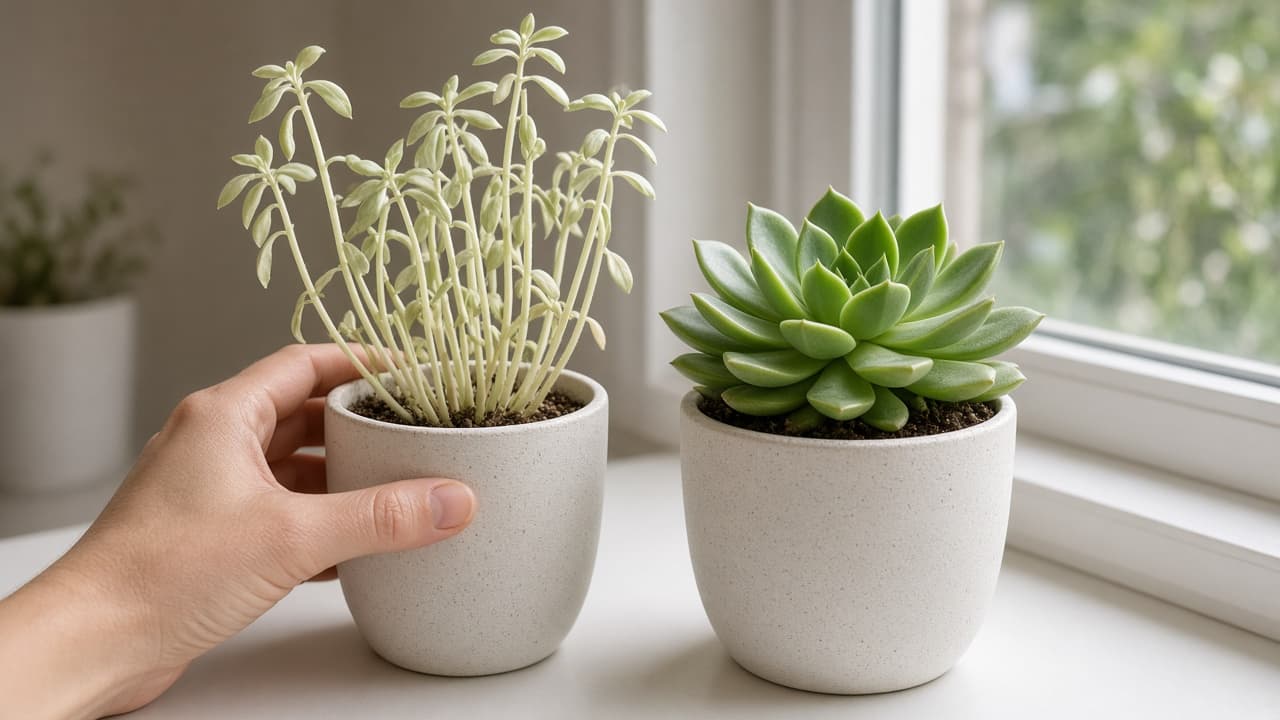
Check trouble from the roots upward. A stretched stem and wide gaps between leaves point to weak light. Soft yellow leaves or a brown base suggest excess moisture, so unpot the plant, trim rotten roots and restart in dry gritty mix. Wrinkled leaves with bone-dry soil usually mean thirst, but wrinkling in wet soil can mean damaged roots cannot take up water.
Step-by-step guide
Time: 15 to 25 minutes to set up; ongoing checks take a few minutes weekly
What you need
- Succulent or cactus potting mix
- Pot with a drainage hole (terracotta helps dry soil faster)
- Small trowel or spoon for repotting
- Watering can with a narrow spout
- Diluted cactus fertilizer for active growth
- Optional: perlite or coarse sand to lighten mix
Before you start
- No drainage hole plus frequent watering is the fastest route to rot.
- Misting leaves does not replace proper soil watering.
- Outdoor succulents need gradual sun acclimation to avoid sunburn.
- Cold windowsills below about 50°F (10°C) can damage many tender succulents.
Step 01
Set up a draining pot and identify the species
Drainage and a correct ID come before watering rules. Desert types, forest cacti and haworthias do not share one schedule.
Do this step in order
1a
Read the label or compare leaf shape first
Check whether you have a desert rosette, a forest cactus or a haworthia. Haworthias often want bright indirect light. Christmas cacti need more water than echeverias.
1b
Pick a pot with a hole and a saucer you empty
Plastic or terracotta both work if water can escape. Never leave standing water in the saucer after a soak.
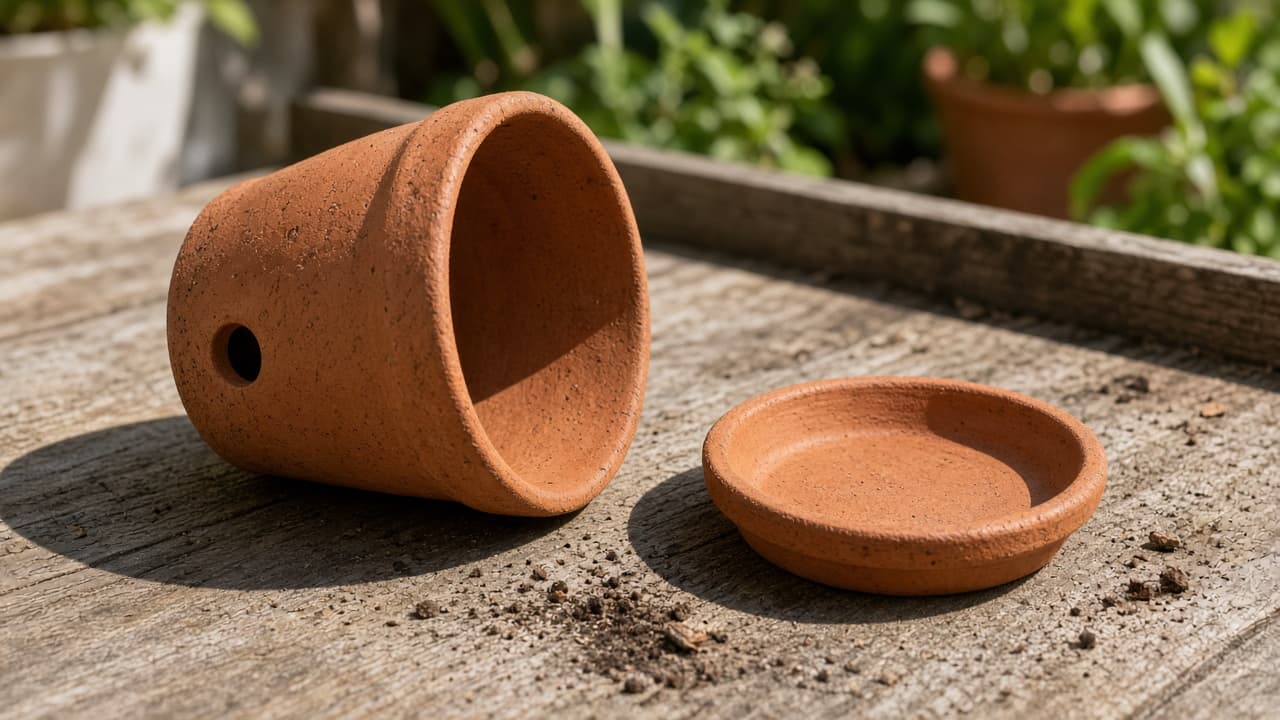
Choose a pot that drains and empty the saucer after every soak. 1c
Fill with cactus or succulent mix
Buy a labeled mix or blend potting soil with perlite and coarse sand until water drains in under a minute.
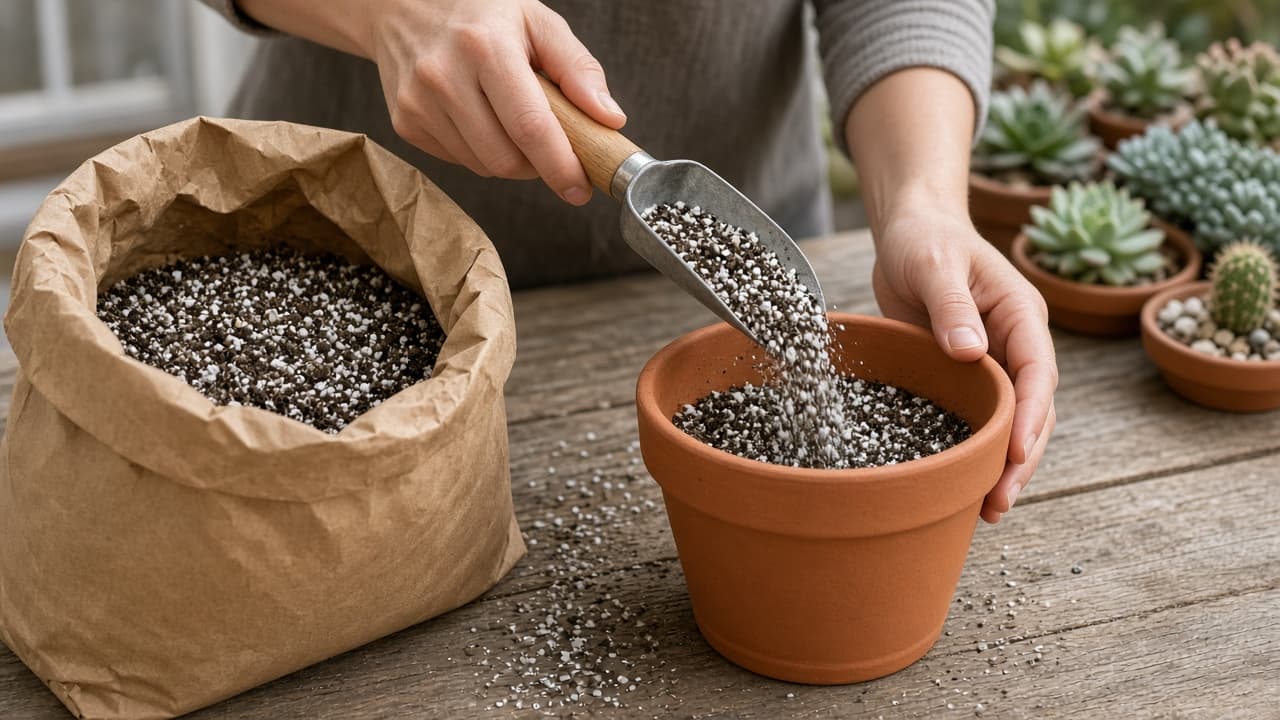
Use a fast-draining cactus or succulent mix, not dense garden soil. 1d
Reject heavy garden soil in a sealed pot
Common mistake: planting in dense backyard soil inside a pot with no hole. Roots suffocate within weeks and rot follows even if you water lightly.
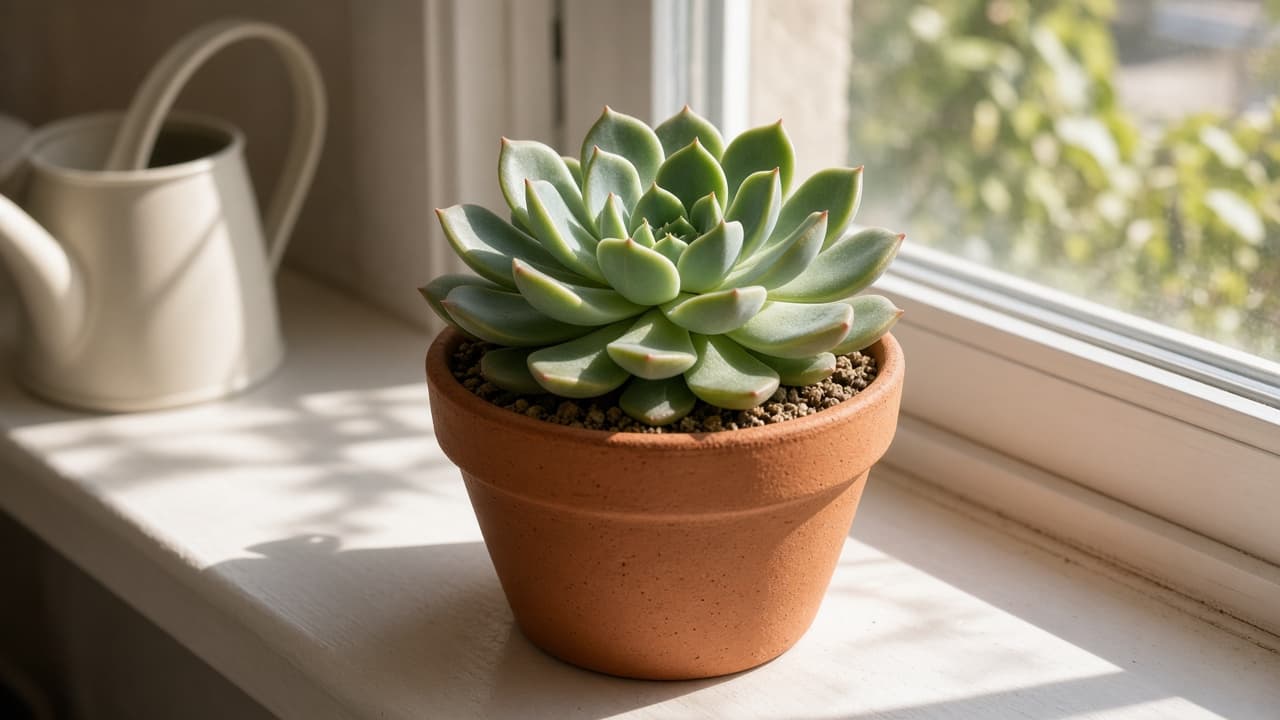
Give most desert succulents hours of bright sun each day.
Step 02
Place in bright light and acclimate gradually
Most succulents want hours of sun. Sudden exposure can bleach leaves. Move closer over one to two weeks.
Do this step in order
2a
Find the brightest safe spot in your home
A south or west window is a strong default in the Northern Hemisphere. Rotate the pot weekly so growth stays even.
2b
Watch for stretch before you blame watering
Pale tall growth with wide gaps between leaves means the plant is reaching for light. Increase brightness before you change the watering rhythm.
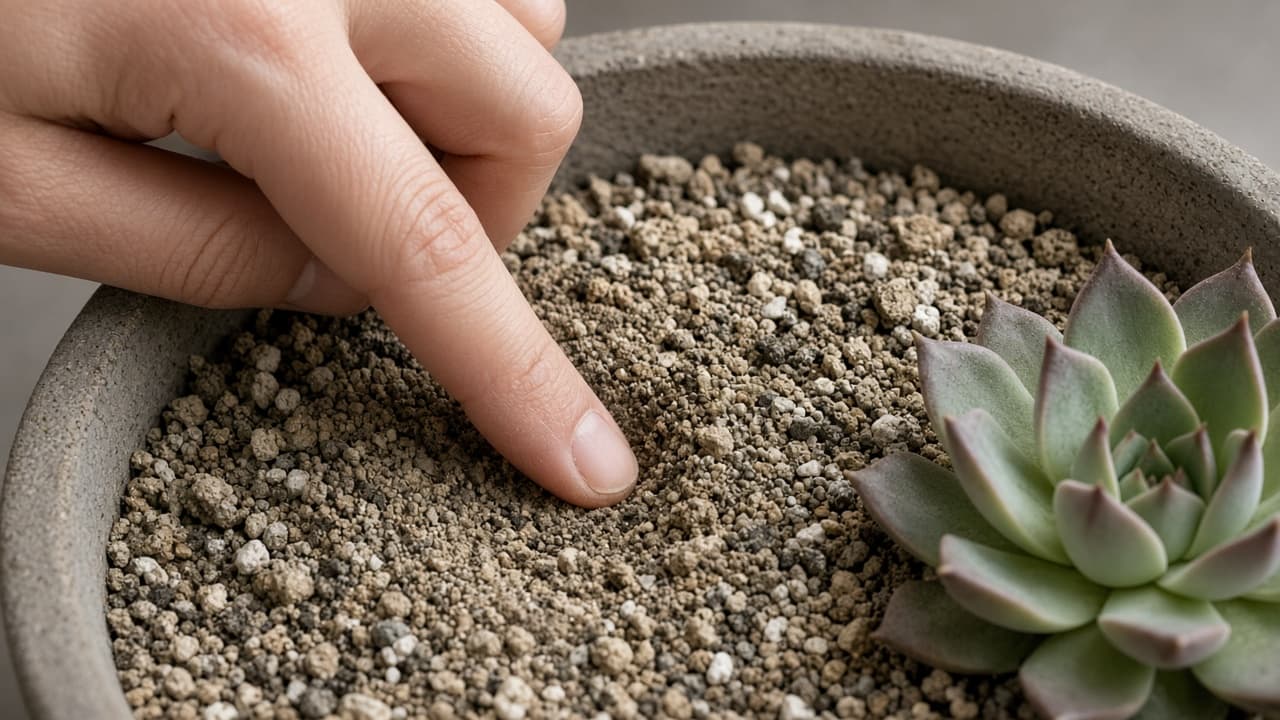
Check soil dryness separately from light stress signals. 2c
Move nursery plants closer to sun over two weeks
Start behind a sheer curtain or a foot back from the glass. Add an hour of direct sun every few days when leaves look firm.
Acclimate before you park a new plant in harsh midday sun. 2d
Skip the instant full-sun move from a dim shop
Common mistake: placing a shade-grown nursery succulent in direct midday sun the first day. Sunburn scars leaves permanently even on sun-loving species.
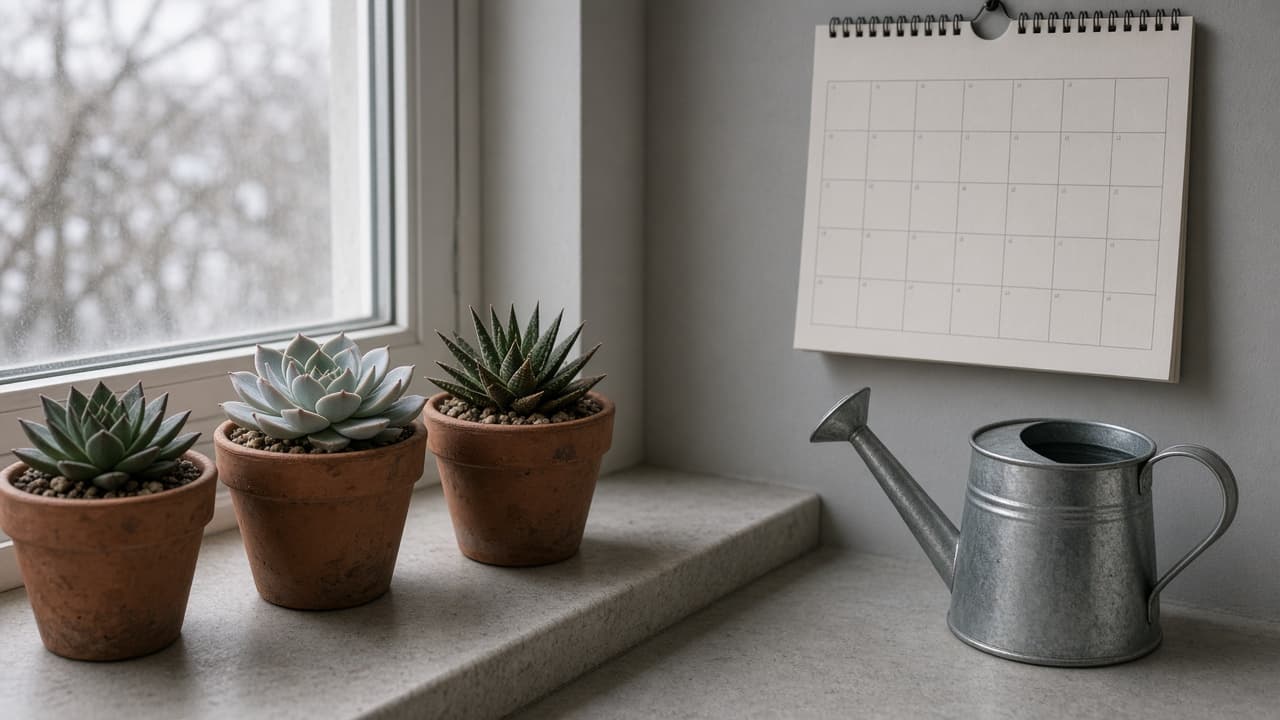
Reduce water in cool months when growth slows.
Step 03
Water on a soak-then-dry schedule
Deep watering followed by full drying mimics desert rain. Shallow sprinkles keep roots shallow and invite fungus.
Do this step in order
3a
Check dryness before every watering
Stick a finger an inch into the soil or lift the pot. Water only when that layer is completely dry.
3b
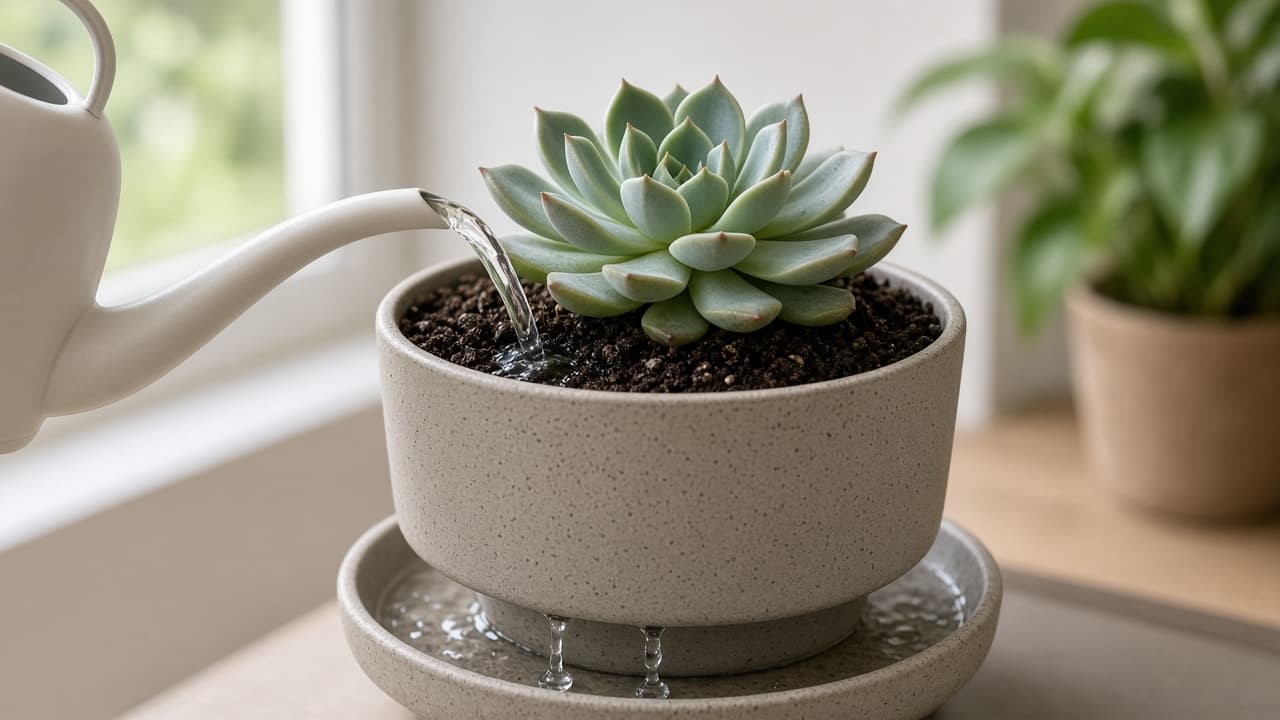
Soak until water exits the drainage hole
Pour slowly around the base. Stop when water flows out the bottom, then discard saucer water.
Confirm the soil is dry throughout before you soak. 3c
Stretch intervals in cool or dormant months
Many succulents need half as much water in winter. Watch the leaves: slight wrinkling means thirst; mush means too much.
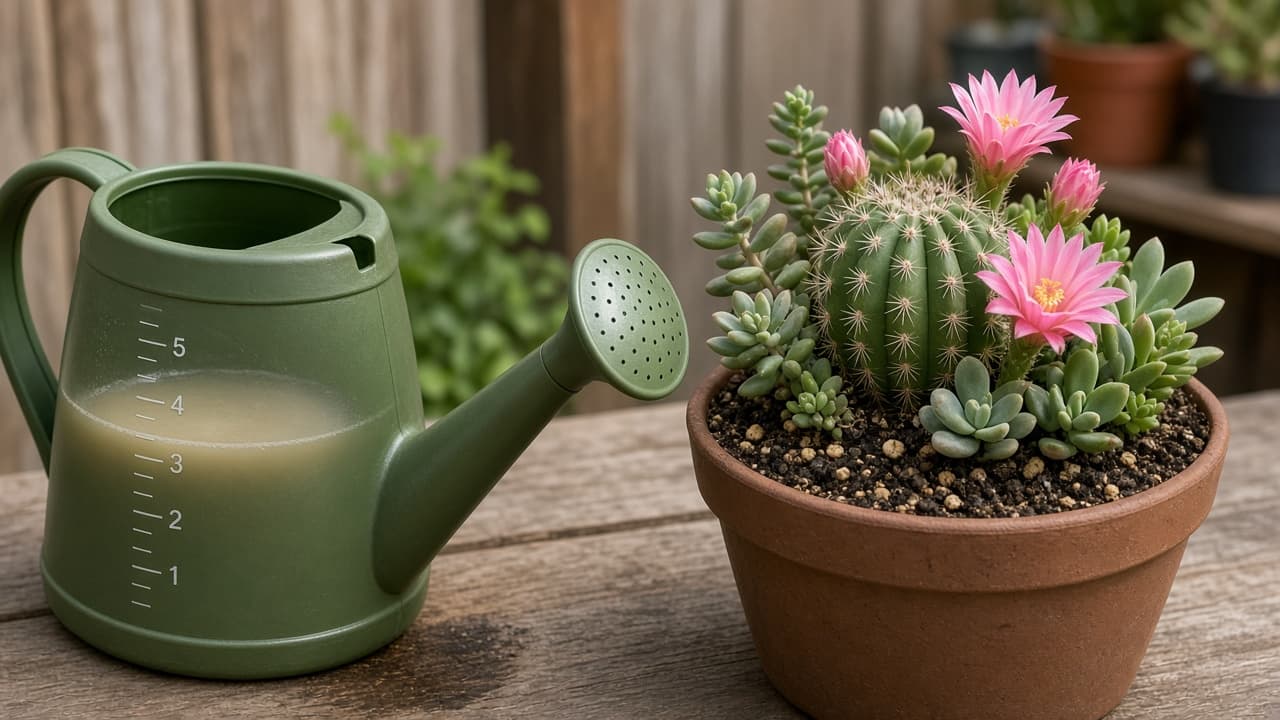
Water less often when growth slows in cool months. 3d
Keep water out of crowns and saucers
Common mistake: misting rosette centers or leaving saucer water overnight. Standing moisture rots tight leaves from the inside out.
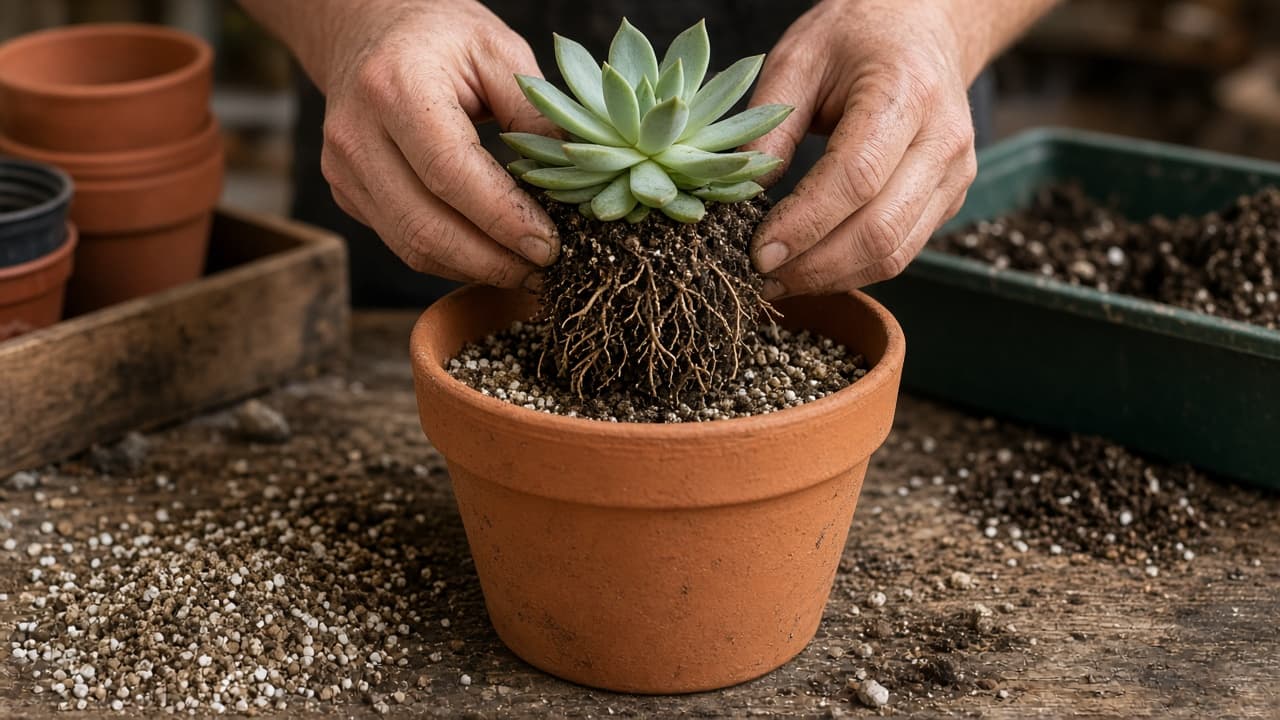
Aim at the soil and empty standing water from the saucer.
Step 04
Clear debris and feed lightly during growth
Remove fallen leaves, trim dead tissue and fertilize at half strength only when the plant is actively growing.
Do this step in order
4a
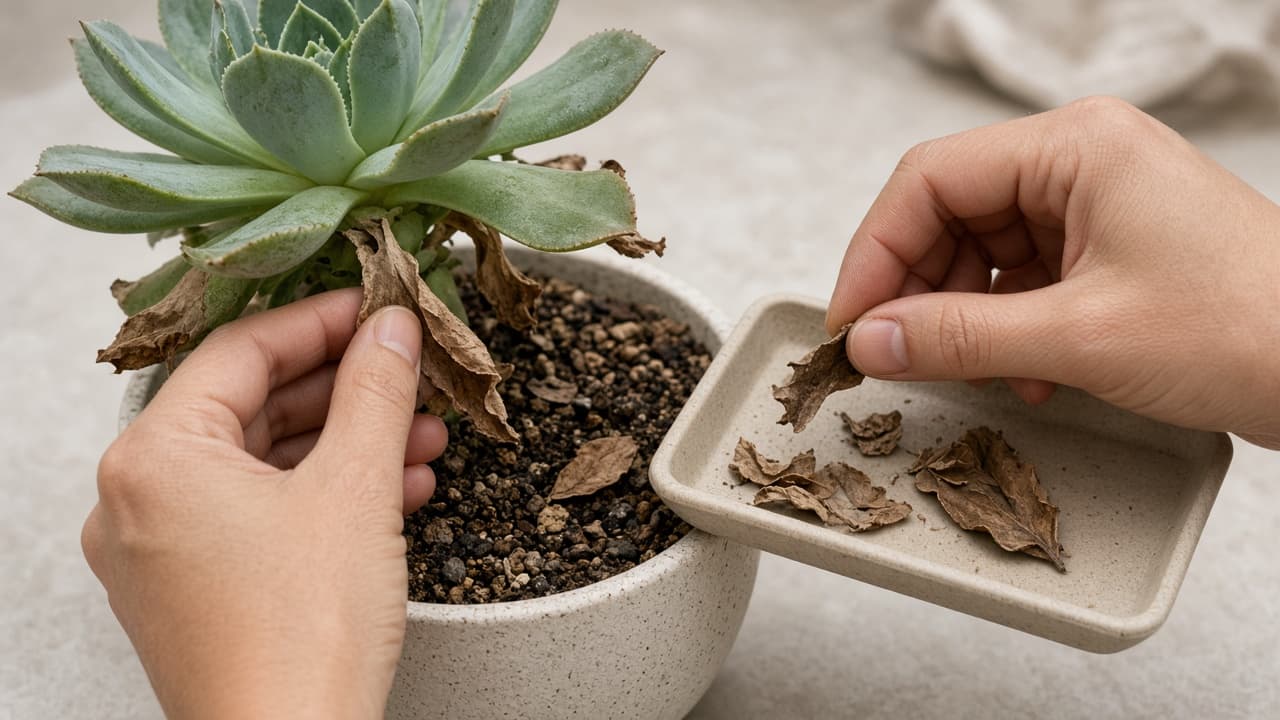
Clear dead leaves from the soil surface
Fallen leaves trap moisture and can harbor pests. Gently twist off dry lower leaves during routine checks.
4b
Fertilize at half strength in spring and summer
Use a cactus formula once a month during active growth. Skip feed when the plant is dormant.
Feed lightly at half strength only during active growth. 4c
Inspect for pests while you handle leaves
Look for cottony mealybugs in leaf joints and scale bumps on stems. Isolate an affected plant before treating it.
Check leaf joints for mealybugs during routine care. 4d
Avoid heavy feed on wet winter soil
Common mistake: pouring full-strength fertilizer on cold, barely dry soil. Salts build up and roots burn when growth has stopped.
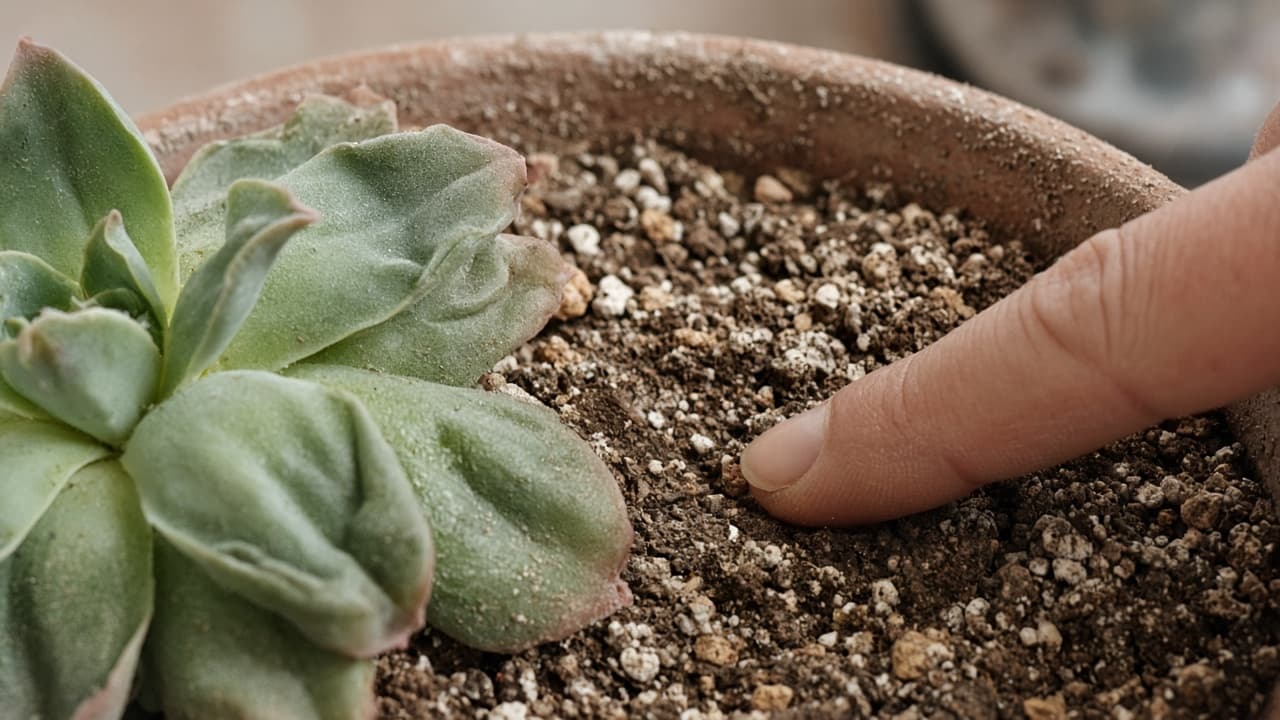
Skip fertilizer when the plant is dormant or stressed.
Step 05
Repot one size up when roots fill the pot
Refresh gritty mix when roots circle the drainage hole or growth stalls for a full season.
Do this step in order
5a
Wait until the plant is dry and growth is active
Repot in spring or early summer when possible. Let the soil dry for several days so roots are easier to handle.
5b
Choose a pot only one size larger
Too much empty soil stays wet longer. Terracotta dries faster than glazed ceramic for beginners.
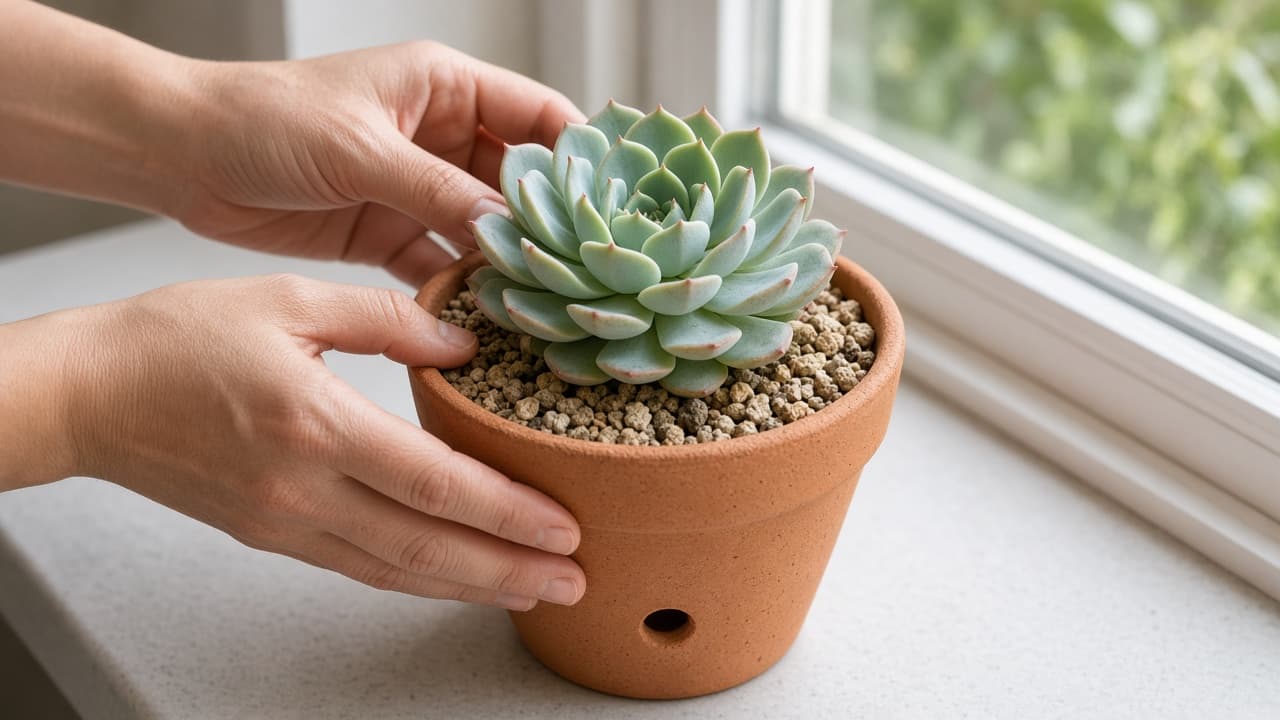
Move up one pot size, not three. 5c
Tease circling roots and backfill with fresh mix
Loosen the root ball gently. Set the plant at the same depth and water lightly after one week.
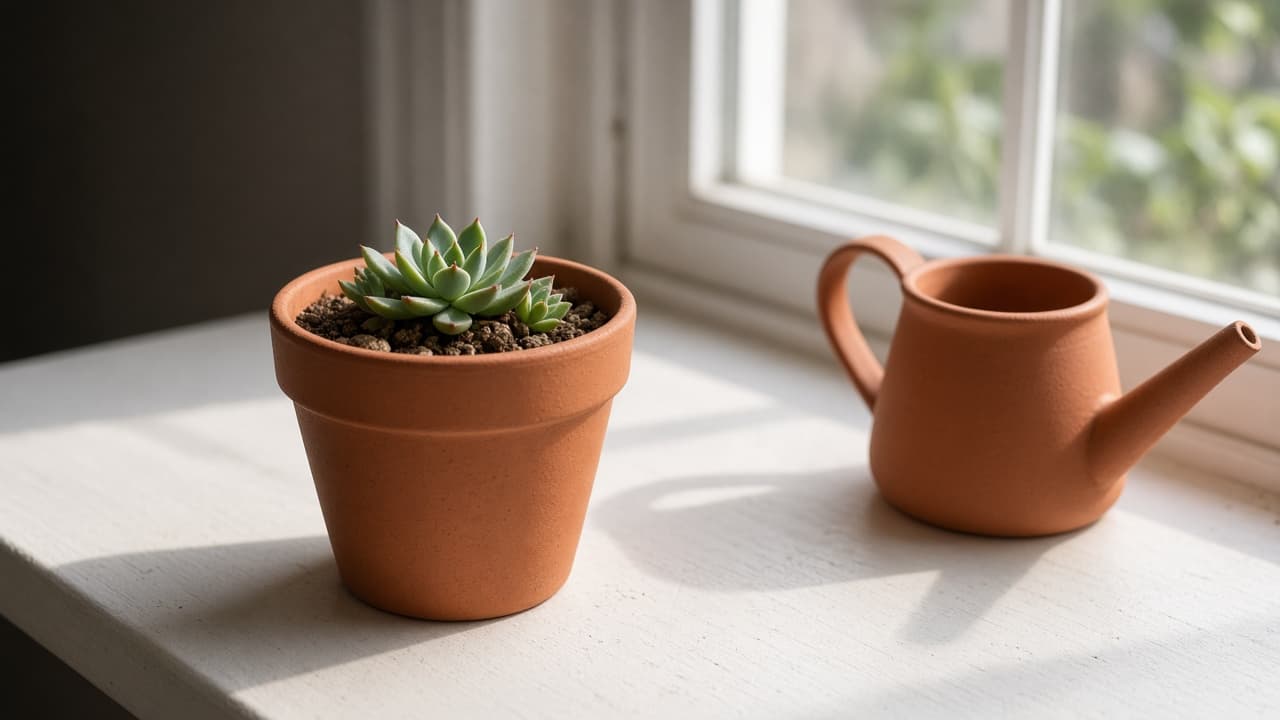
Fresh gritty mix replaces exhausted soil. 5d
Water immediately after every repot
Common mistake: soaking a freshly repotted succulent the same day. Let cut roots callus for a few days, then resume normal soak-then-dry watering.
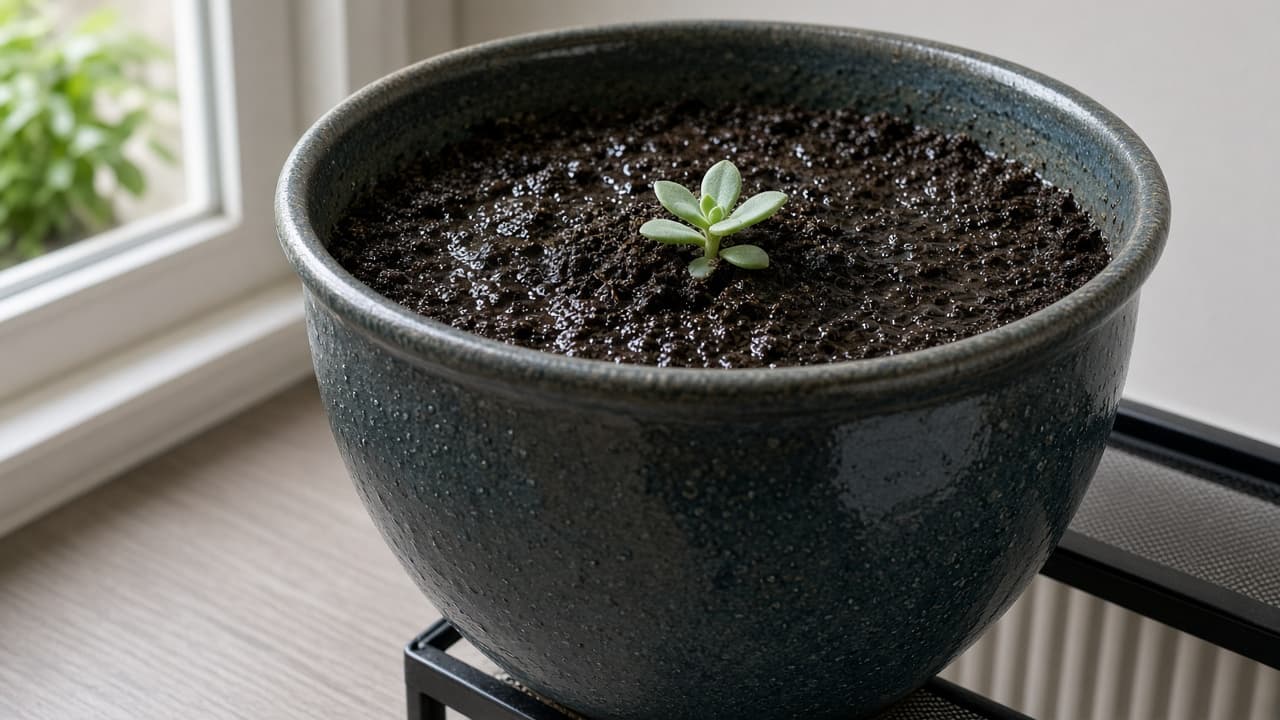
Wait a few days after repotting before a full soak.
Step 06
Separate species with different needs
Desert rosettes, forest cacti and haworthias should not share one watering calendar in the same tray.
Do this step in order
6a
Group plants by light and water preference
Keep rainforest cacti away from blazing south glass. Pair haworthias with bright indirect spots.
6b
Use separate saucers when schedules differ
A thirsty forest cactus beside a dry echeveria invites accidental overwatering when you pour for one plant.
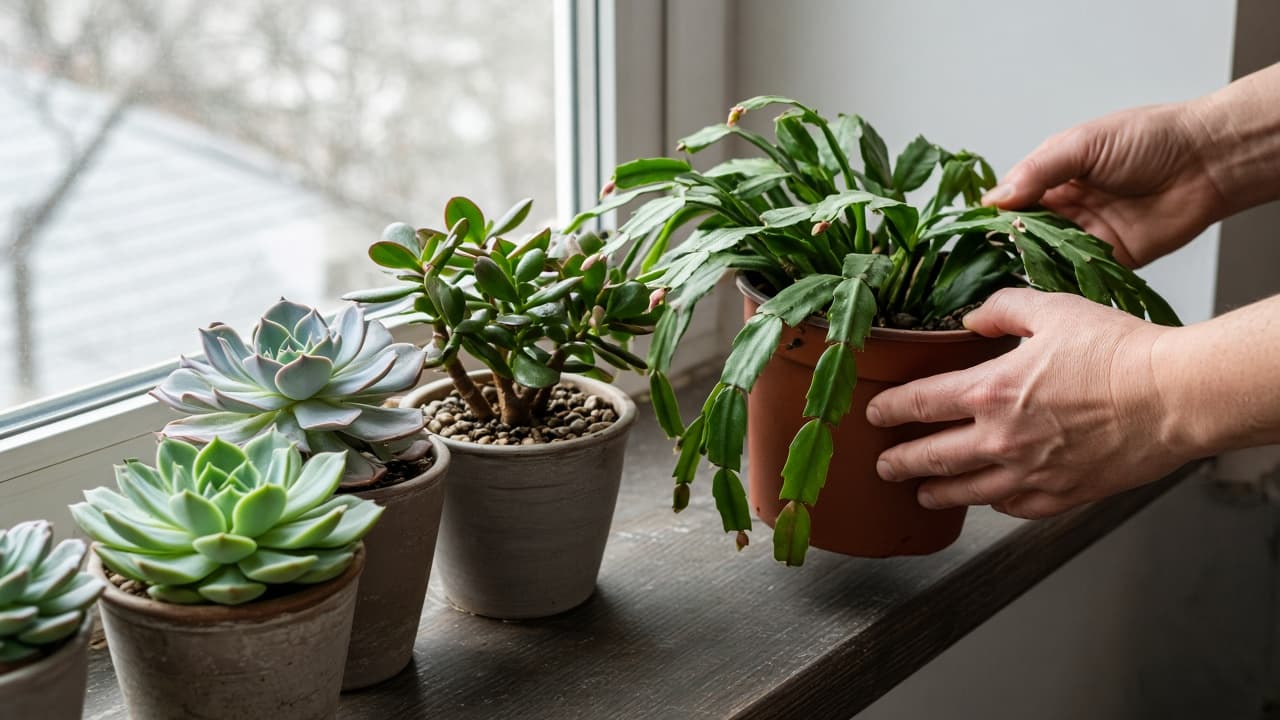
Label pots when you mix species on one shelf. 6c
Adjust winter care by type
Christmas cacti may need more humidity and regular water in bloom season. Echeverias often want a dry rest.
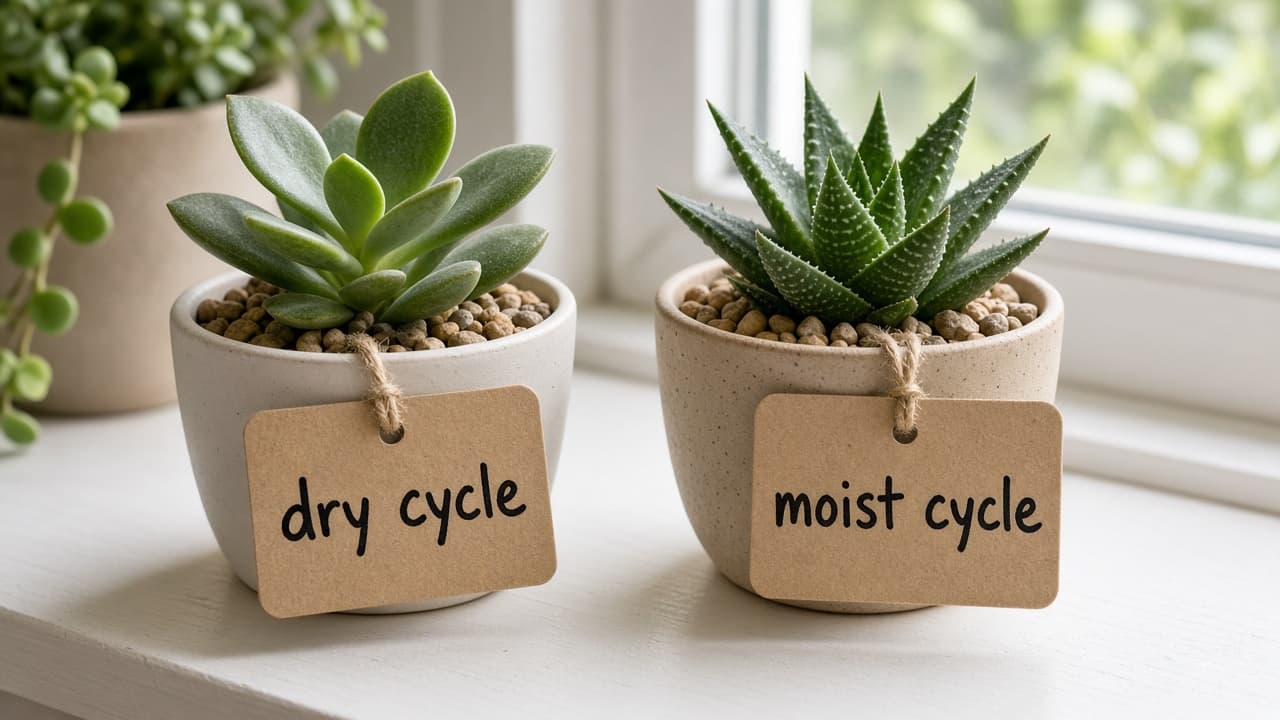
Forest and desert types belong on different schedules. 6d
Treat every fleshy leaf as the same plant
Common mistake: watering a haworthia on the same day as a desert stonecrop because both look succulent. One schedule fits neither.
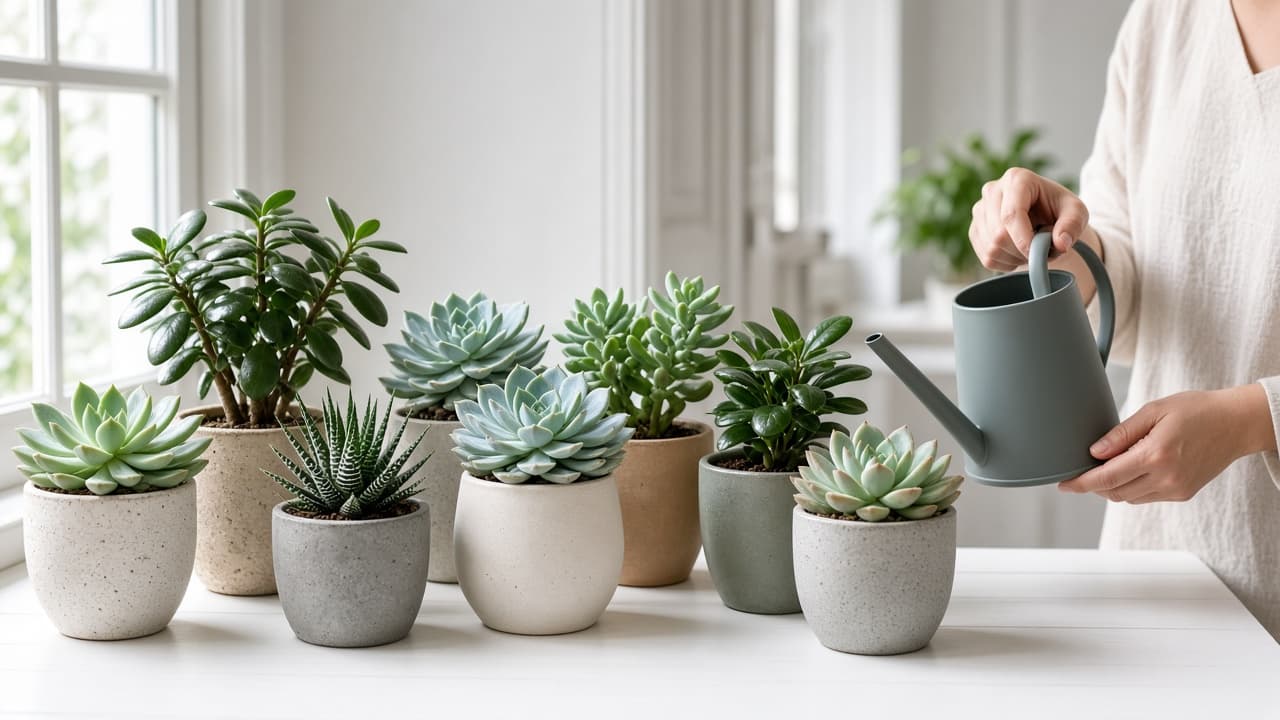
Identify the species before you copy a friend's routine.
Step 07
Diagnose light, water and root problems
Read leaves, stem and soil together. One symptom alone can point to more than one cause.
Do this step in order
7a
List symptoms before you change the routine
Note stretch, wrinkle, color and smell. A wrinkled plant in wet soil needs root inspection, not another soak.
7b
Move stretched growth toward brighter light
Increase light gradually and rotate the pot each week. Old stretched growth will not shrink, but compact new leaves show improvement.
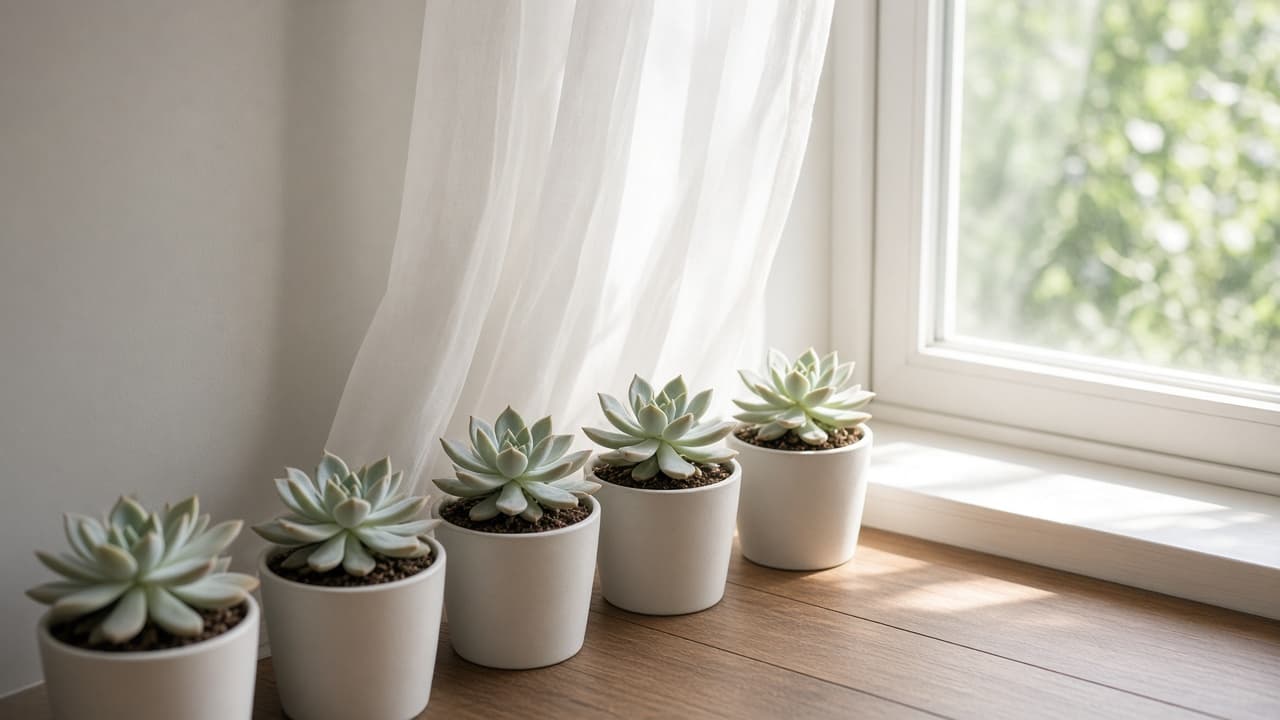
Increase light gradually so new growth stays compact. 7c
Unpot a plant with a soft brown base
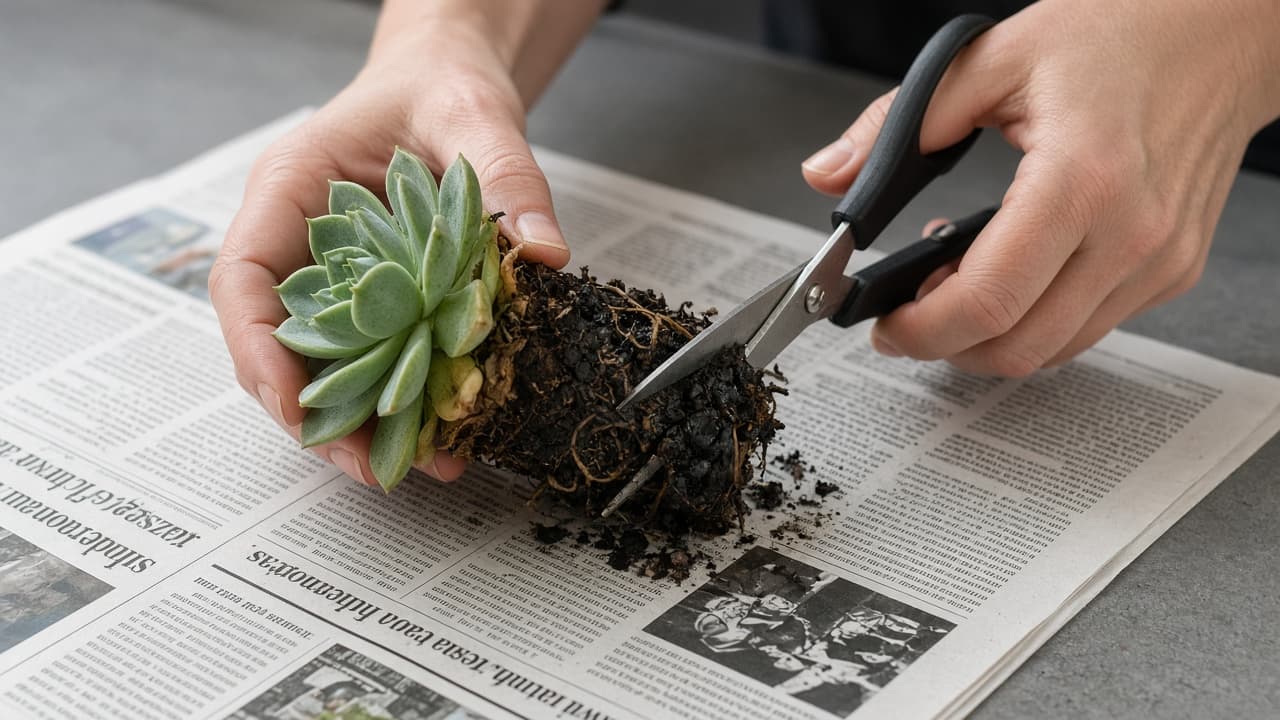
Remove wet mix, cut away black mushy roots with a clean blade and let cuts dry before repotting in fresh gritty compost.
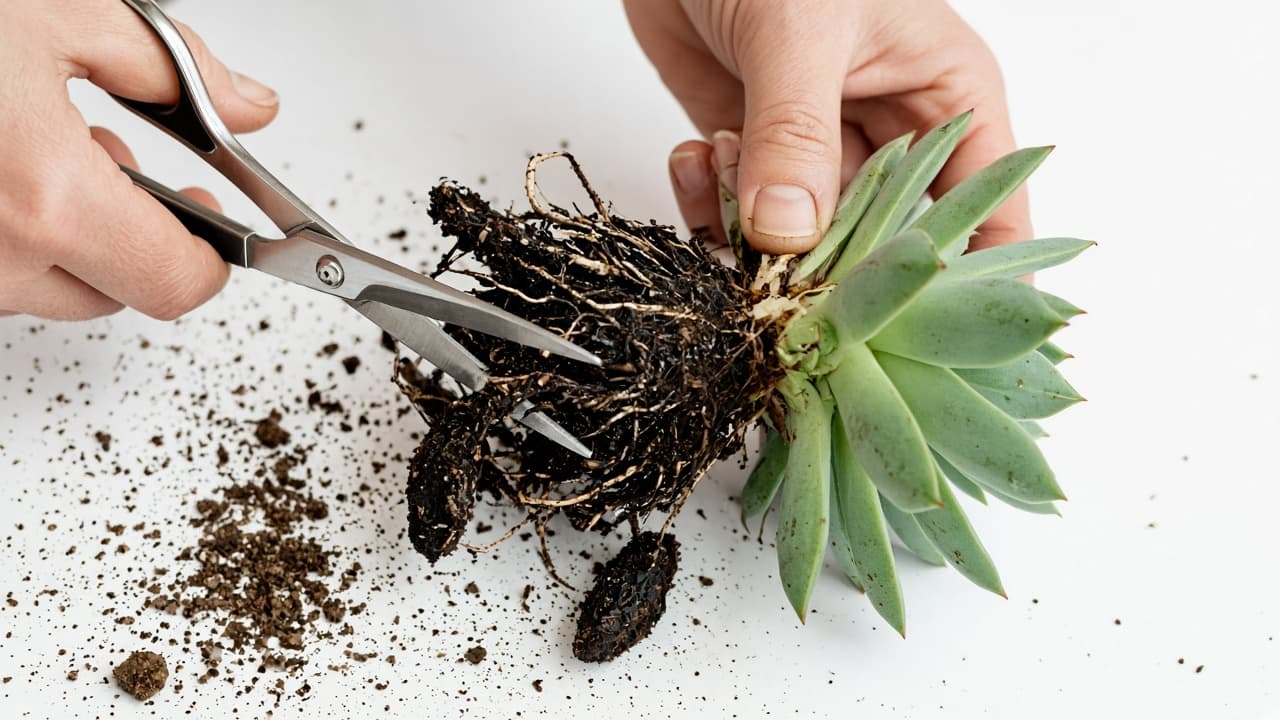
Trim mushy roots, dry the cuts, then restart in dry gritty mix. 7d
Water a wrinkled plant only after checking soil
Common mistake: soaking on schedule when the mix is still wet. Rot mimics thirst; confirm dryness or inspect roots first.
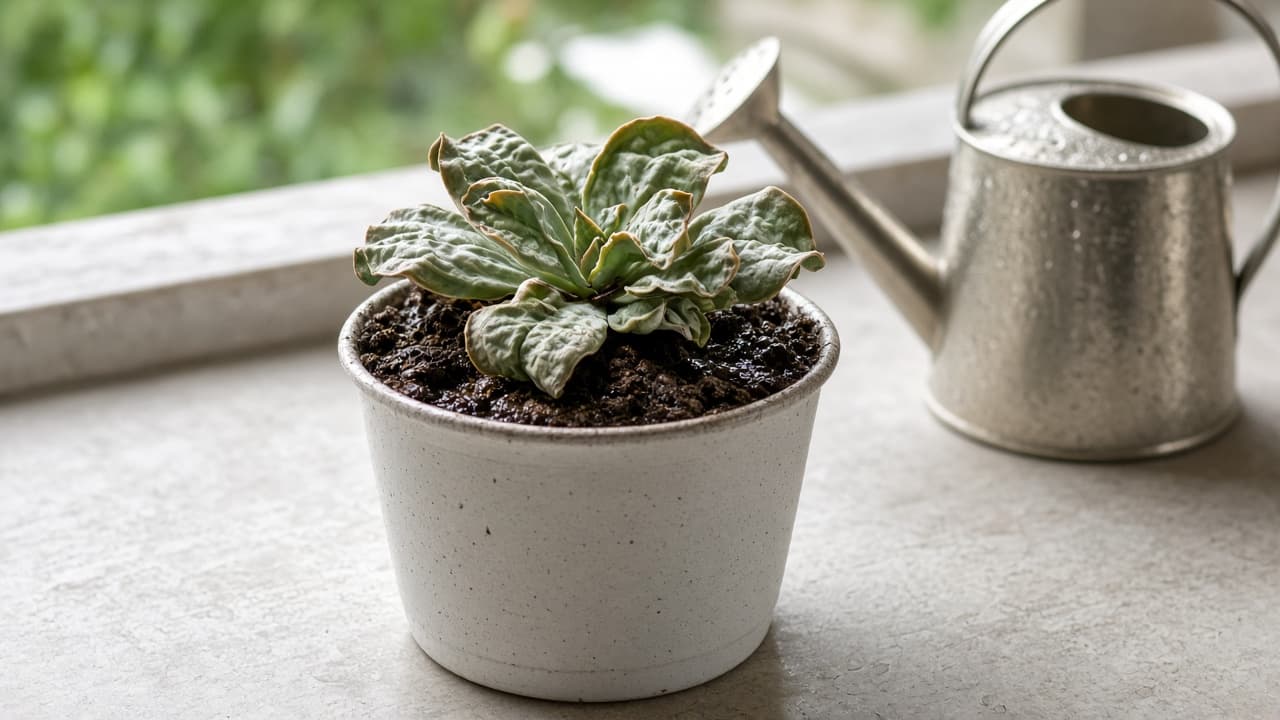
Confirm the soil is dry before treating wrinkles as thirst.
Done when
- Confirm the pot drains freely
- Identify the species before copying a watering chart
- Place in bright indirect to direct sun depending on type
- Water until it runs out the bottom, then wait for dry soil
- Remove fallen leaves from the soil surface
- Repot with gritty mix when roots outgrow the pot
- Separate species that need different light or water
Eagle Frame's takeaway: bright light, gritty soil, a drainage hole and water only when dry. Firm leaves mean you are on track. Soft brown bases mean back off water, check drainage and move the plant to stronger light if it has been dim for weeks.