How to clean white shoes
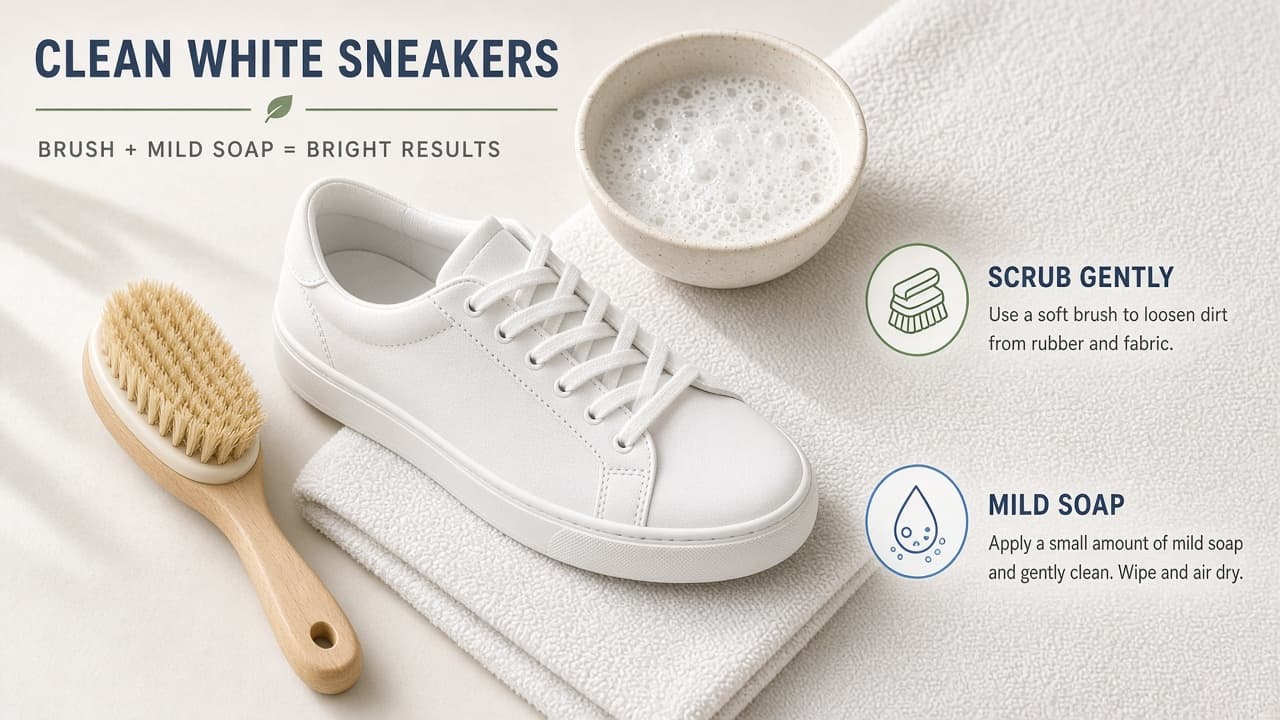
Clean white sneakers by material: mild soap for canvas and mesh, careful wipe-downs for leather and slow air drying so glue and shape survive the wash.
White shoes show every scuff, which is also why a careful clean looks dramatic. The method depends on material. Canvas and mesh like mild soap and a soft brush. Leather prefers wipe-downs and conditioner-safe care. Glue lines and foam midsoles hate long soaks and hot dryers.
Start by reading any care tag and removing loose dirt outside. Stuff the shoes with paper to hold shape while they dry. Skip bleach baths unless a product is explicitly made for that upper; bleach can yellow fabric and weaken fibers.
Laces and insoles often make the whole shoe look greyer than the upper really is. Clean them separately. For rubber midsoles, a paste of mild soap or a magic-eraser style foam cleaner used gently can lift curb marks without shredding the upper.
Dry at room temperature away from radiators and direct blasting heat. Heat warps soles and can loosen factory glue. Once dry, a simple sneaker protector spray can slow the next round of stains if the material allows it.
Step-by-step guide
Time: 30 to 60 minutes plus air-dry time
What you need
- Mild dish soap or sneaker cleaner
- Soft brush or old toothbrush
- Microfiber cloths
- Bowl of lukewarm water
- Paper for stuffing and drying
- Optional: white eraser for scuffs, sneaker protector spray
Before you start
- Do not machine-wash shoes unless the maker explicitly allows it. Many pairs delaminate in dryers.
- Test cleaners on a hidden spot first. Avoid harsh bleach on most uppers.
- Keep water out of the shoe cavity as much as you can. Soaked foam takes forever to dry and can smell.
Step 01
Prep the pair and identify the material
Guessing wrong is how leather gets oversaturated and mesh gets scrubbed raw.
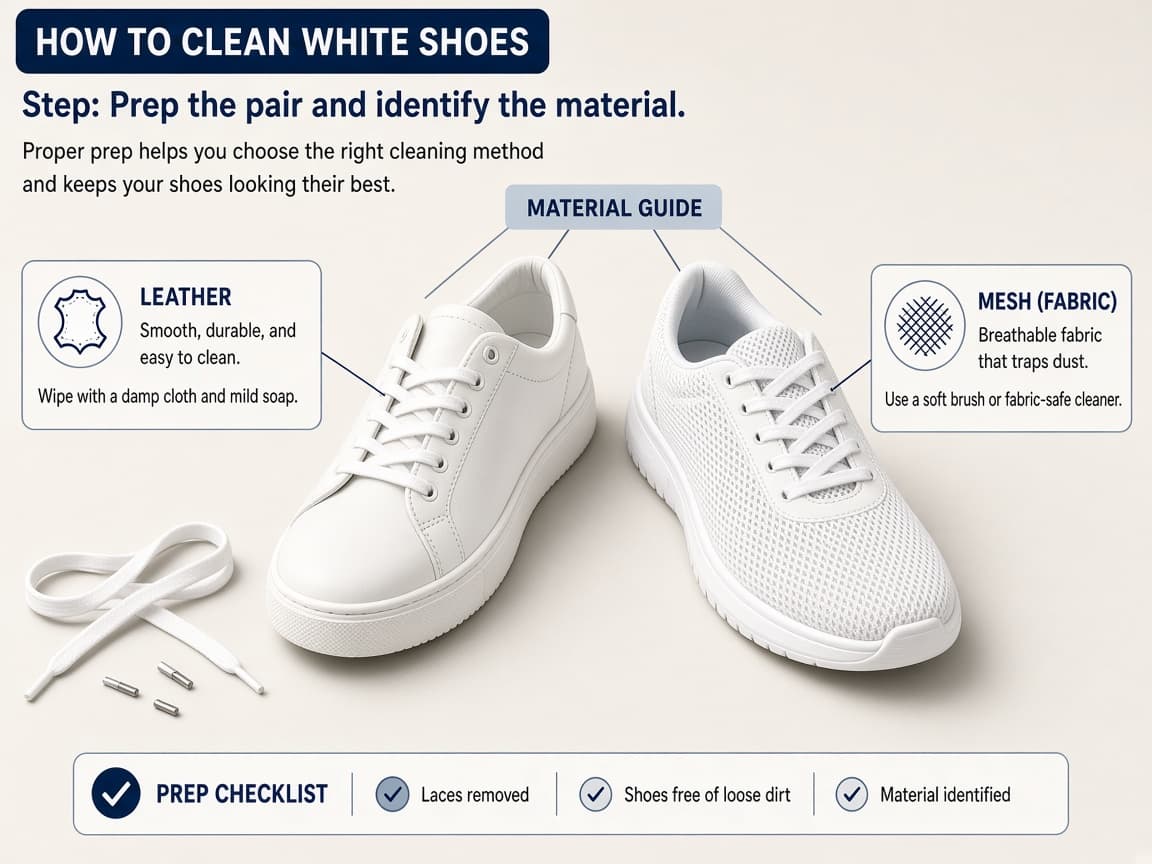
Remove laces first and note canvas, mesh, leather or knit. Do this step in order
1a
Take out laces and insoles
Set them aside to wash separately. Empty pebbles from the footbed.
1b
Knock off dry dirt outside
Tap soles together outdoors and brush loose mud before you add water. Wet mud becomes paste that smears.
1c
Check for leather, canvas, mesh or knit
Leather looks smooth and may be coated. Canvas is woven fabric. Mesh and knit are open textiles. Mix methods only with care on multi-material shoes.
1d
Spot-test your cleaner
Dab mild soapy water on a hidden heel area. Wait and check for dye bleed or dulling.
Step 02
Clean the upper with a material-safe method
Mild soap and patience beat aggressive bleach for most everyday sneakers.
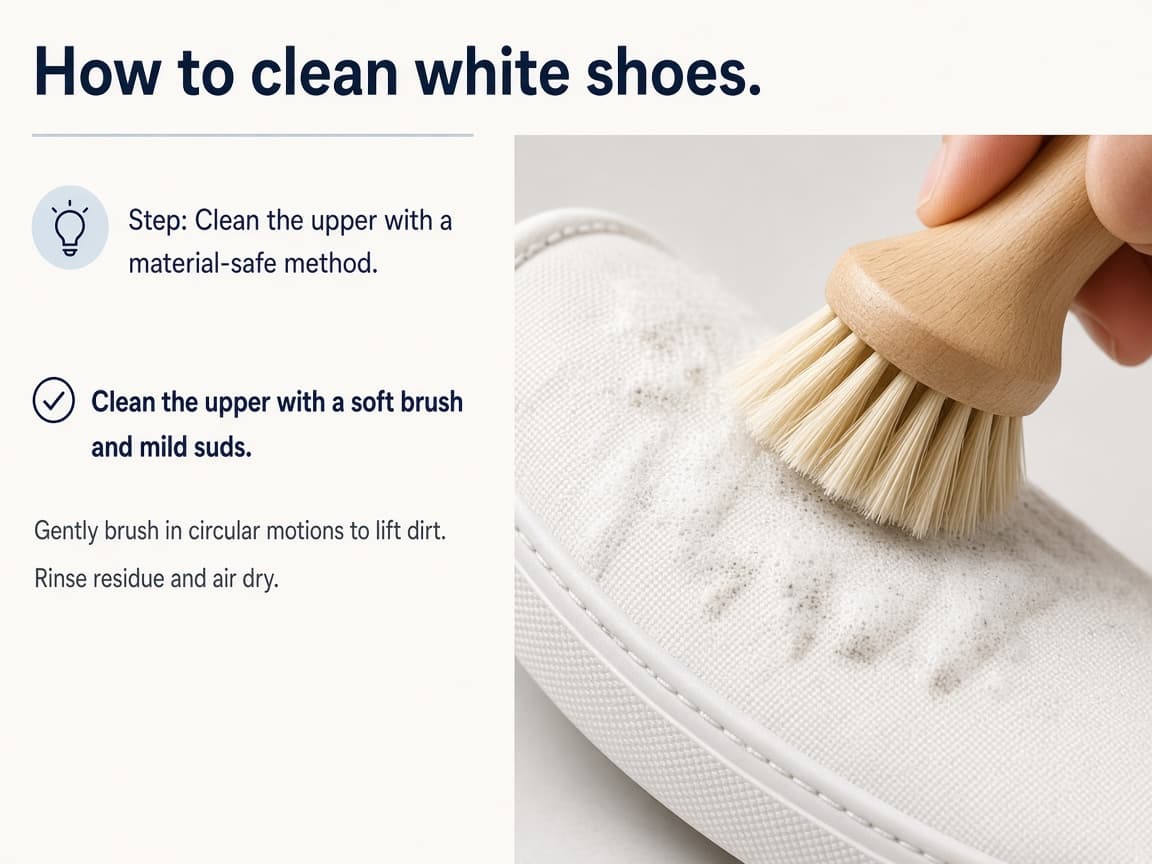
Light suds and a soft brush lift most everyday grime. Do this step in order
2a
Canvas and mesh: mild soap and soft brush
Mix a few drops of mild soap in lukewarm water. Brush in small circles. Wipe with a clean damp cloth often so dirt does not resettle.
2b
Leather: wipe, do not soak
Use a barely damp cloth with mild soap. Wipe scuffs. Dry with a second cloth. Add a leather-safe conditioner later if the maker allows it.
2c
Rinse the cloth often
A dirty cloth paints grey film back onto white panels. Refresh water when it looks muddy.
2d
Skip the washing machine for most pairs
Unless the brand says otherwise, hand methods are safer for glue and shape.
Step 03
Detail midsoles, laces and stubborn marks
Edges and laces decide whether the shoe still looks dingy after the upper is clean.
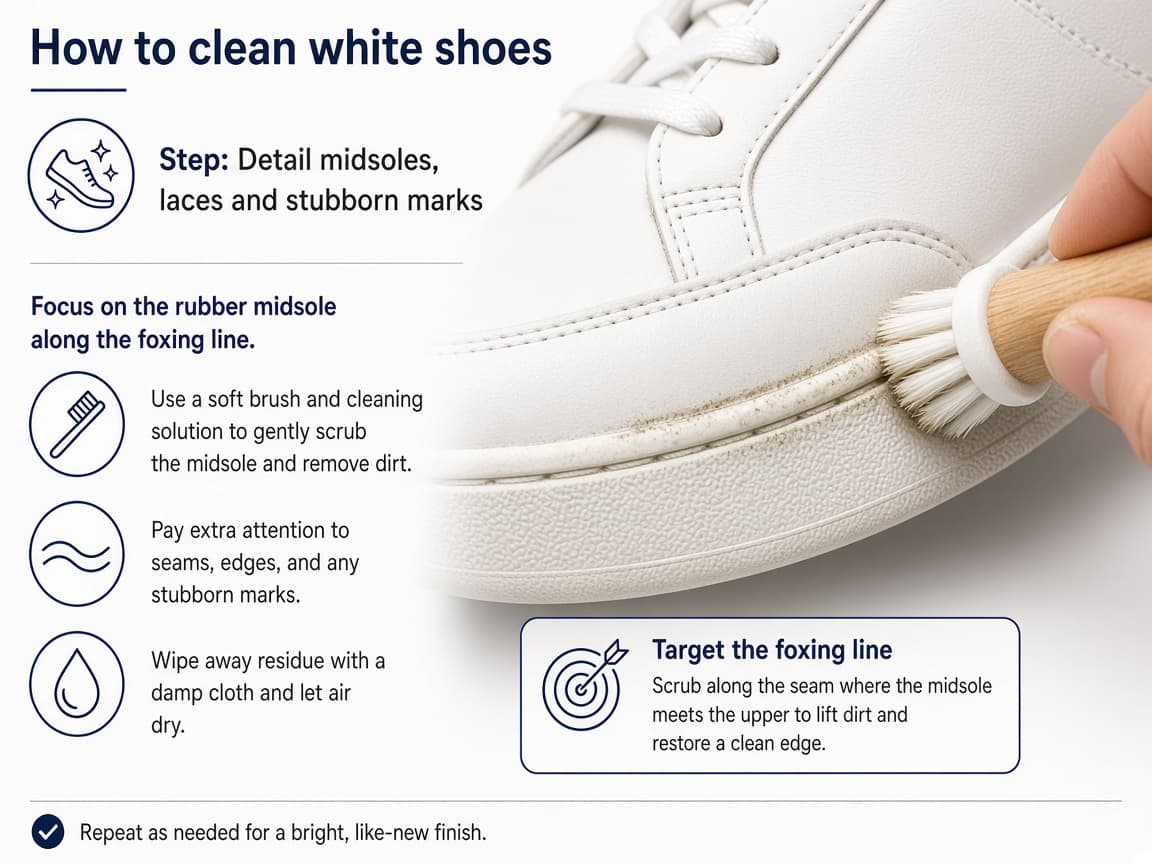
Midsole scuffs are half the 'dirty white shoe' look. Do this step in order
3a
Clean rubber midsoles carefully
Use the brush and soapy water along the foxing. For stubborn curb marks, a melamine foam eraser used gently can help. Keep it off delicate suede or untreated leather.
3b
Wash laces and insoles apart
Soak laces in mild soapy water, agitate and rinse. Wipe insoles; replace them if they are broken down or foul-smelling.
3c
Treat stains by type when you can
Mud wants dry brush then soap. Grass may need a bit more timed soap work. Oil is harder; blot and use a cleaner meant for sneakers. When in doubt, repeat mild methods before harsh chemicals.
3d
Wipe metal eyelets and tongue labels
Grey rings around eyelets make clean uppers look unfinished. A cotton swab helps in tight spots.
Step 04
Dry slowly and protect for next wear
How you dry the shoes matters as much as how you wash them.
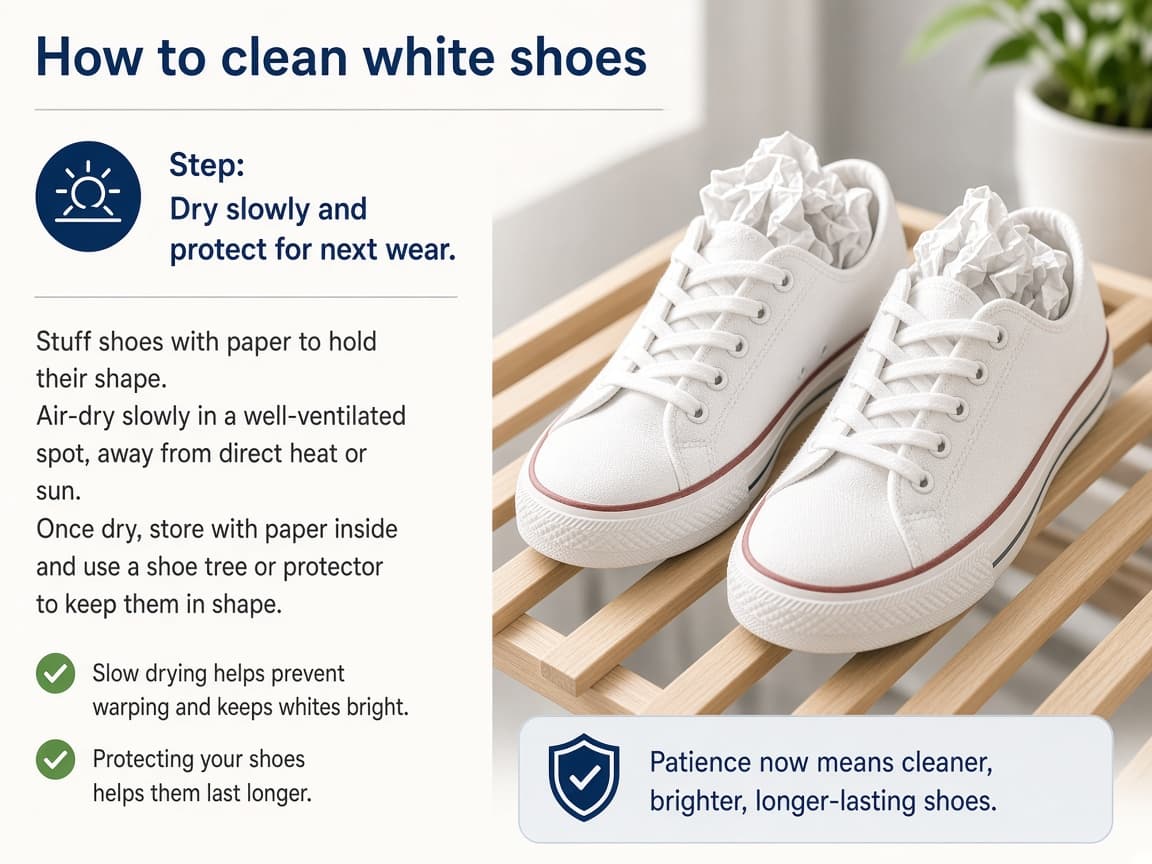
Paper stuffing and room-temperature drying protect shape and glue. Do this step in order
4a
Stuff with paper and air dry
Fill the toe box with paper or a sneaker tree. Replace paper if it gets soaked. Keep shoes away from radiators, hair dryers and hot cars.
4b
Re-lace only when fully dry
Damp foam compressed by tight laces can smell and crease oddly. Wait until the upper feels dry inside.
4c
Optional protector spray on compatible materials
Once dry, a sneaker protector can help canvas and some leathers shrug off light stains. Spray outside and let it cure as directed.
4d
Spot-clean sooner next time
Fresh mud is easier than baked-on grey film. A two-minute wipe after a muddy day saves a full Saturday scrub.
Done when
- Laces and insoles removed
- Dry dirt brushed off
- Upper cleaned by material type
- Midsole scuffs lifted
- Stuffed and air-drying away from heat
Eagle Frame's takeaway: match the method to the material, use mild soap and soft tools, clean laces apart and air dry with paper inside. Patience keeps white shoes wearable longer than a washing-machine gamble.