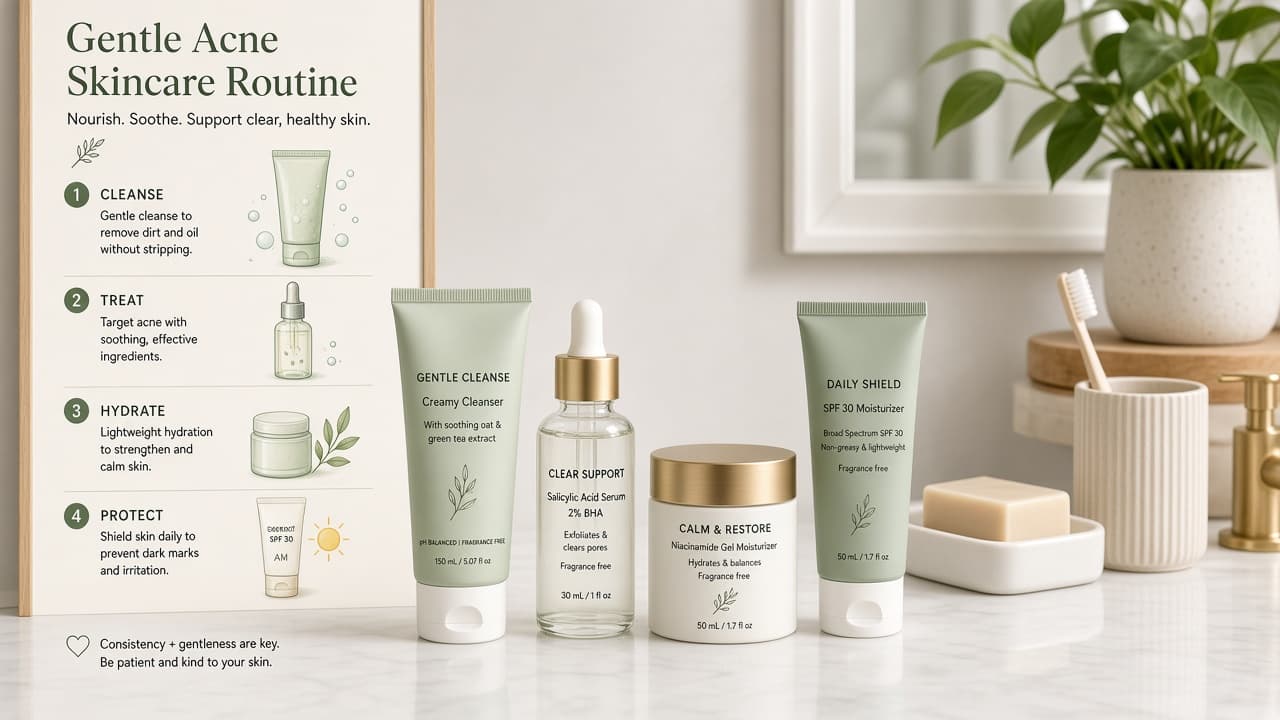
How to get rid of acne (gentle routine)
Calm common acne with a gentle cleanse, non-comedogenic moisturizer, careful OTC actives and no picking. Severe or scarring acne needs a dermatologist, not a harsher scrub.
Acne happens when pores clog with oil and dead skin and inflammation follows. A calm routine beats a cabinet of harsh scrubs. Most mild cases respond to consistent gentle cleansing, non-comedogenic moisture and one well-chosen over-the-counter active used with patience.
This guide is not a substitute for medical care. See a clinician or dermatologist for cystic acne, scarring, sudden adult breakouts with other symptoms or routines that burn and worsen skin. Prescription options exist; DIY is not the only path.
Benzoyl peroxide and adapalene (a retinoid available OTC in many places) are common evidence-backed starting points for many mild to moderate cases, but they can irritate. Introduce slowly, moisturize and use sunscreen by day. Patch test if your skin is reactive.
Picking and constant product hopping keep inflammation alive. Give a simple routine several weeks before you judge it. Change pillowcases, clean phone screens and avoid heavy hair products along the hairline if those are triggers for you.
Step-by-step guide
Time: Five to ten minutes morning and night; several weeks to judge results
What you need
- Gentle fragrance-free cleanser
- Non-comedogenic moisturizer
- Broad-spectrum sunscreen for daytime
- Optional OTC: benzoyl peroxide and/or adapalene as directed on the label
- Clean towels and pillowcases
Before you start
- Not a substitute for medical care. Dermatologist care is appropriate for severe, cystic or scarring acne.
- OTC actives can irritate, bleach fabrics (benzoyl peroxide) or increase sun sensitivity (retinoids). Follow label directions and stop if severe burning or swelling occurs.
- Do not combine every strong acid and retinoid at once. Over-exfoliation damages the barrier.
- Pregnancy and some medical conditions change which products are appropriate. Ask a clinician.
Step 01
Strip the routine back to gentle basics
Calm the barrier before you add fighting products.
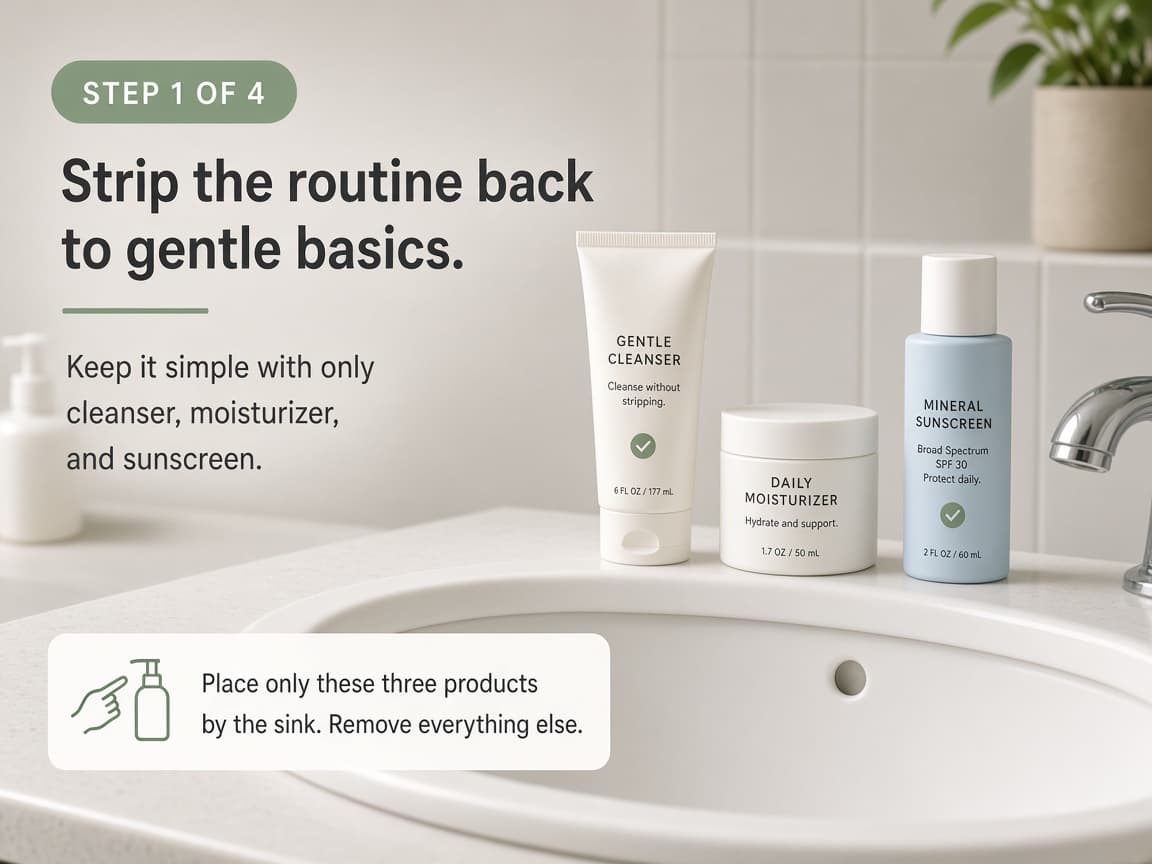
A short shelf beats a crowded irritating one. Do this step in order
1a
Wash with lukewarm water and a mild cleanser
Twice daily is enough for most faces. Avoid hot water and rough washcloths. Pat dry; do not scrub.
1b
Moisturize even if you feel oily
Choose non-comedogenic formulas. A stripped barrier often makes oil and irritation worse.
1c
Wear sunscreen every morning
Many acne actives increase sun sensitivity. Use a non-comedogenic SPF and reapply when outdoors for long stretches.
1d
Pause harsh scrubs and constant new products
For two weeks, stop rotating five serums. You cannot tell what helps if everything changes daily.
Step 02
Add one OTC active with a slow schedule
Patience beats a full-strength blast that inflames your face.
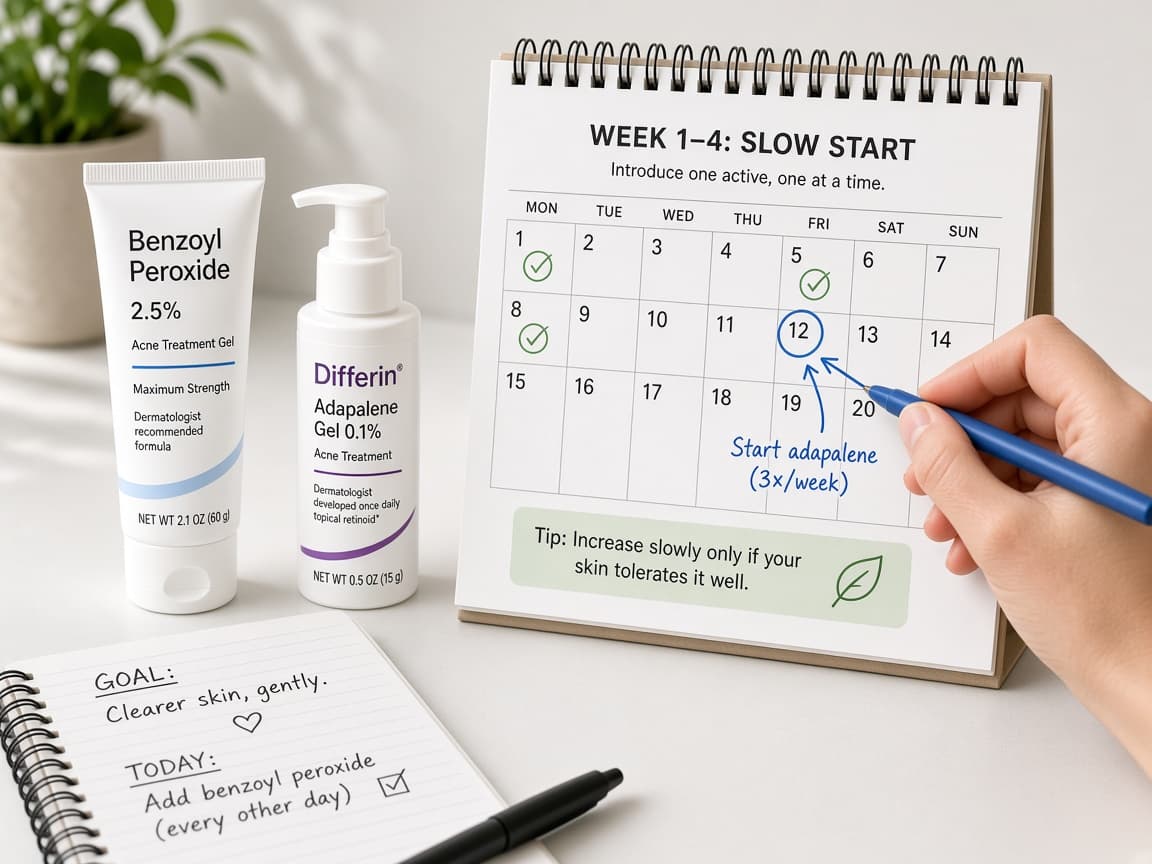
One active at a time with a calendar beats a bathroom pile-on. Do this step in order
2a
Choose benzoyl peroxide or adapalene first
Benzoyl peroxide targets acne-related bacteria and inflammation. Adapalene helps unclog pores over time. Read the label. Ask a pharmacist or clinician if you are unsure which fits you.
2b
Start a few nights per week
Apply a thin layer to affected areas after moisturizer or as the product instructs. Increase frequency only if your skin tolerates it.
2c
Expect a adjustment period, not overnight clear skin
Mild dryness or a temporary purge can happen. Severe swelling, oozing or pain means stop and seek care.
2d
Do not stack every acid at once
If you add a leave-on salicylic acid, drop something else or alternate nights. Barrier damage looks like redness and stinging.
Step 03
Stop picking and clean the contact points
Hands, phones and pillowcases reinoculate and inflame spots.
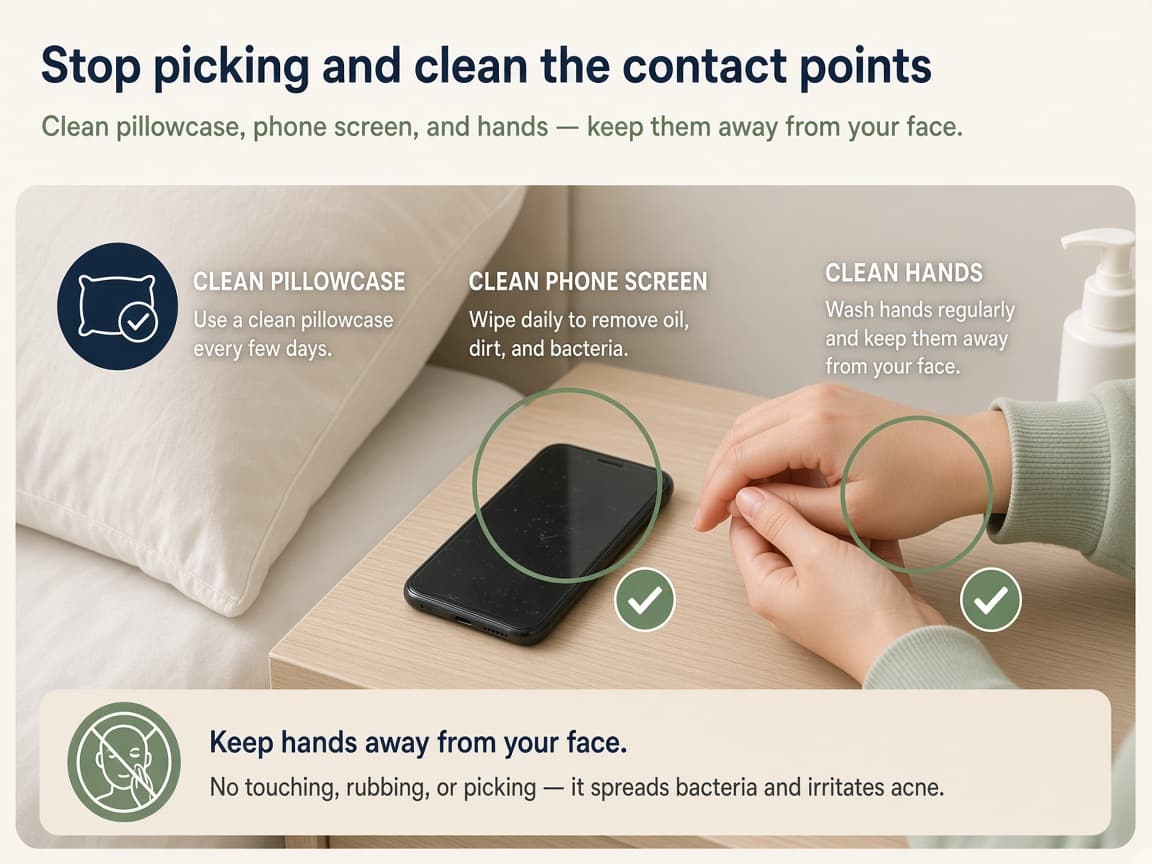
Less touching and cleaner contact surfaces support healing. Do this step in order
3a
Keep hands off active pimples
Picking spreads bacteria and raises scar risk. If you need a hydrocolloid patch for a raised spot, use it clean and leave it alone.
3b
Wash pillowcases and avoid dirty phone screens on your face
Change pillowcases a few times a week if you can. Wipe your phone screen. Tie back greasy hair products away from the forehead.
3c
Be careful with makeup and sunscreen texture
Choose non-comedogenic formulas and remove makeup fully at night. Dirty brushes can reintroduce clogged pores.
3d
Note hormonal or sports patterns
Track if breakouts follow cycles, helmets or heavy sweating. Patterns help a dermatologist later even if home care is your first step.
Step 04
Know when to see a dermatologist
Home care has a ceiling. Scarring risk is a reason to escalate early.
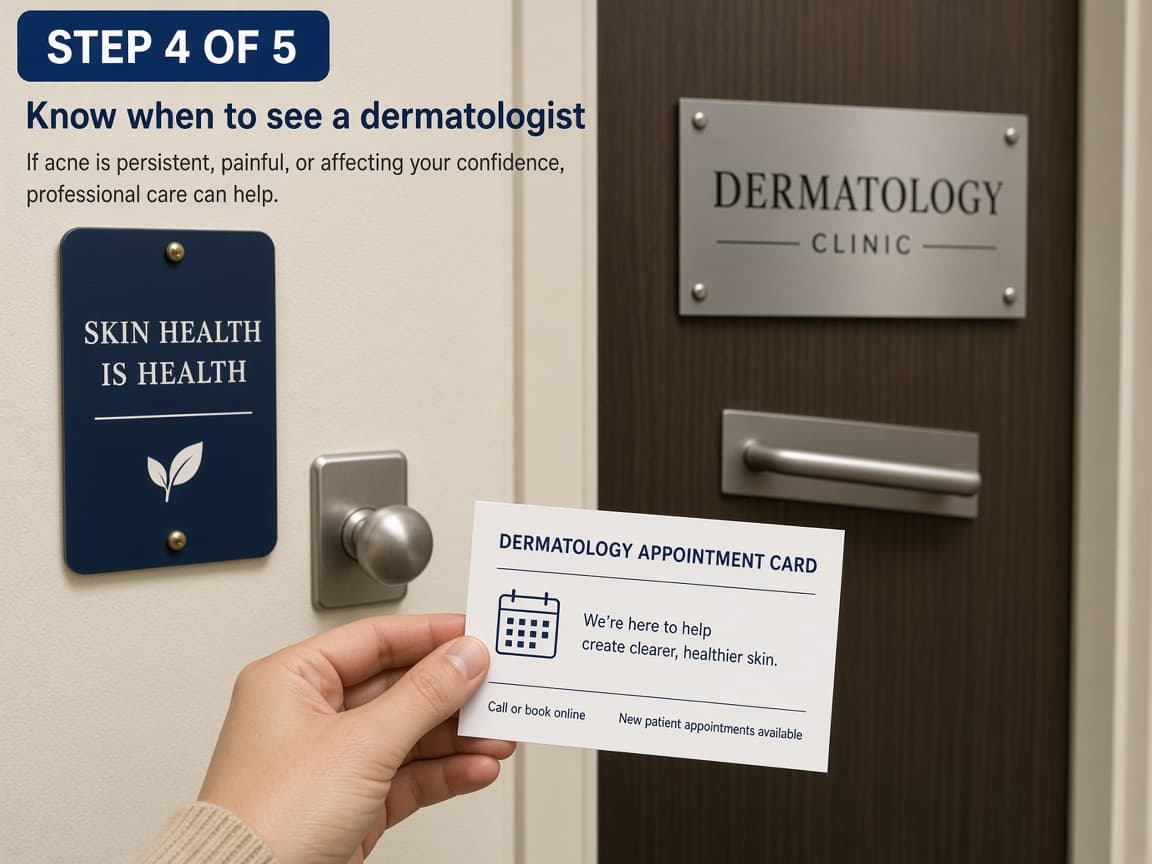
Professional care is the right next step for stubborn or severe acne. Do this step in order
4a
Book care for cysts, nodules or scarring
Deep painful bumps and early scars deserve prescription options. Waiting for more home experiments can cost permanent marks.
4b
Escalate if OTC fails after consistent use
If you used a simple routine correctly for about eight to twelve weeks with little change, ask about prescription topicals or other therapies.
4c
Mention medicines and mental health impact
Some drugs trigger acne. Severe breakouts can also weigh on mood. Both belong in the clinical conversation.
4d
Follow prescribed plans; do not remix them solo
If you receive a prescription routine, use it as directed. Adding leftover harsh actives on top can undo progress.
Done when
- Gentle cleanse morning and night
- Moisturizer in place
- One active introduced slowly
- Daytime sunscreen used
- No picking rule kept for two weeks
Eagle Frame's takeaway: cleanse gently, moisturize, add one OTC active with care and keep your hands off active spots. If acne is severe, scarring or not improving, book a dermatologist. This routine is supportive skincare, not a medical prescription.