How to lower blood pressure (habits that help)
Support healthier blood pressure with DASH-style eating, less sodium, regular activity and correct home cuff technique. Habits help; they do not replace clinician care or prescribed medicine.
Blood pressure is the force of blood pushing against artery walls. When it stays high, risk for heart disease, stroke and kidney problems rises over time. Many people can support better numbers with food, movement, sleep, alcohol limits and correct home monitoring.
This guide is not a substitute for medical care. Do not stop, start or change blood pressure medicine without a clinician. If readings are very high, you have chest pain, severe headache, sudden weakness or trouble breathing, seek emergency care. Habit tips are support, not a replacement for diagnosis or prescriptions.
DASH-style eating (Dietary Approaches to Stop Hypertension) emphasizes vegetables, fruit, whole grains, low-fat dairy patterns and limited sodium. Public-health guidance often points adults toward less sodium and more potassium-rich foods when a clinician says that is safe for you.
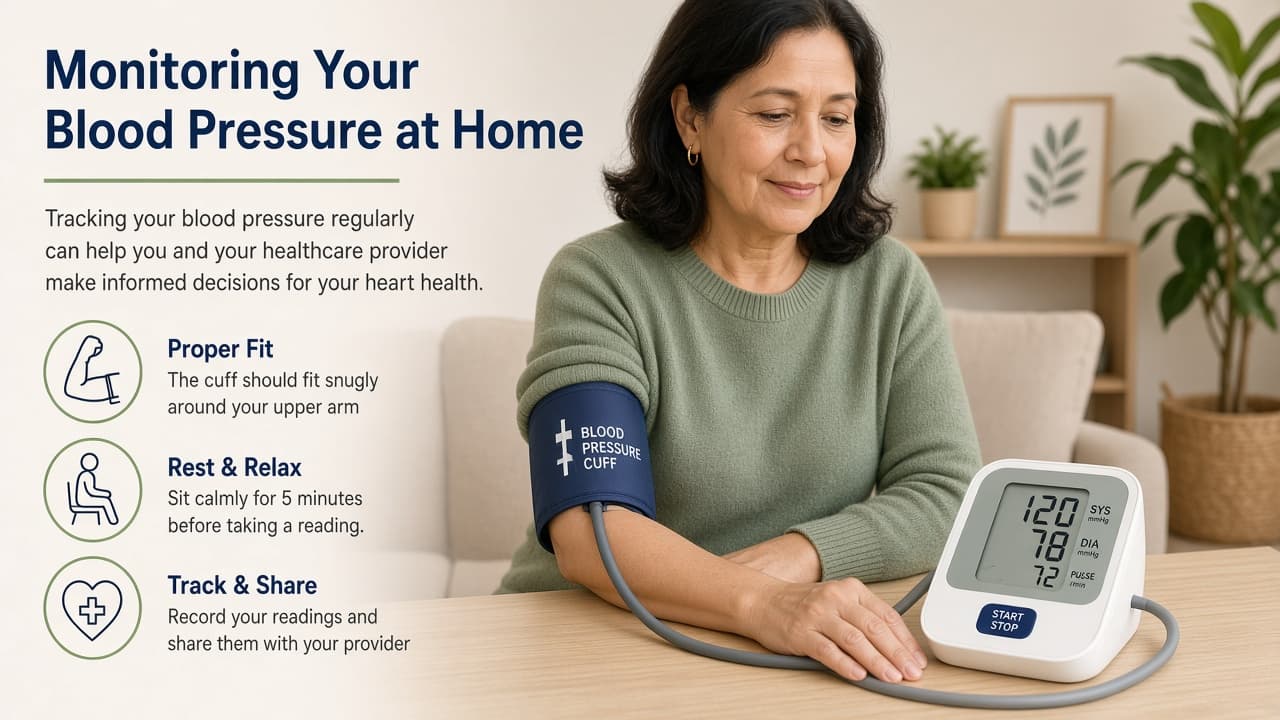
Home cuffs only help if you use them well: seated, back supported, feet flat, cuff on bare upper arm, quiet for a few minutes. Write readings down and bring the log to appointments.
Step-by-step guide
Time: Ongoing daily habits; 10 minutes for a proper home reading
What you need
- Validated upper-arm home blood pressure cuff (if your clinician recommends home checks)
- Notebook for readings, time and notes
- Grocery plan focused on produce, whole grains and lower-sodium options
- Walking shoes or activity you can repeat
Before you start
- Not a substitute for medical care. Never change prescribed blood pressure drugs on your own.
- Very high readings with symptoms such as chest pain, severe headache, confusion or shortness of breath need urgent or emergency care.
- People with kidney disease or on certain medicines may need personalized potassium and fluid advice. Ask your clinician before large diet shifts.
Step 01
Confirm your plan with a clinician first
Know your target range, medicines and whether home monitoring is advised for you.
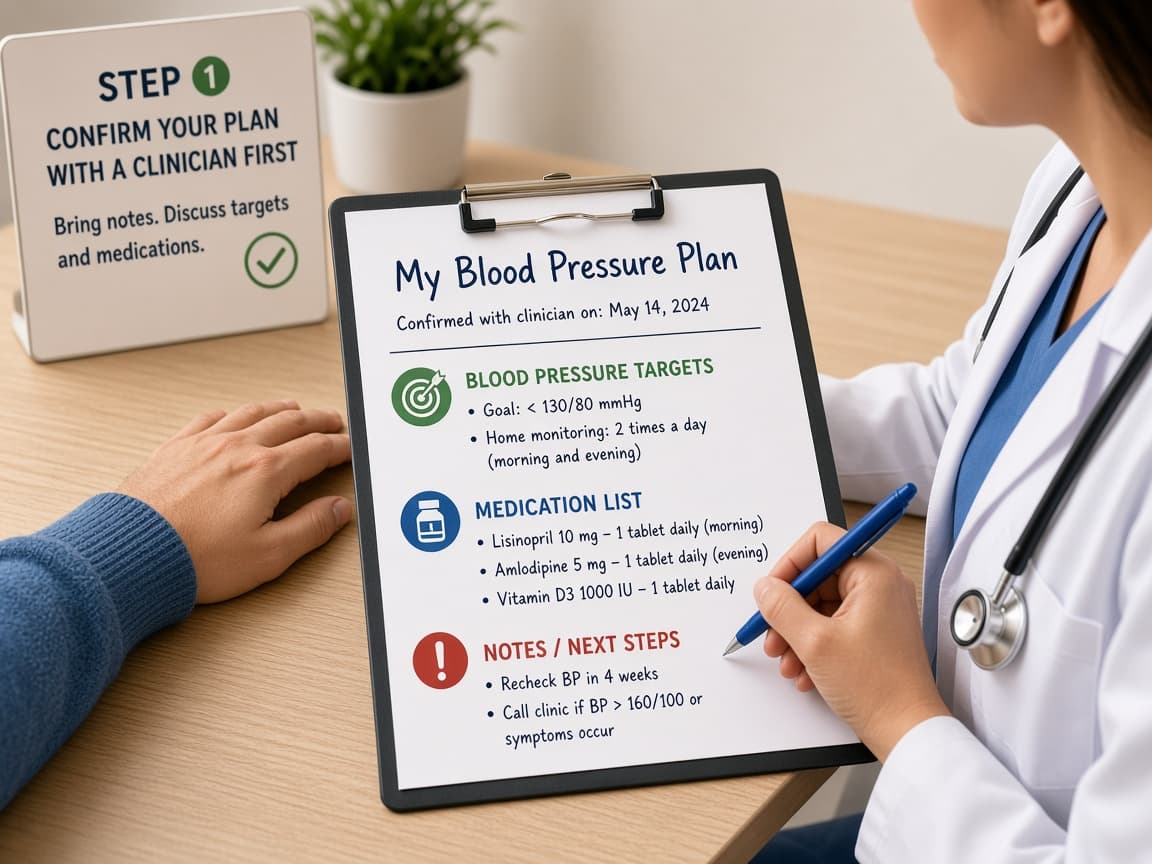
Personal targets belong with a clinician, not a generic chart alone. Do this step in order
1a
Ask what numbers mean for you
Guidelines group readings into ranges, but your clinician sets the target that fits your age and conditions. Write that target in your phone.
1b
List every medicine and supplement
Some cold medicines, pain relievers and herbal products can raise blood pressure. Bring the full list to visits.
1c
Clarify home monitoring
Ask how often to check, which arm to use and when to call. Not everyone needs daily checks forever.
1d
Know urgent warning signs
Chest pain, sudden neurological symptoms or readings your clinician labeled as emergency thresholds mean you seek care now, not another lifestyle tip.
Step 02
Shift food toward DASH-style and lower sodium
More produce and less salt from packages often moves the needle more than a single exotic superfood.
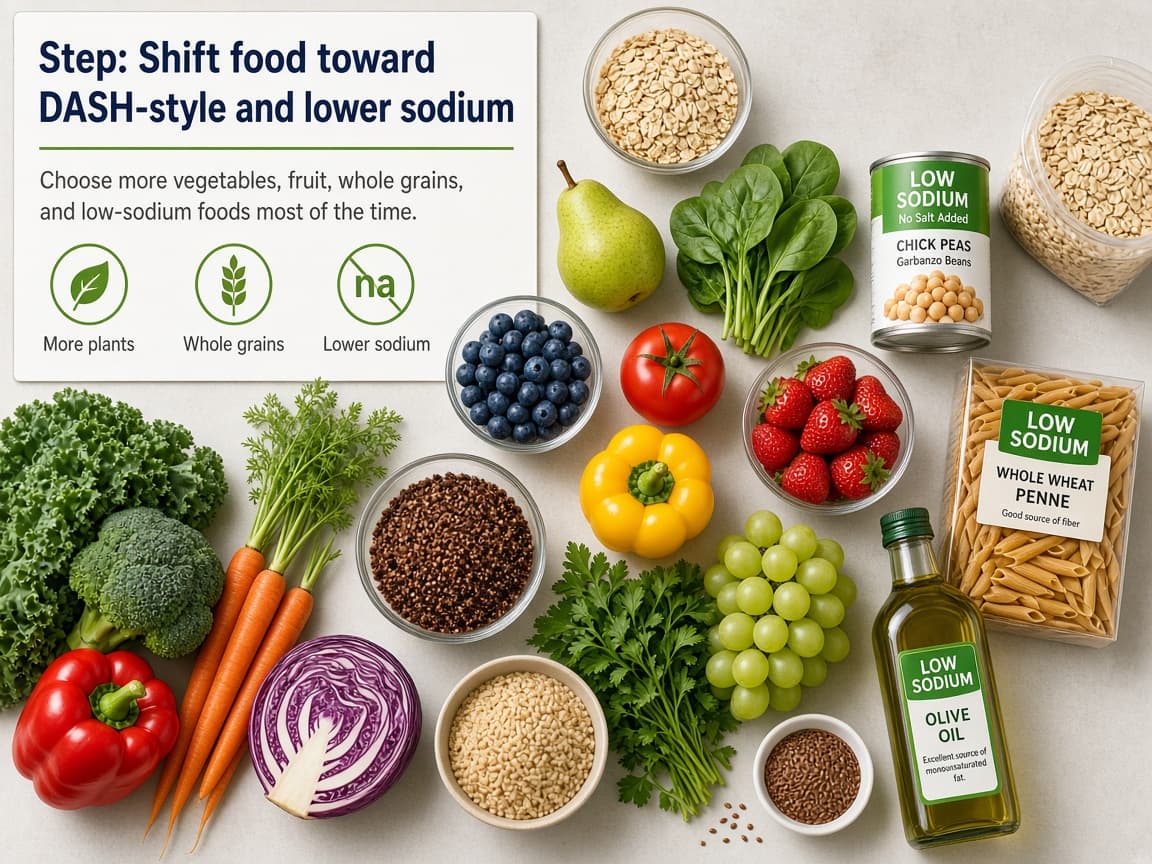
DASH-style carts look colorful and lower in salty packaged foods. Do this step in order
2a
Read sodium on labels
Compare soups, breads, sauces and deli meats. Choose lower-sodium versions when you can. Cooking more meals at home gives you control.
2b
Build plates with vegetables, fruit and whole grains
Fill half the plate with produce. Add beans, nuts in modest portions and low-fat dairy patterns if you tolerate them and your clinician agrees.
2c
Ease off the salt shaker and salty sauces
Flavor with herbs, garlic, citrus and vinegar. Taste before you automatically salt.
2d
Limit alcohol and watch sugary drinks
Excess alcohol can raise blood pressure. If you drink, stay within clinician guidance. Swap sugary drinks for water most of the time.
Step 03
Move most days and support sleep
Aerobic activity and steadier sleep help many people when cleared by a clinician.
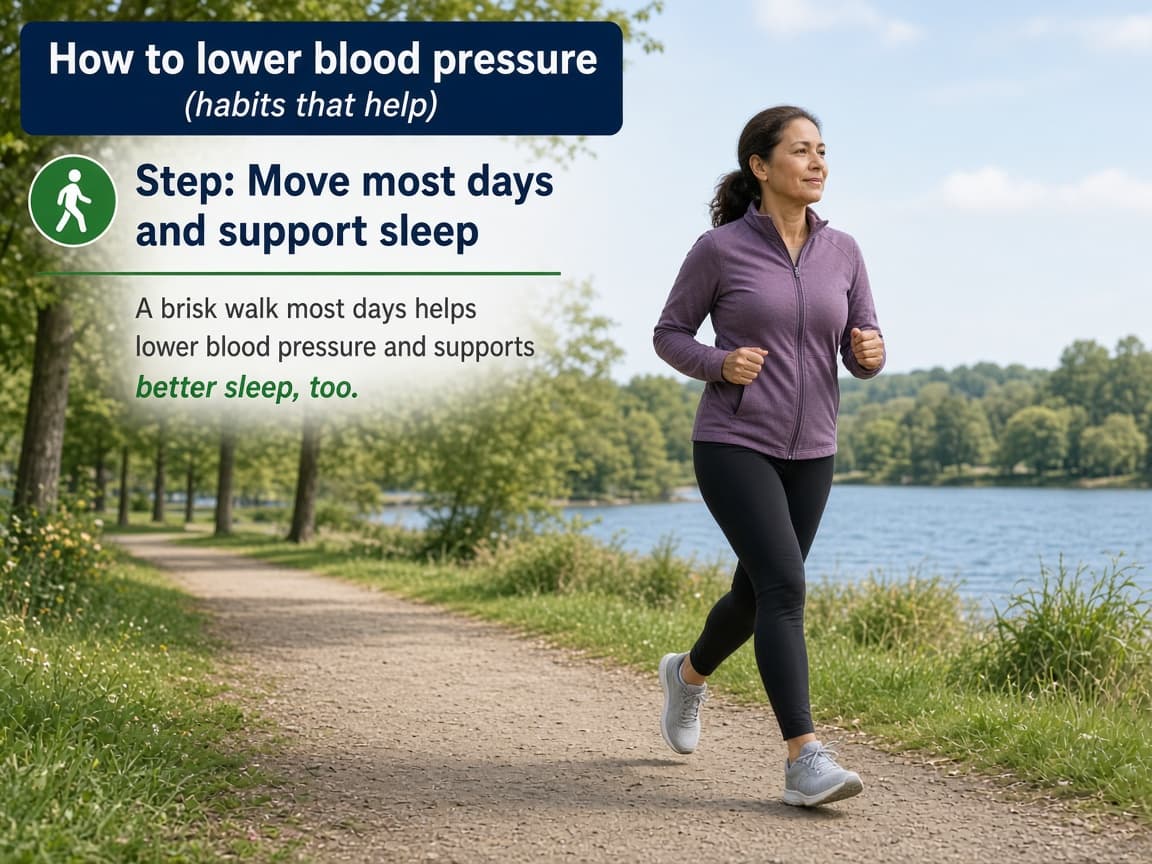
Brisk walking is a common clinician-friendly starting activity. Do this step in order
3a
Aim for regular moderate activity
Many adults work toward about 150 minutes a week of moderate activity such as brisk walking, if cleared. Split it into daily chunks.
3b
Add light strength work if approved
Two sessions of basic strength training can support overall health. Avoid holding your breath and straining hard if that is restricted for you.
3c
Protect sleep and manage stress practices
Short sleep and chronic stress can work against blood pressure goals. Use a wind-down, limit late caffeine and try brief breathing or walks when tension spikes.
3d
Lose weight only with a safe plan if advised
If your clinician links excess weight to your readings, use steady habits (see our weight guide) rather than crash diets. Coordinate with the same care team.
Step 04
Measure at home with solid cuff technique
Bad technique creates false alarms and false reassurance.
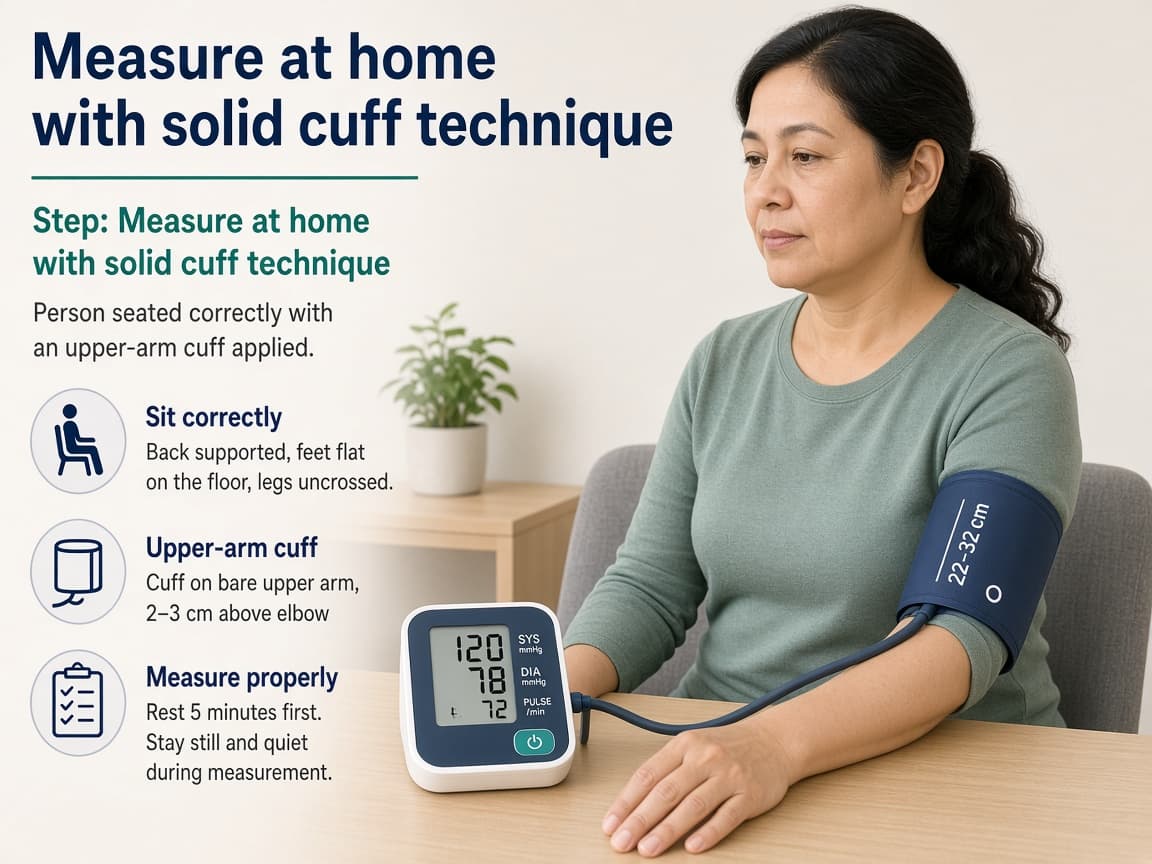
Seated, quiet and bare-arm cuff placement make readings usable. Do this step in order
4a
Sit correctly for five quiet minutes first
Back supported, feet flat, legs uncrossed, arm resting at heart level. No talking. Empty your bladder first if needed.
4b
Place the cuff on bare upper arm
Follow the device marks. Do not measure over thick sleeves. Use the arm your clinician prefers.
4c
Take two readings and log both
Wait about one to two minutes between checks. Record date, time, readings and whether you took medicine. Bring the log to visits.
4d
Share odd patterns instead of self-adjusting pills
If home numbers drift from your plan, contact the clinic. Do not double doses or skip pills based on one scary reading unless you were given that exact instruction.
Done when
- Clinician plan reviewed (targets and medicines)
- Sodium sources identified in your usual meals
- Walking or activity schedule set
- Home cuff technique practiced
- Reading log started for appointments
Eagle Frame's takeaway: cut sodium where you can, walk most days, measure at home with good technique and keep medicine decisions with your clinician. Habits can help blood pressure. They are not a license to ignore prescribed care or urgent warning signs.