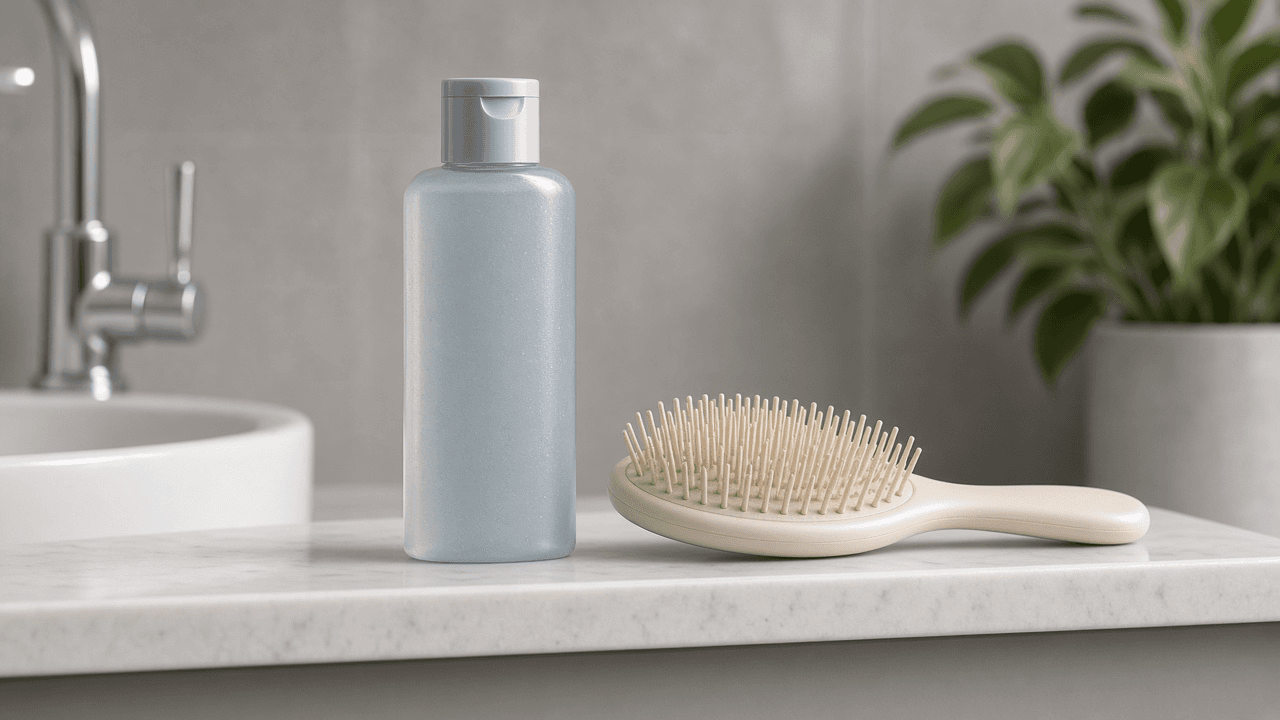
How to get rid of dandruff
Use a medicated anti-dandruff shampoo on a steady schedule, massage the scalp, rinse well and see a dermatologist if flakes, itch or redness persist after several weeks.
Dandruff is flaky skin on the scalp, often with itch. It is common and usually not contagious. The cause is often a yeast called Malassezia, excess oil, dry skin or sensitivity to hair products. Psoriasis and eczema can look similar, which is why stubborn cases need a clinician.
Drugstore medicated shampoos are the first line. Look for active ingredients such as zinc pyrithione, selenium sulfide, ketoconazole or coal tar. Brand names vary by country. Use the label directions: many say two to three times per week until flakes calm, then once weekly for maintenance.
Technique matters. Wet hair, apply shampoo to the scalp not only the lengths, massage for three to five minutes so the active ingredient contacts skin, then rinse thoroughly. Leaving residue can irritate. Conditioner on mid-lengths is fine; keep heavy oils off the scalp if they trigger buildup.
Give a product four to six weeks before you call it a failure. Rotating two actives can help if one plateaus. Reduce heat styling and scratch less; broken skin worsens inflammation. See a dermatologist if you have thick plaques, bleeding, hair loss patches or no improvement after consistent medicated use.
The American Academy of Dermatology says the schedule should fit both the label and hair texture. Someone with straight hair or an oily scalp may wash often and use dandruff shampoo about twice a week. Someone with curly or tightly coiled hair may use it about once a week if tolerated and keep the medicated lather mainly on the scalp to limit dryness.
Each active has trade-offs. Zinc pyrithione is a common antifungal option, ketoconazole targets yeast and selenium sulfide can reduce yeast plus scaling. Salicylic acid loosens scale but may feel drying. Coal tar slows skin-cell turnover but can discolor light hair and make skin more sun-sensitive. Product strengths and availability vary by country, so follow that bottle rather than a generic schedule.
Step-by-step guide
Time: 5 to 10 minutes per wash; several weeks to judge results
What you need
- Medicated anti-dandruff shampoo (zinc pyrithione, selenium sulfide, ketoconazole or coal tar)
- Optional second shampoo with a different active for rotation
- Gentle conditioner for hair lengths
- Optional: soft scalp massage brush
- Shower timer or phone for contact time
- Weekly photo or journal to track flakes
Before you start
- Stop use and seek care if you get rash, swelling or severe burning.
- Coal tar and some actives increase sun sensitivity. Read labels.
- This guide is not a substitute for diagnosis of psoriasis, eczema or fungal infection.
- Avoid scratching open sores; infection risk rises.
Step 01
Pick a proven active ingredient
Match the active to your scalp type. Oily flake-prone scalps often respond to zinc or ketoconazole.
Do this step in order
1a
Start with zinc pyrithione or ketoconazole
Zinc is a common starter. Ketoconazole targets yeast strongly. Read the active line on the back label.
1b
Note how often the label says to use it
Many bottles say two or three times weekly at first. Daily use is not always better.
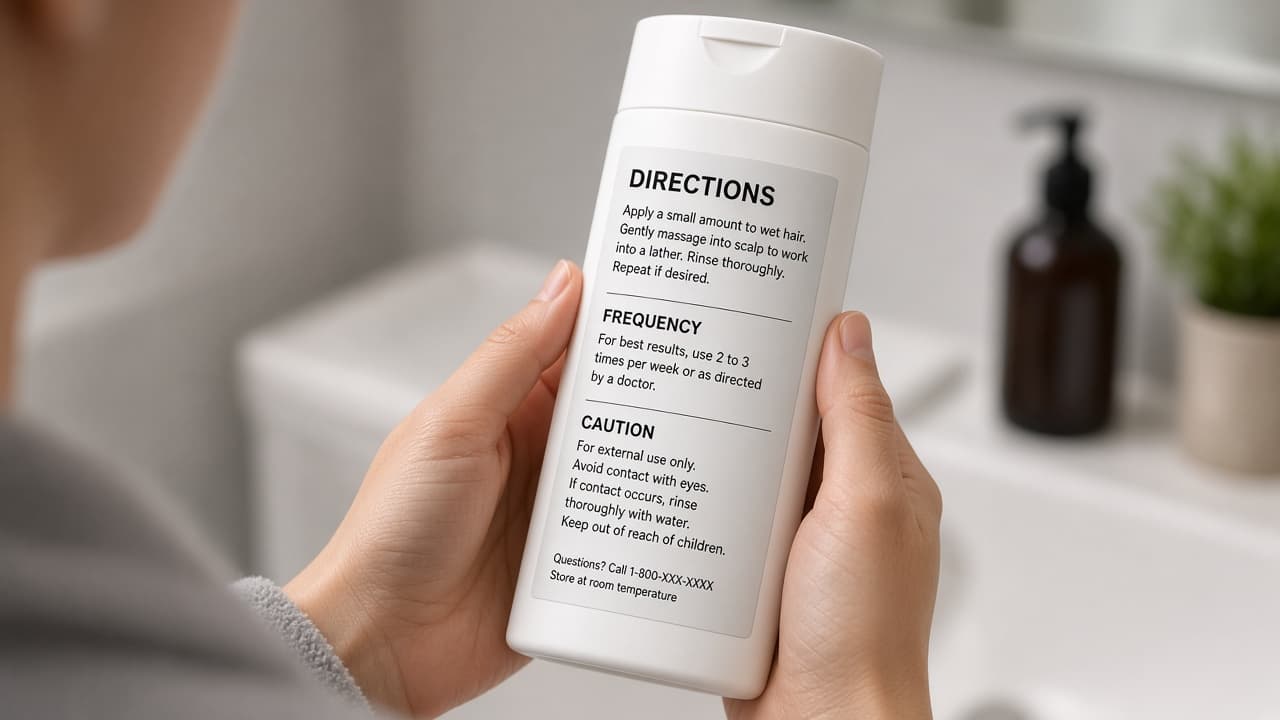
Follow the label schedule, not a daily guess. 1c
Buy a small bottle before stocking up
Scalp chemistry varies. A trial size lets you test tolerance first.
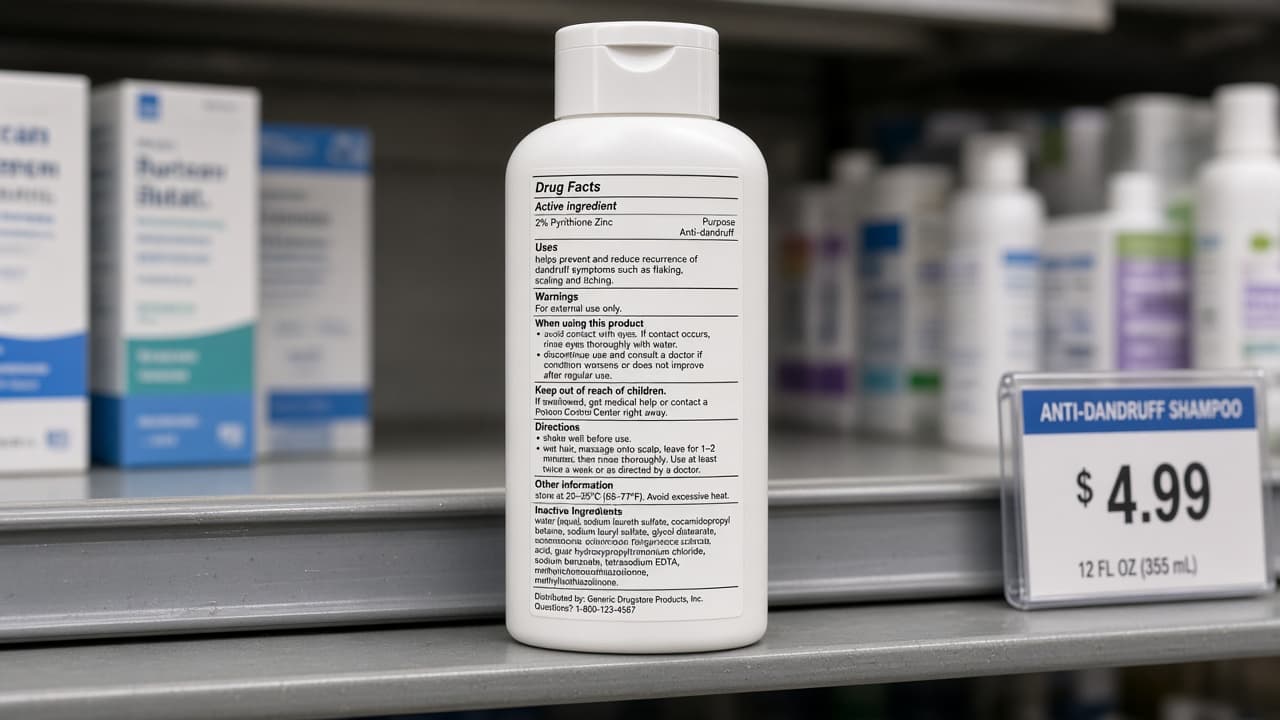
Read the active line, not the front slogan. 1d
Choose by scent alone
Common mistake: picking a fragrance you like without checking the active. Pretty bottles without zinc, ketoconazole or selenium rarely treat yeast-driven flakes.

Common mistake: choosing by scent instead of the active line.
Step 02
Read the label schedule and warnings
Coal tar, selenium and ketoconazole carry different cautions. Follow the bottle, not a blog chart.
Do this step in order
2a
Read frequency, contact time and age limits
Some actives are not for children. Coal tar may stain light hair.
2b
Check sun sensitivity warnings
Coal tar and some actives need extra sun protection on the scalp.
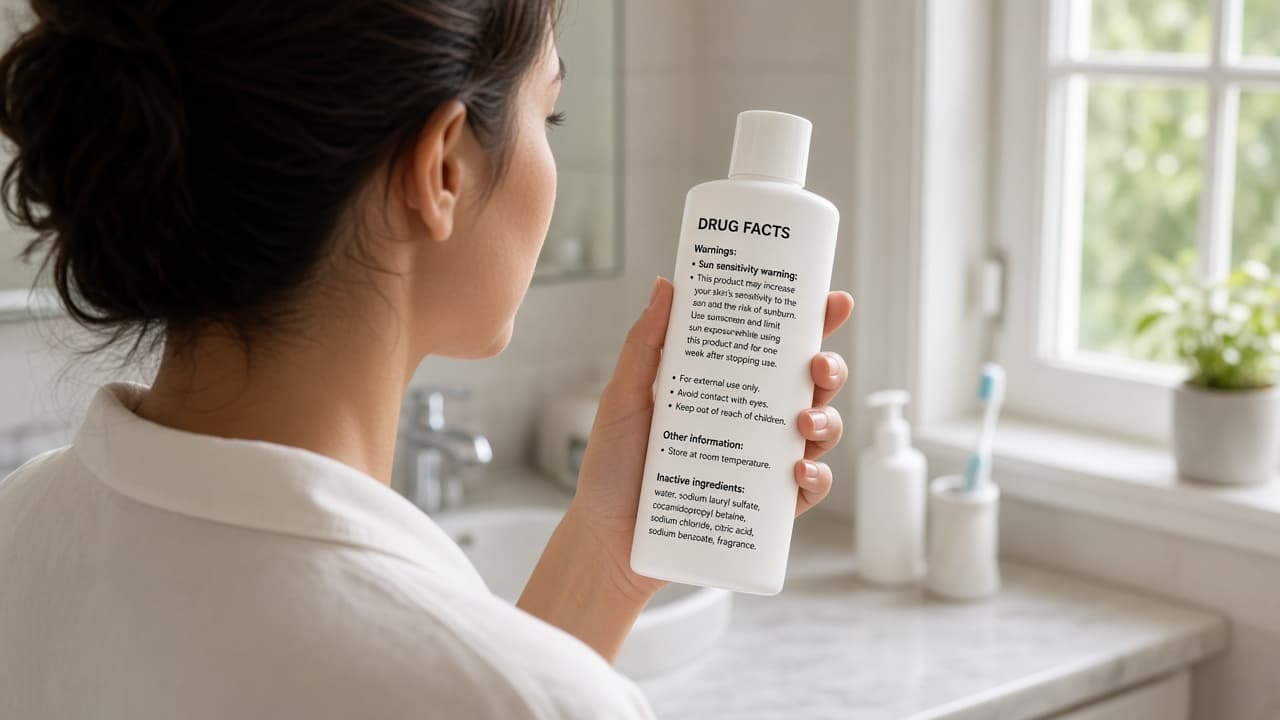
Read warnings for coal tar and similar actives. 2c
Note whether to alternate with regular shampoo
Many regimens use medicated washes on certain days only.
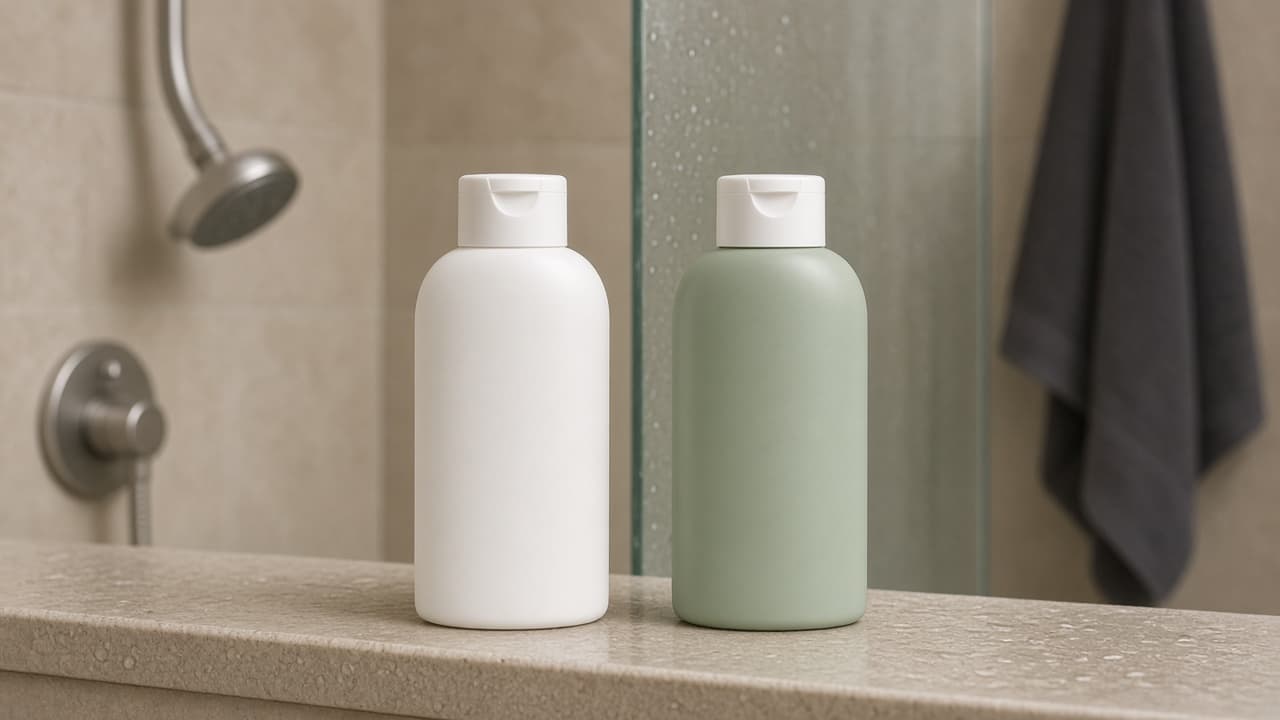
Many routines alternate medicated and gentle washes. 2d
Use medicated shampoo daily without reading limits
Common mistake: daily coal tar or selenium when the label caps weekly use. Overuse dries and irritates the scalp.

Common mistake: daily medicated washes without reading limits.
Step 03
Wash with scalp contact time
Medicated shampoo needs minutes on skin to work. A quick lather and rinse wastes the active ingredient.
Do this step in order
3a
Wet hair and apply shampoo to the scalp line
Part hair if it is long so product reaches skin. Use enough to cover the scalp thinly.
3b
Massage with fingertips for three to five minutes
Work in circles at the hairline and crown. A soft brush can help if the label allows it.
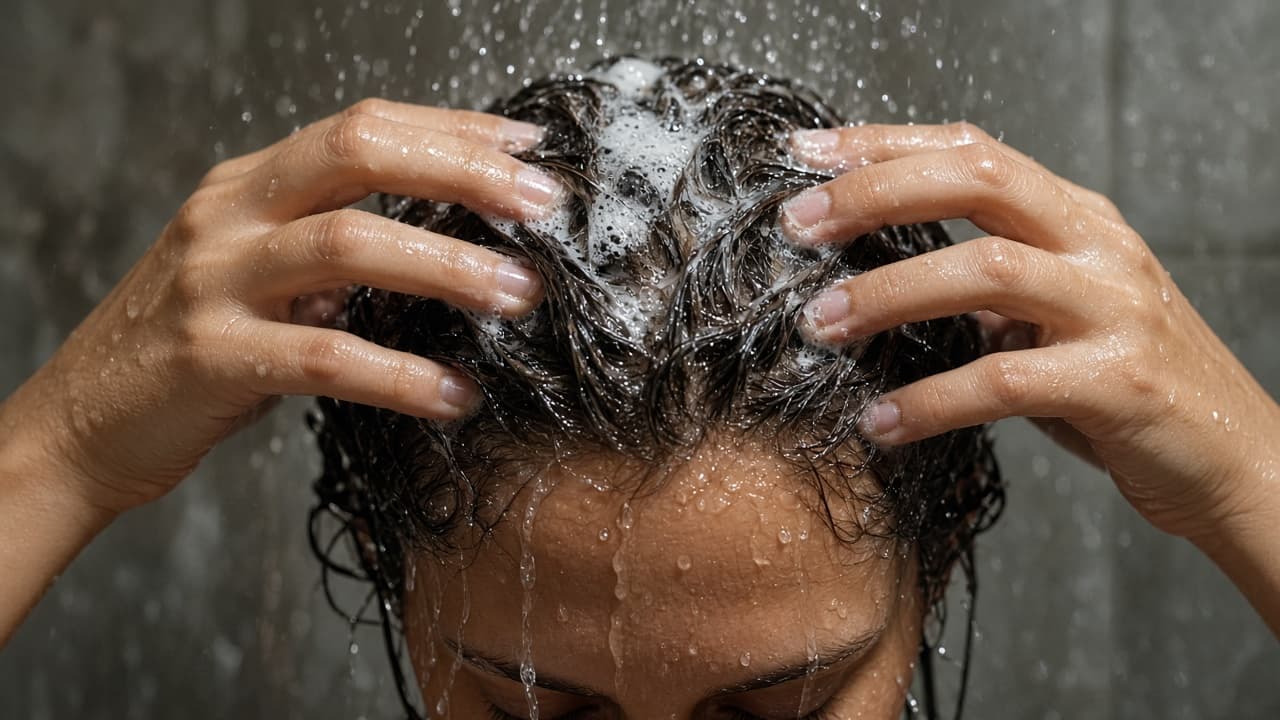
Scalp contact time is where treatment happens. 3c
Add water if the lather dries out
Keep the scalp coated for the full wait. Set a timer so you do not rinse early.
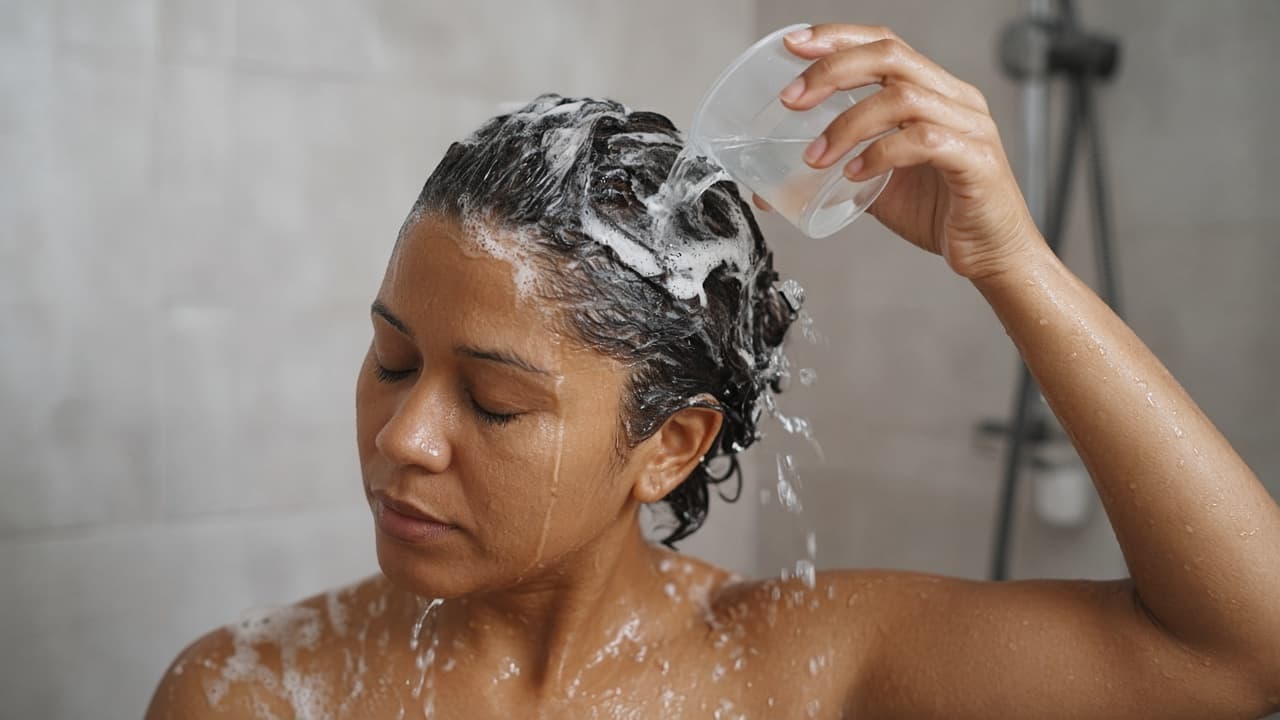
Keep contact time even if you refresh the lather with water. 3d
Lather lengths and rinse in thirty seconds
Common mistake: treating dandruff like a quick body wash. Actives need minutes on the scalp to work.

Common mistake: skipping scalp contact time with a thirty-second rinse.
Step 04
Rinse thoroughly and protect hair lengths
Leftover actives can irritate. Condition mid-lengths if medicated wash feels drying.
Do this step in order
4a
Rinse until water runs clear at the roots
Residue at the hairline can itch later. Tilt your head under the stream and separate sections.
4b
Apply conditioner from ears down on curly hair
Keep heavy conditioner off the scalp if you are oily or flake-prone.

Protect lengths while keeping heavy product off the scalp. 4c
Blot hair gently after the shower
Rough towel rubbing can irritate an inflamed scalp.

Gentle drying reduces scalp irritation. 4d
Skip the rinse because you are late
Common mistake: leaving selenium or ketoconazole film on the scalp. Residue burns and builds up.

Common mistake: skipping a thorough rinse when you are late.
Step 05
Shift to maintenance frequency when flakes ease
Many people move to once weekly medicated washes plus regular shampoo on other days.
Do this step in order
5a
Track weekly flake and itch scores
A one-to-five scale in a notes app is enough. Improvement often shows in itch before visible flakes vanish.
5b
Drop to label maintenance frequency when calm
Many bottles suggest once weekly after control. Do not quit entirely the day flakes fade.

Drop to maintenance frequency when the scalp settles. 5c
Use regular gentle shampoo on off days
Fragrance-light formulas help if the scalp feels reactive.
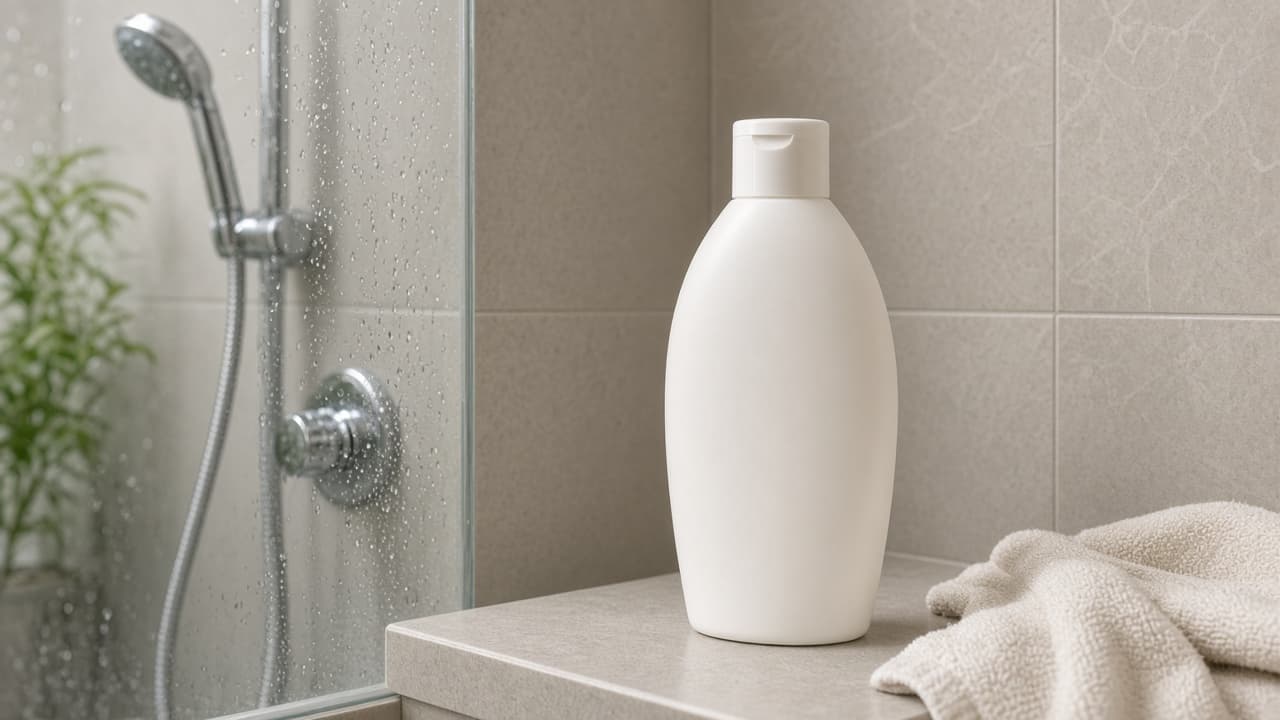
Use a mild shampoo on off days between treatments. 5d
Stop medicated washes the moment flakes look better
Common mistake: quitting maintenance and watching flakes return within two weeks.
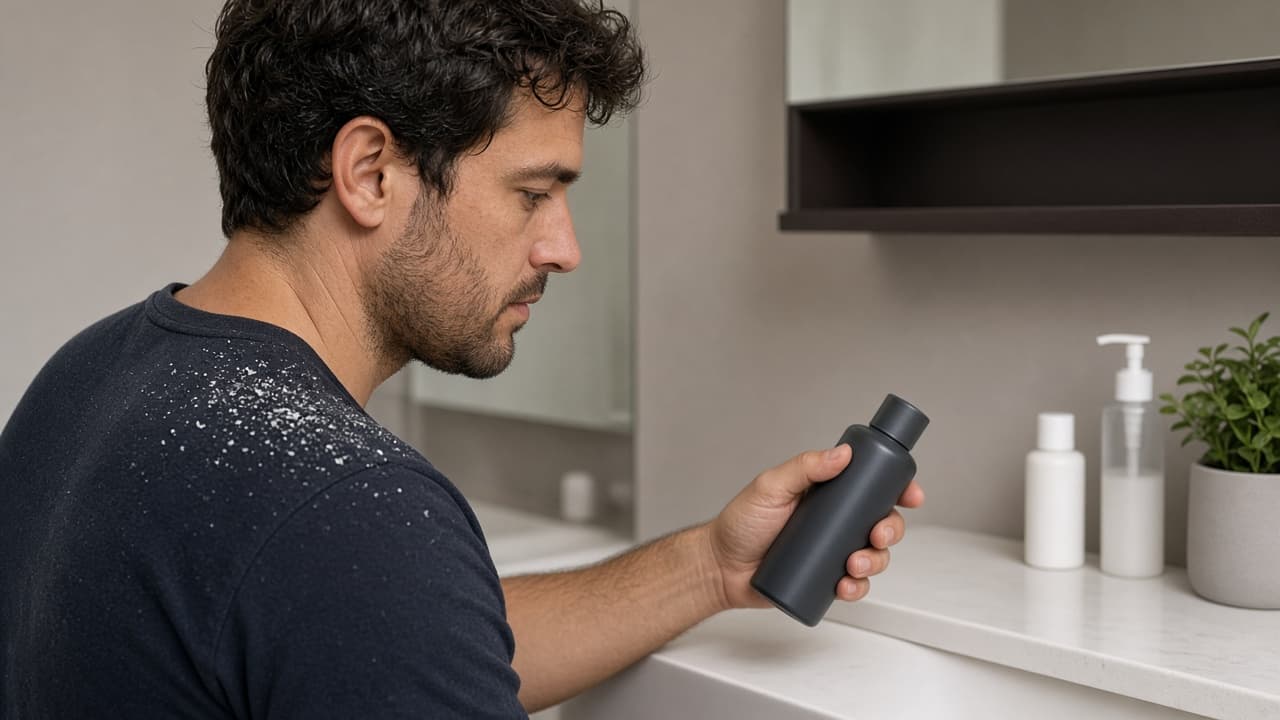
Common mistake: stopping treatment the moment flakes look better.
Step 06
Rotate actives and reduce irritation
If one ingredient plateaus, switch classes for a few weeks. Protect the scalp from heat and scratching.
Do this step in order
6a
Switch active class after four to six weeks if needed
Move from zinc to ketoconazole or selenium if flakes plateau on the first bottle.
6b
Pause heavy oils and new styling products
Buildup can mimic dandruff. Reintroduce one product at a time.
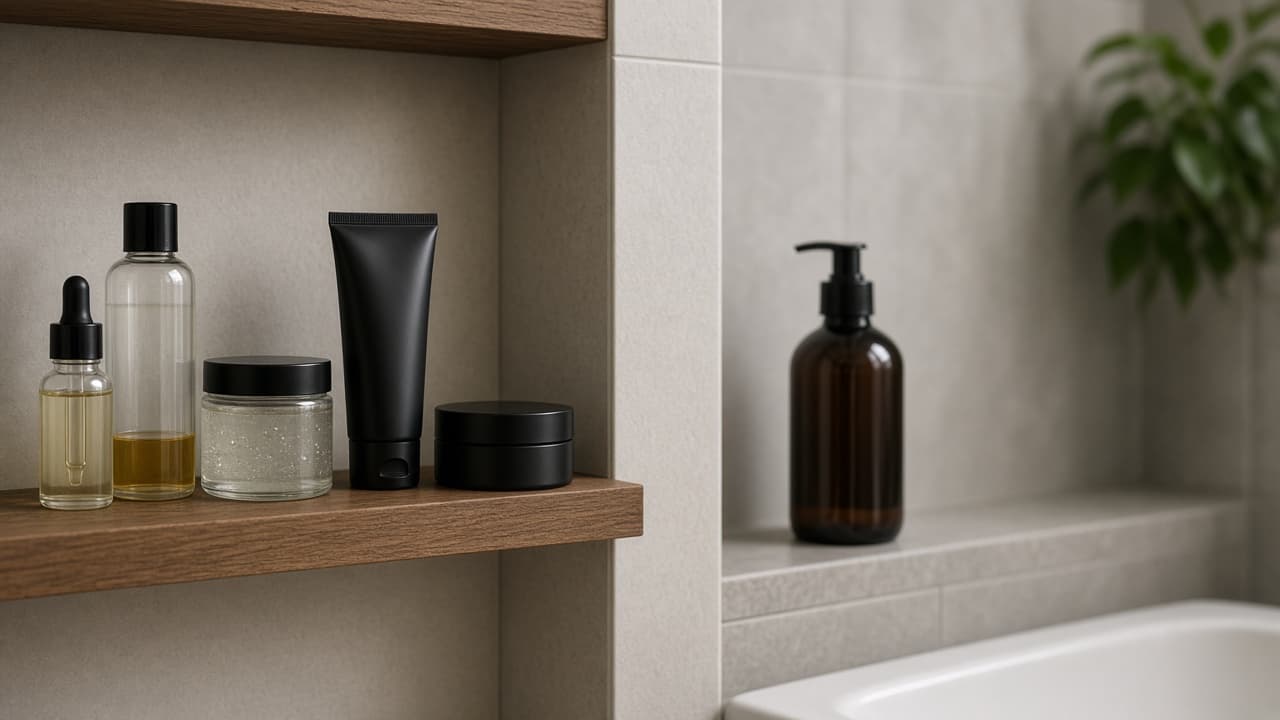
Pause new oils and gels that may trigger buildup. 6c
Reduce heat styling while the scalp heals
High heat near the roots can worsen itch and dryness.

Less heat styling helps an irritated scalp recover. 6d
Stack three actives in one week
Common mistake: alternating so aggressively that the scalp never stabilizes. Give each schedule a full trial.
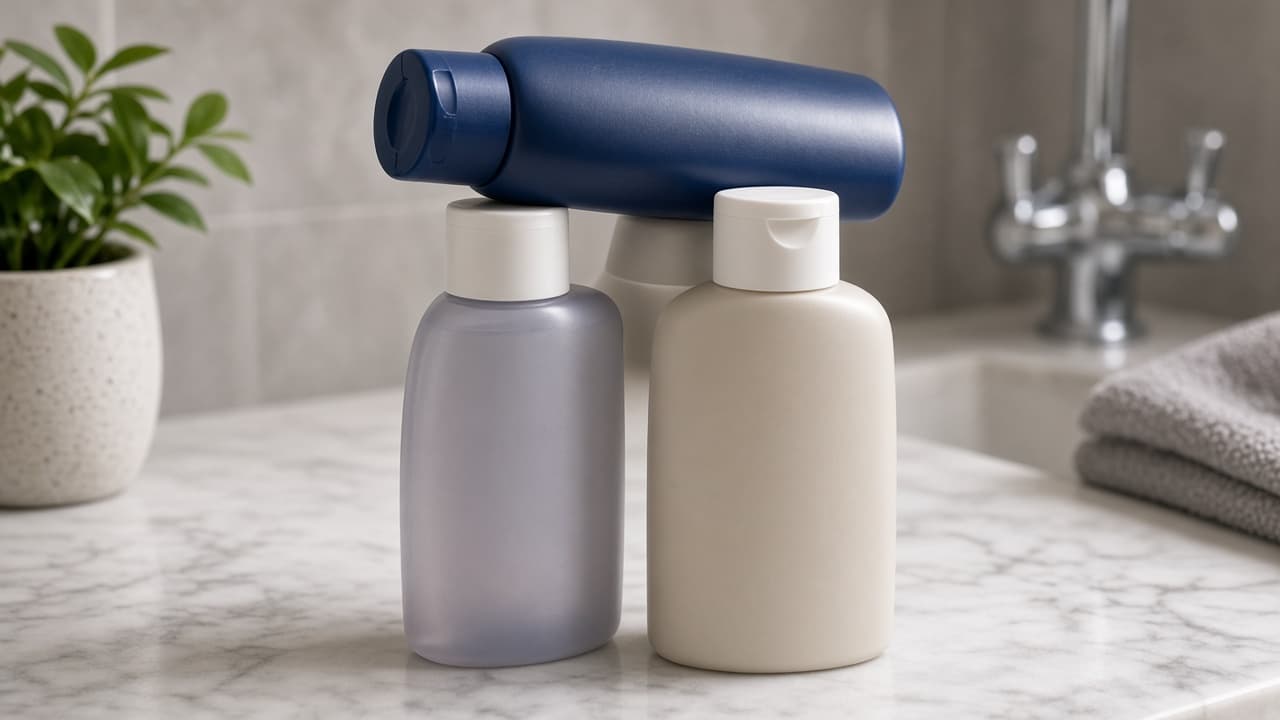
Common mistake: stacking multiple actives in one week.
Step 07
Know when to see a dermatologist
Thick plaques, pain, patchy hair loss or no improvement need professional evaluation.
Do this step in order
7a
Book care for plaques, pain or patchy hair loss
Psoriasis, eczema and fungal infection can mimic dandruff. Prescription foams or steroids may help.
7b
Bring your product list and wash schedule
Photos in consistent lighting help the clinician see progress.

Bring your product list and wash schedule 7c
Stop all treatment the night before the visit
Unless directed otherwise, keep using your routine so the exam reflects reality.
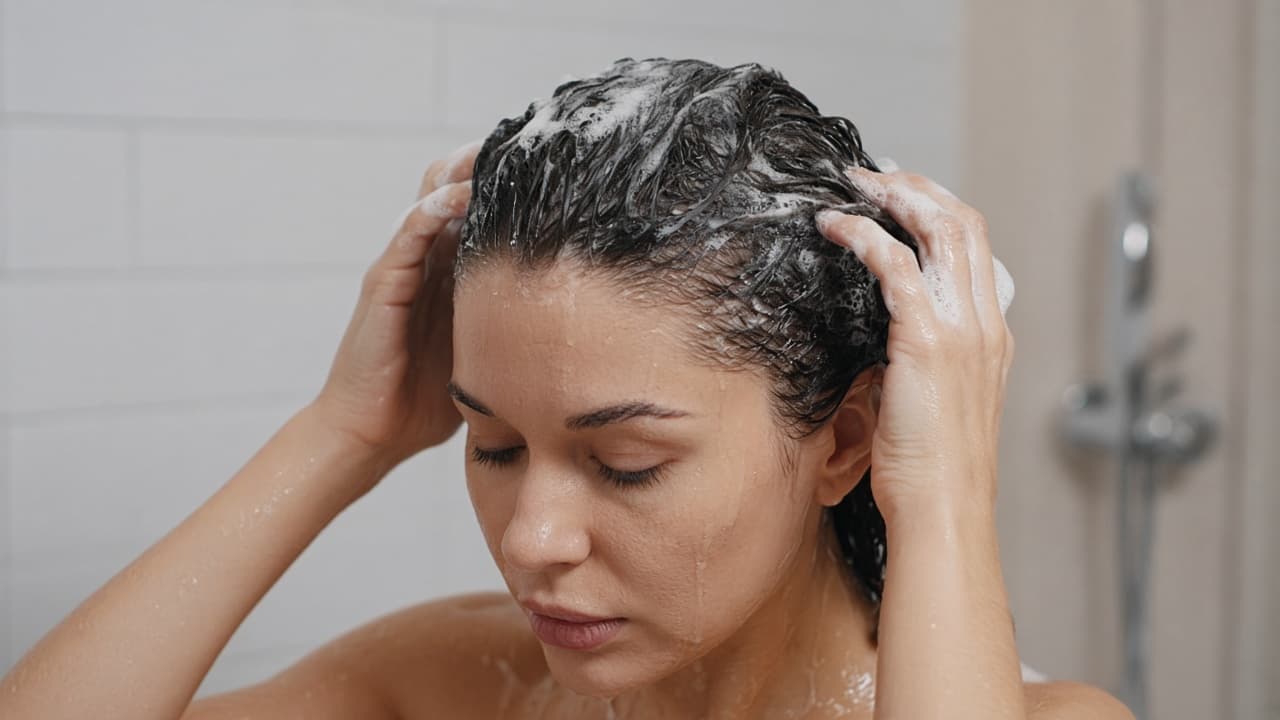
Do not stop needed treatment unless your clinician advises it. 7d
Wait six months while the scalp bleeds
Common mistake: assuming every flake is routine dandruff. Open sores, pus or clumps of hair loss need urgent evaluation.

Common mistake: waiting months while the scalp worsens.
Done when
- Choose a shampoo with a proven active ingredient
- Apply to scalp on the label schedule
- Massage three to five minutes before rinsing
- Track flake level weekly for four to six weeks
- Rotate actives if one plateaus
- Protect curly lengths from over-drying
- Book dermatology if no improvement or worsening symptoms
Eagle Frame's takeaway: pick a proven active ingredient, use it on schedule with scalp contact time, rinse clean and track progress for a month. Escalate to a dermatologist when flakes stay heavy, the scalp burns or you suspect something beyond routine dandruff.