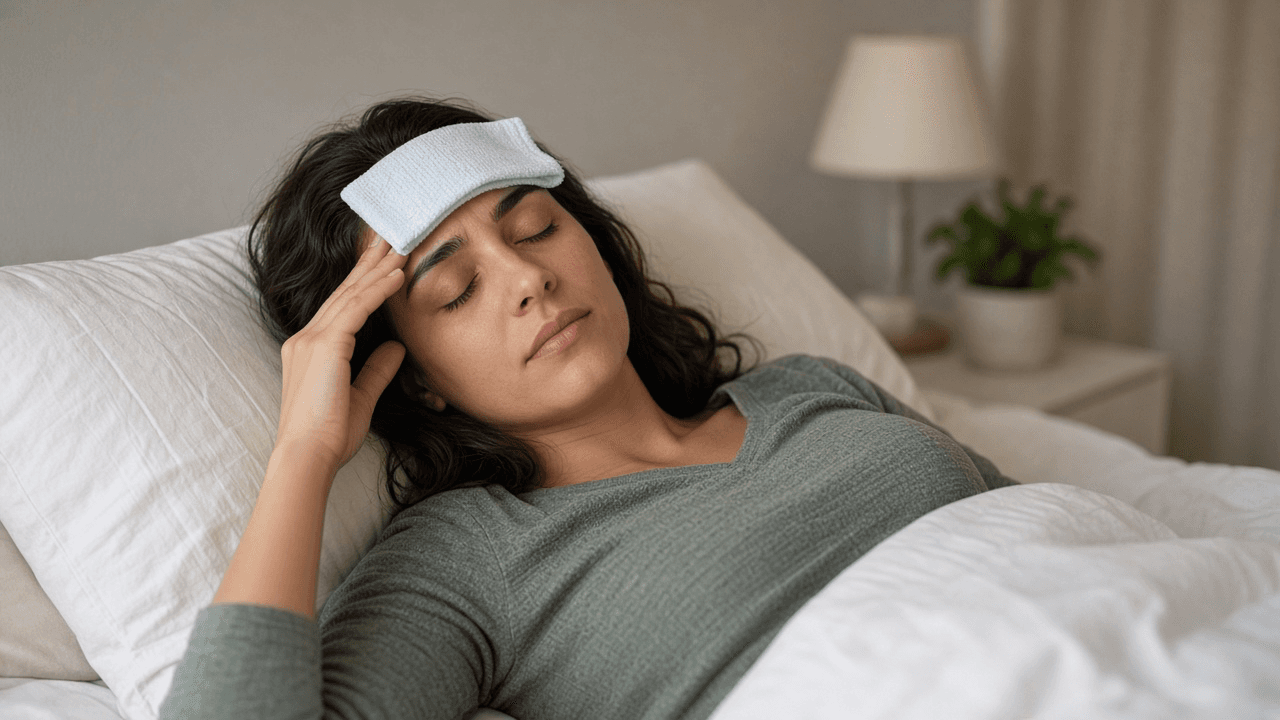
How to get rid of a headache
Ease a mild headache with hydration, rest, dim light and appropriate OTC pain relief if you can take it. Know red-flag symptoms that need urgent or emergency care.
A headache is a symptom, not one single illness. Tension-type pain often feels like pressure on both sides, while migraine may bring throbbing pain, nausea and sensitivity to light or sound. Dehydration, missed meals, viral illness, stress, eyesight strain and taking pain medicine too often can also contribute.
Before trying home care, check how the pain began and what came with it. Call emergency services for a sudden extremely painful headache, seizure, fainting, confusion, new weakness or numbness, trouble speaking or walking, loss of vision or a high fever with stiff neck. Do not drive yourself when emergency symptoms are present.
Headache after a significant injury also needs prompt assessment. Seek urgent advice for pain with repeated vomiting, a red painful eye, new vision problems, jaw pain while eating, a tender scalp or pain made worse by coughing, bending or exertion. Severe headache during pregnancy or soon after birth should be assessed urgently.
For a familiar mild headache without warning signs, drink water, eat a normal meal if you skipped one and rest in a quiet space. Reduce screen glare, loosen tight headwear and gently move tense neck and shoulder muscles. Avoid alcohol. Do not compensate with much more sleep than usual because that can worsen some headaches.
Paracetamol or ibuprofen can help some people when taken exactly as the package directs. They are not safe for everyone. Ask a pharmacist or clinician first if you are pregnant, take blood thinners, have stomach ulcers, kidney or liver disease, drink heavily or are treating a child. Check cold and flu products so you do not duplicate an ingredient.
Keep a diary if headaches return. Record start time, duration, severity, associated symptoms, sleep, meals, caffeine, menstrual timing and every medicine dose. Arrange clinical care when headaches become more frequent or severe, disrupt normal life, change pattern or do not improve with appropriate nonprescription treatment.
Step-by-step guide
Time: 30 minutes to a few hours for mild tension headache relief
What you need
- Water and optional electrolyte drink if you sweated heavily
- Quiet dim room or eye shade
- Cool compress for forehead or neck
- OTC pain reliever you are allowed to take (check label)
- Notebook to log triggers, duration and medicines taken
Before you start
- Not a substitute for medical care. This guide does not diagnose migraine, infection or stroke.
- Do not exceed OTC label limits or mix duplicate ingredients.
- Seek emergency care for sudden severe headache with neuro symptoms, fever with stiff neck or after significant head trauma.
- Daily or increasing headaches need a clinician, not endless self-medication.
Step 01
Screen for red flags before home treatment
Most headaches are benign. A few patterns need urgent evaluation first.
Do this step in order
1a
Ask if this is the worst headache you have felt
Thunderclap onset, like a switch flipped to maximal pain, needs emergency evaluation even without other symptoms.
1b
Look for fever, stiff neck or rash
These can signal infection such as meningitis. Do not wait it out with tea alone.
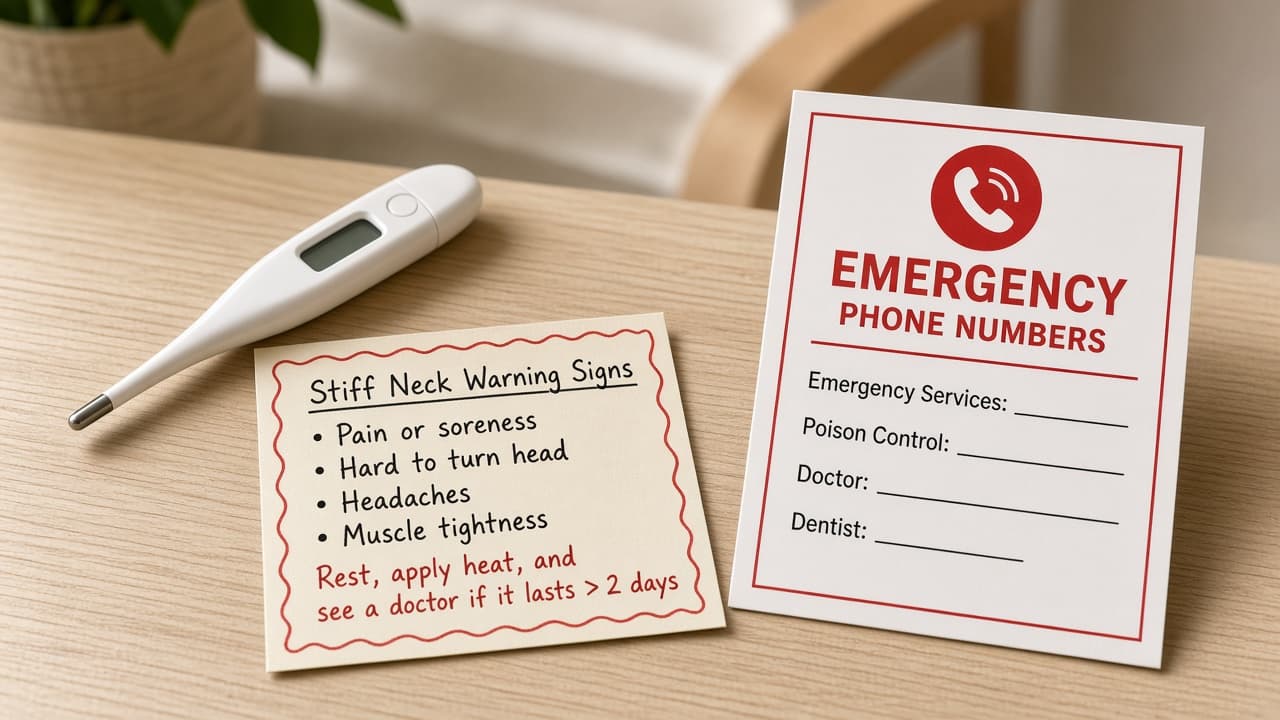
Fever with stiff neck is not a home-care headache. 1c
Check for weakness, confusion or speech change
One-sided numbness, drooping face or trouble speaking can signal stroke. Call emergency services.
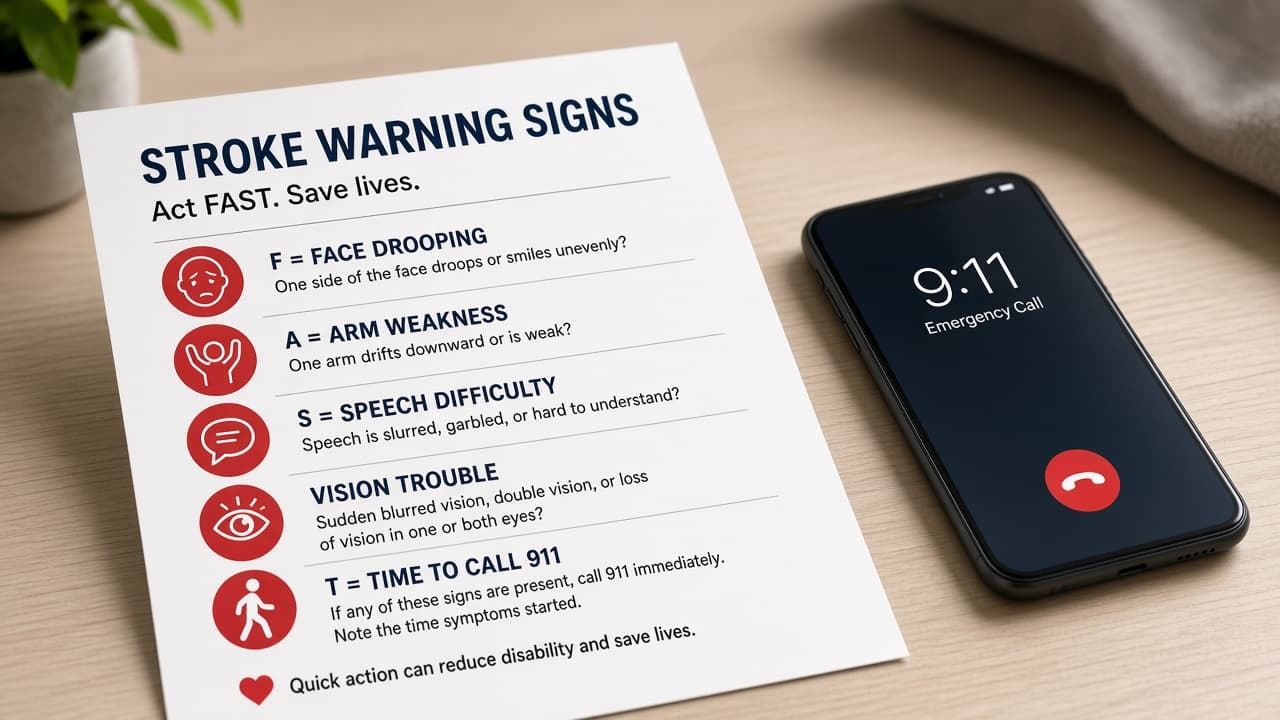
Neurological changes mean emergency care, not OTC pills. 1d
Note recent head injury or pregnancy
Common mistake: treating post-injury or pregnancy headache as ordinary tension pain. Those patterns need prompt clinical assessment.
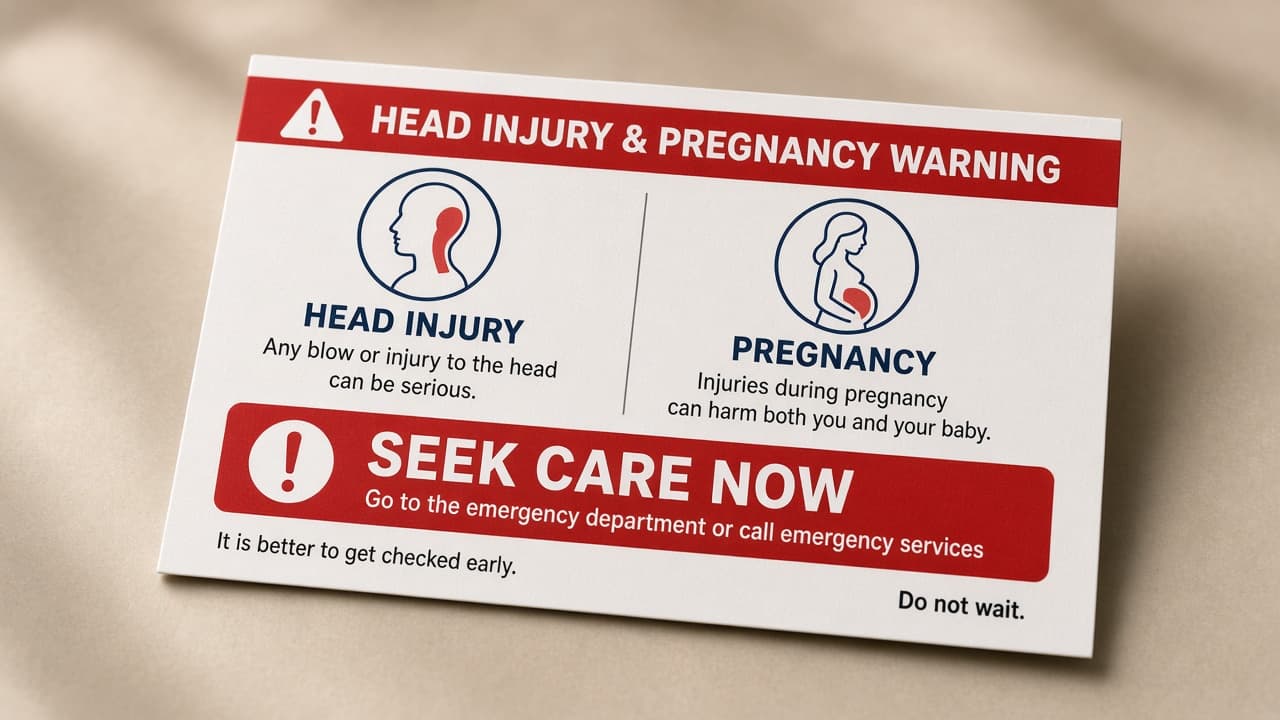
Injury and pregnancy change the urgency rules.
Step 02
Hydrate and eat if you skipped a meal
Simple fixes solve many mild headaches before medicine.
Do this step in order
2a
Drink water steadily
Sip water over 30 minutes rather than chugging once. Add electrolytes only if you lost a lot of sweat and have no condition that restricts sodium.
2b
Eat if you skipped a meal
Low blood sugar headaches often improve with protein and complex carbs, not only sugar.
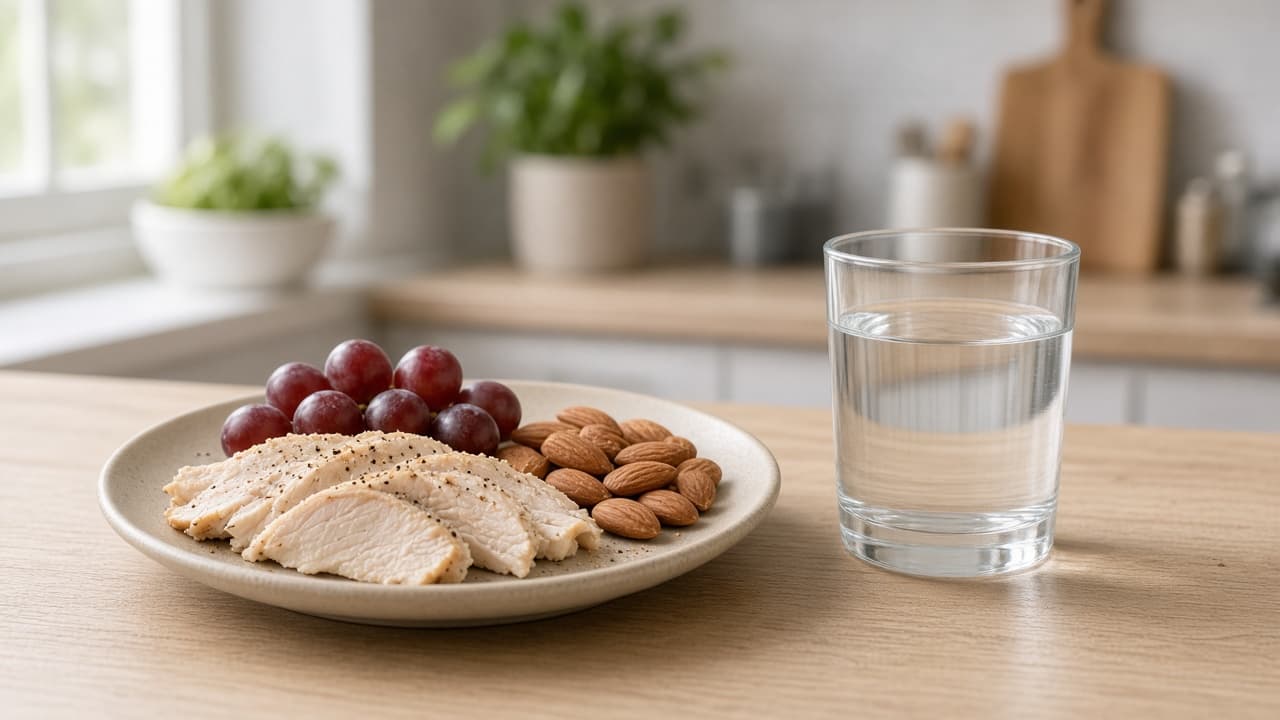
Food plus fluid beats sugar alone for many hunger headaches. 2c
Pause alcohol completely while you recover
Alcohol dehydrates and can worsen pain. Save any drink for a day when the headache is gone.

Skip alcohol until the headache fully clears. 2d
Do not chug a huge volume at once
Common mistake: drinking a liter in two minutes and feeling worse. Steady sipping is easier on the stomach when pain already sits high.
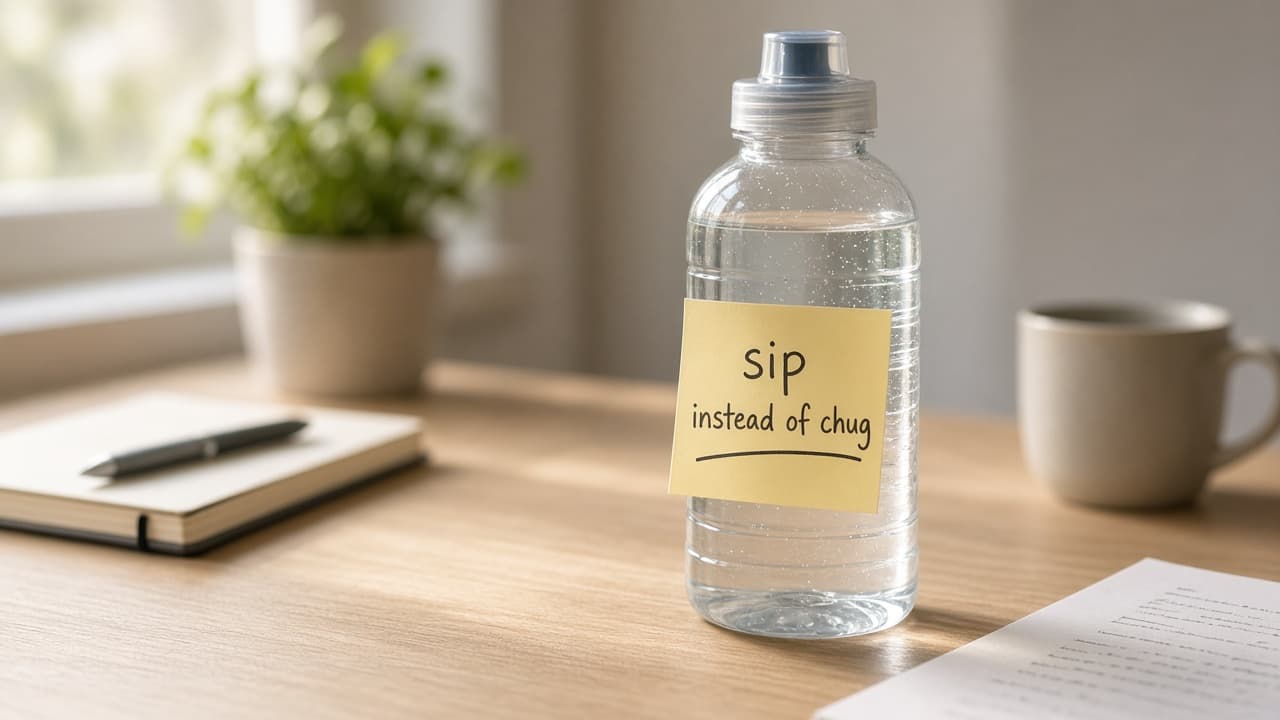
Steady sips usually sit better than one huge chug.
Step 03
Rest in dim light and ease neck tension
Lower stimulation so the nervous system can settle.
Do this step in order
3a
Rest eyes away from bright screens
Step away from phones and monitors. Reduce glare and loosen tight headwear or ponytails.
3b
Apply a cool or warm cloth where it helps
A cool cloth on the forehead or a warm cloth on tight neck muscles both have a place. Use whichever feels better.
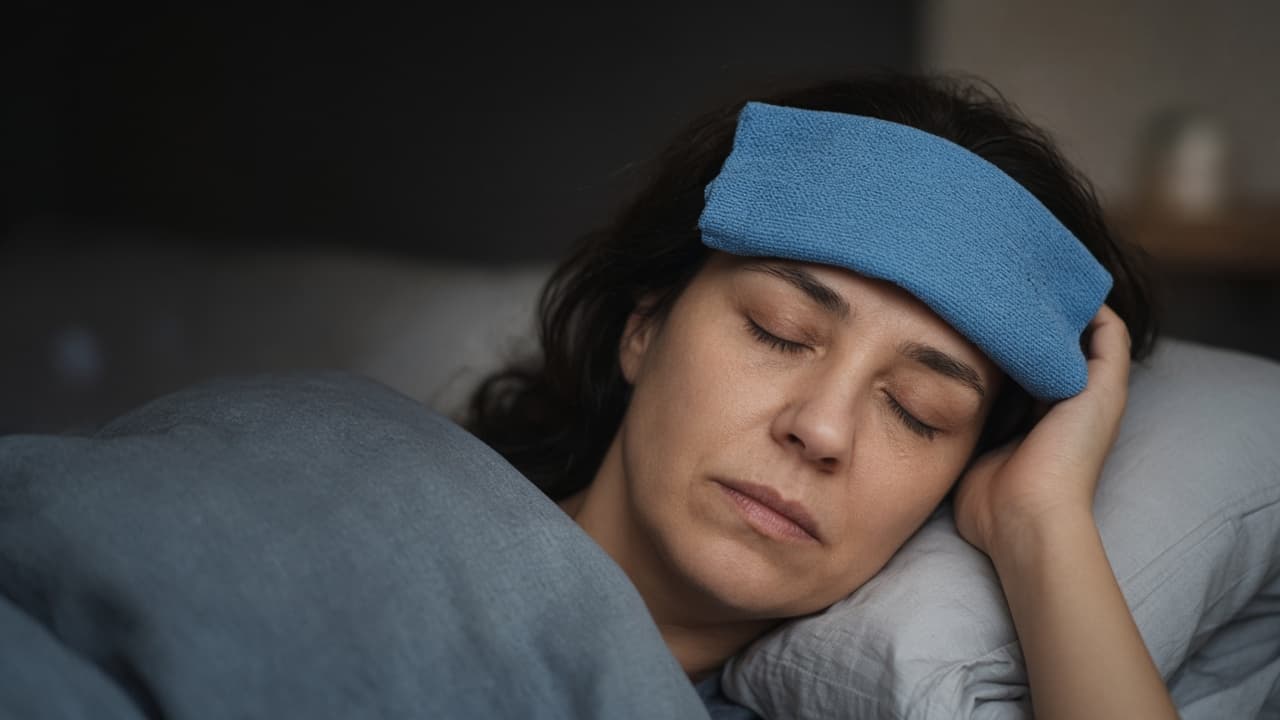
Pick cool or warm based on what eases your pain. 3c
Gently move tense neck and shoulder muscles
Slow shoulder rolls and easy neck range can help tension-type pain. Stop if movement sharpens the headache or causes dizziness.

Easy movement beats aggressive stretching during pain. 3d
Avoid sleeping far longer than usual as the cure
Common mistake: staying in bed much longer than your normal night because more sleep feels like medicine. Extra sleep can worsen some headaches.
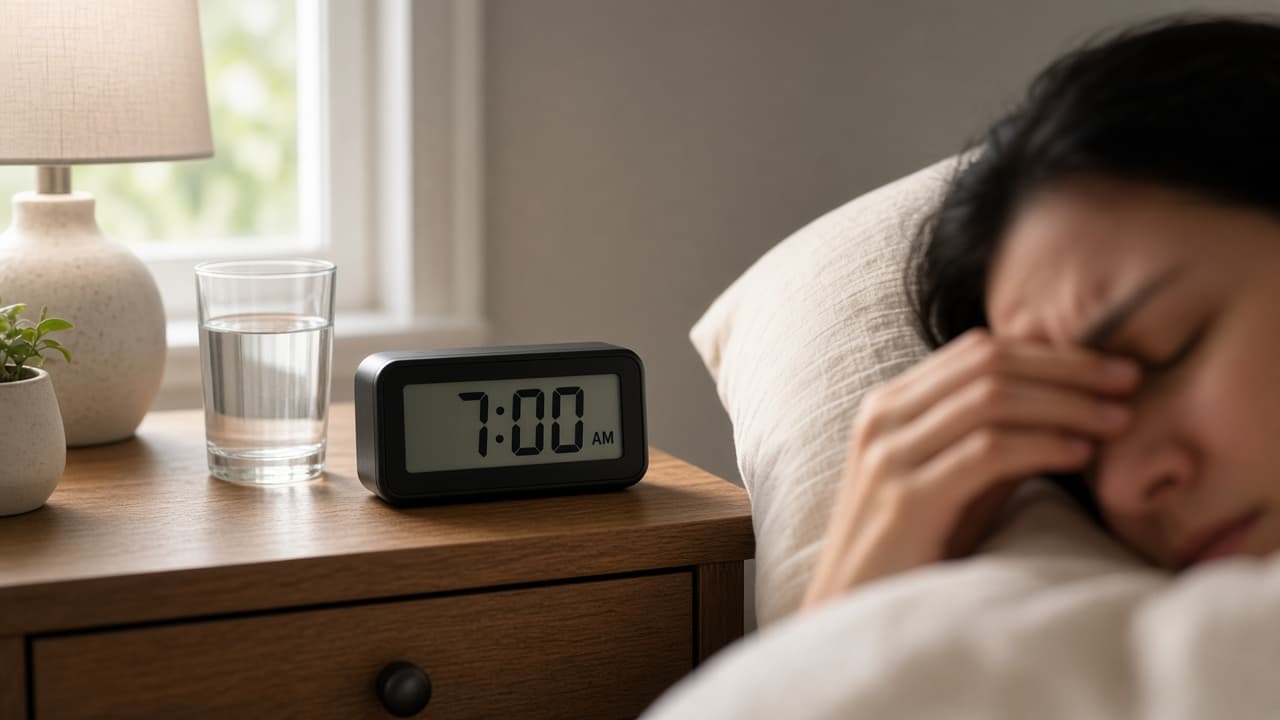
Protect rest, but do not oversleep as the only plan.
Step 04
Use OTC relief safely if appropriate
Medicine helps some people when labels and personal health allow it.
Do this step in order
4a
Confirm the product is safe for you
Ask a pharmacist or clinician first if you are pregnant, take blood thinners, have ulcers, kidney or liver disease, drink heavily or are treating a child.
4b
Pick one appropriate product
Acetaminophen or ibuprofen helps many adults. Do not combine multiple acetaminophen sources. Ask a clinician about aspirin for children or teens.
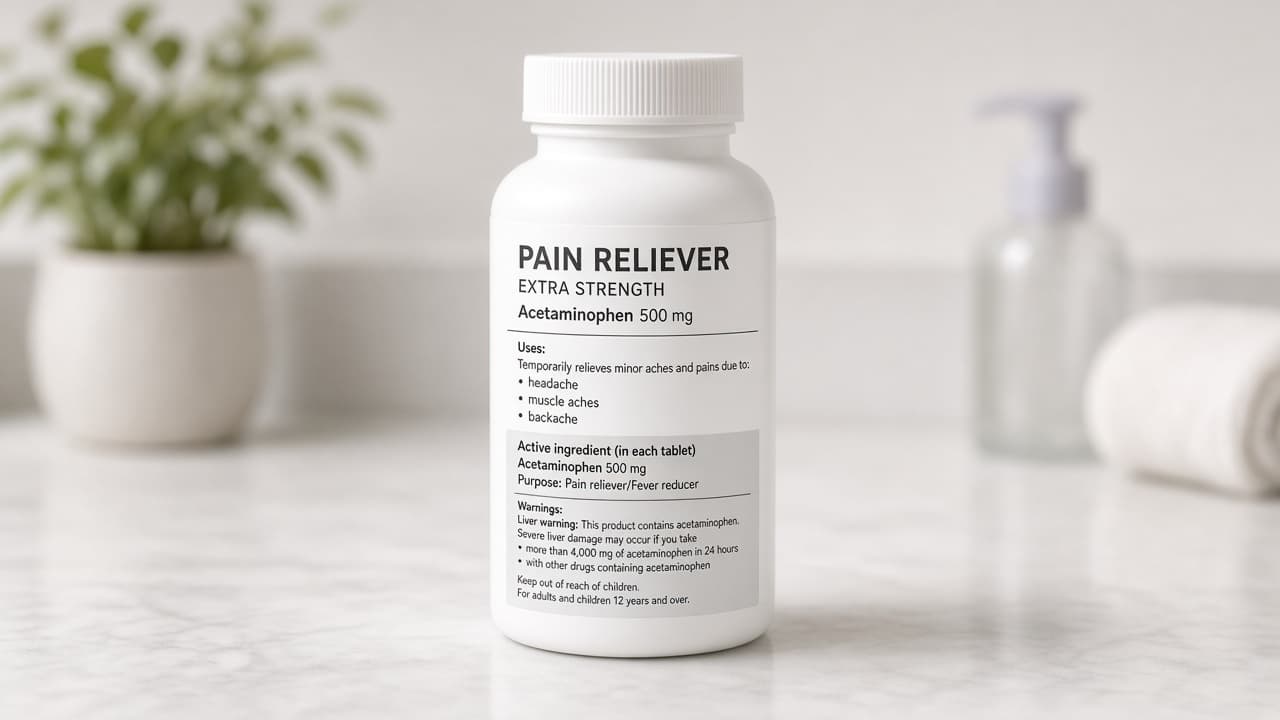
One product. Check that cold medicines do not duplicate it. 4c
Follow dose and spacing on the label
More pills do not work faster and can harm liver or kidneys. Set a timer for the next allowed dose.
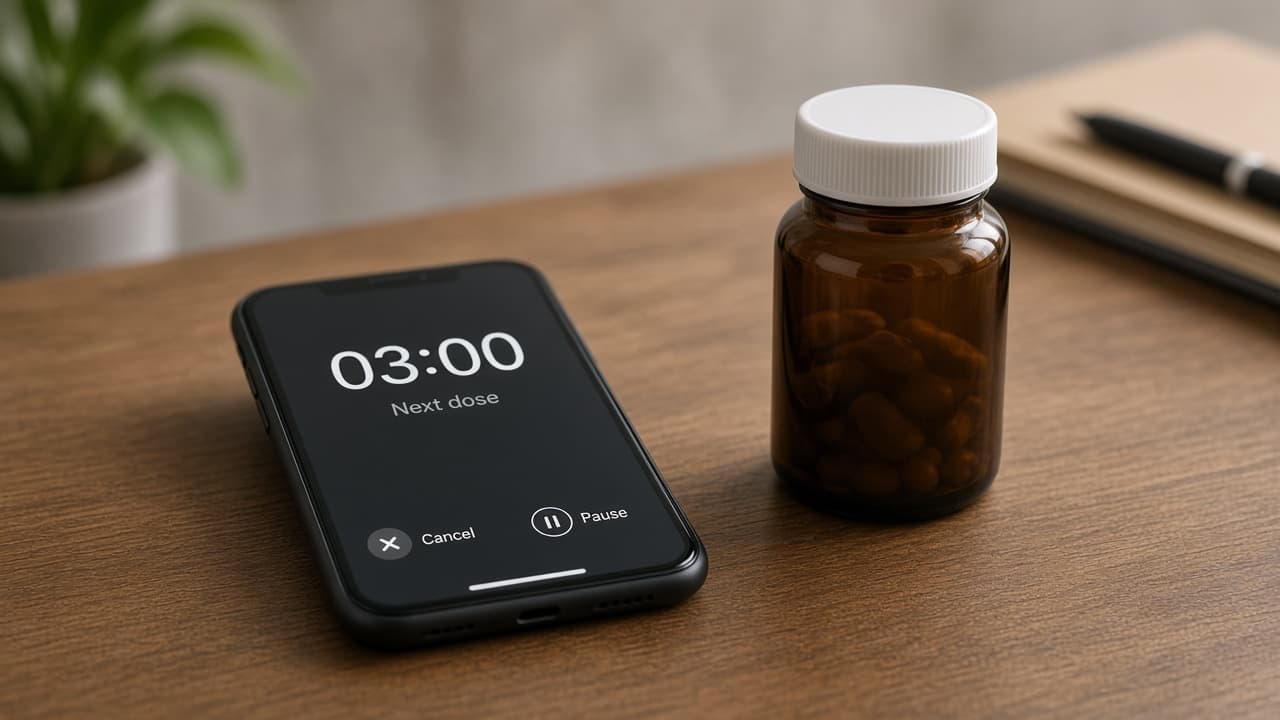
Respect spacing. Extra tablets are not a shortcut. 4d
Write down the dose and time immediately
Common mistake: forgetting what you took and repeating a dose too soon, or stacking a cold remedy with the same ingredient.
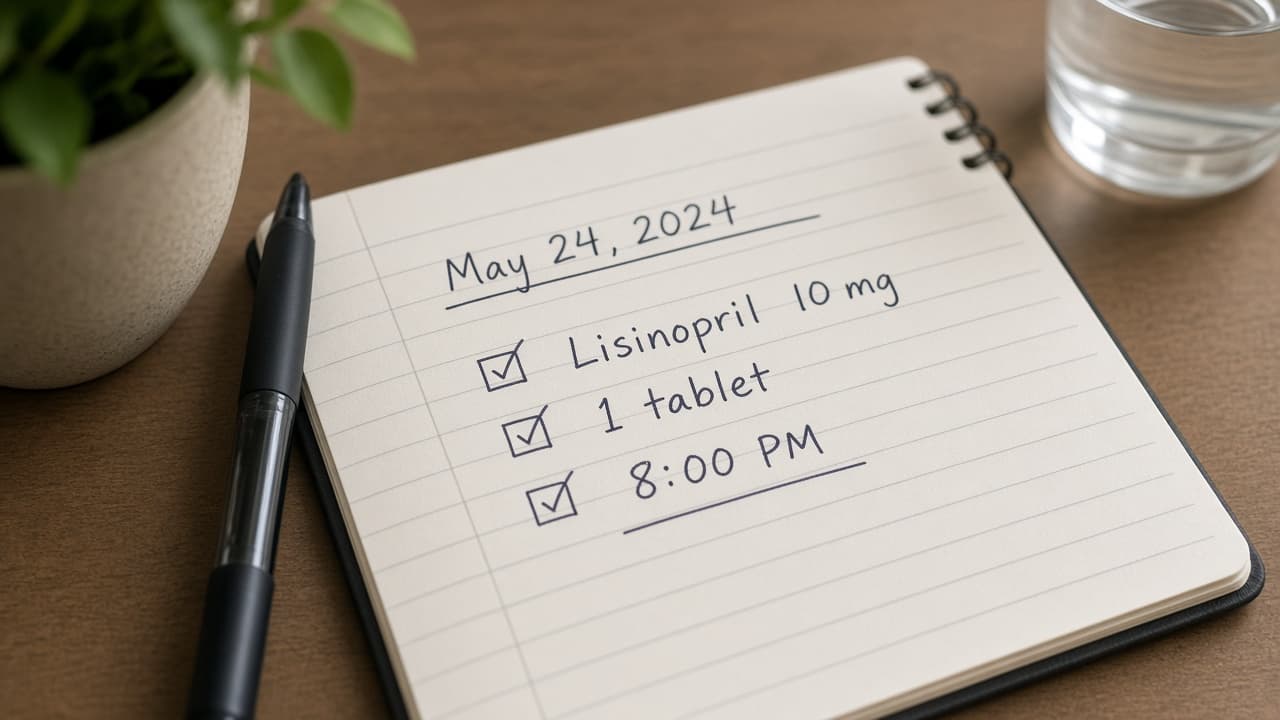
Log each dose so you do not double up by accident.
Step 05
Avoid rebound and other medicine pitfalls
Too-frequent OTC use can become part of the headache problem.
Do this step in order
5a
Limit how many days you use OTC pain medicine
Using OTC pain medicine more than about ten days a month can cause medication-overuse headaches. If you need it that often, book clinical help.
5b
Check combination cold and flu products
Many nighttime formulas already contain acetaminophen. Adding a separate pain tablet can push you over safe limits.
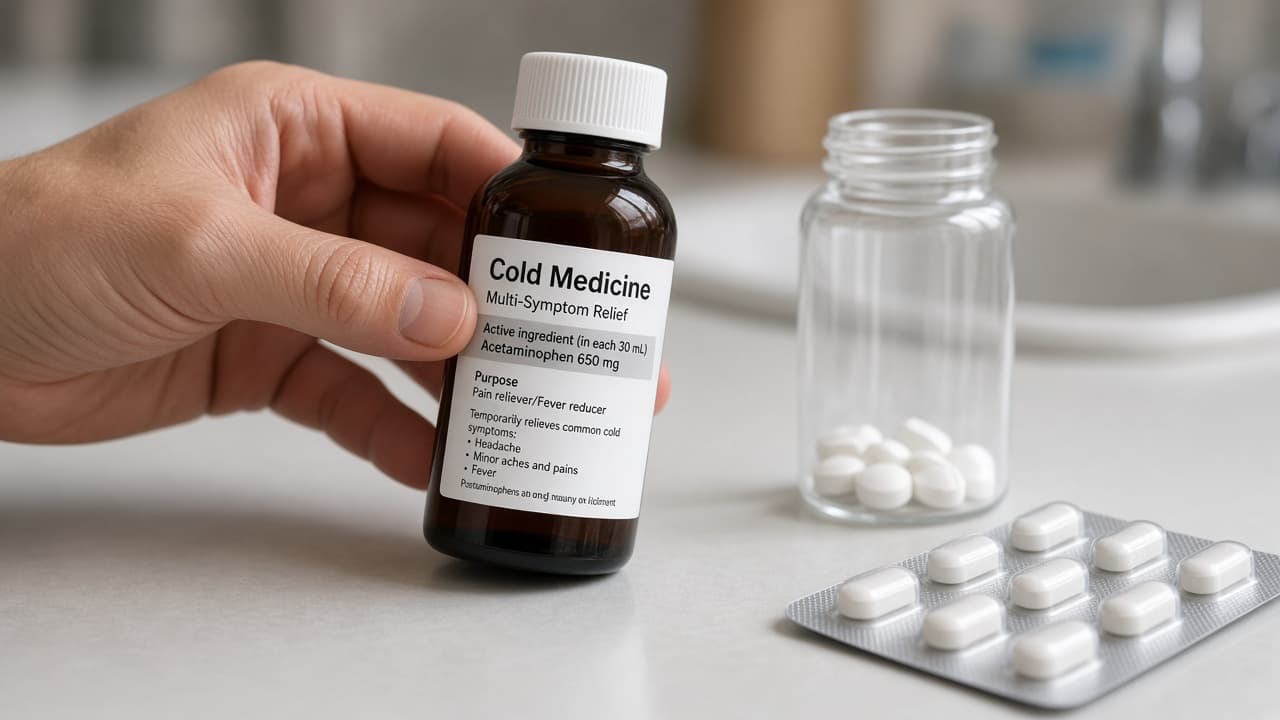
Read combination labels before stacking products. 5c
Keep caffeine close to your normal amount
Both excess caffeine and abrupt withdrawal can trigger pain. Do not swing from none to several strong coffees in one afternoon.
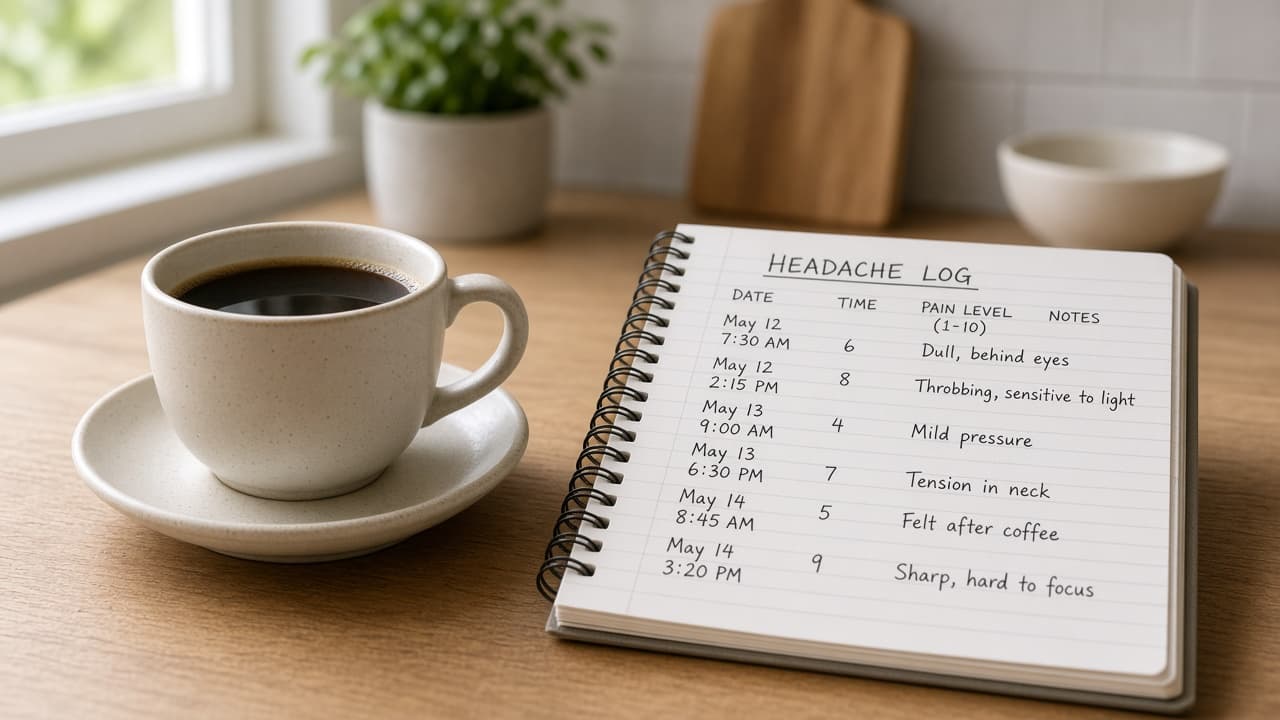
Stay near your normal caffeine, not a huge swing. 5d
Do not chase pain with ever-higher doses
Common mistake: taking another tablet early because the first felt weak. Stay inside label limits and seek care if pain is unmanageable.
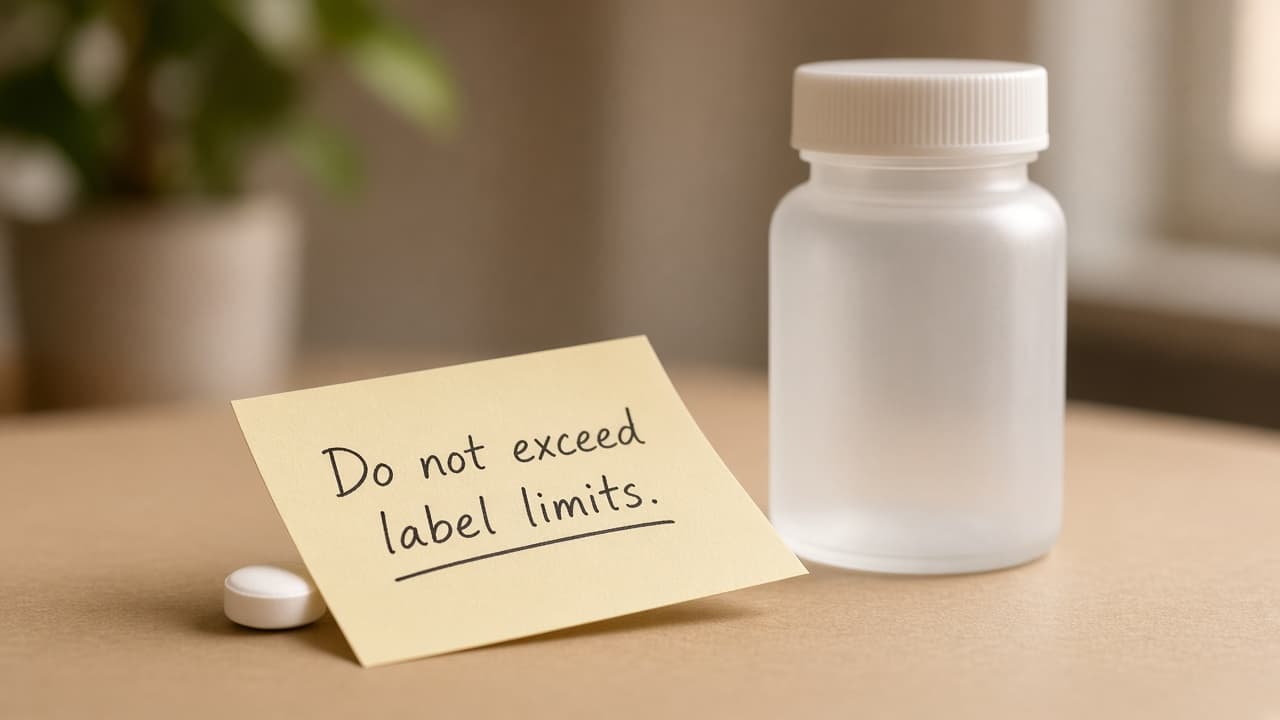
Early redosing is a safety problem, not a stronger cure.
Step 06
Log triggers and patterns
A short diary turns random pain into useful information.
Do this step in order
6a
Log sleep, caffeine, stress and meals
Write date, duration, severity, what helped and what you ate or drank. Screenshots of phone notes work.
6b
Adjust one trigger at a time
If coffee withdrawal or late screens repeats in the log, fix that lever for a week and recheck.
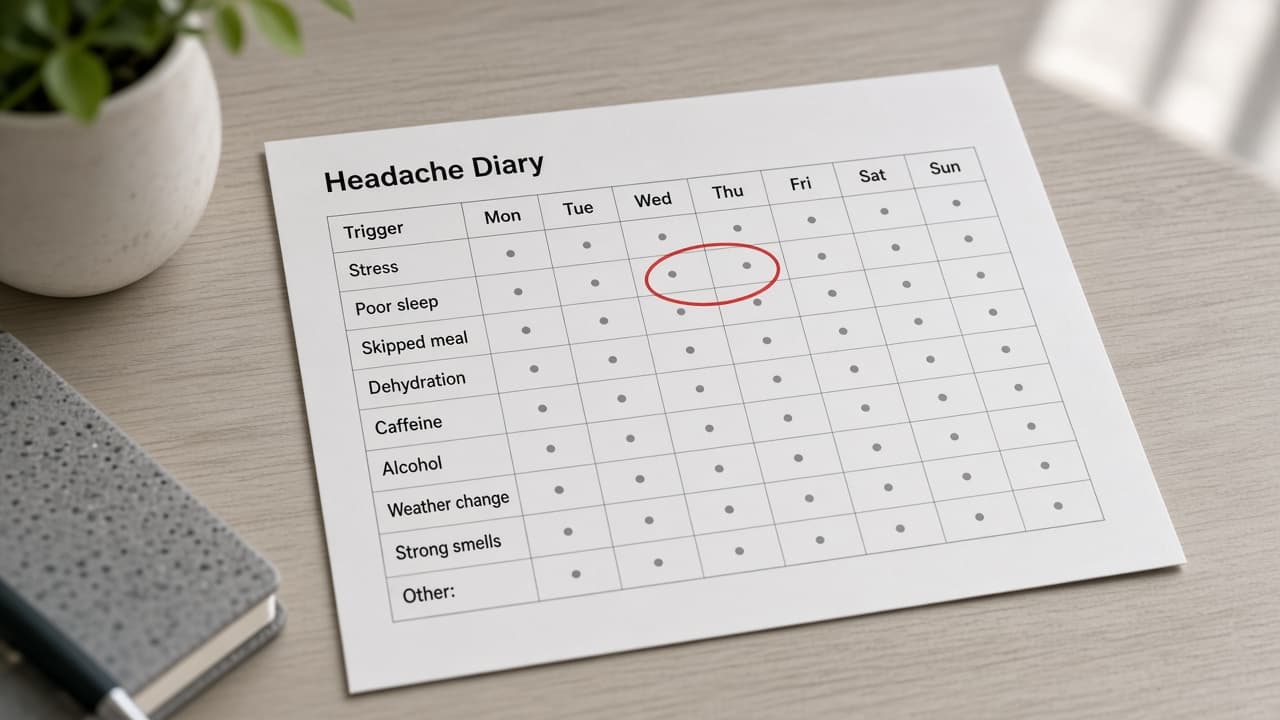
Change one lever so you can tell what helped. 6c
Note menstrual timing if relevant
Hormonal patterns matter for some people. A simple cycle mark beside headache dates can help a clinician later.
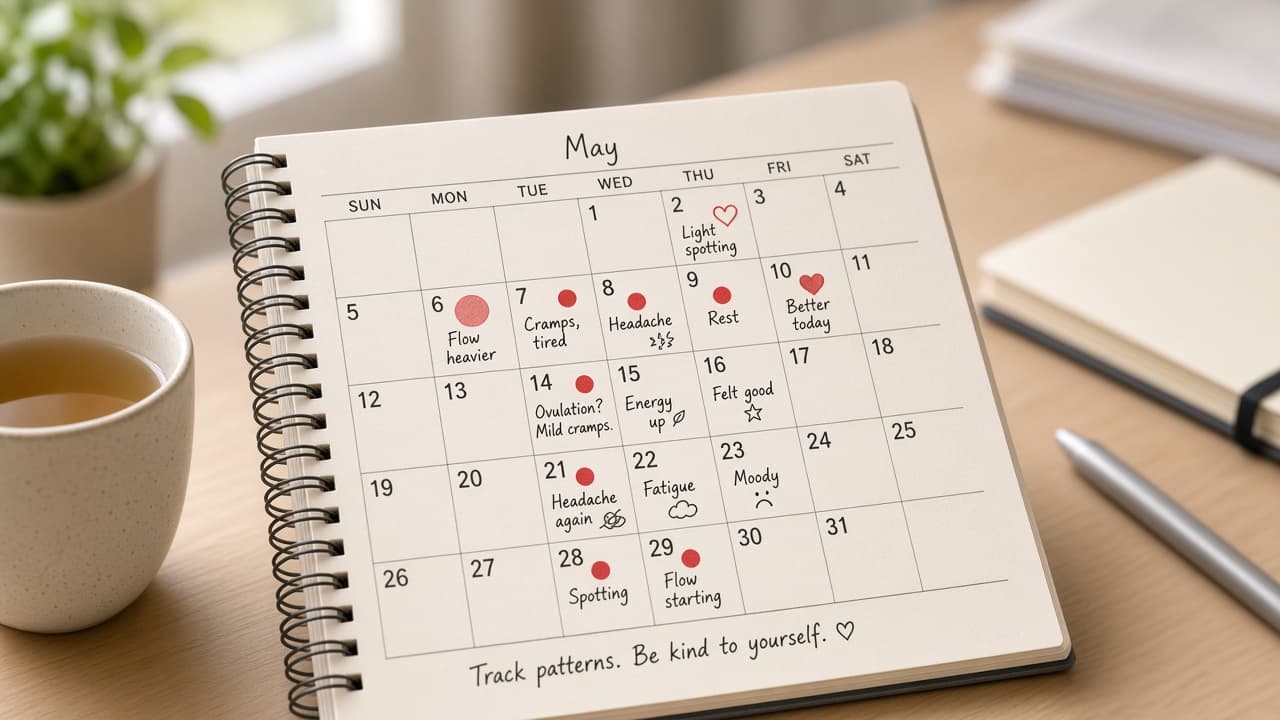
Cycle context helps when patterns are hormonal. 6d
Do not rely on memory alone after weeks of pain
Common mistake: telling a clinician it happens a lot with no dates, doses or trigger notes. Bring the log.
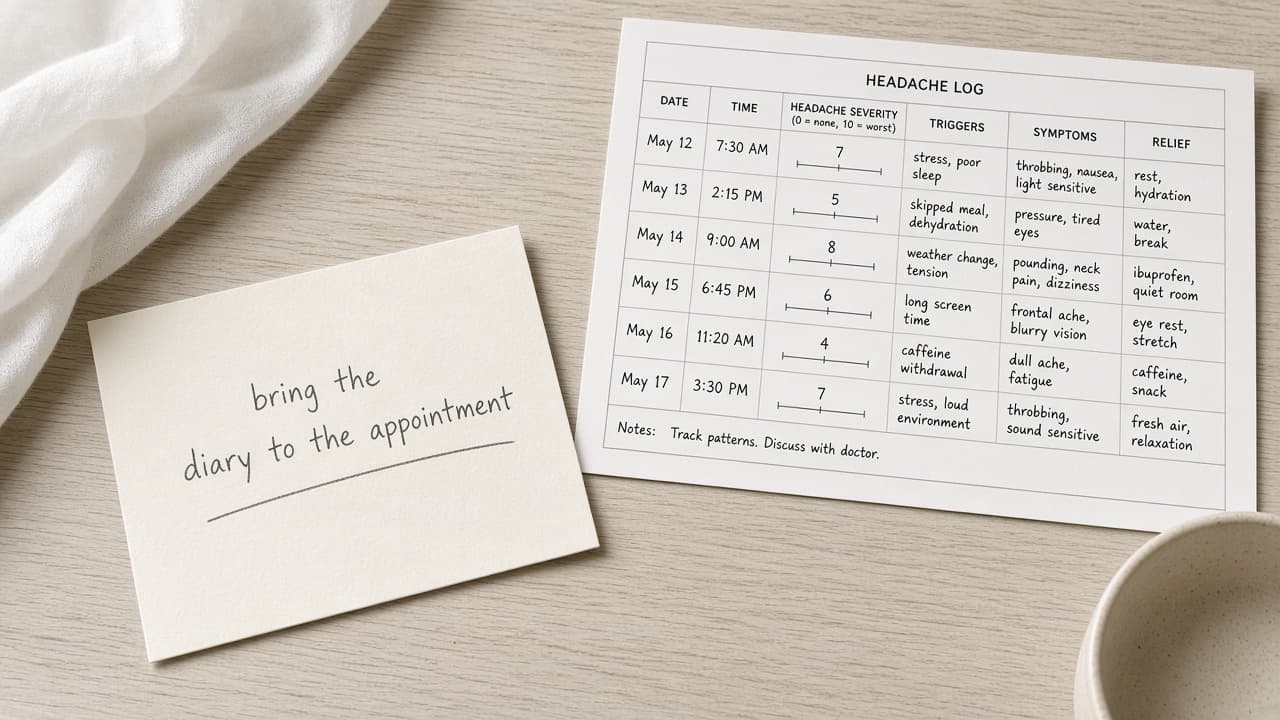
A written log beats a vague week of hurting.
Step 07
Know when to book clinical care
Home care has limits. Changing or frequent headaches deserve professional evaluation.
Do this step in order
7a
Book care for changing or frequent headaches
New headaches after age fifty, increasing frequency, headaches that wake you or need medicine most days deserve professional evaluation.
7b
Ask about migraine when light and nausea dominate
If light sensitivity and nausea dominate, ask about migraine diagnosis and prescribed options instead of only repeating OTC cycles.
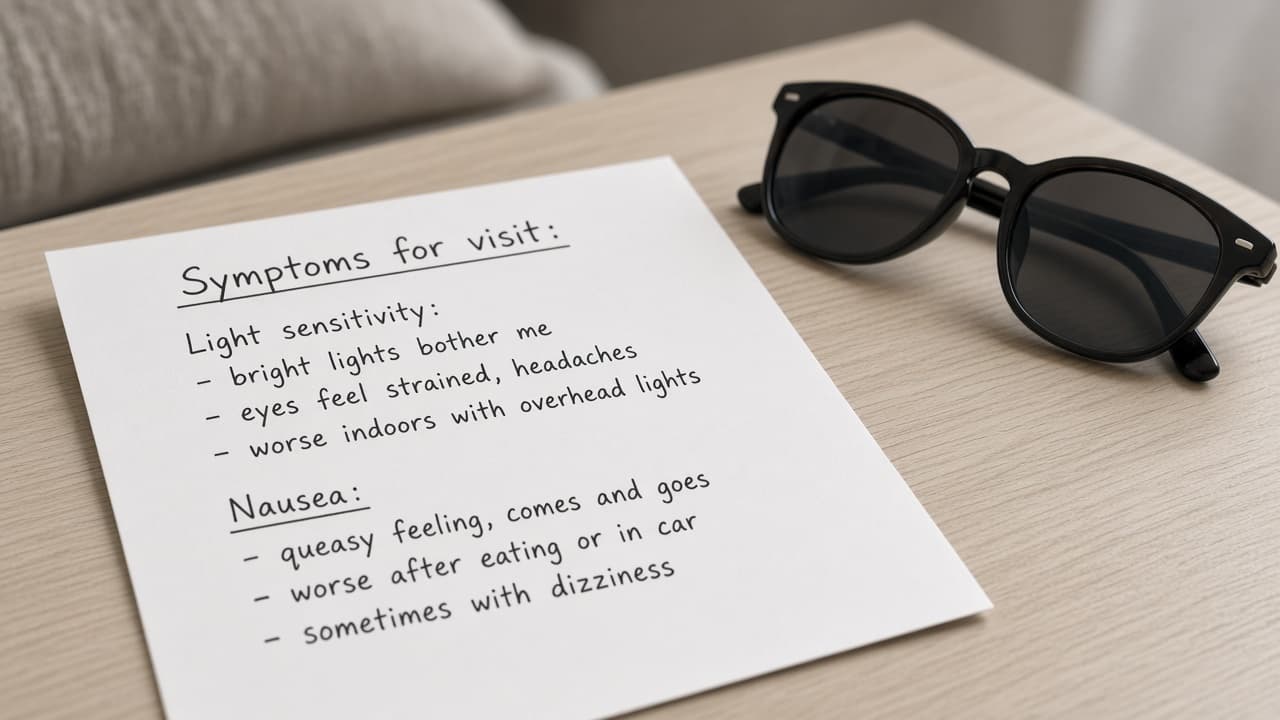
Migraine patterns need a clinician plan, not endless OTC loops. 7c
Seek urgent care for red flags that appear later
A mild start can change. New weakness, fever with stiff neck or the worst pain of your life still means emergency care.
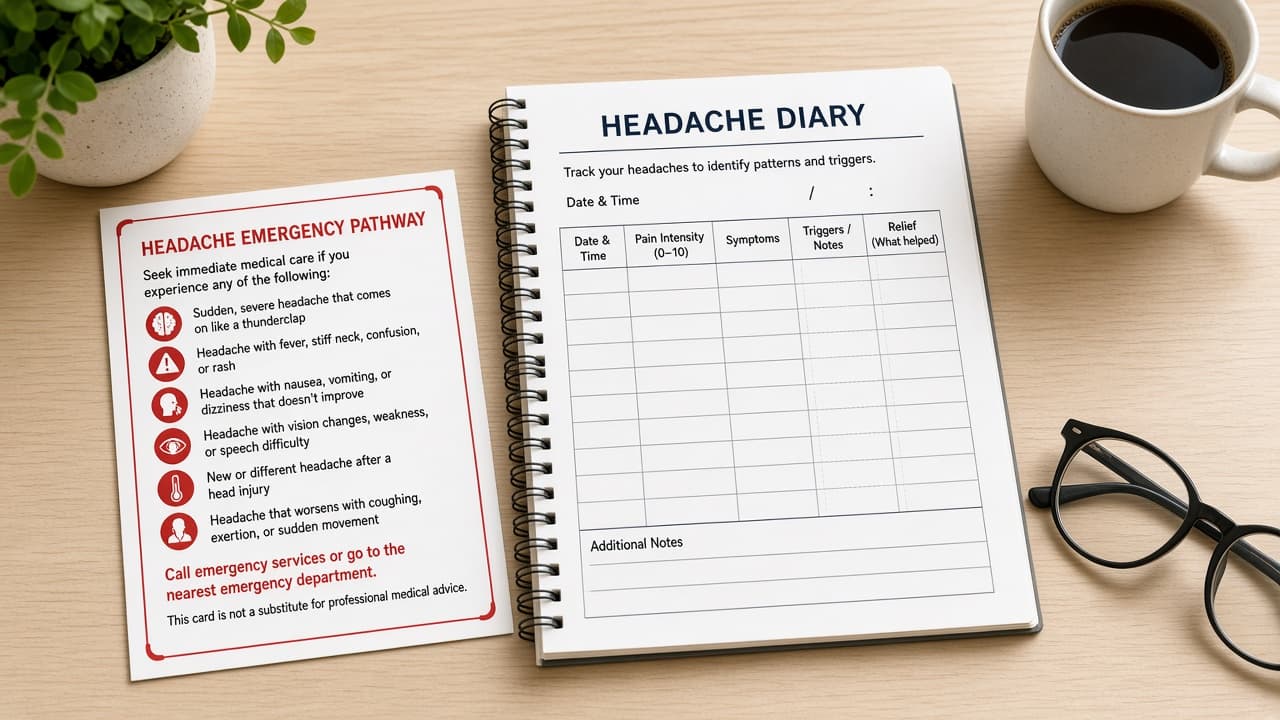
Red flags stay urgent even if the day began mildly. 7d
Reject online miracle headache cures
Common mistake: buying unverified supplements that promise permanent headache freedom. Use clinical guidance for repeated or severe pain.

Skip miracle products. Use real clinical pathways.
Done when
- Red-flag symptoms ruled out
- Water and food if needed
- Rest in low light and low noise
- OTC medicine taken only if safe for you
- Trigger note written for next time
- Clinician contacted if pattern is new or worsening
Eagle Frame's takeaway: mild familiar headaches may settle with fluids, regular food, reduced stimulation, rest and a pain reliever that is safe for you. This guide cannot diagnose the cause. Treat a sudden severe headache or one with neurological, infection, eye, injury or pregnancy warning signs as urgent or emergency care.