How to hard-boil eggs that peel cleanly
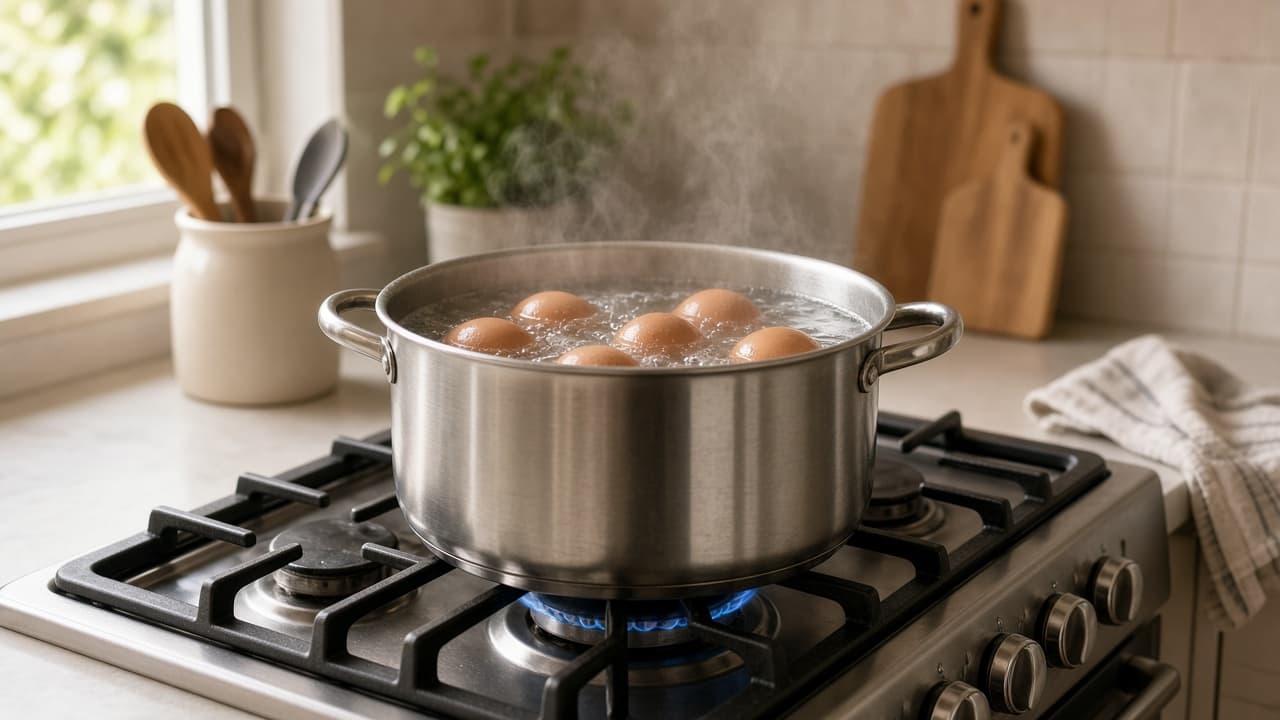
Use a cold-water start, a gentle boil and an ice bath. For large eggs, about 10 minutes at a gentle boil gives a set yolk that still peels without tearing.
Hard-boiled eggs fail in two common ways: a green ring on a chalky yolk from overcooking or shells that take half the white with them when you peel. Both problems are mostly about heat control and cooling, not about lucky eggs. A reliable method uses cold water at the start, a gentle boil rather than a violent roll and a real ice bath before you peel.
This guide uses one clear method: cold-water start. You place large eggs in a single layer, cover them with cold water, bring the pot to a gentle boil, then keep that gentle boil for about 10 minutes. Immediately move the eggs into ice water so cooking stops and the membrane loosens. After a few minutes you can peel under a thin stream of water.
Timing below is for large chicken eggs straight from the fridge in a pot that holds them in one layer. Extra-large eggs may need about a minute more. Medium eggs may need about a minute less. Very fresh eggs often peel harder than eggs that have sat a few days in the fridge. If peeling still fights you, start peeling from the wider end where the air pocket sits.
You will need a saucepan, a slotted spoon, a bowl of ice water and a timer. No special gadgets. The same batch works for snacks, egg salad and packing lunches. Stop when yolks are set the way you like them and the shells slip off in large pieces instead of tiny shards.
Step-by-step guide
Time: 20 to 25 minutes including the ice bath
What you need
- Saucepan large enough for eggs in a single layer
- Large eggs (timing below is for large)
- Cold tap water
- Timer
- Slotted spoon or tongs
- Bowl of ice water
Before you start
- Use a gentle boil. A hard rolling boil knocks eggs together and can crack shells.
- Move hot eggs with a spoon. Do not tip a full pot of boiling water into the sink with eggs still inside.
- If an egg cracks badly and leaks into the water, remove it so the white does not foam over the pot.
Step 01
Set eggs in cold water in a single layer
Starting cold heats the eggs evenly and reduces the shock that cracks shells when they hit already-boiling water.
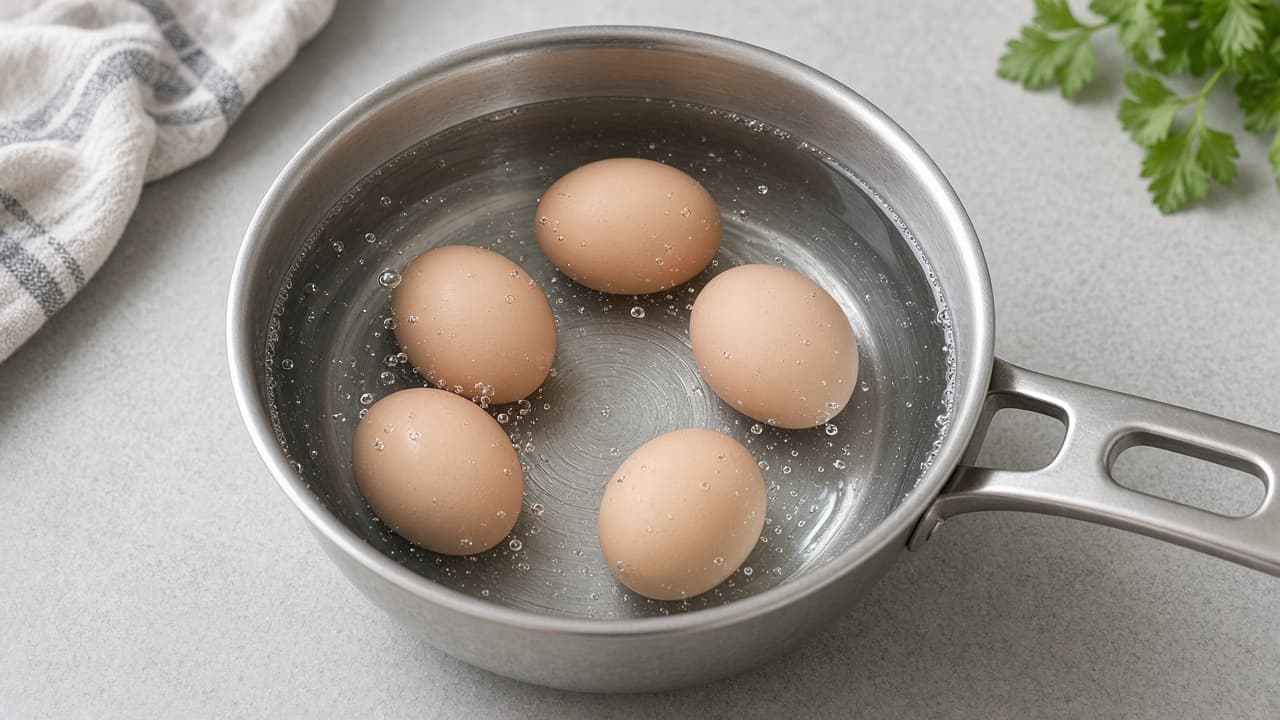
Illustrative: cold water should cover the eggs by about an inch in a single layer. Do this step in order
1a
Arrange eggs in one layer
Place large eggs in the saucepan so they sit in a single layer. Do not stack. Crowding makes some eggs overcook while others lag and raises the chance of cracks when the water moves.
1b
Cover with cold water by about an inch
Add cold tap water until it covers the tops of the eggs by about 2 to 3 cm (about an inch). Starting from hot water is a different method. Stick to cold for this timing.
1c
Set the ice bath before you turn on the stove
Fill a bowl with cold water and plenty of ice. Having it ready means you can stop the cooking the moment the timer ends. Common mistake: hunting for ice while the eggs keep cooking in hot water.
Step 02
Bring to a gentle boil, then time large eggs
Heat until you see steady gentle bubbles, then start the clock. Violent boiling is not better.
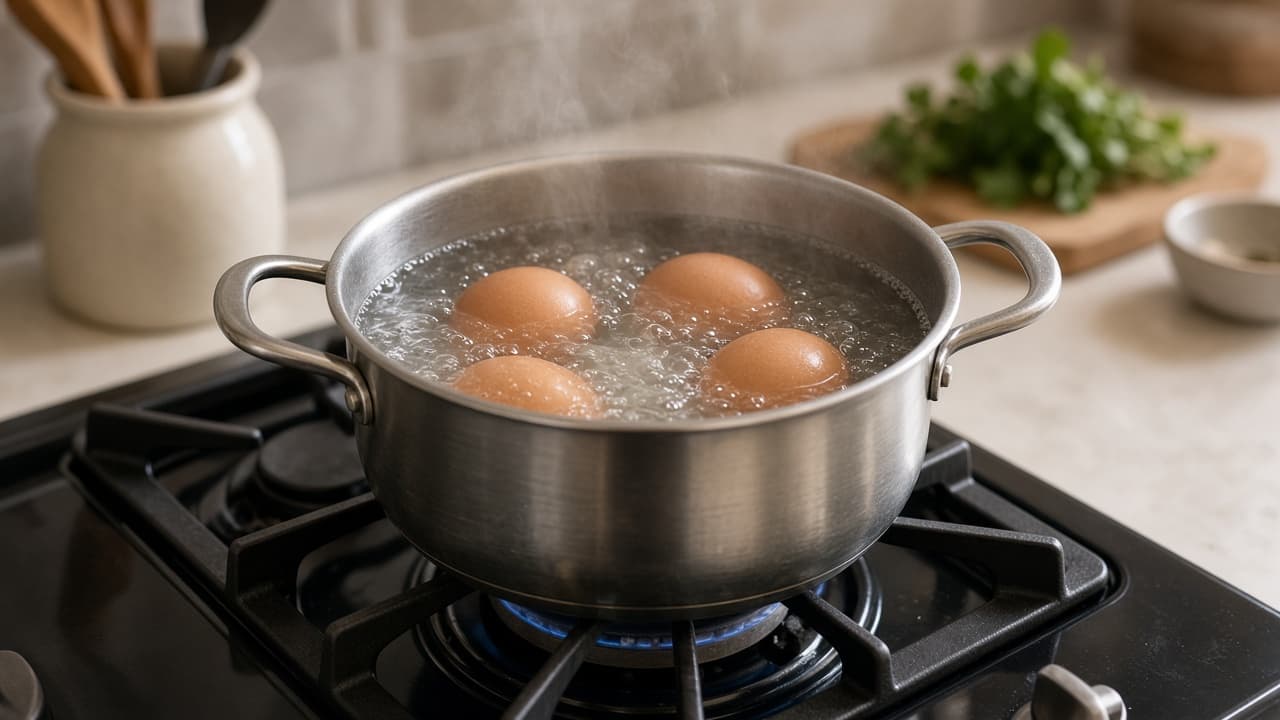
Illustrative: a gentle boil moves the water without slamming eggs into each other. Do this step in order
2a
Heat over medium-high until a gentle boil
Set the burner to medium-high and wait until the water reaches a gentle boil: steady bubbles that break the surface without a roaring roll. If the pot is leaping, turn the heat down slightly.
2b
Hold a gentle boil for about 10 minutes for large eggs
Once you hit that gentle boil, start a timer for about 10 minutes for large eggs with fully set yolks. For a slightly softer center, try 8 to 9 minutes. Extra-large often need about 11. Keep the heat in the gentle range the whole time.
2c
Avoid a hard rolling boil
A hard boil throws eggs against the pot and each other. Shells crack and whites leak. If you see aggressive rolling, lower the heat. Common mistake: walking away on high heat so the pot boils over and the timing drifts.
Step 03
Move eggs straight into an ice bath
Cold water stops carryover cooking and helps the shell release from the white.
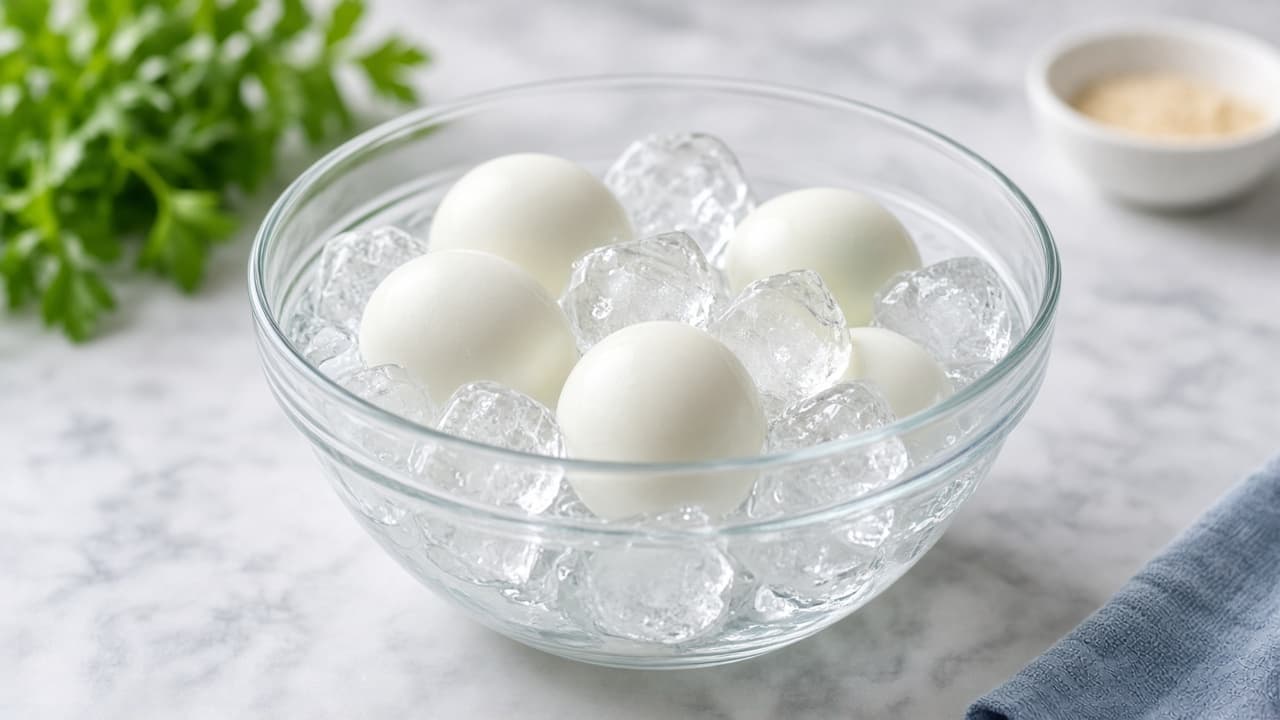
Illustrative: straight from the pot into ice water stops the yolks from overcooking. Do this step in order
3a
Lift eggs into the ice bath immediately
When the timer ends, use a slotted spoon to move eggs into the ice water. Do not leave them sitting in the hot pot. The residual heat will keep cooking the yolks and can create that gray-green ring.
3b
Chill at least 5 minutes
Leave the eggs in the ice bath for at least 5 minutes, longer if the batch is large and the water warms. Add more ice if needed. Eggs should feel cold before you peel.
3c
Drain and decide: peel now or refrigerate
Peel what you need now. Unpeeled hard-boiled eggs keep in the fridge for about a week. Peeled eggs should be eaten sooner and stored in a covered container. Common mistake: peeling while eggs are still warm because you are impatient.
Step 04
Crack, peel from the wide end and rinse
Start at the air pocket, work under a little water and take large shell pieces instead of scraping.
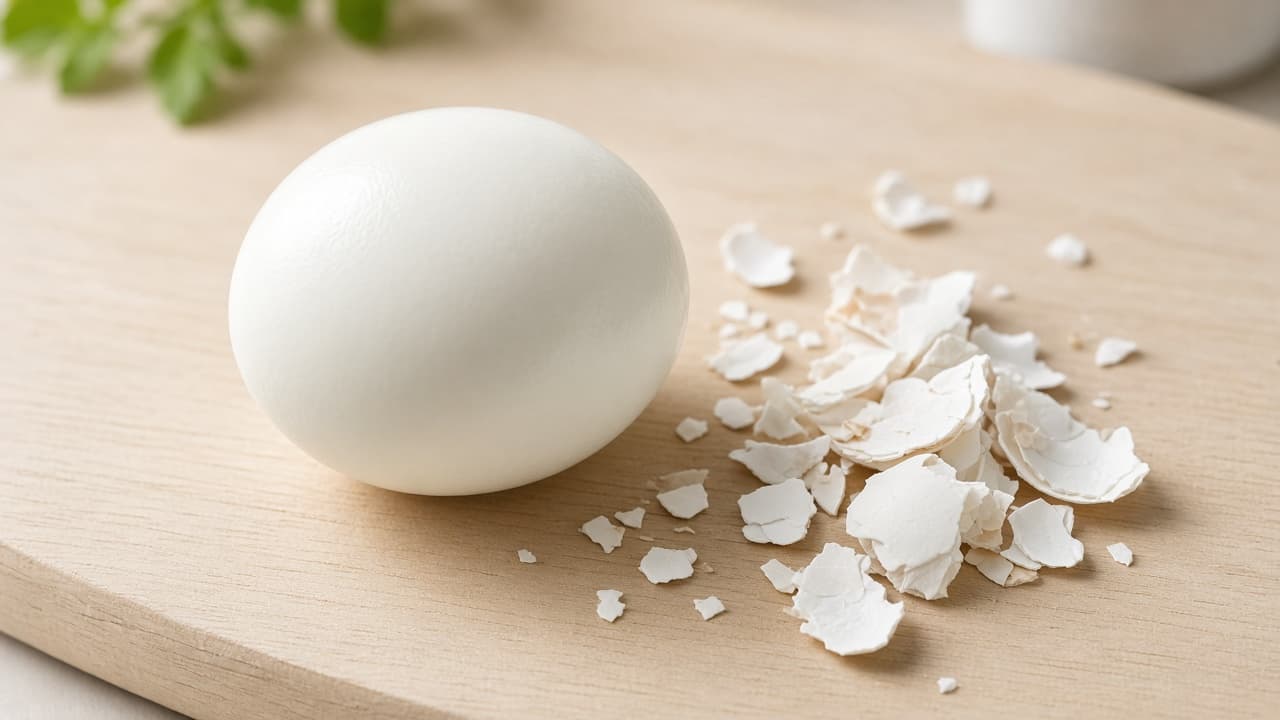
Illustrative: start at the wide end and peel under a thin stream of water. Do this step in order
4a
Tap all over, then open at the wide end
Gently roll or tap the egg on the counter to crack the shell all around. Begin peeling at the wider end where the air pocket sits. Slip a thumb under the membrane and peel shell and membrane together when you can.
4b
Peel under a thin stream of water
Hold the egg under a slow stream of cool water or peel it in a bowl of water. Water helps separate tiny shell bits from the white. Take large pieces. Digging with a fingernail creates pits in the white.
4c
Pat dry and check the yolk
Pat dry and slice one open if you are still learning your stove. A set yolk with little or no green ring means the timing worked. Common mistake: scraping every last fleck of shell so hard you tear the white. Rinse instead.
Done when
- Eggs in a single layer under about an inch of cold water
- Gentle boil held for the timed minutes
- Ice bath ready before the timer ends
- Eggs chilled several minutes before peeling
- Peeled from the wide end under a little water
Eagle Frame’s takeaway: clean peels come from a cold start, a gentle boil and an ice bath, not from chasing the eggs around a roaring pot. For large eggs, plan about 10 minutes at a gentle boil, chill fully, then peel from the wide end under a little running water.