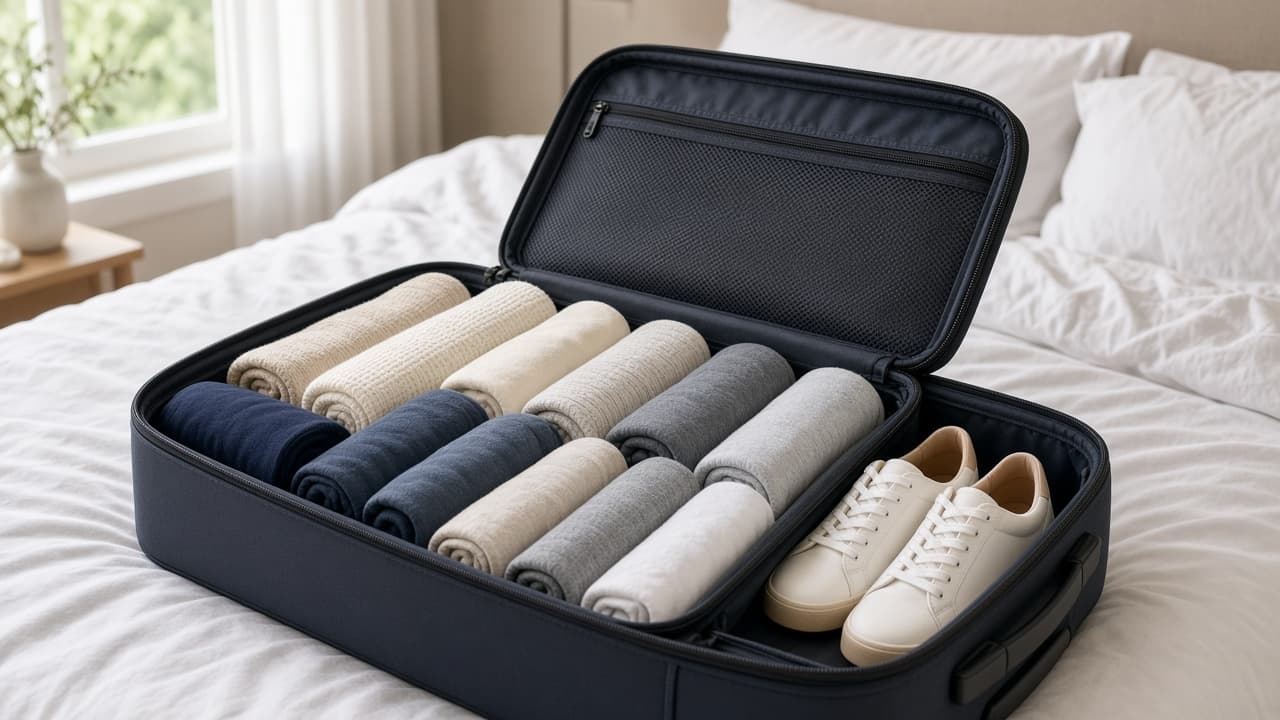
How to pack a weekend carry-on
Build a short capsule list, roll or fold in a packing order, bag your liquids and keep essentials in a personal item. Weigh before you leave so the bag still lifts easily.
A weekend trip rarely needs a checked bag. What it needs is a short list you actually wear, a packing order that keeps the suitcase closable and a personal item that holds the things you cannot afford to gate-check. Overpacking usually starts with “just in case” outfits that never leave the bag and liquids that fail security.
Work from a capsule: outfits that share shoes and layers, plus sleepwear, underwear and one weather layer. Roll soft knits and fold sharper pieces. Put heavy items near the wheels, keep a clear liquids bag ready for security and park chargers, meds and documents in the personal item on your shoulder. Then weigh the carry-on at home so you are not surprised at the counter.
Airline size and weight rules differ. Many short-haul tickets are strict on cabin size even when weight is generous. Measure your bag against the airline’s published limits for this trip, not last year’s airline. If you might be asked to gate-check, keep valuables and a change of clothes in the personal item.
The steps below assume two to three nights, mixed indoor plans and one walking-heavy day. Adjust the capsule for climate. Skip duplicates. The goal is a bag you can lift into the overhead bin without a scene and a weekend where every packed piece earns its place.
Step-by-step guide
Time: 45 to 75 minutes including a weigh-in and liquids bag
What you need
- Carry-on suitcase or cabin bag within your airline’s size limit
- Personal item (backpack, tote or under-seat bag)
- Clear quart- or litre-size liquids bag
- Packing list on paper or phone
- Bathroom scale for a quick weigh
- Optional: packing cubes or compression folders
Before you start
- Check this airline’s cabin size and weight rules for your ticket type before you pack.
- Keep passports, medication, money and electronics in the personal item if gate-checking is possible.
- Do not pack prohibited items. When unsure, leave it out or put it in checked luggage on a different trip.
Step 01
Build a weekend capsule list and cut duplicates
Write every piece before it enters the bag. If two items do the same job, one stays home.
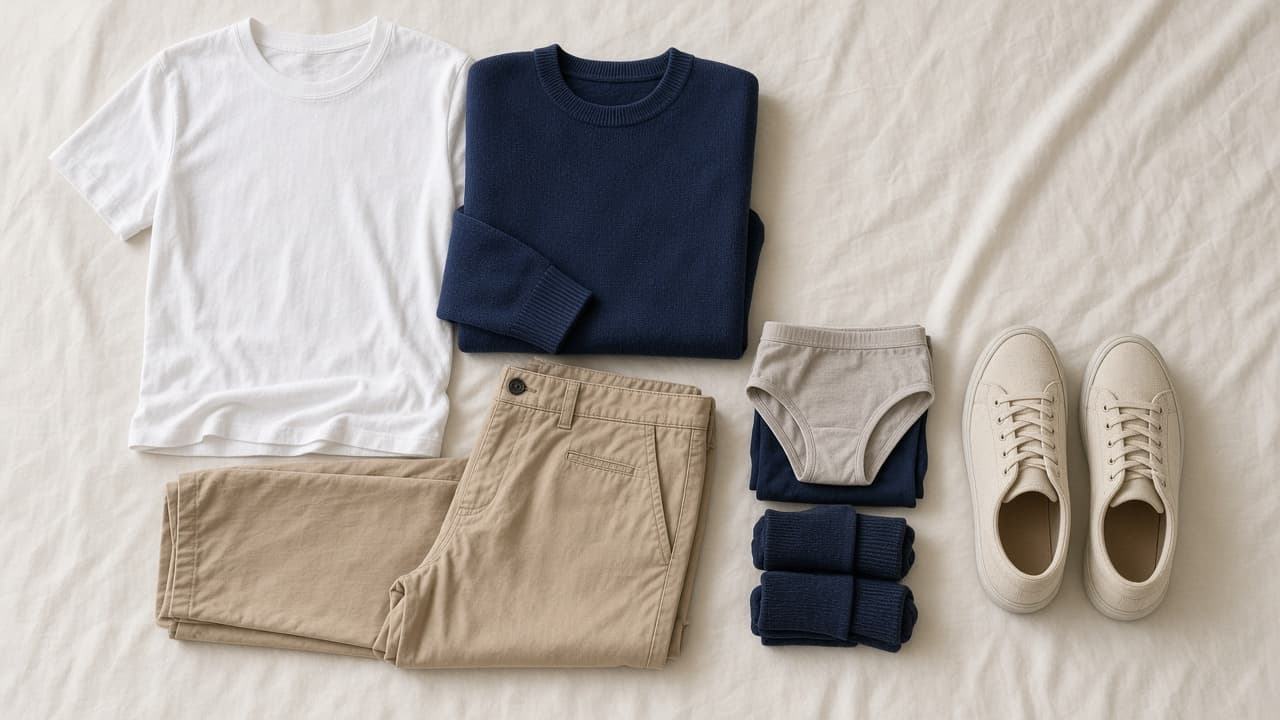
Illustrative: a short written capsule beats packing from memory. Do this step in order
1a
List outfits that share shoes and layers
Plan two or three daytime outfits plus one nicer option if needed, all sharing one or two pairs of shoes. Add sleepwear, enough underwear and socks for each night plus one spare, a weather layer and a cross-body or compact bag for walking days.
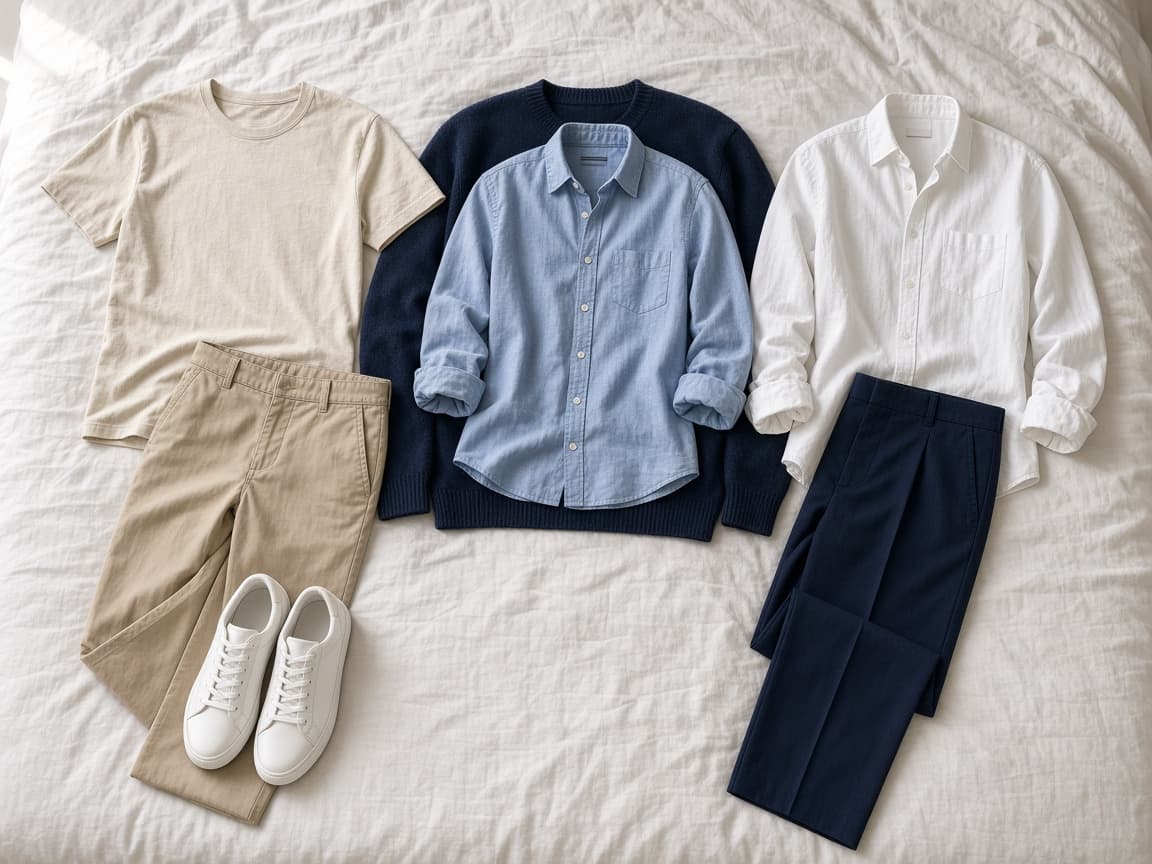
Illustrative: shared shoes are how a weekend capsule stays small. 1b
Add only the toiletries and tech you will use
Toothbrush, deodorant, SPF, any daily medication, phone charger and one small battery pack if you rely on maps. Decant full-size bottles you can buy at the destination. Common mistake: packing four tops “in case” when two mix-and-match tops already cover the plans.
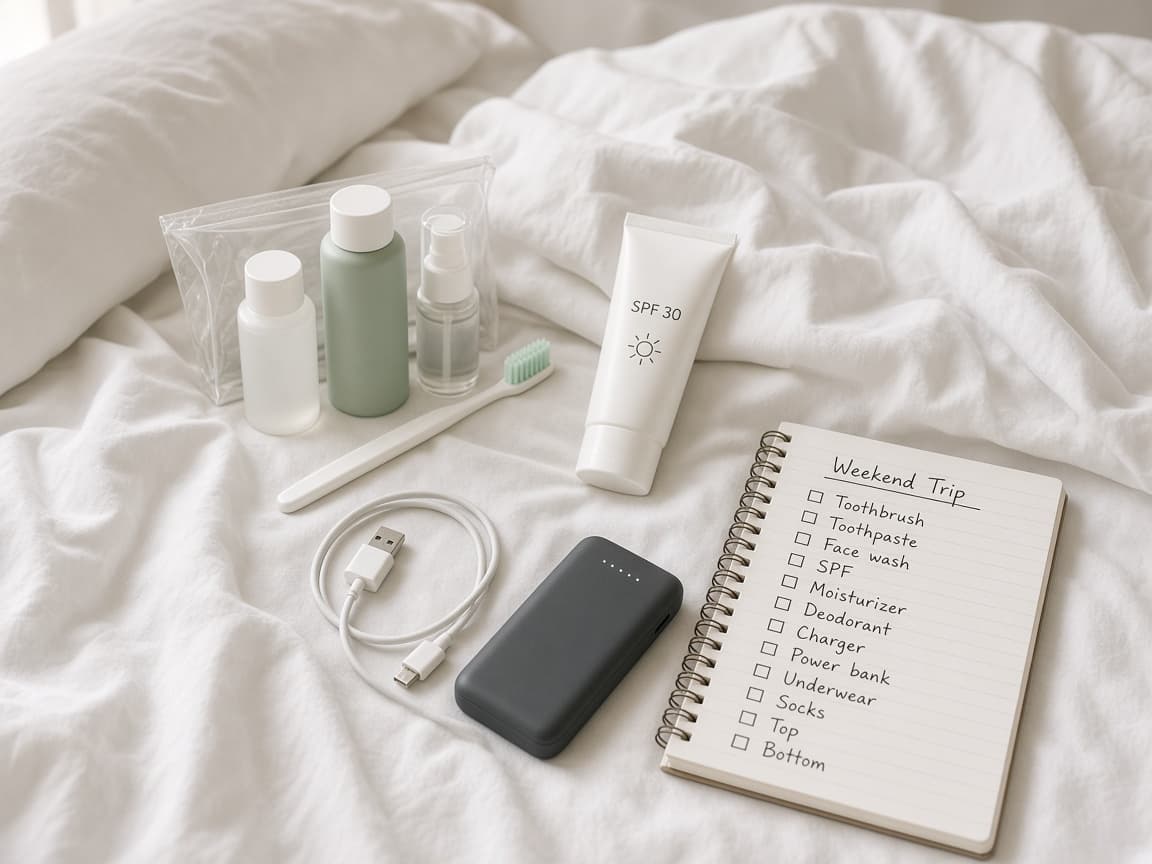
Illustrative: toiletries and tech should match real days, not a full bathroom shelf. 1c
Lay everything out and remove one more item
Put the full pile on the bed. Remove one clothing item and one optional gadget. If the bag still looks tight, remove another layer. You are packing for a weekend, not a catalog shoot.
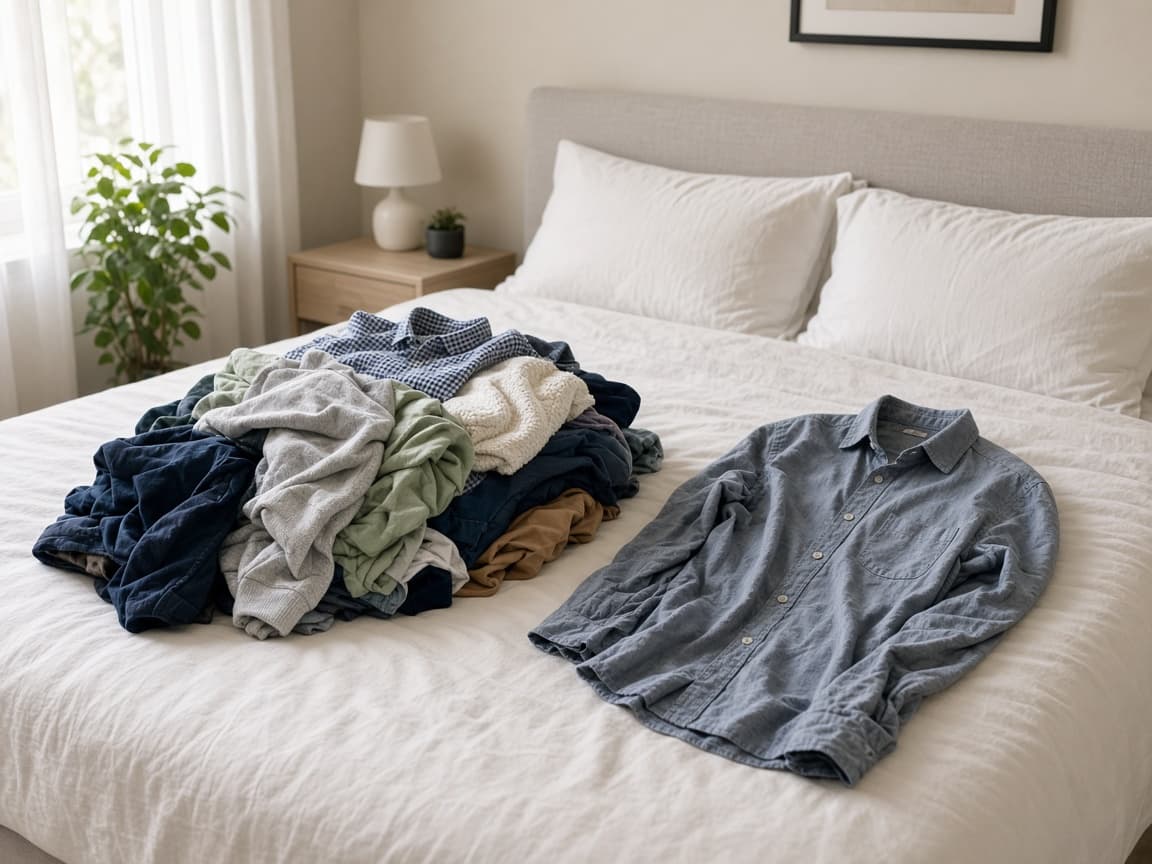
Illustrative: the edit on the bed is cheaper than the struggle at the overhead bin.
Step 02
Roll soft clothes, fold structure and pack in order
Packing order matters as much as folding style. Heavy items low, outfit blocks together, tomorrow morning on top if you land late.
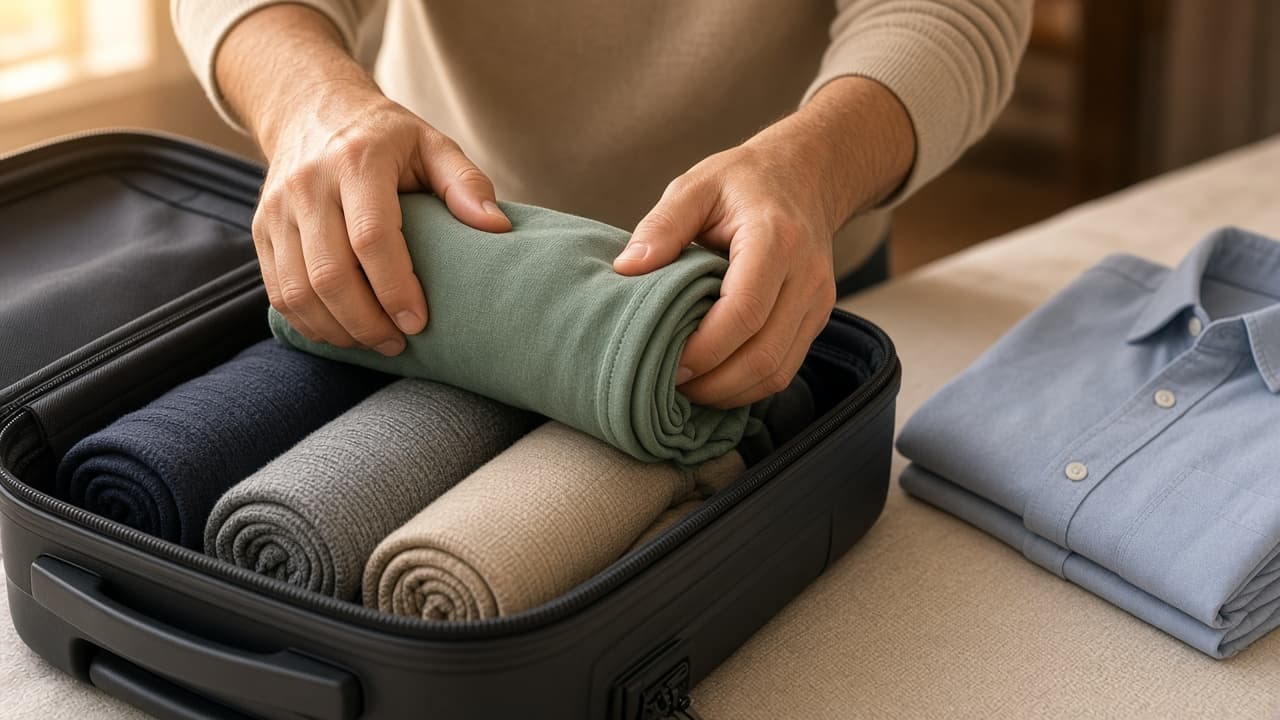
Illustrative: roll soft knits, fold sharper pieces and pack heavy items toward the wheels. Do this step in order
2a
Roll knits and fold shirts or trousers that crease
T-shirts, tees and soft trousers roll tight and fill gaps. Button-downs, blazers or crisp trousers fold along existing creases and can sit in a cube or along the lid. Choose one system per fabric so you are not redoing the bag twice.
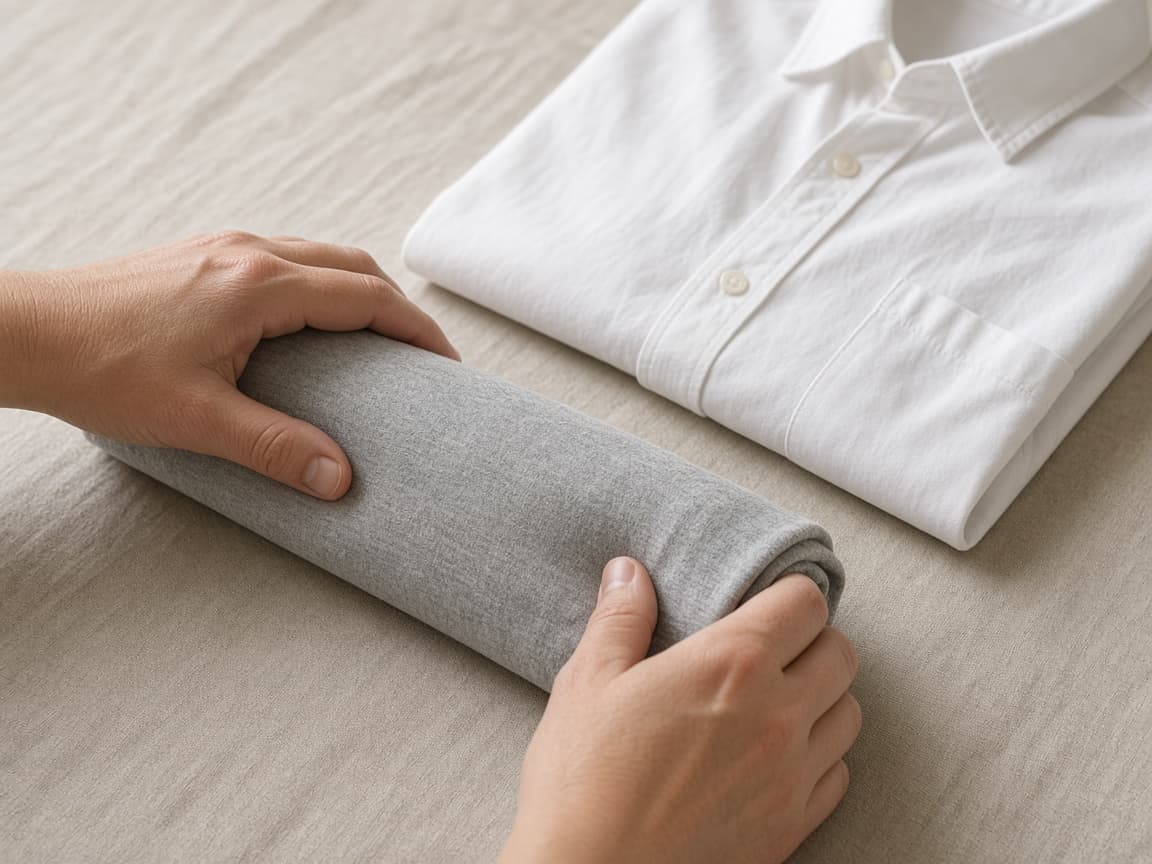
Illustrative: roll what compresses; fold what needs a cleaner shape. 2b
Place shoes and dense items near the wheels
Shoes in shoe bags or old socks go heel-to-toe along the wheel end of a roller bag so weight sits low. Fill shoe cavities with socks. Put the densest remaining items beside them so the bag does not tip when you lift it.
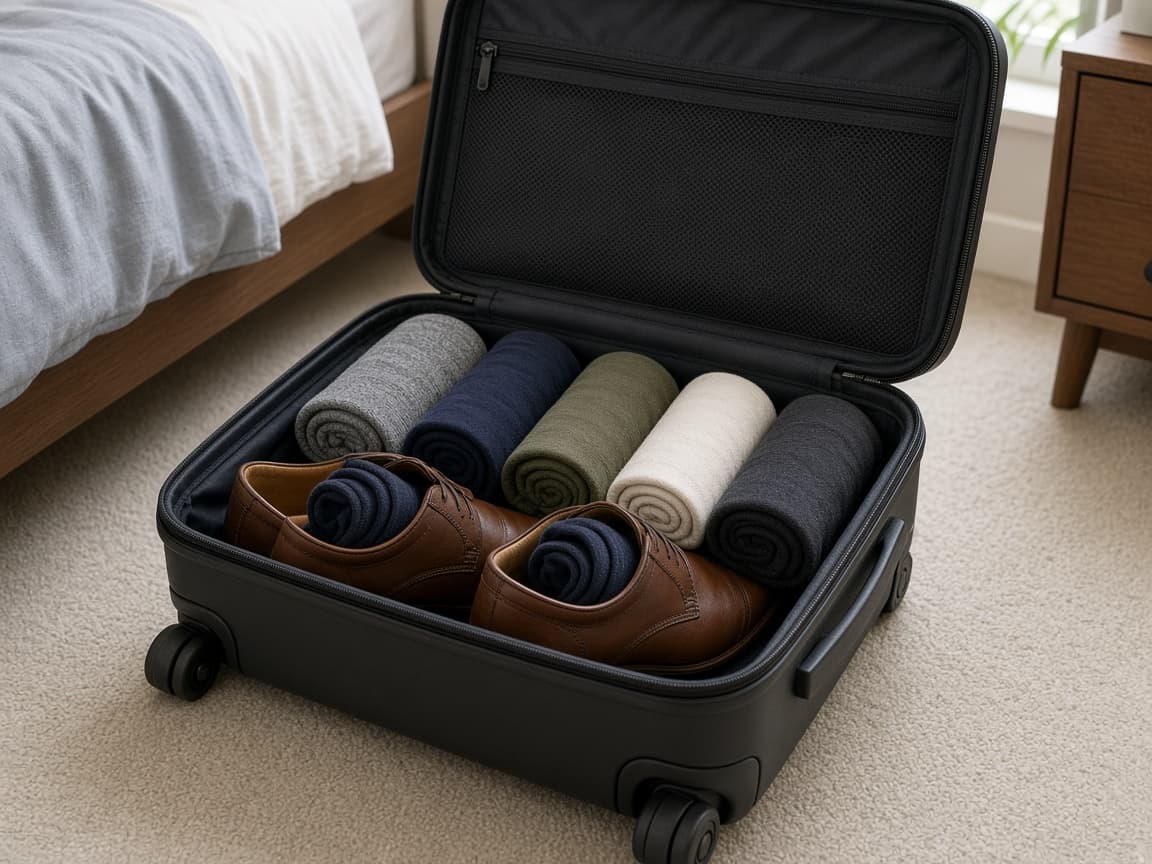
Illustrative: weight at the wheel end makes the bag easier to lift and roll. 2c
Stack outfit blocks and leave a flat top
Group each day’s core clothes together. Leave a flat layer on top so the lid closes without a fight. Common mistake: stuffing the last sweater into a corner so the zipper strains and something spills at security.
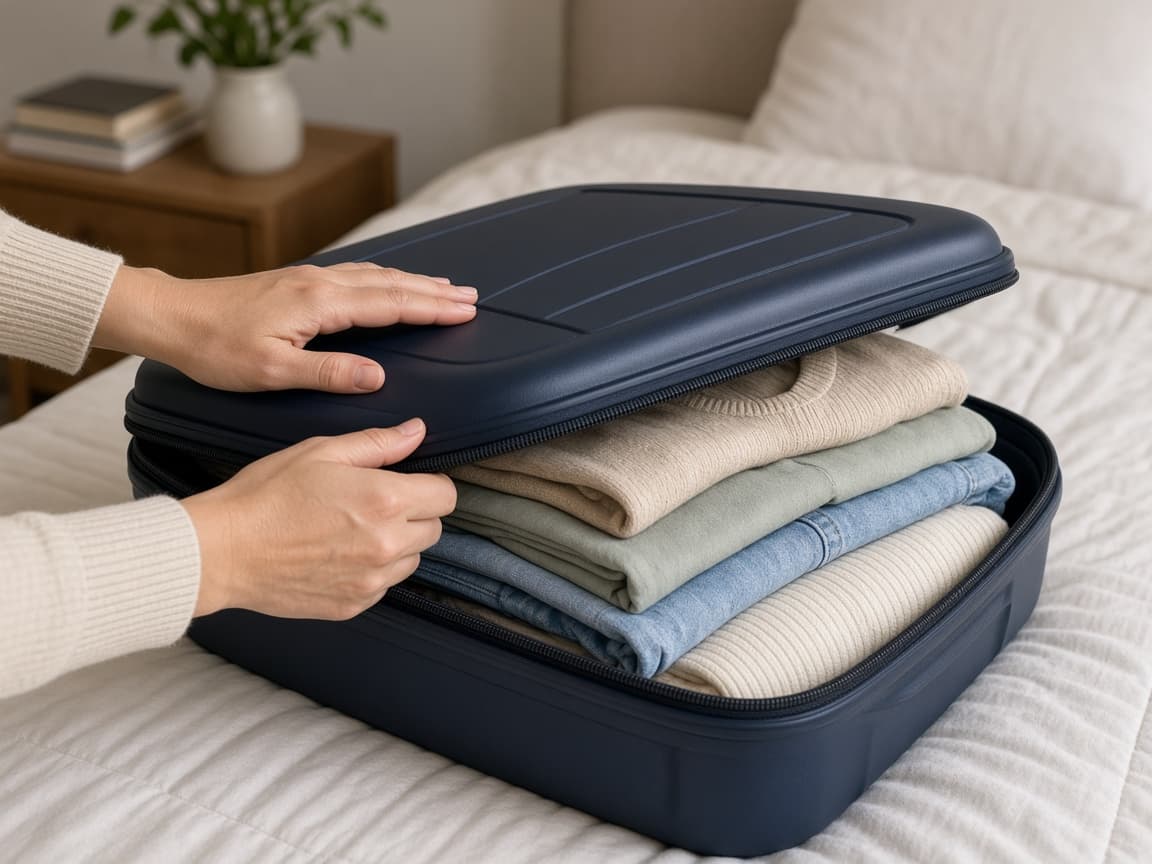
Illustrative: a flat top closes clean; a stuffed corner becomes a zipper problem.
Step 03
Bag liquids for security and load the personal item
Security wants liquids visible. Your personal item should hold everything you need if the suitcase is taken at the gate.
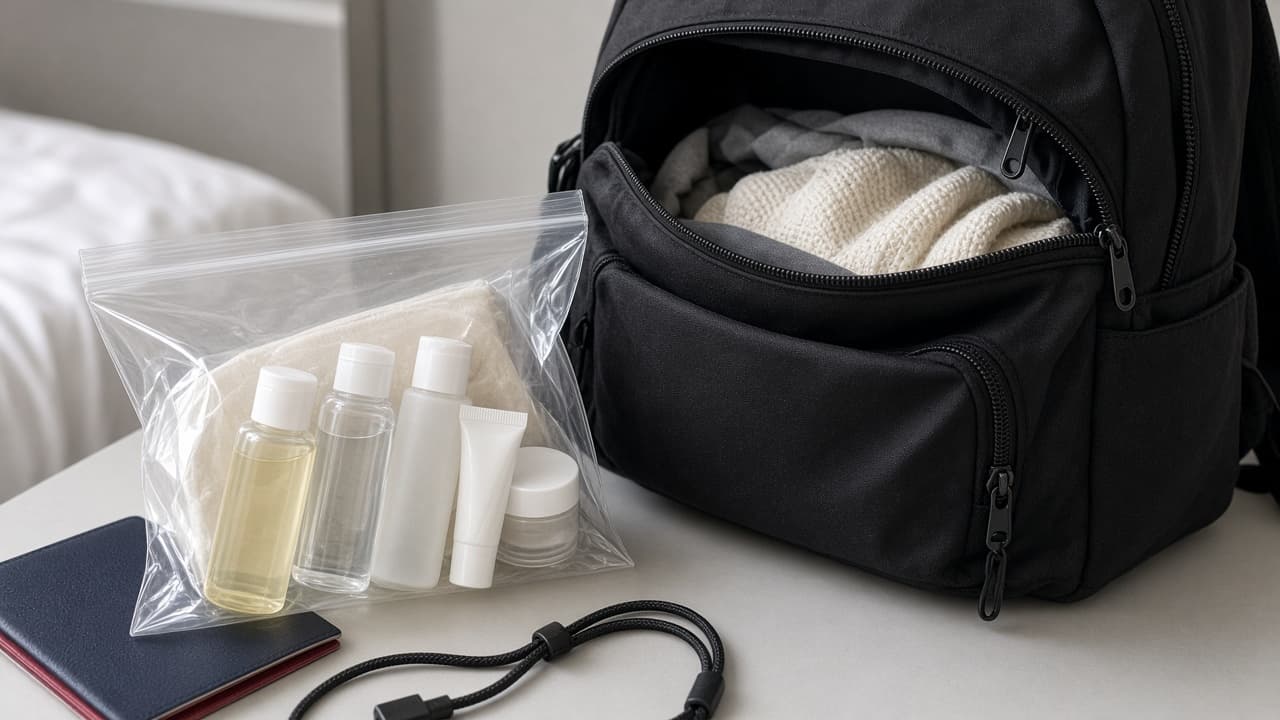
Illustrative: liquids in a clear bag and essentials in the personal item save time at security and the gate. Do this step in order
3a
Decant liquids into travel sizes in one clear bag
Follow the liquid rules for your departure airport. In many places that means containers of 100 ml (3.4 oz) or less inside one clear resealable bag about a quart or litre in size. Put the bag where you can pull it out without unpacking the whole case.
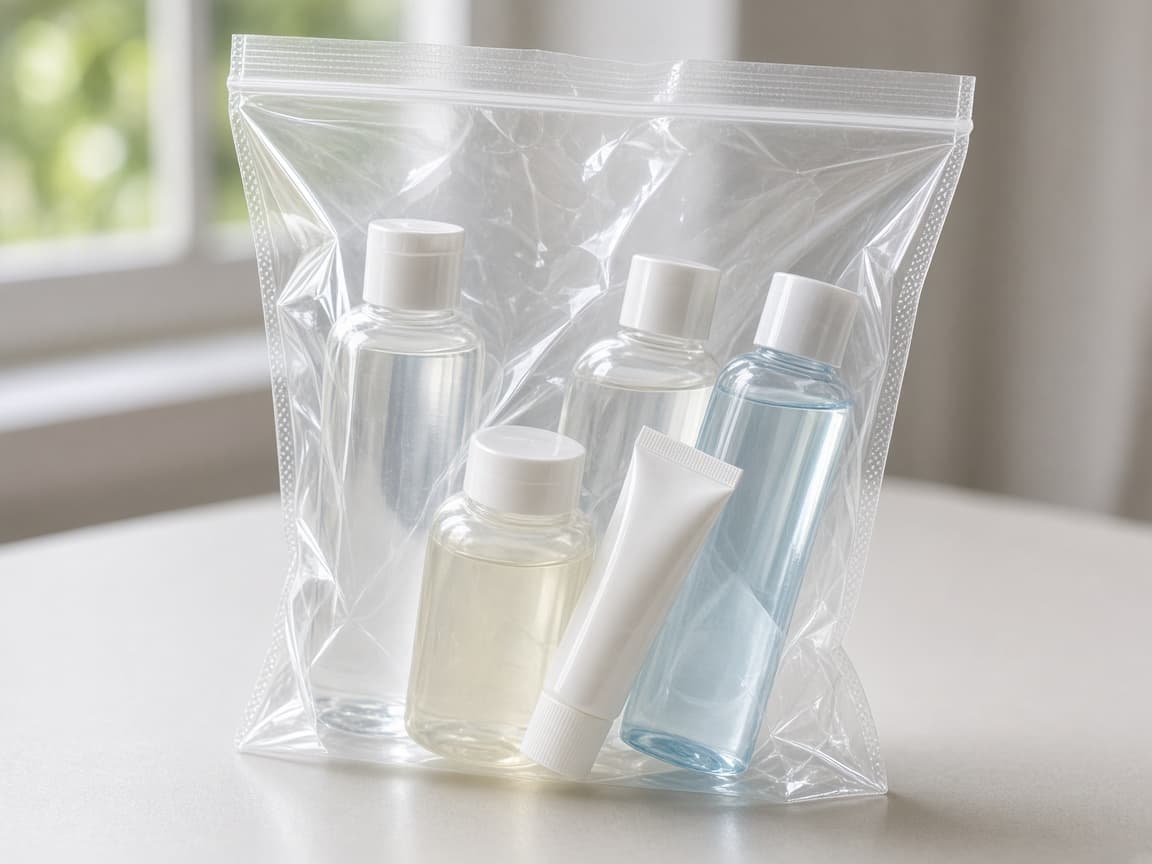
Illustrative: one clear bag you can lift out beats liquids buried in a toiletry pouch. 3b
Pack the personal item with must-stay-with-you gear
Passport or ID, tickets, medication, phone, charger, headphones, wallet and a thin layer or sweater. Add a spare underwear and socks set if gate-checking is likely. This bag goes under the seat or stays on your person.
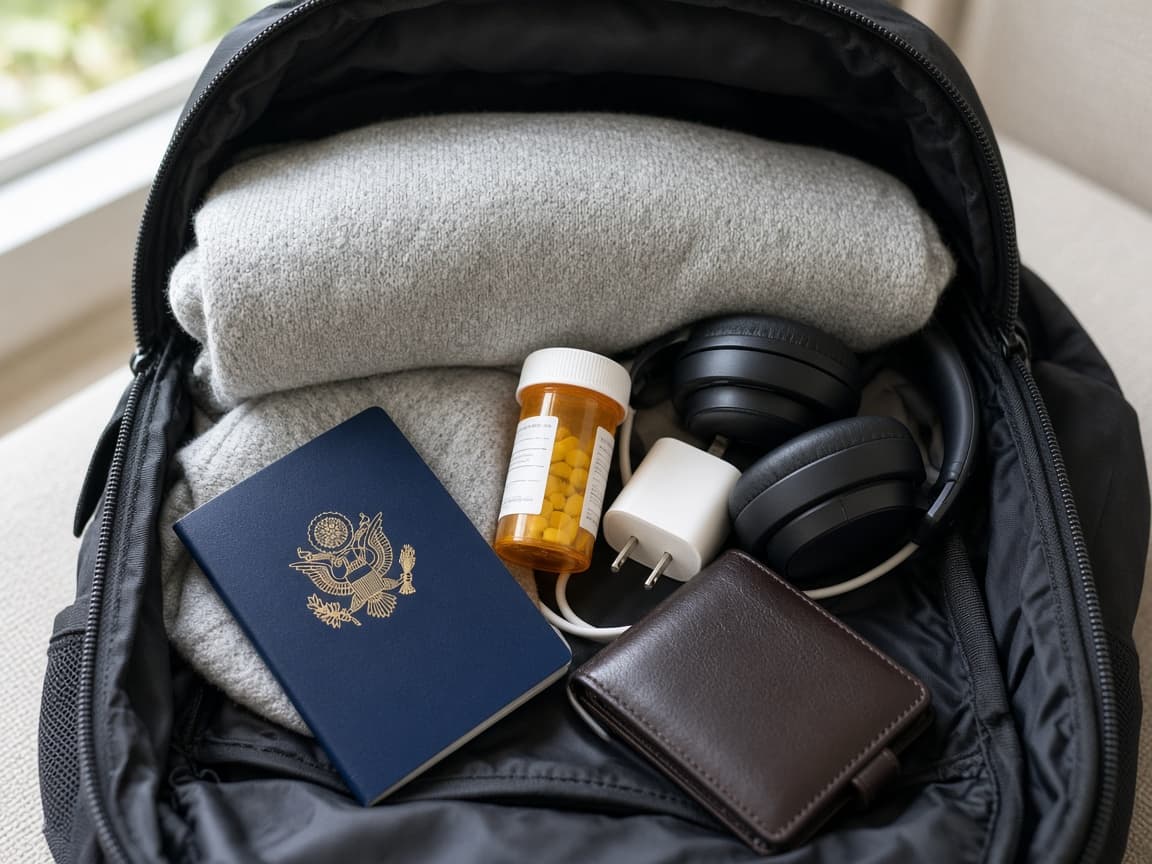
Illustrative: if the airline takes the carry-on at the gate, this bag still holds your weekend essentials. 3c
Keep snacks and a water plan realistic
Solid snacks are fine in most cabins. Empty a refillable bottle before security and fill it after. Common mistake: a full water bottle in the carry-on that forces a bin dump and a wet bag.
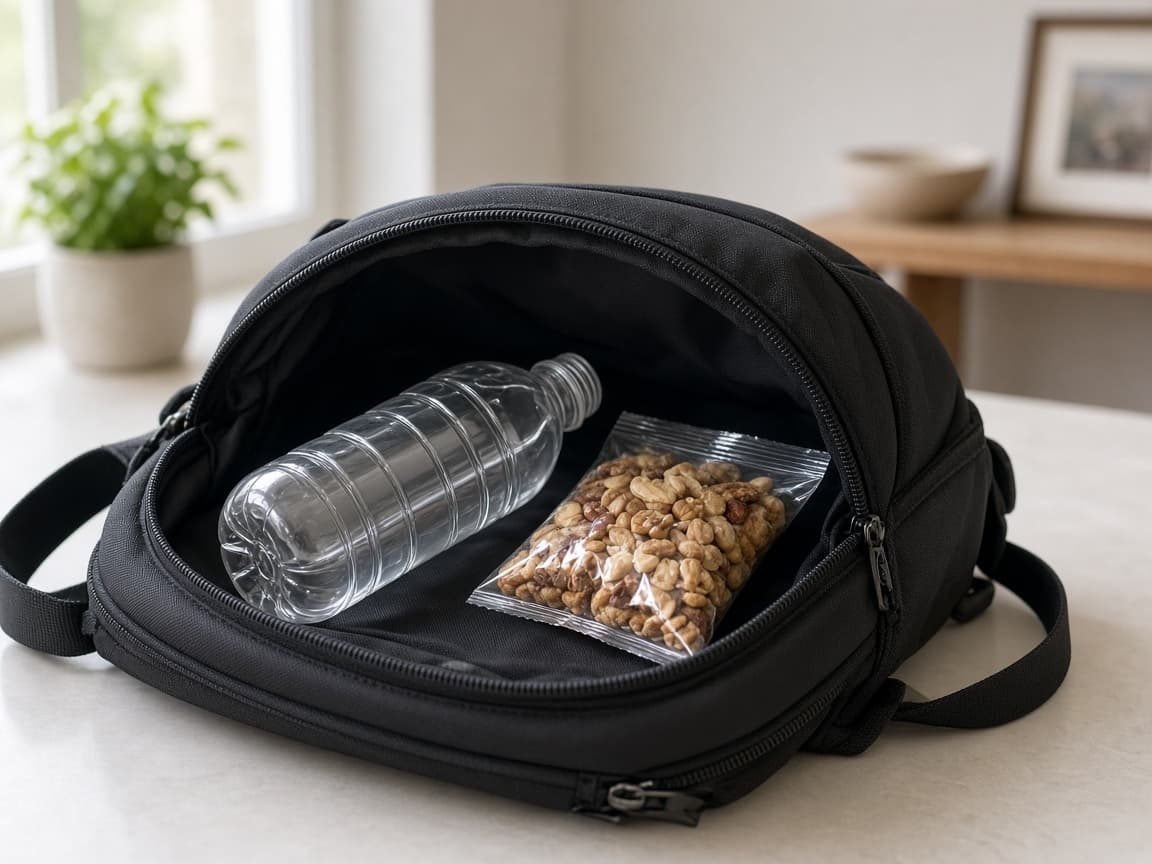
Illustrative: empty bottle through security, then refill on the other side.
Step 04
Weigh, measure and do a final walk-through
Confirm the bag meets this airline’s rules and that you can still lift it. Then walk the first travel day in your head.
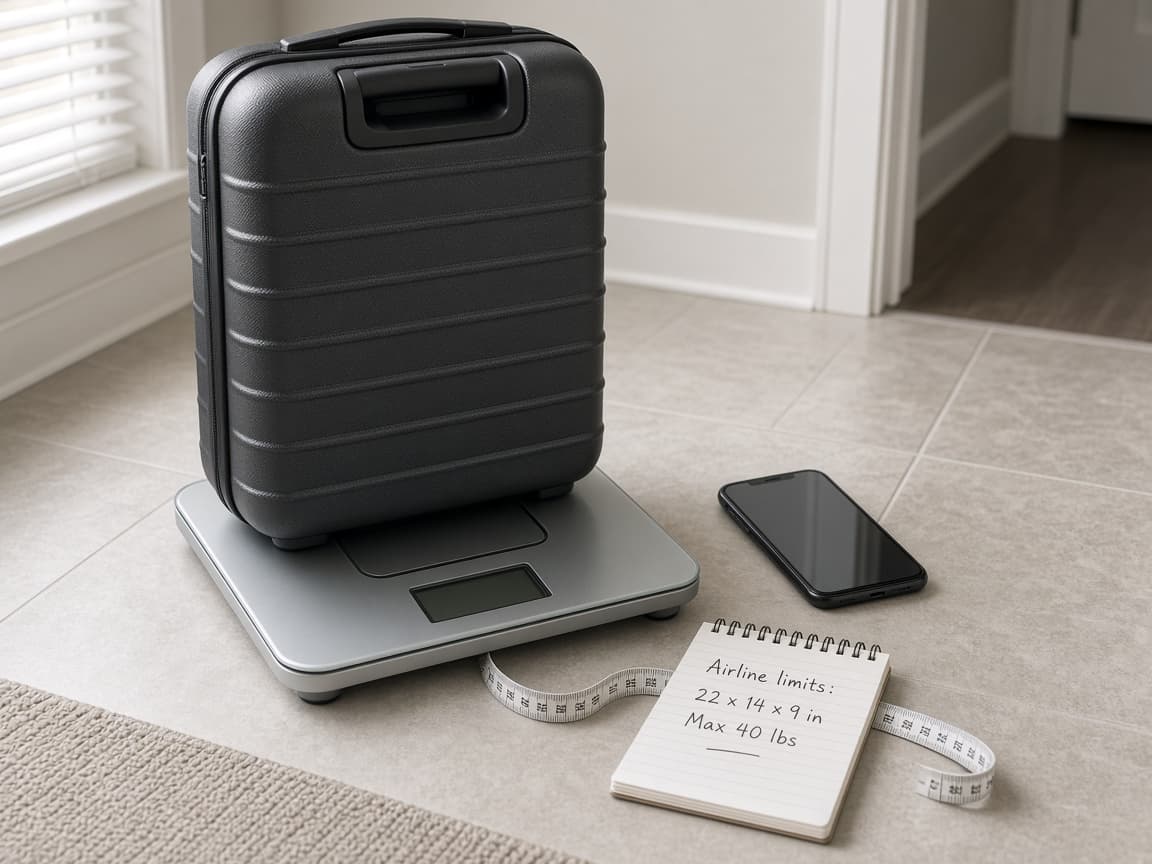
Illustrative: weigh and size-check at home, not in the departure hall. Do this step in order
4a
Weigh the packed carry-on on a bathroom scale
Weigh yourself alone, then again holding the bag and subtract to get the bag weight. Or place the bag on the scale if it fits. Know your airline’s cabin weight limit if it has one. More important for many trips: confirm you can lift the bag to shoulder height without straining.
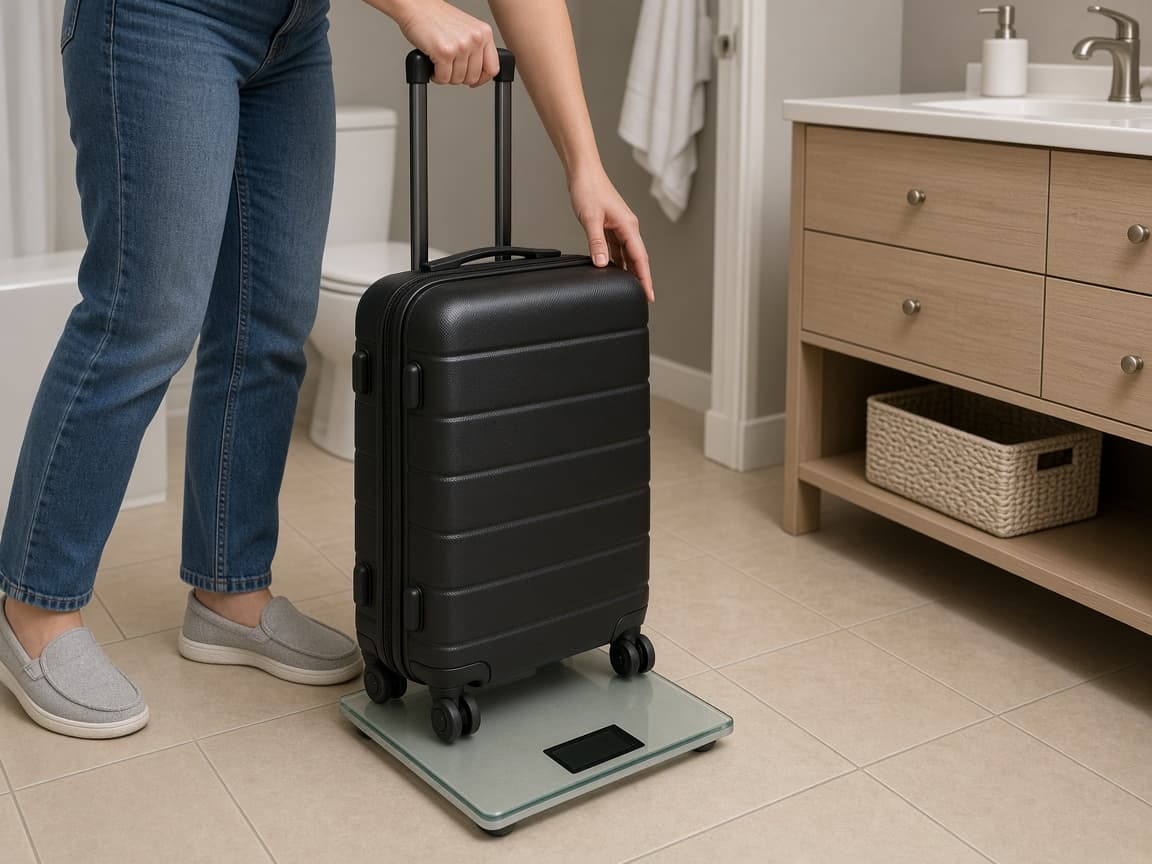
Illustrative: a number on the scale plus a lift test beats hoping the bin will be kind. 4b
Check external size against this ticket’s rules
Measure including wheels and handles the way the airline describes. Soft bags expand when full. If you are close to the limit, remove bulk before you leave home. Rules vary by carrier and fare.
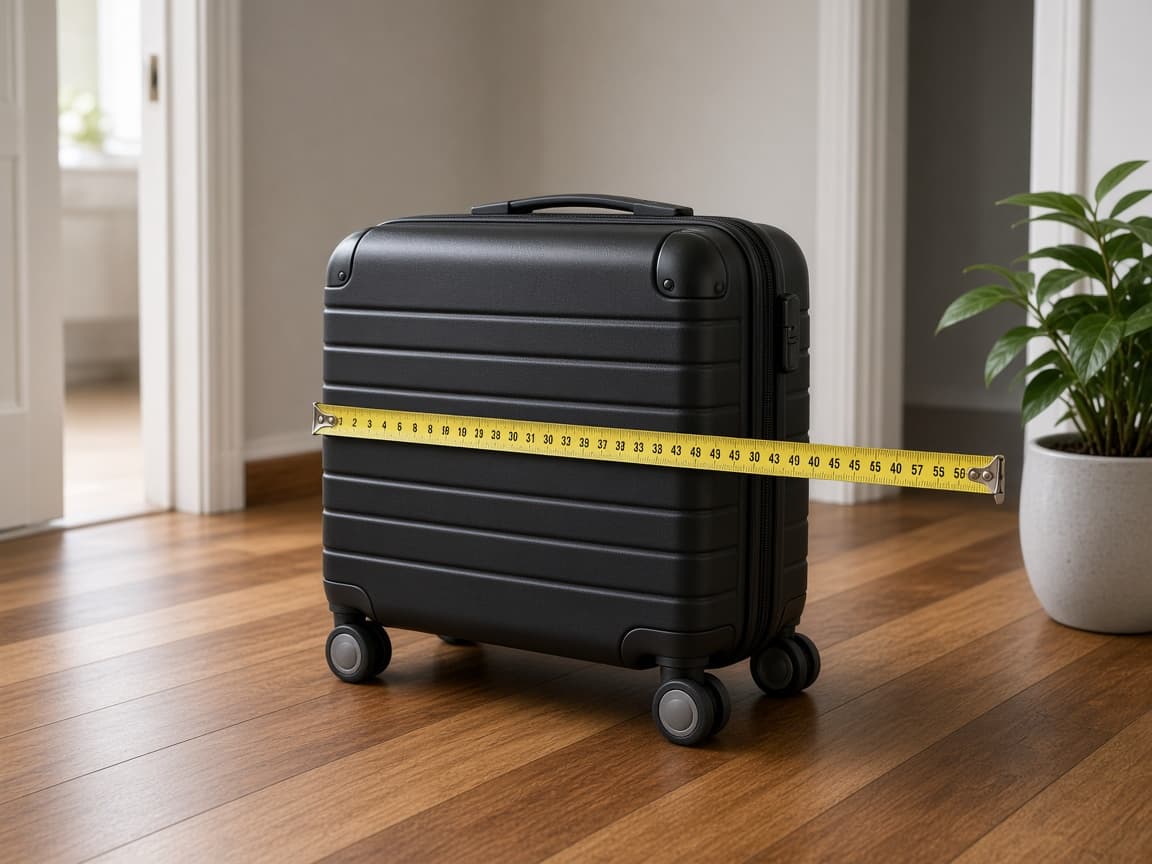
Illustrative: measure the packed bag, including wheels, against this airline’s published cabin limit. 4c
Do a first-day walk-through and stop packing
Confirm tickets, ID, chargers, meds, one outfit for arrival and the liquids bag are in the right place. Then close the zipper and stop adding “one more thing.” Common mistake: opening the bag again in the hallway and breaking the flat pack you just achieved.
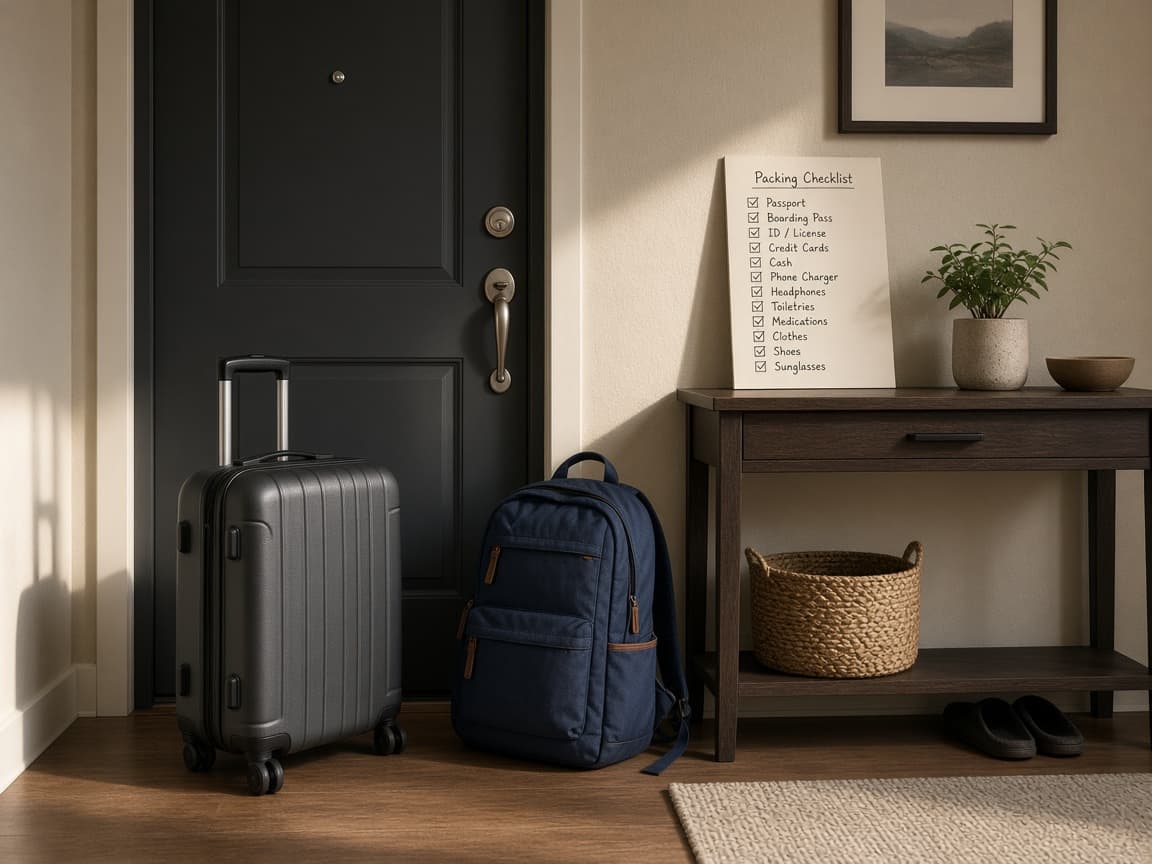
Illustrative: close the bag once the walk-through passes, then leave for the trip.
Done when
- Capsule list written and duplicates cut
- Clothes rolled or folded in packing order
- Liquids bag packed and easy to pull out
- Personal item holds docs, meds, chargers and a spare layer
- Carry-on weighed and still easy to lift
Eagle Frame’s takeaway: a weekend carry-on works when the list is short, the packing order is deliberate and the personal item holds what must stay with you. Roll or fold with a plan, bag liquids for security, weigh once at home and leave the “just in case” fourth outfit on the hanger.