
How to lose belly fat
Reduce belly fat through overall fat loss: modest calorie gap, protein and fiber, strength training and sleep. Spot reduction is a myth. This is wellness education, not medical advice.
Abdominal fat includes fat beneath the skin and visceral fat around internal organs. A larger waist can be associated with higher risk of type 2 diabetes and heart disease, but shape alone does not diagnose health. A clinician can interpret waist size with blood pressure, laboratory results, medicines and family history.
Exercises cannot reliably command the body to burn fat from one chosen area. Sit-ups can strengthen abdominal muscles, but they do not selectively empty nearby fat cells. Genetics, hormones, age and overall energy balance influence where fat is lost first. Products promising local melting are not a sound plan.
CDC guidance supports gradual weight loss built on nutritious eating, physical activity, enough sleep and stress management. About 1 to 2 pounds a week is a common general pace, not a target for everyone. Even a modest reduction of about 5 percent of body weight may improve blood pressure, cholesterol or blood sugar for some people.
Start with a short record of normal meals, drinks, activity, sleep and stress. Use it to choose two or three specific changes, such as replacing a sugary drink, adding a vegetable at supper and walking for 15 minutes after work. A modest repeatable change is safer than severe restriction that triggers fatigue or bingeing.
Adults are generally advised to work toward at least 150 minutes of moderate aerobic activity each week and muscle-strengthening activity on two days. Beginners can divide that into short sessions and build gradually. Core exercises support strength and function, but walking, cycling, swimming and full-body resistance work do more for the broader goal.
This article is general education, not a diagnosis or personal treatment plan. Ask a clinician or registered dietitian before changing food or exercise if you are pregnant, under 18, take medicines that affect glucose or weight, have heart or kidney disease or have an eating disorder history. Sudden swelling, severe abdominal pain, fainting or unexplained weight change needs medical assessment.
Step-by-step guide
Time: Ongoing habits over weeks; not a weekend fix
What you need
- Notebook or app for simple meal and step logs
- Kitchen scale or measuring cups (optional)
- Comfortable walking shoes
- Grocery list built around protein, produce and fiber
- Tape measure for waist checks at the same landmark
Before you start
- Not a substitute for medical care. Seek clinician advice for personal targets.
- Spot reduction products and detox teas do not remove belly fat safely.
- Sudden severe abdominal pain, hard distension or unexplained weight change needs urgent clinical evaluation.
- Stop extreme restriction if you feel faint or develop binge-restrict cycles.
Step 01
Reject spot reduction and set a modest gap
Plan for whole-body change. Pick a deficit you can keep on ordinary weekdays.
Do this step in order
1a
Reject spot-reduction promises
Waist belts, ab gadgets and fat-burning creams do not selectively shrink belly tissue. Save money for groceries and shoes.
1b
Estimate maintenance then trim modestly
Many adults cut about 300 to 500 calories per day from estimated maintenance. Smaller cuts work if larger ones feel unsustainable. A clinician or dietitian can set a personal number.

Choose a gap you can keep on a normal workday. 1c
Track simply for two weeks
Log portions, steps or waist circumference once a week the same way. Honest data beats guessing why the belt is tight.
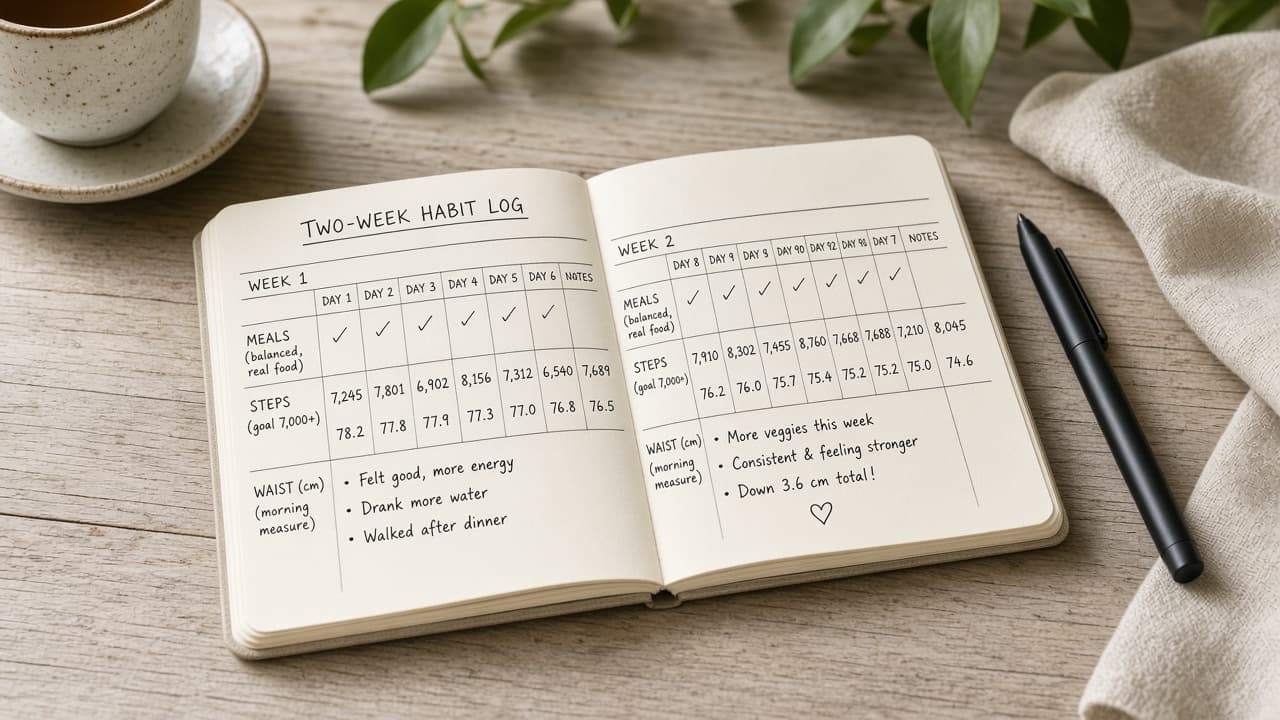
Two honest weeks of data beat one dramatic overhaul. 1d
Do not crash diet for a faster waist
Common mistake: cutting more than 1,000 calories overnight for a flat stomach by Friday. Severe restriction raises fatigue and rebound risk without teaching lasting habits.
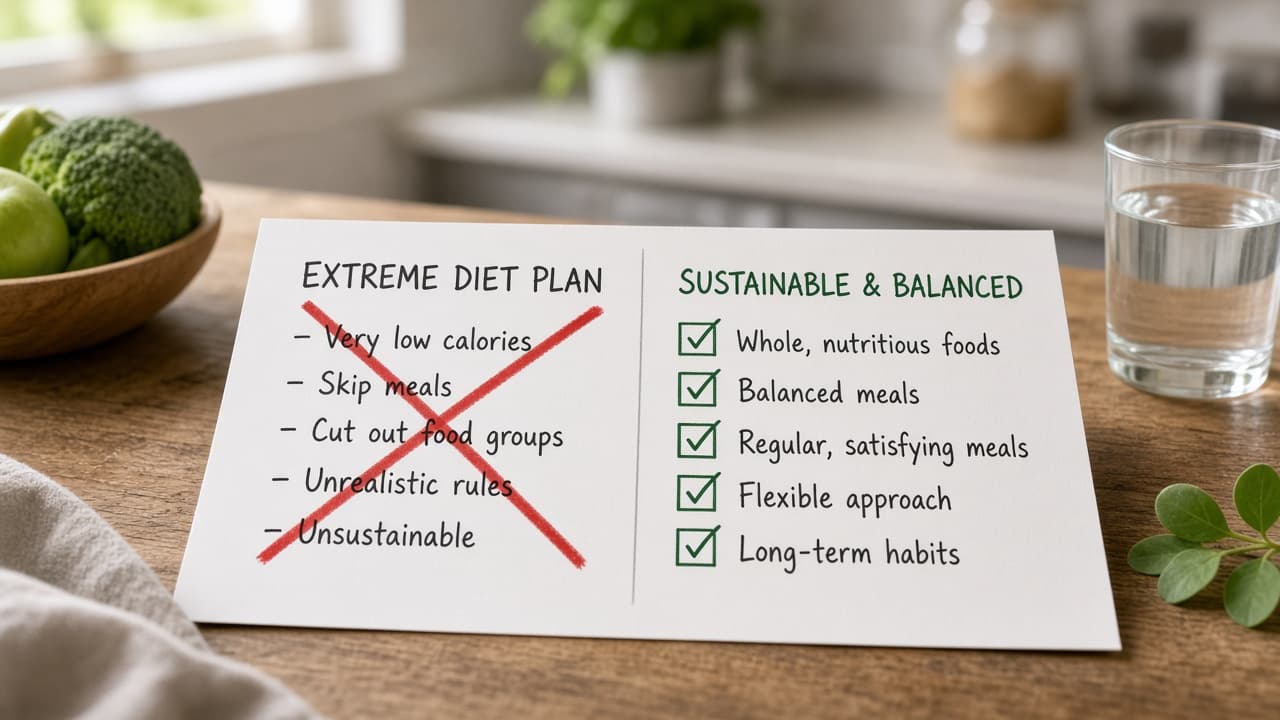
Crash cuts are not a belly-fat strategy.
Step 02
Build meals around protein and fiber
Satiety makes a smaller budget livable. Quality matters as much as the number.
Do this step in order
2a
Put protein on most plates
Eggs, fish, poultry, tofu, beans or yogurt at meals support fullness and muscle during a deficit.
2b
Fill half the plate with vegetables or fruit
Volume without many calories helps evenings feel less deprived.

Produce volume helps meals feel complete on fewer calories. 2c
Choose fiber-rich carbs you will actually eat
Beans, oats, potatoes with skin and whole grains beat cardboard snacks you abandon by day three.

Buy fiber-rich foods you will cook on busy nights. 2d
Skip meal-skipping as a fat-loss trick
Common mistake: skipping lunch then overeating at night. Regular protein-forward meals usually control total intake better than heroic fasting you cannot sustain.
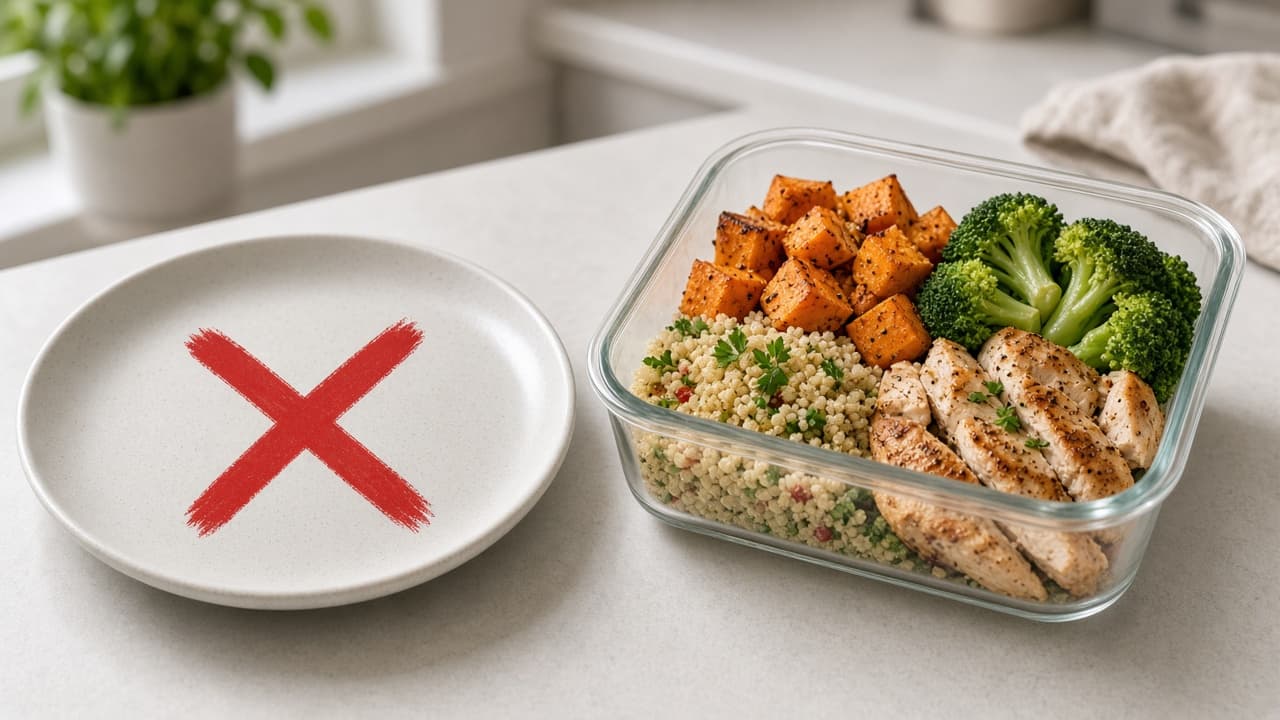
Skipping meals often backfires at night.
Step 03
Cut liquid calories and plan busy-day backups
Drinks and takeout defaults often hide the weekly surplus.
Do this step in order
3a
Swap sugary drinks for water or unsweetened tea
Soda, juice and fancy coffee drinks often hide the gap. Alcohol adds calories and lowers restraint.
3b
Measure coffee add-ins for a week
Creamers, syrups and large blended drinks can erase a careful dinner. Write what you actually pour.

See how add-ins add up before you blame dinner. 3c
Plan backup meals for busy nights
Decide now what you eat when tired so takeout does not erase the week. Keep a freezer or pantry option ready.
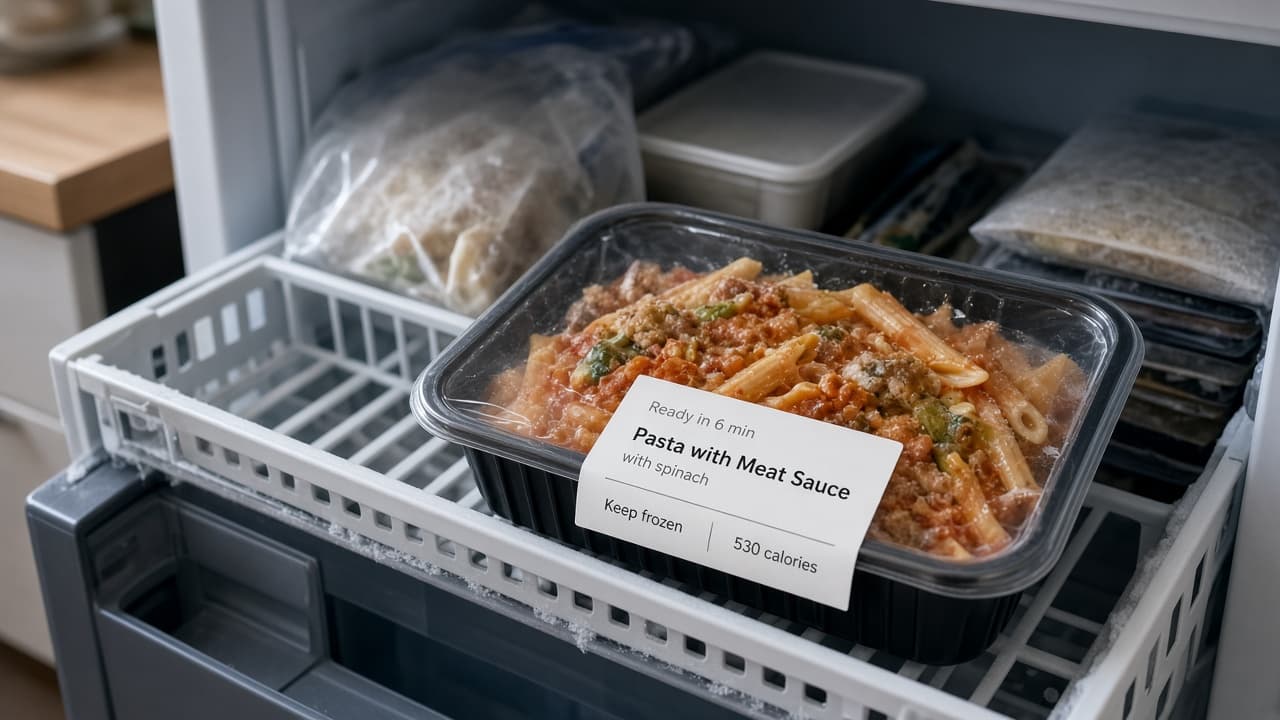
A planned backup meal beats a default delivery order. 3d
Do not drink your deficit back on weekends
Common mistake: clean weekdays and heavy weekend alcohol or sweet drinks. Weekly averages decide fat loss more than one perfect Tuesday.
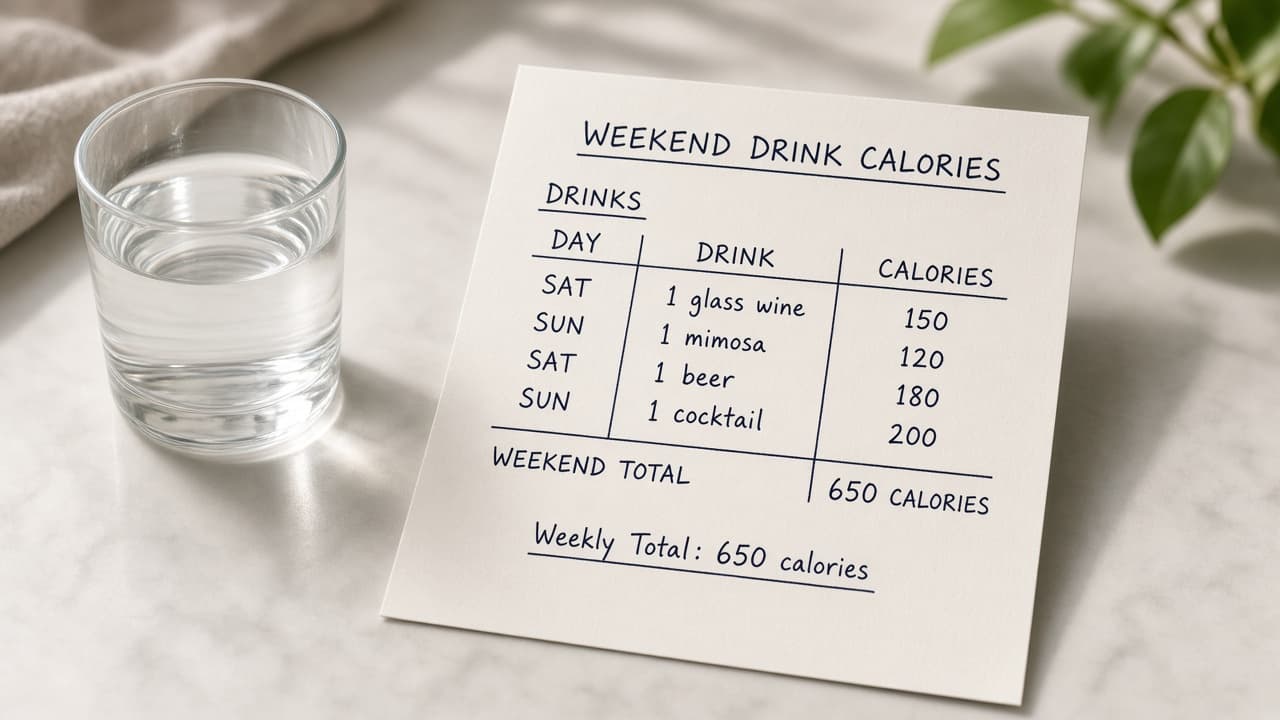
Weekend drinks count in the same weekly budget.
Step 04
Move daily with walking or cardio
Consistent movement raises weekly burn without needing a gym membership on day one.
Do this step in order
4a
Set a daily walk or step floor
Start where you are and add brisk walking most days. Consistency beats one heroic weekend workout.
4b
Split long targets into short sessions
Two 15-minute walks count. Beginners can build toward about 150 minutes of moderate activity across the week.
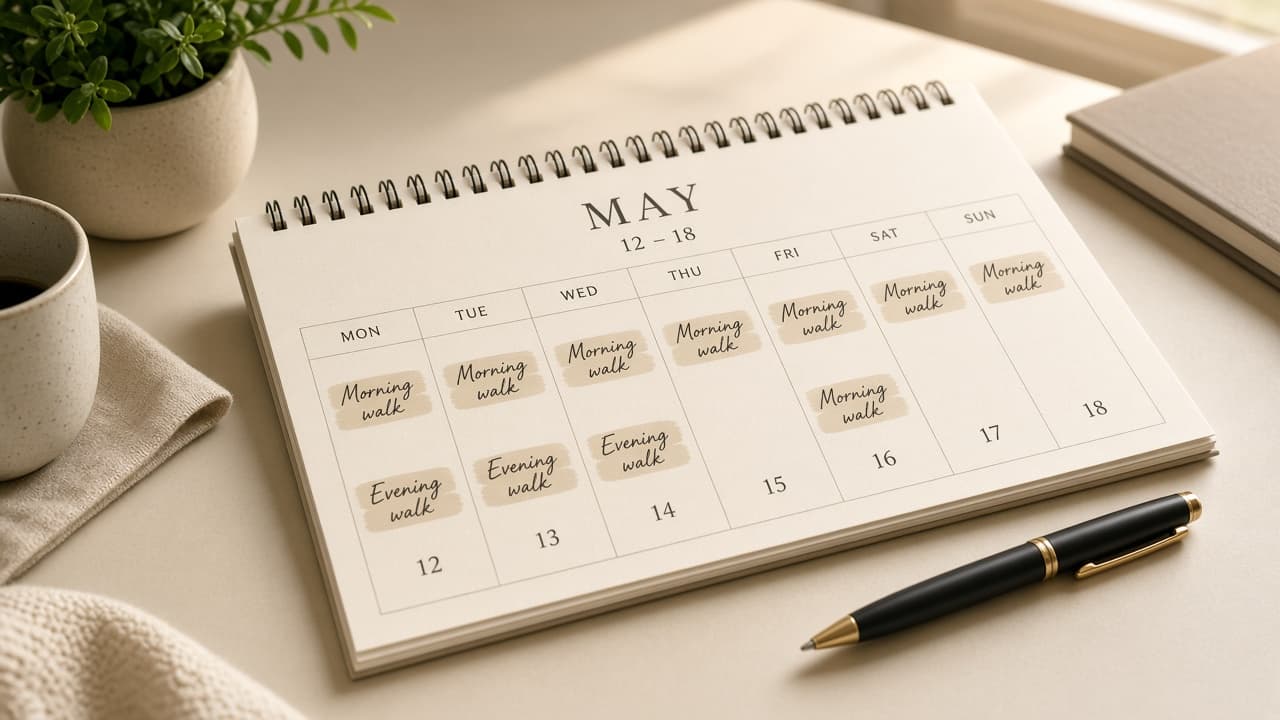
Short repeatable sessions beat abandoned marathon plans. 4c
Pick a pace you can keep while talking
Moderate effort usually means you can speak in sentences but not sing. That pace is sustainable for most healthy adults.

Conversational pace is enough for a fat-loss cardio base. 4d
Stop if chest pain or severe dizziness appears
Common mistake: pushing through red-flag symptoms because a plan said move more. Chest pain, severe dizziness or unusual shortness of breath needs clinical care, not a harder walk.

Warning symptoms end the workout and start a clinical call.
Step 05
Add strength training twice a week
Strength helps keep muscle so more of the loss is fat as the scale moves.
Do this step in order
5a
Schedule two or three strength days
Squats, rows, push-ups, hinges or dumbbell work if your clinician clears it. Put the days on a calendar you honor.
5b
Train large muscle groups, not only abs
Legs, back, chest and hips move the metabolism needle more than endless crunch variations.

Train the whole body, not only the waistline muscles. 5c
Use crunches as a bonus, not the strategy
Core work is fine for strength and posture. It is not the primary fat-loss tool.

Core work finishes the session. It does not replace it. 5d
Avoid daily ab burnouts as spot reduction
Common mistake: 200 sit-ups a night hoping the belly disappears while meals stay unchanged. Muscle fatigue is not the same as fat loss.
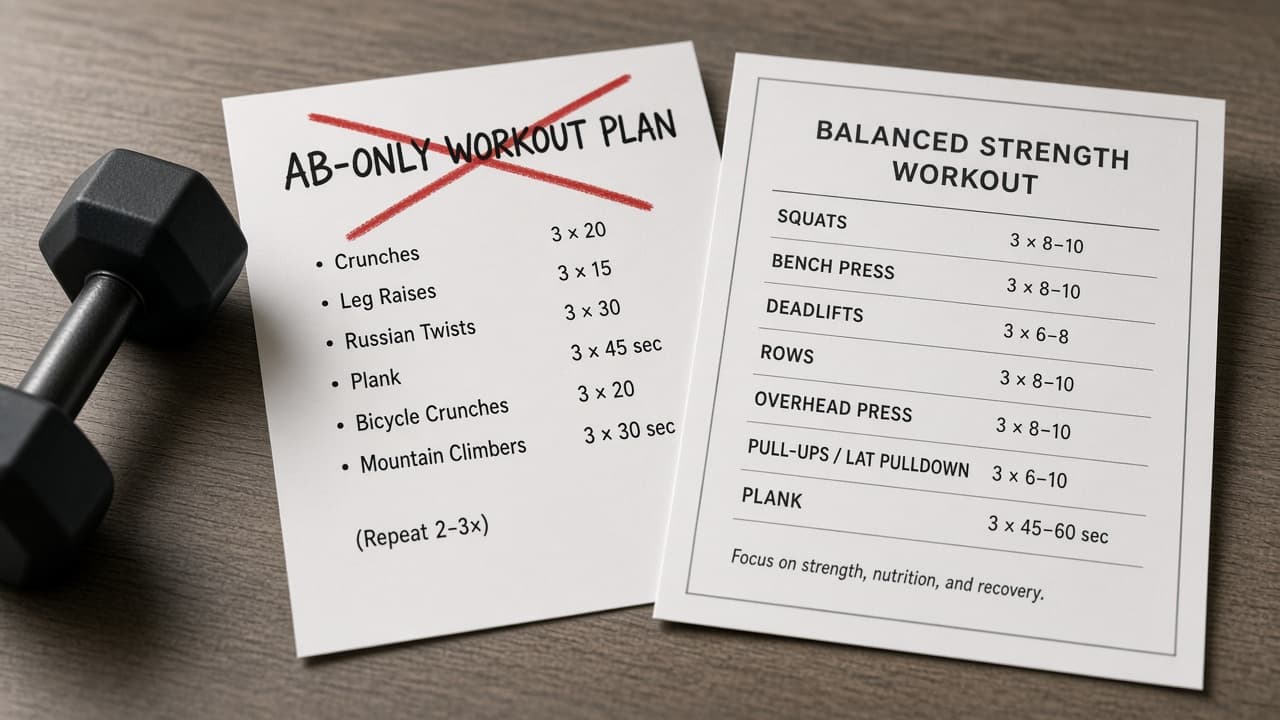
Ab burnouts cannot order fat off the midsection.
Step 06
Protect sleep and manage stress load
Short sleep and high stress often raise hunger and make the plan harder to keep.
Do this step in order
6a
Aim for a regular sleep window
Short sleep often raises hunger hormones. Protect a wind-down and a consistent wake time on workdays.
6b
Park screens before bed when you can
Late bright screens delay sleep for many people. Charge the phone across the room if bedtime scrolling keeps winning.

Distance from the phone makes sleep easier to start. 6c
Use one stress outlet that is not snacking
A short walk, breathing practice or call with a friend can interrupt stress eating without adding another diet rule.

Replace one stress snack cue with a non-food reset. 6d
Do not borrow sleep to add more gym time
Common mistake: cutting sleep to 5 hours so you can train earlier. The trade often raises appetite and hurts recovery more than the extra session helps.

Stolen sleep is a poor exchange for one more workout.
Step 07
Review weekly and seek care when needed
Patience and clinical support matter more than a crash week.
Do this step in order
7a
Adjust one lever if progress stalls
After two honest weeks with a flat waist or weight, trim a snack, add a short walk or tighten weekend portions. Do not slash another 1,000 calories overnight.
7b
Use waist measure, not only the scale
Water retention and cycles can hide fat loss on the scale. A tape measure at the navel tells another story when used the same way each time.
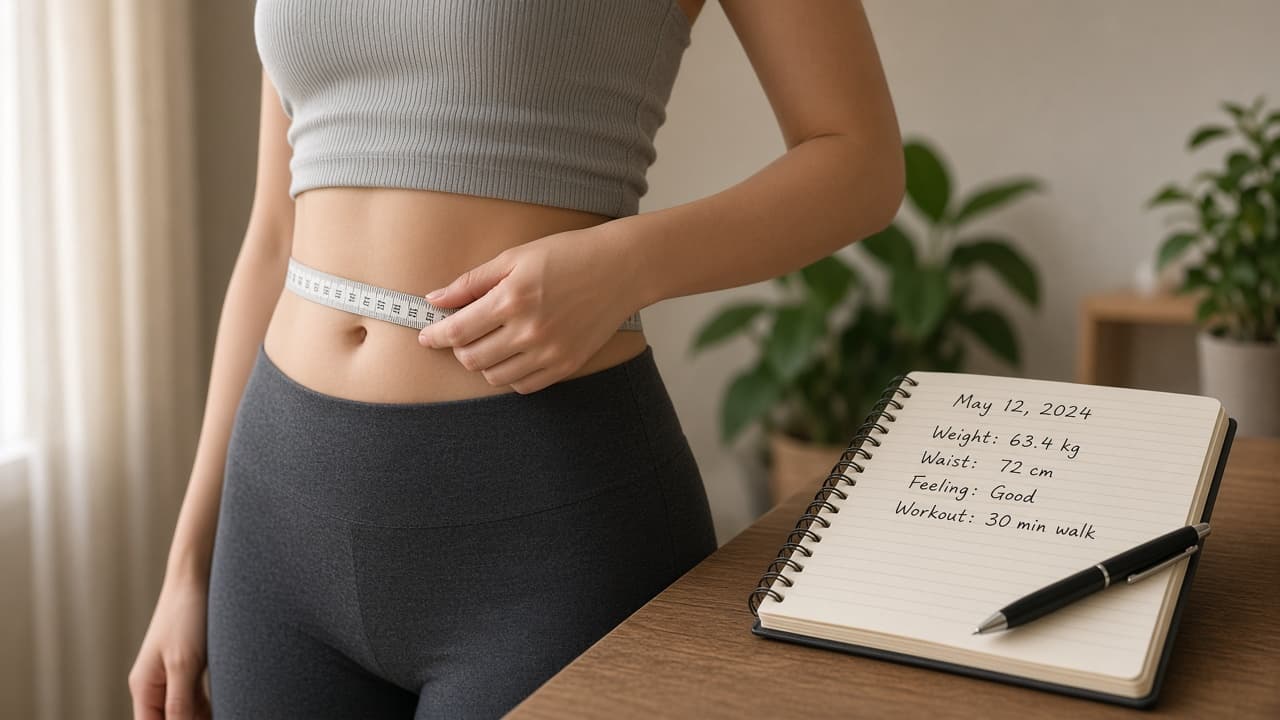
Same landmark, same tension, once a week. 7c
Book clinical help when DIY is not enough
Metabolic conditions, medications or repeated extreme dieting deserve a clinician or dietitian. This article does not replace that care.
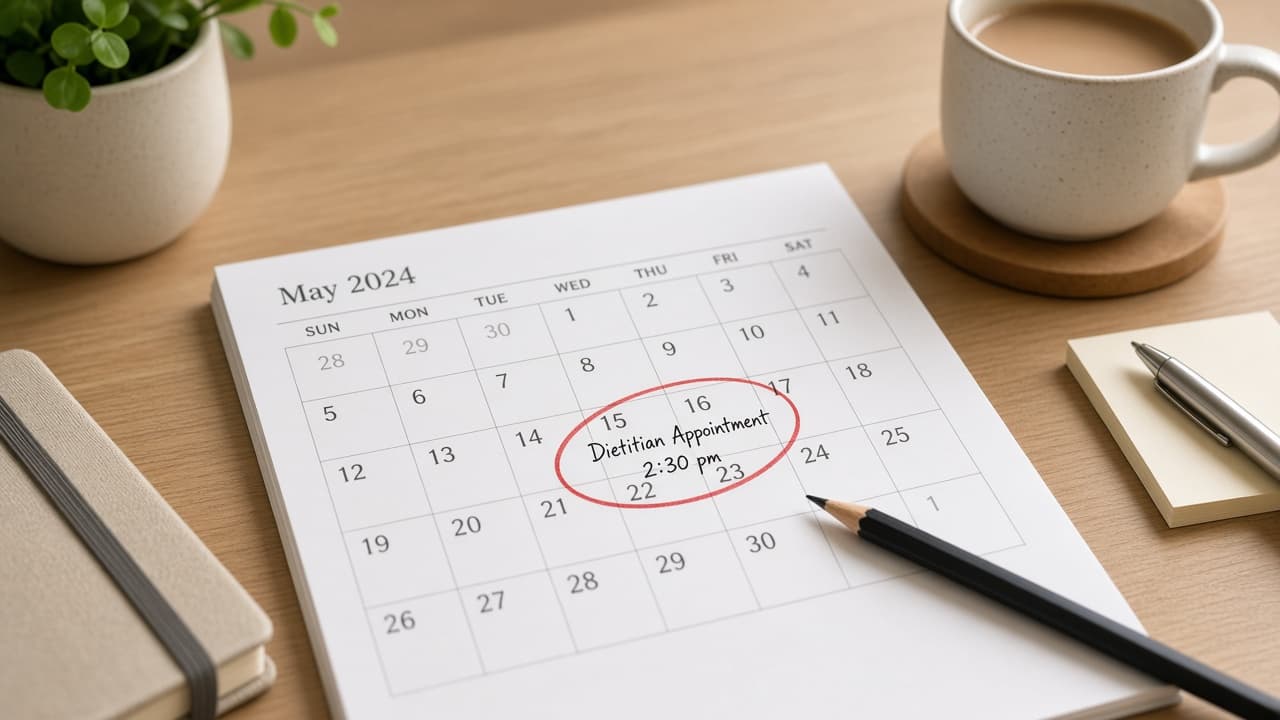
Professional care belongs in the plan when DIY stalls or risks rise. 7d
Reject detox teas and wrap promises
Common mistake: buying wraps, teas or fat-melt creams when progress slows. They do not remove visceral fat and can distract from meals, walking and sleep.
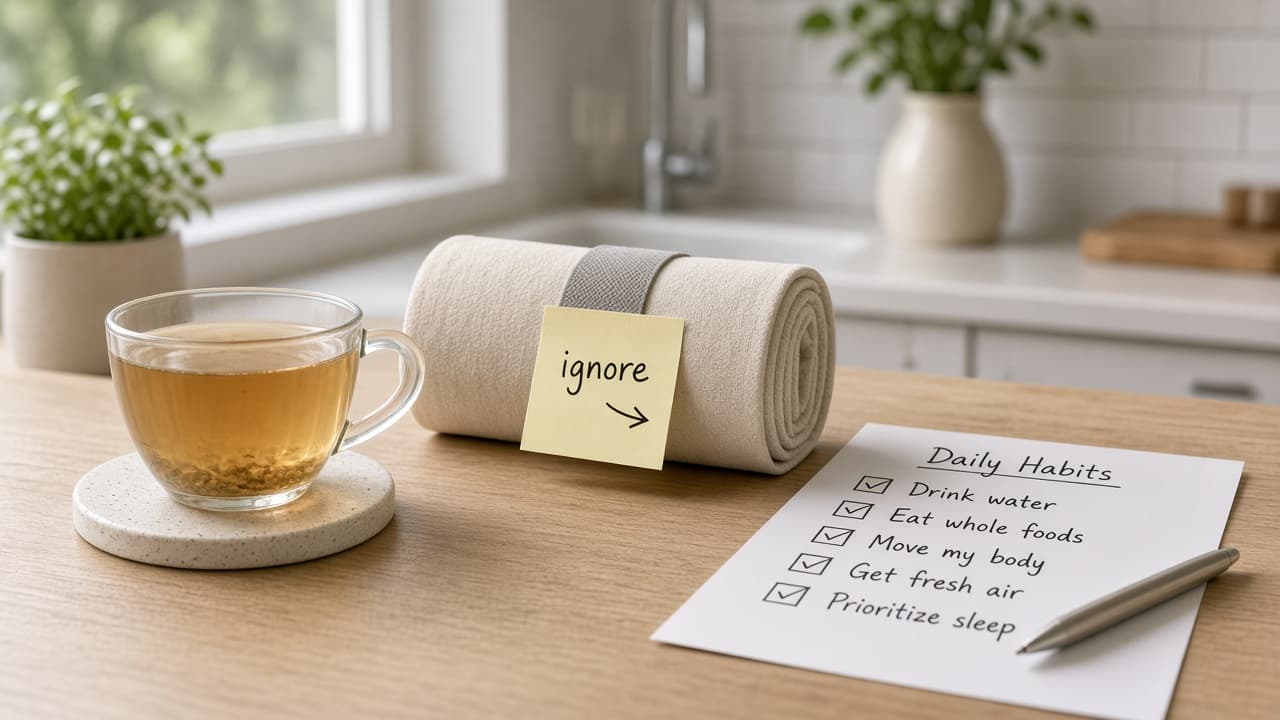
Skip melt products. Return to meals, movement and sleep.
Done when
- Clinician consulted if health conditions apply
- Rough daily portion or calorie plan written
- Protein on most meals
- Daily walking or cardio target set
- Strength sessions scheduled twice weekly
- Sleep window protected
- Weekly waist or habit review scheduled
Eagle Frame's takeaway: aim for overall health and gradual fat loss, not a promise to shrink one body part. Build filling meals, reduce easy excess calories, move regularly, strengthen the whole body and protect sleep. A qualified clinician should set targets when symptoms, medicines or medical conditions complicate the plan.