
How to make money online (realistic paths)
Pick a skill you can deliver, choose a realistic path like freelancing or selling services, set up simple payment and portfolio basics, then find first clients without falling for guaranteed-income scams.
Making money online is ordinary work delivered through a screen. People get paid for writing, design, tutoring, bookkeeping, customer support, coding help, handmade goods and other skills buyers already understand. What does not work is a secret method that promises fast passive income if you pay a stranger first.
This guide is practical orientation, not personalized financial advice. Taxes, business registration and local rules differ by country and situation. Treat early income as real income: track it and check how your tax authority expects you to report it.
Start with a skill you can already demonstrate. Package it as a clear offer with a price and a delivery time. Build a simple proof page or portfolio. Then look for buyers in places those buyers already go: freelance platforms, local networks, niche communities or outbound messages that respect people's time.
Expect slow first weeks. The first paid job teaches pricing and scope better than another motivational video. Be wary of anyone who guarantees earnings, asks for upfront fees to unlock work or pressures you to recruit others. Real clients pay for deliverables. They do not sell you a dream.
Step-by-step guide
Time: One focused weekend to set up an offer; ongoing hours to find and deliver work
What you need
- A skill you can demonstrate with samples or references
- Email address and basic invoice or payment tool
- Simple portfolio page, PDF samples or a profile on a reputable platform
- Notebook for tracking hours, expenses and payouts
Before you start
- This is not financial, tax or legal advice. Rules differ by country and personal situation.
- Ignore guaranteed-income schemes, mystery crypto signals and any offer that requires you to pay to unlock wages.
- Do not share bank passwords, remote-access codes or copies of ID with strangers who found you first with a too-good job.
Step 01
Choose a skill-based offer you can deliver
Buyers pay for outcomes they understand. Vague hustle labels do not sell.
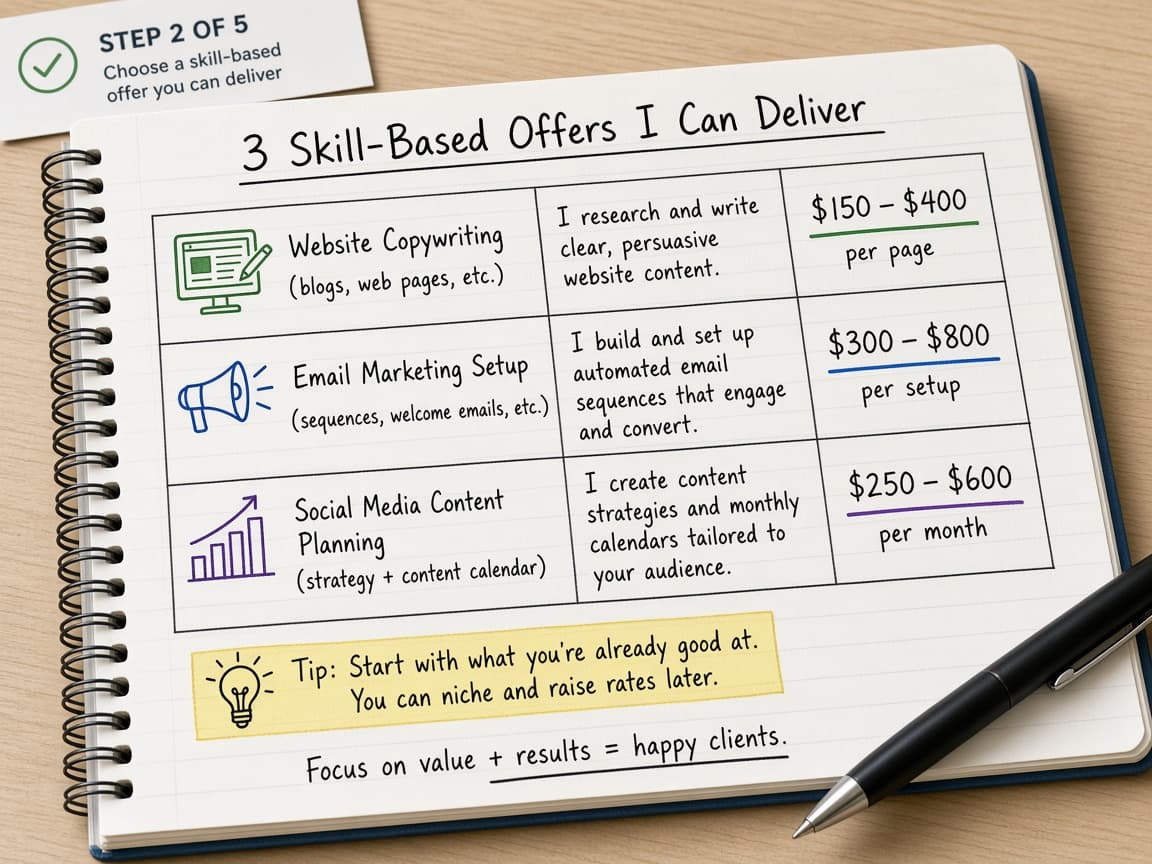
Write one offer a stranger can understand in a single sentence. Do this step in order
1a
List skills people already pay for
Examples: resume edits, logo cleanups, tutoring sessions, product photos, data cleanup in spreadsheets, social post drafting or virtual assistance. Prefer work you have done before for school, a job or friends.
1b
Turn the skill into one sentence
Pattern: I help [who] get [result] with [method]. Example: I help small shops clean product photos for their online catalog. Specific beats I do digital marketing.
1c
Set a starter price and scope
Decide what is included, what is not and how long delivery takes. Price a small package you can finish. You can raise rates after proof and demand show up.
1d
Reject get-rich-quick niche fantasy
Common mistake: picking a trendy niche you cannot deliver because a video said it prints money. Capability first. Trend second.
Step 02
Set up proof, profile and payment basics
Clients need a reason to trust you and a way to pay you.
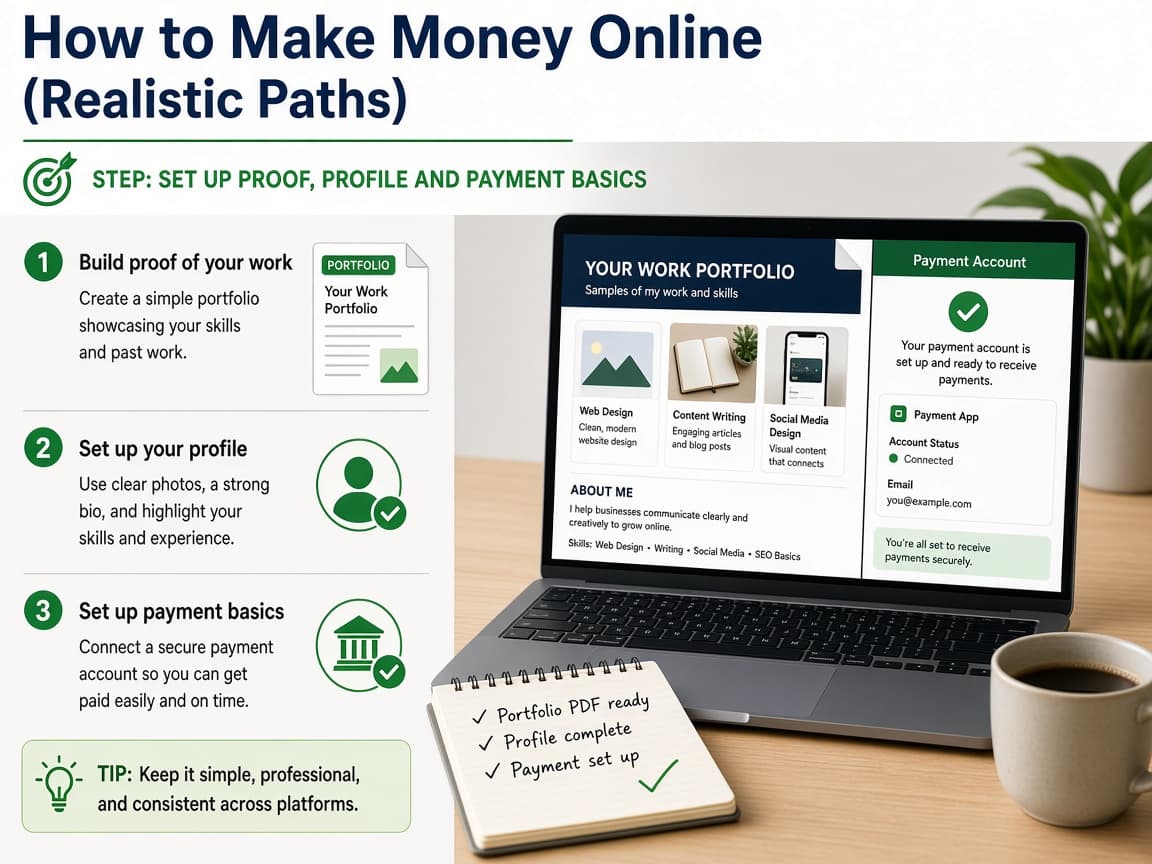
A short portfolio and a normal payment path matter more than a fancy brand kit. Do this step in order
2a
Collect two or three samples
Use anonymized work, personal projects or a small unpaid sample you create on purpose. Show before and after when it helps. Label what you did in one line under each sample.
2b
Create a clean profile or one-pager
Use a reputable freelance platform profile, a simple Notion or Google Doc page or a basic personal site. Include your offer, samples, turnaround and contact email. Use a professional-looking photo if the platform expects one.
2c
Set up a payment method you control
Use a normal path such as bank transfer, a well-known payment app or platform escrow. Write invoices with your name, the project, amount and date. Keep screenshots or exports of payouts.
2d
Do not pay a stranger to release your first paycheck
Common mistake: sending a registration fee, training fee or crypto deposit to unlock a job. Real employers and clients do not charge you to start earning wages.
Step 03
Find first buyers in realistic channels
Go where demand already exists instead of waiting for viral luck.
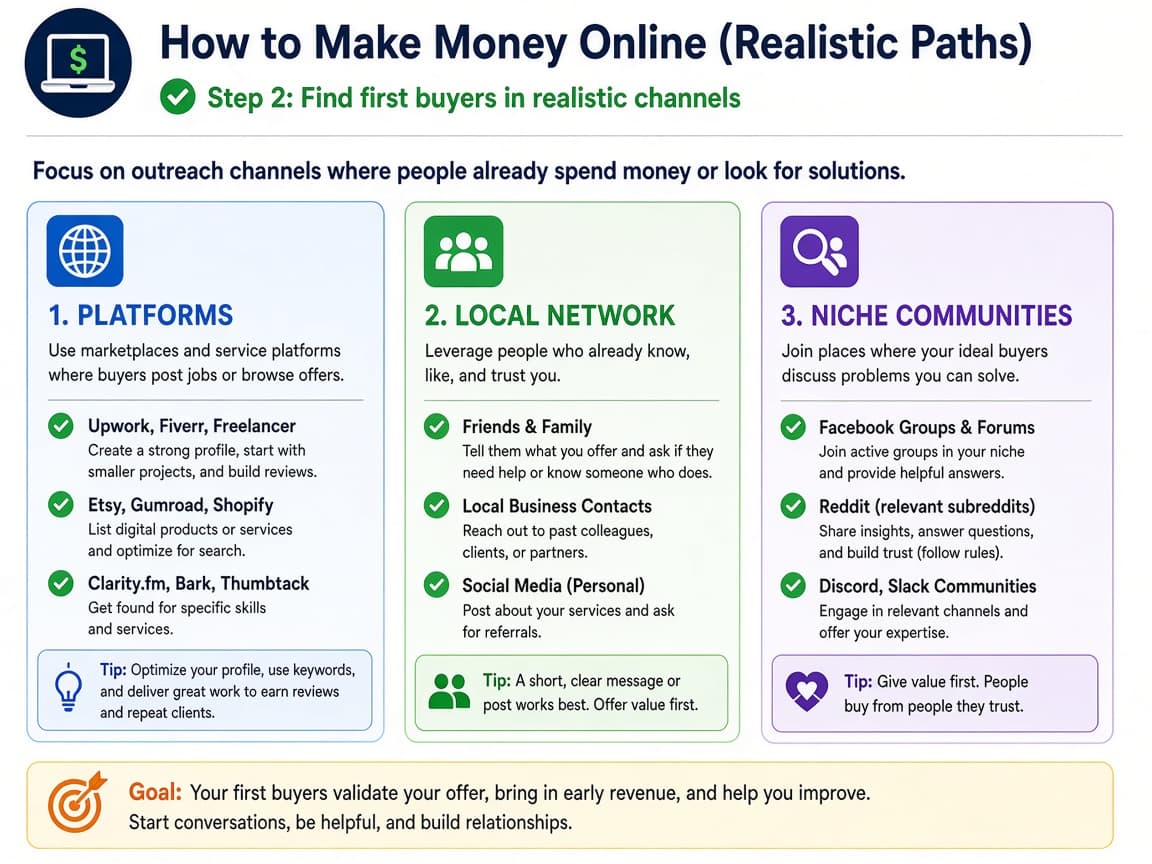
Platforms, warm contacts and niche communities beat random spam blasts. Do this step in order
3a
Publish one listing or profile where buyers search
Complete a profile on a known freelance marketplace or a niche job board that fits your skill. Fill every required field. Use your one-sentence offer as the headline.
3b
Tell people who already trust you
Send a short note to former coworkers, classmates or local business owners. Say what you offer, your starter price and how to reply. Warm leads often become the first invoice.
3c
Send a few careful outbound notes
If you pitch strangers, keep messages short, specific and useful. Mention one concrete observation about their need. Do not mass-paste the same flattery paragraph to fifty people.
3d
Skip engagement-pod and recruitment schemes
Common mistake: joining a program that pays you mainly to recruit others or to post empty engagement. That is not a client business. It is a warning sign.
Step 04
Deliver well, track money and grow carefully
Reliable delivery turns a first job into a second one.
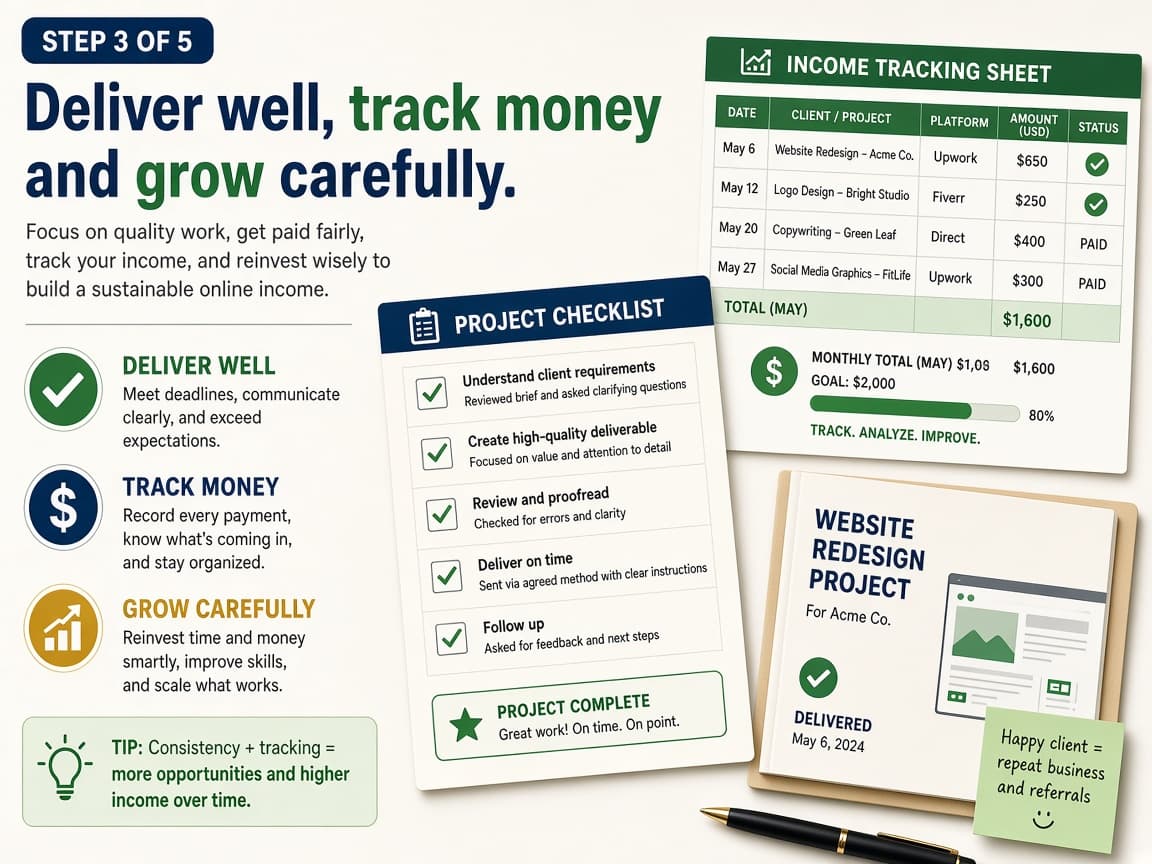
Finish on time, confirm acceptance, get paid and write down what you earned. Do this step in order
4a
Confirm scope before you start heavy work
Restate deliverables, deadline and price in writing. Ask what done looks like. Change requests that expand scope deserve a new price or a later phase.
4b
Deliver, invoice and follow up politely
Send the work in the format they asked for. Attach or link the invoice. If payment is late, send one calm reminder with the original agreement attached.
4c
Track income and set aside for taxes
Log date, client, amount and fees. Online pay is still income in most places. This is not tax advice: check your local rules or a qualified pro for how to report it.
4d
Raise rates after proof, not after vibes
Common mistake: either undercharging forever or tripling prices overnight with no waitlist. Use completed jobs and demand signals. Improve the offer, then adjust.
Done when
- One clear service or product offer written down
- Proof sample or portfolio ready to send
- Price and delivery time decided
- Payment method set up
- First outreach or listing published without scam fee
Eagle Frame's takeaway: online income usually means selling a real skill on clear terms. Pick one offer, show proof, price the work and find buyers without paying for miracle systems. Track what you earn, ignore guaranteed-income pitches and treat the first small paid jobs as practice that funds the next ones.