
How to manifest what you want
Turn vague wishes into outcomes with written goals, weekly actions, honest tracking and support networks. This is structured goal-setting, not a promise that thought alone changes reality.
Manifesting in popular culture often sounds like wishing hard enough will bend outcomes. A practical version is closer to evidence-based goal setting: name what you want, break it into behaviors you control, review progress and adjust when life pushes back. Thinking clearly about a goal can motivate action, but action still carries most of the weight.
Start with one priority that is specific and measurable. Vague prompts like be successful fail because you cannot tell when you arrived. Better frames name a skill, savings target, health habit or creative project with a deadline and a first small step. Write it in plain language you would show a friend.
Visualization can help when it rehearses real steps, not fantasy montages. Spend a few minutes picturing the uncomfortable parts too: early mornings, awkward networking, studying on a tired night. Pair mental rehearsal with calendar blocks for the work itself.
Track weekly, celebrate small wins and recruit accountability. A partner, coach or simple spreadsheet keeps honest score. If a goal repeatedly stalls, the plan may be too big, the timeline unrealistic or the motivation mismatched with your values. Change the plan; do not blame yourself for lacking magic.
Research on mental contrasting pairs a desired future with the real obstacle most likely to interfere. The next move is an implementation intention: an if-then plan that names the cue and the response, such as, If I reach for my phone during the study block, then I will put it in the hallway and work for ten minutes. A 2021 meta-analysis found a small-to-moderate average benefit for this combined approach, with caution that publication bias may reduce the estimate. This evidence does not show that thoughts attract money, relationships or cures. Structural barriers, other people's choices, illness and chance still affect results.
Step-by-step guide
Time: 30 to 45 minutes for initial setup, then 15 minutes weekly review
What you need
- Notebook or notes app
- Calendar with recurring time blocks
- Optional habit tracker or spreadsheet
- Trusted friend, coach or mentor for accountability
- Timer for short reviews and work sprints
- Quiet space for a two-to-five-minute rehearsal
Before you start
- Positive thinking is not a substitute for medical, legal or financial professional advice.
- No technique guarantees wealth, romance or health outcomes.
- Toxic positivity can ignore real barriers; adjust the plan instead of blaming yourself.
- If low mood or anxiety blocks daily life, seek qualified mental health support.
Step 01
Define one specific outcome and why it matters
Clarity beats a long vision board of unrelated wishes.
Do this step in order
1a
Write the goal in one measurable sentence
Name one outcome with a number, observable finish line or clear behavior. Write Save $2,000 for a move by December 1 rather than attract abundance. Read it aloud and remove any phrase you could not verify later.
1b
Note why the goal fits your values
Write one sentence about what the outcome would make possible in daily life. Separate your own reason from pressure created by comparison, family expectations or social media. If the reason feels borrowed, pause and choose a goal you actually want.

A borrowed why usually dies after the first hard week. 1c
Set a realistic deadline and define done
Estimate the work, money or repetitions required, then compare that total with the time available. Define exactly what counts as done and set an earlier review date. A deadline should guide pacing, not predict an outcome controlled by another person.
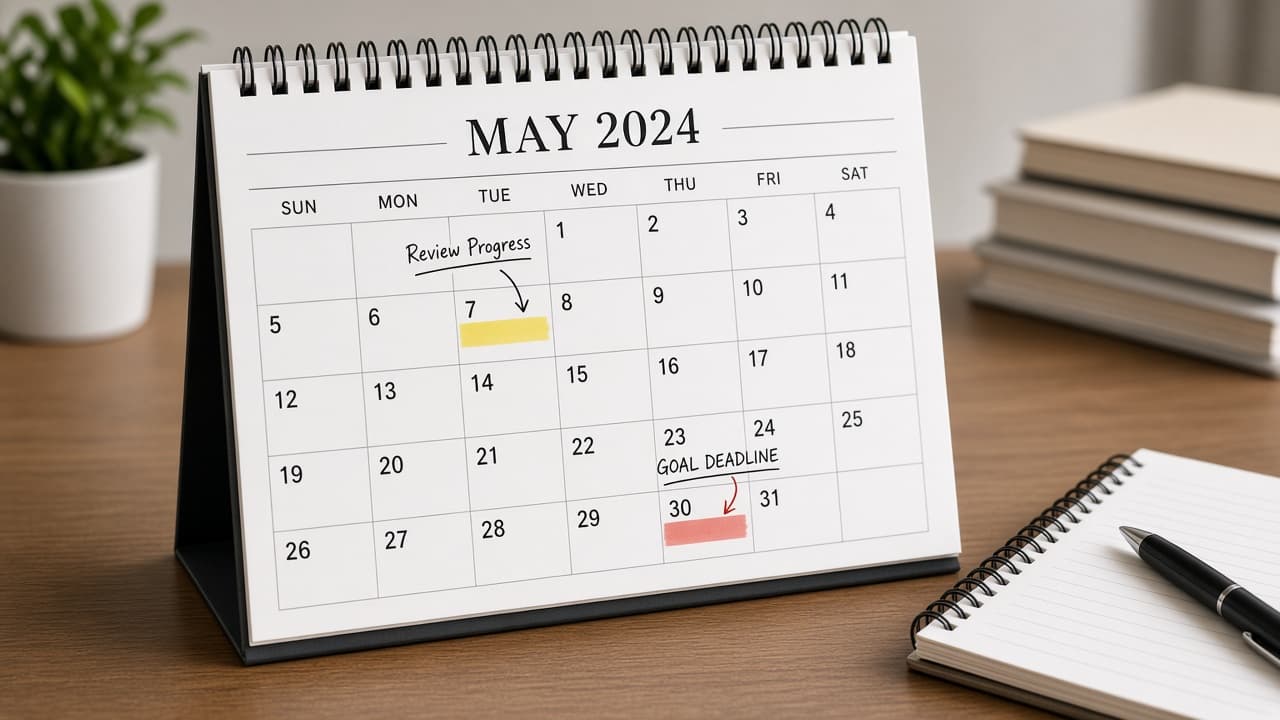
Done needs a definition before motivation fades. 1d
Common mistake: stacking ten unrelated wishes
Common mistake: filling a board with money, romance, fitness and career wins for the same month. Parallel priorities dilute calendar time. Park extras on a later list until the first goal has a weekly rhythm.
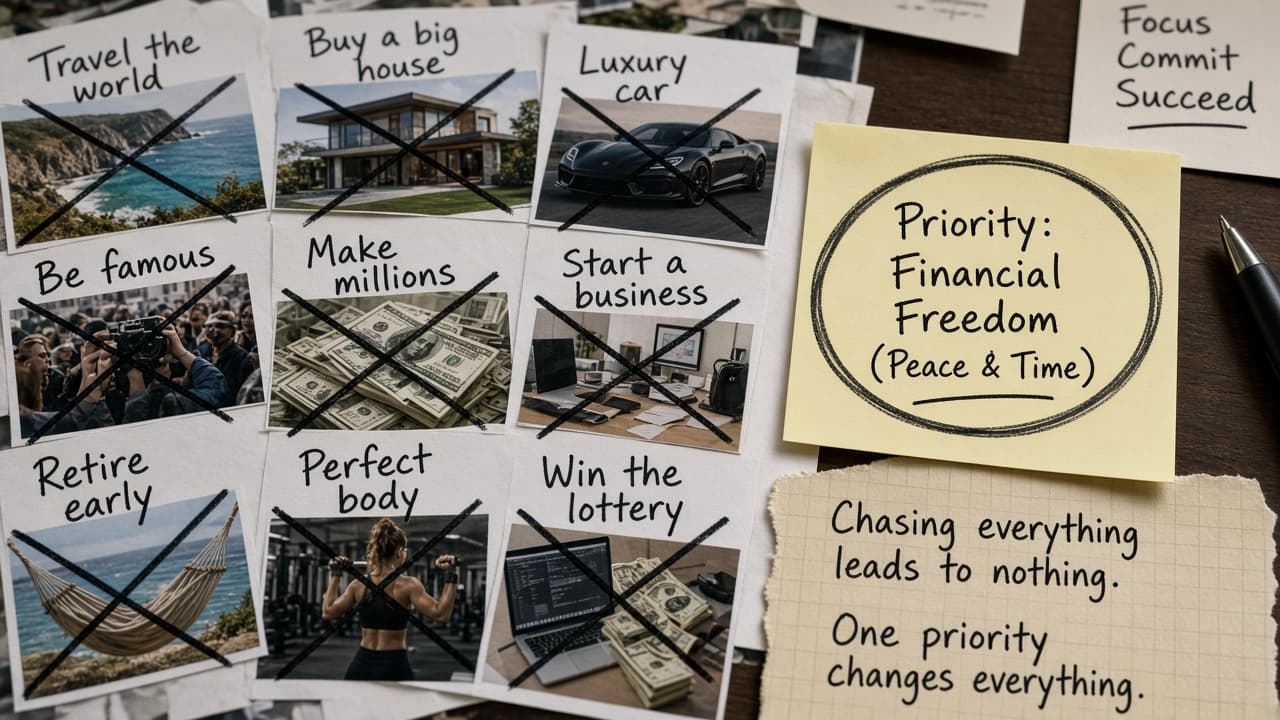
One active goal beats a collage of competing wishes.
Step 02
Check feasibility before you commit the week
Resize the goal if the first week already demands more than you have.
Do this step in order
2a
List resources, permissions and health limits
Write the money, equipment, childcare, transportation and physical limits the goal requires. Mark items that depend on another person's yes. Ask a qualified professional when the target involves medicine, law or major financial risk.
2b
Compare required hours with a real calendar
Count the hours the plan needs this week and place them beside existing work, caregiving and rest. If the math only works by deleting sleep, shrink the weekly dose before you start.
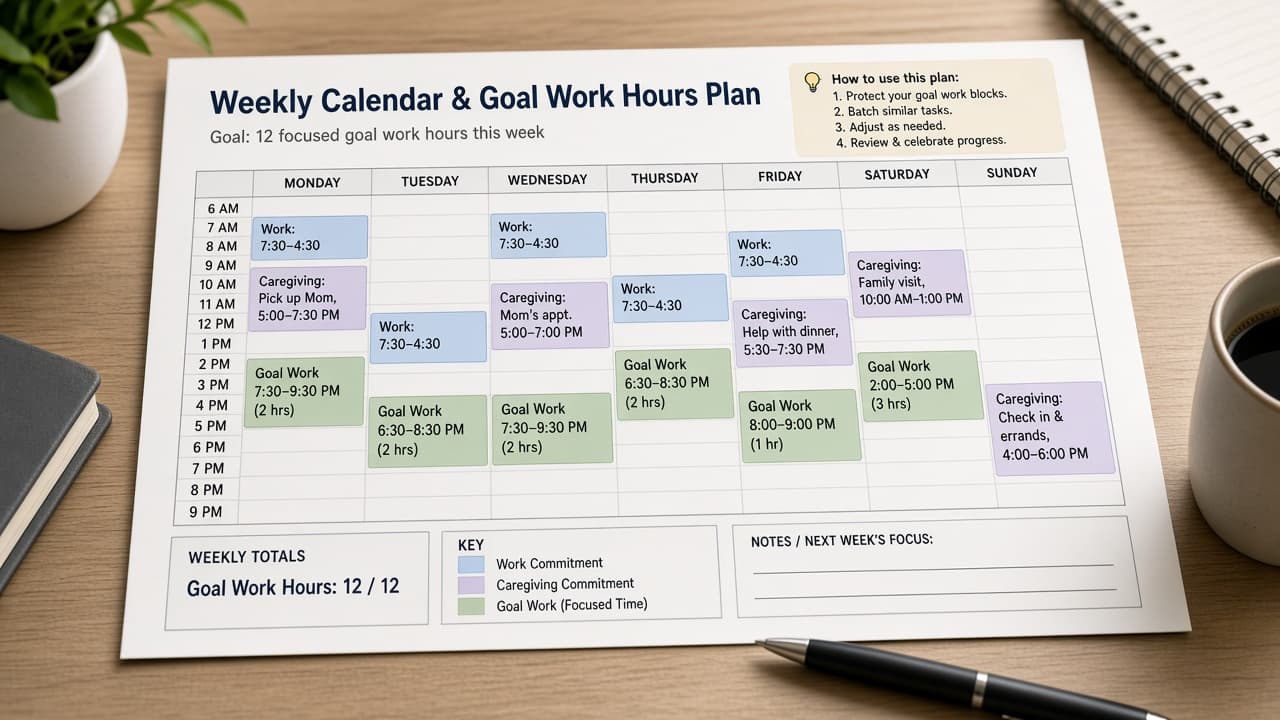
If the hours do not fit, the plan is fiction. 2c
Separate controllables from wishes about other people
Circle actions you can complete alone, such as applications sent or pages drafted. Put replies, hirings and other people's feelings in a different column so you do not grade yourself on their choices.
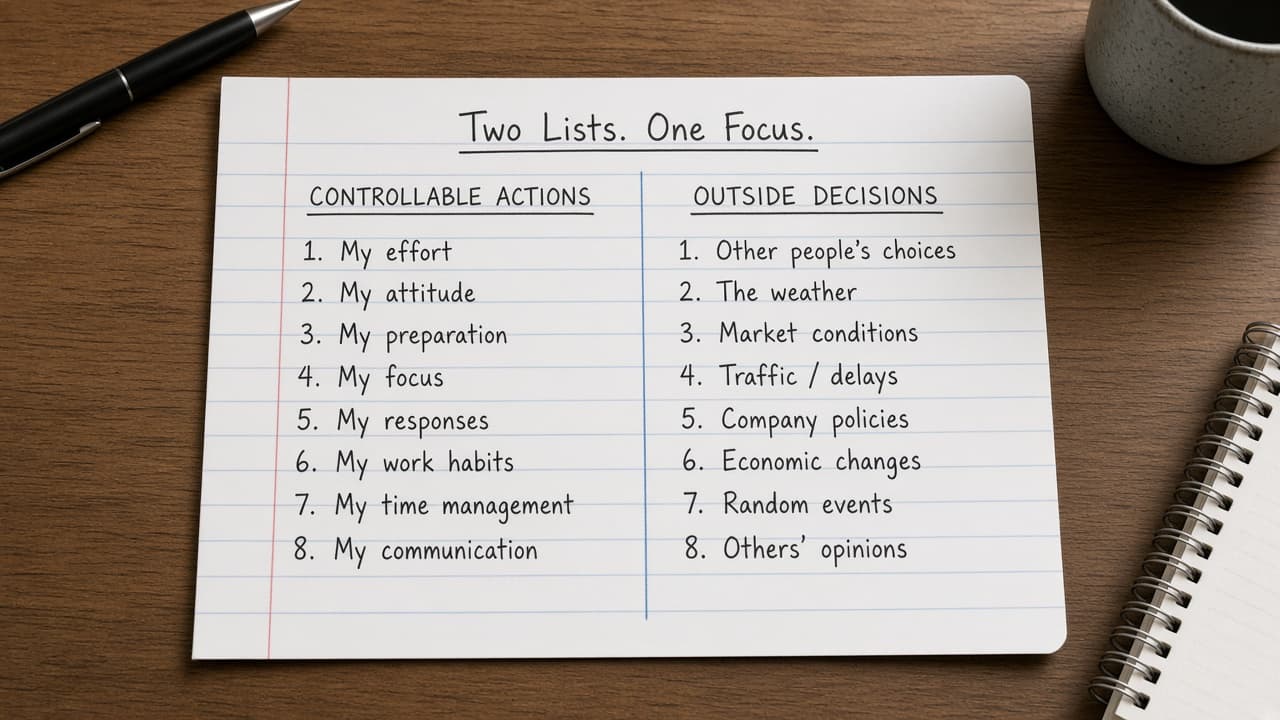
You own the sends and drafts, not the replies. 2d
Common mistake: treating chance outcomes as personal failure
Common mistake: concluding you manifested badly because a landlord, hiring manager or clinician said no. Update the controllable actions and the timeline. Do not turn structural barriers into a character judgment.
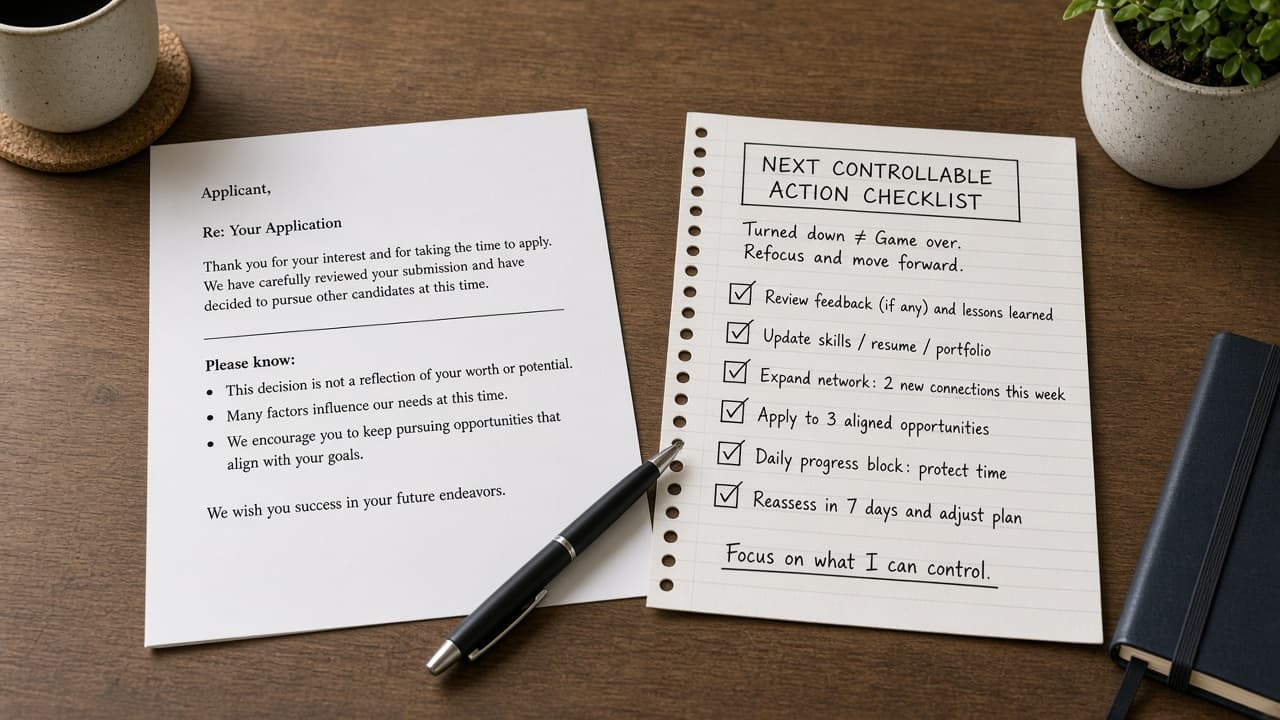
A no outside your control is data, not a moral verdict.
Step 03
Break the goal into weekly actions you control
Manifesting rhetoric often skips the boring middle. Your plan should not.
Do this step in order
3a
List behaviors that move the needle
Translate the outcome into actions such as apply to five suitable jobs, draft one page or transfer $50 to savings. Mark which actions are fully under your control and which depend on a reply or approval. Schedule the controllable actions first.
3b
Cap the list at three priorities per week
Choose no more than three actions that would make the week meaningfully better. Give each a quantity, duration or completion mark. Move extra ideas to a later list so they do not compete for the same hours.
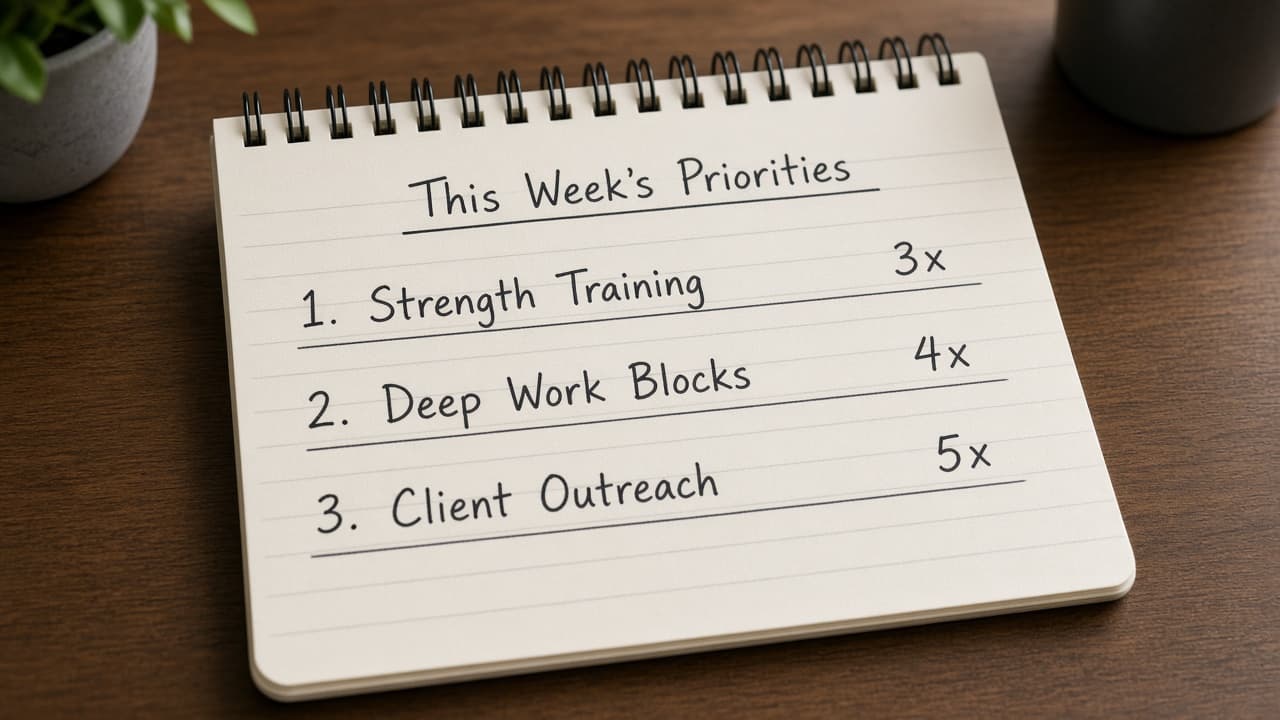
Three concrete actions beat a dozen vague intentions. 3c
Make the first action small enough to start
Reduce the entry step to something that takes two to ten minutes, such as opening the document and writing one sentence. Put the needed shoes, form or file where the action begins. You can continue after the minimum, but completion still counts when you stop there.

A tiny start beats waiting for a perfect free afternoon. 3d
Common mistake: waiting for inspiration before scheduling
Common mistake: leaving the week blank because you want to feel ready first. Readiness often follows the first small block on the calendar. Schedule the starter action even when motivation is low.
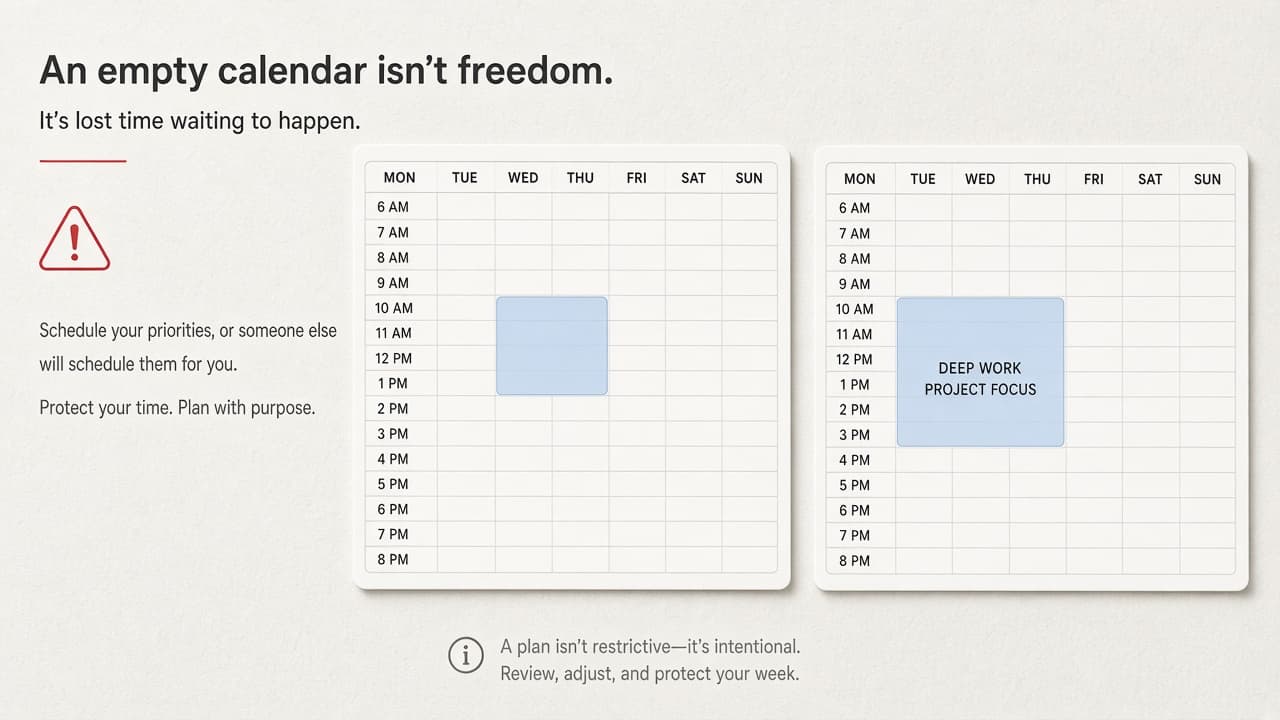
Inspiration is a weak substitute for a start time.
Step 04
Write if-then plans for the obstacles you already know
Mental contrasting works when the obstacle and response are specific.
Do this step in order
4a
Name the most likely internal obstacle
Choose fatigue, avoidance, phone checking or another pattern you already know rather than blaming only the calendar. Be honest enough that the plan names the real friction.
4b
Write one if-then response you can do immediately
Use a form such as, If I skip the morning walk, then I will walk for 15 minutes after lunch. The response should be concrete and available without buying new gear. Keep it short enough to remember under stress.
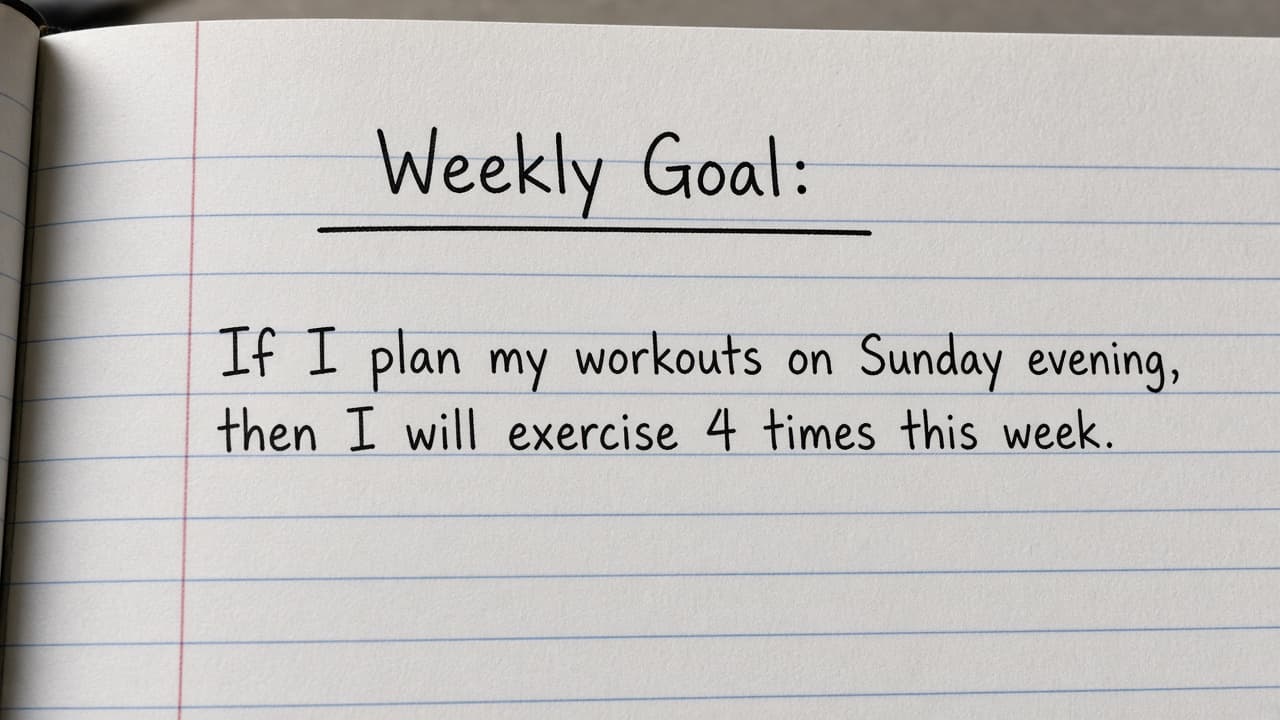
An if-then line is easier to obey than a vague try harder. 4c
Rehearse the response once before the week begins
Say the if-then aloud and picture the first physical move, such as placing the phone in another room. Link the rehearsal to the calendar block so imagery points at behavior, not fantasy.

Rehearse the friction response, not only the trophy moment. 4d
Common mistake: fantasizing the win without the obstacle
Common mistake: spending the visualization on applause and finished results while skipping the awkward middle. Picture the obstacle and the if-then response, then start the real action within ten minutes.
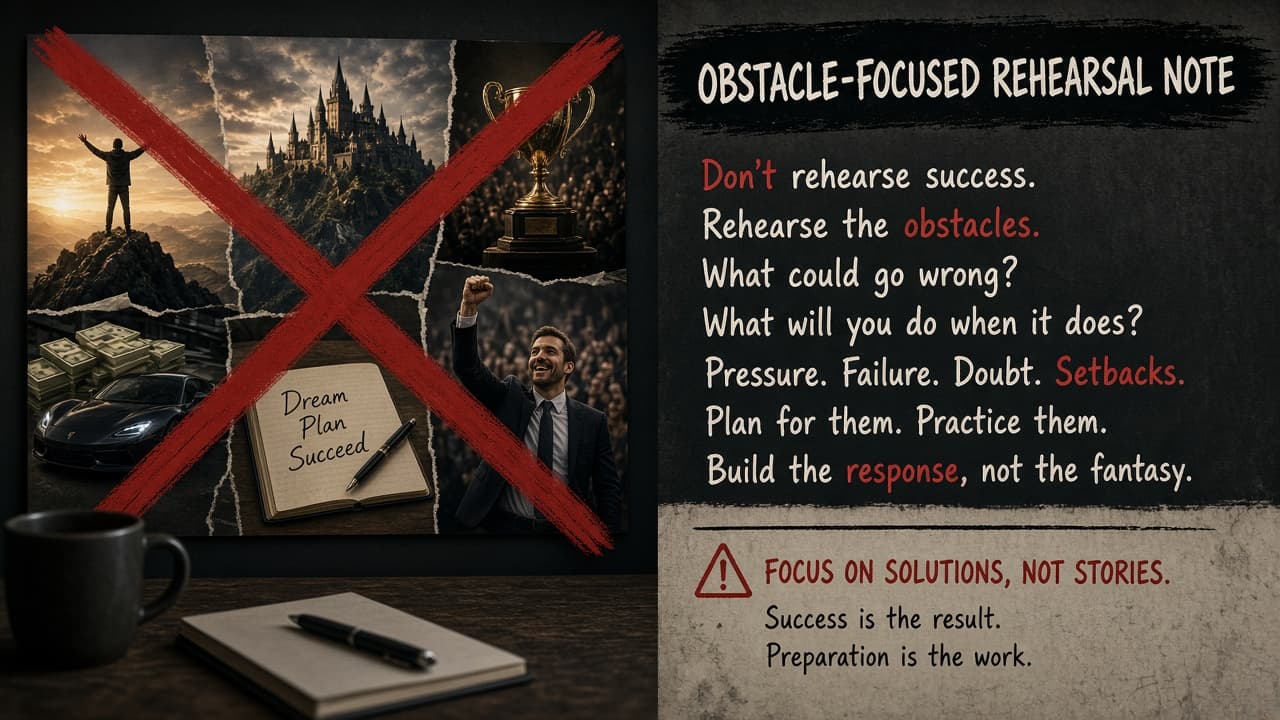
Trophy montages without obstacle plans rarely change the week.
Step 05
Schedule the work and clear one friction source
Put actions on the calendar, then make the start easier than avoidance.
Do this step in order
5a
Block time for the top action before the week starts
Open your calendar before the week begins and reserve a start time, location and duration for each priority. Add preparation time when travel or equipment is involved. Set one reminder early enough to change course rather than at the exact start.
5b
Stage materials where the action begins
Place shoes, forms, files or tools in the spot where the block happens. Close extra tabs and silence notifications before the timer starts. Stop adjusting the setup after five minutes because preparation can become another form of avoidance.

Staging removes the scavenger hunt that kills starts. 5c
Protect the block from soft interruptions
Tell the people who share your space when you are unavailable. Put the phone in another room if that is your usual derailment. Begin within two minutes of the scheduled start even if the session will be shorter than planned.

Soft interruptions need a pre-decided barrier. 5d
Common mistake: endless setup as a form of avoidance
Common mistake: rewriting the planner, recoloring habit trackers and never starting the task. Cap setup at five minutes, then begin the smallest action. Tracking tools serve the work; they are not the work.
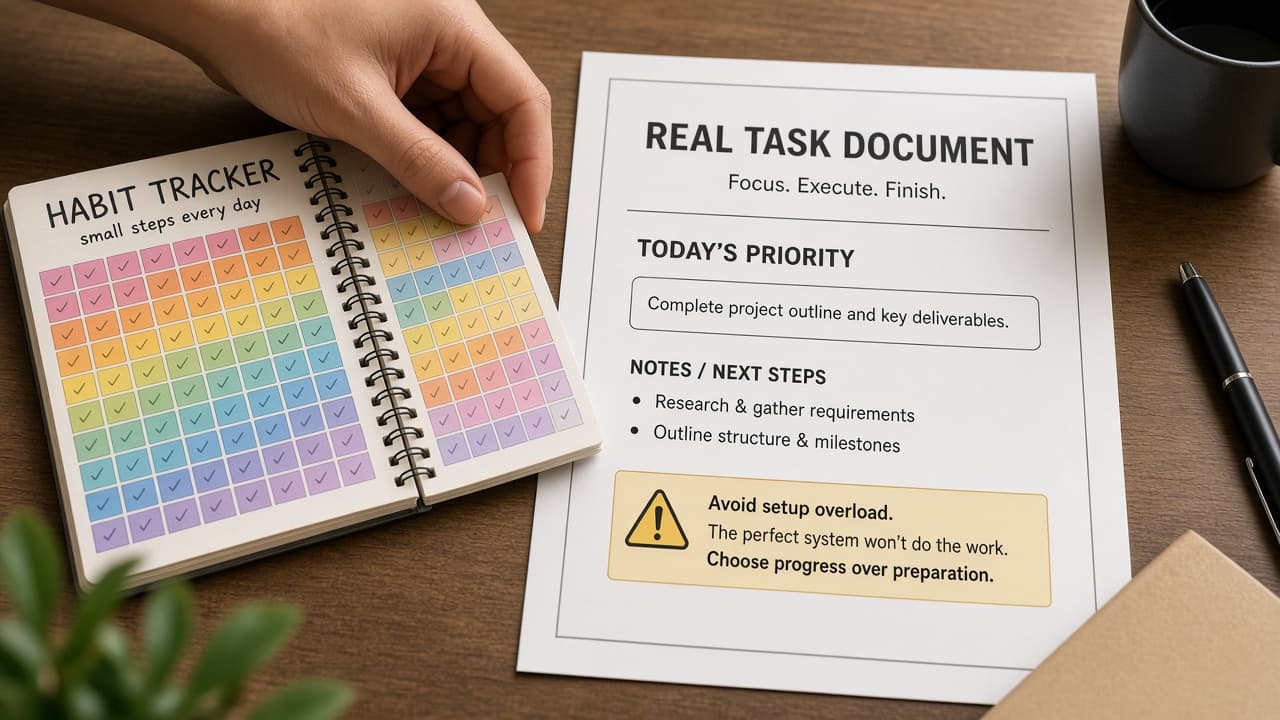
Pretty systems are still avoidance when the task never opens.
Step 06
Track completion without moral drama
Neutral records make weekly reviews useful instead of shameful.
Do this step in order
6a
Mark each scheduled action honestly
Use done, shortened, moved or missed. Record the reason in a few neutral words, such as meeting ran late or task too large. Resume at the next planned cue instead of waiting for a perfect Monday.
6b
Keep streaks from becoming identity tests
A broken streak is information about fit and friction, not proof you lack discipline. Restart at the next block. Change the dose if three straight misses point to an oversized plan.
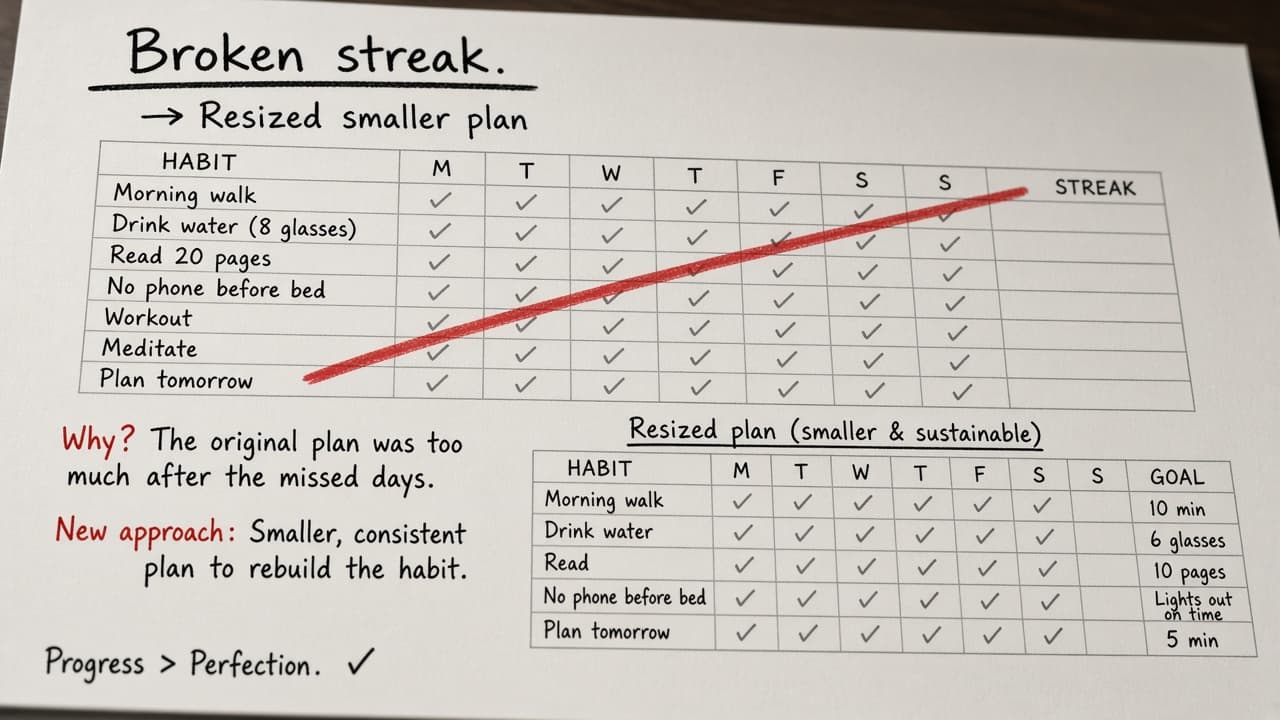
Resize the plan when misses cluster; do not invent a character flaw. 6c
Celebrate controllable wins briefly
Note completed actions that moved the goal, even when outside results are still pending. A short acknowledgment helps the next start. Avoid turning celebration into a full day off from the plan unless that rest was scheduled.
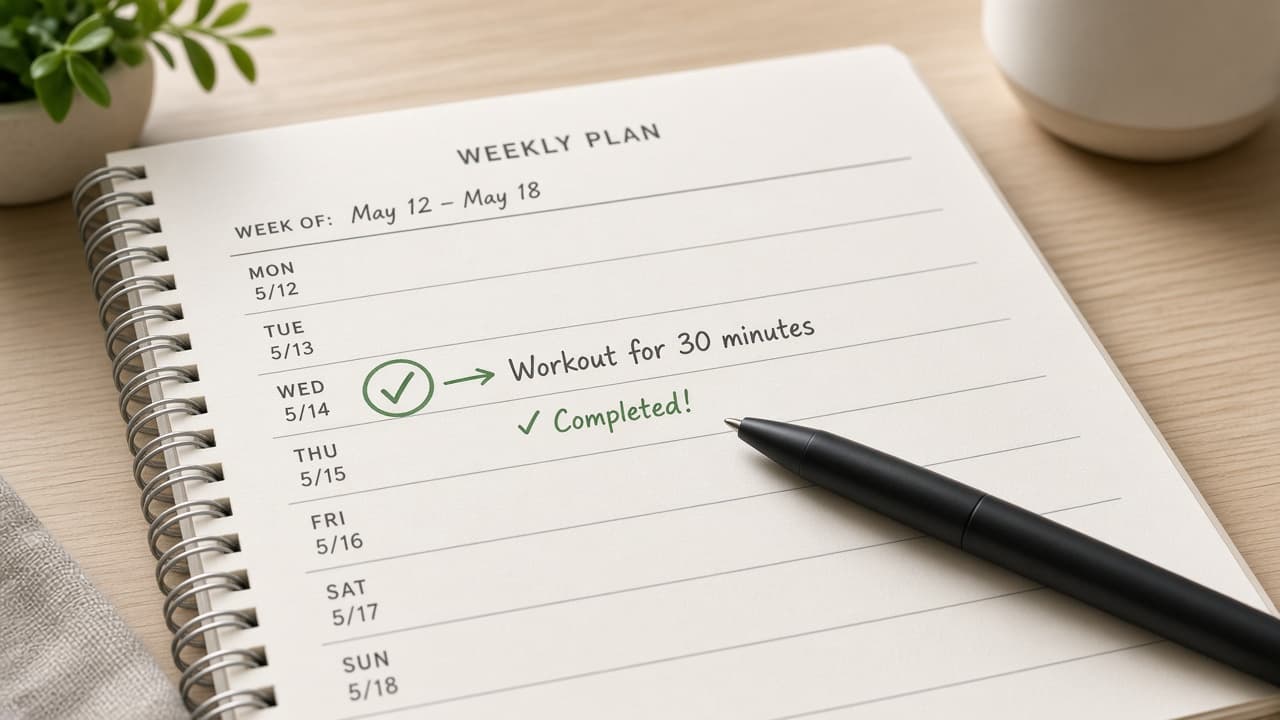
Credit the controllable win without abandoning the schedule. 6d
Common mistake: all-or-nothing weeks after one miss
Common mistake: missing Tuesday and deleting the rest of the week. Return Wednesday with the smallest starter action. Consistency is built from recoveries, not from perfect unbroken chains.
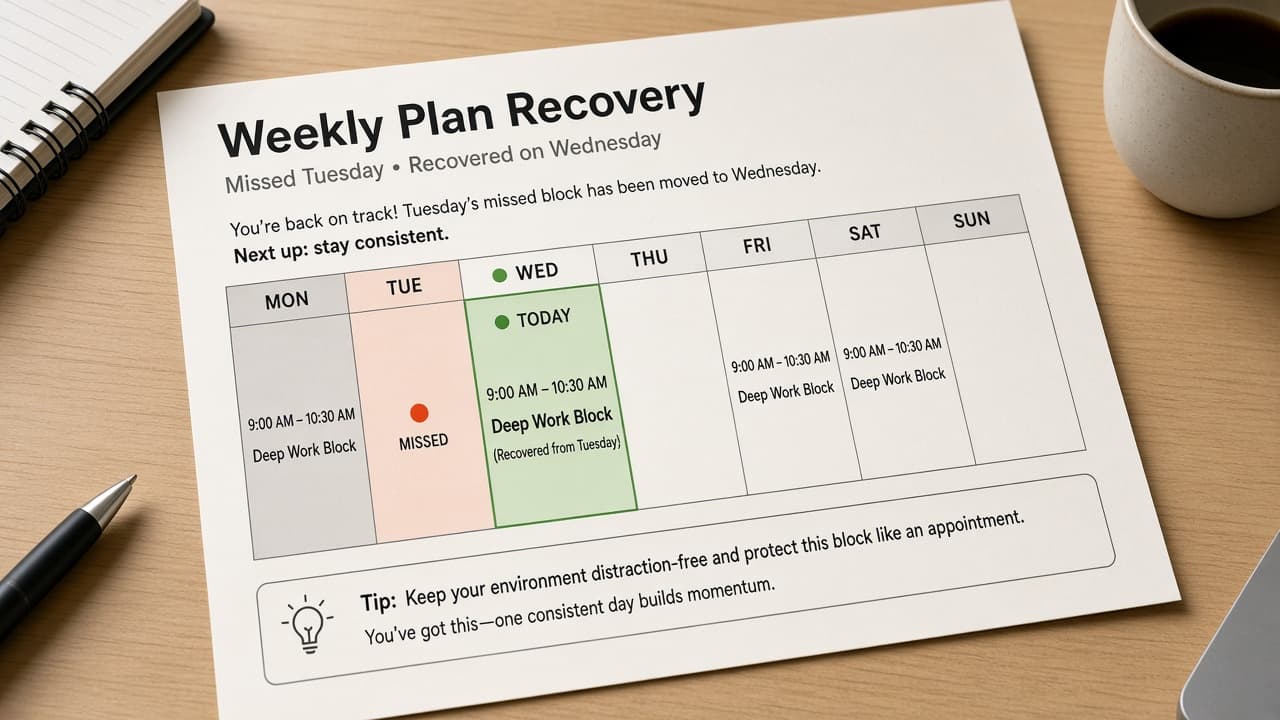
The next block matters more than an unbroken aesthetic streak.
Step 07
Review weekly and escalate real barriers
Progress reviews keep manifesting language grounded in what actually happened.
Do this step in order
7a
Hold a fifteen-minute weekly review
Set a 15-minute timer and compare completed actions with the plan. Write what worked, what blocked you and one change for next week. Stop when the timer ends so reflection does not turn into rumination.
7b
Share progress with an accountability partner
Choose someone who will ask about the agreed action without selling certainty or shame. Send the target before the week and the result afterward using numbers or a simple done status. Ask for problem-solving when blocked, not vague encouragement alone.

Accountability works best with numbers, not pep talks alone. 7c
Resize or retire goals that no longer fit
After several reviews, look for a repeated mismatch between the plan and available time, money or health. Reduce the weekly dose, extend the deadline or choose a different route. Retire a goal that no longer fits your values without calling the decision a failure.
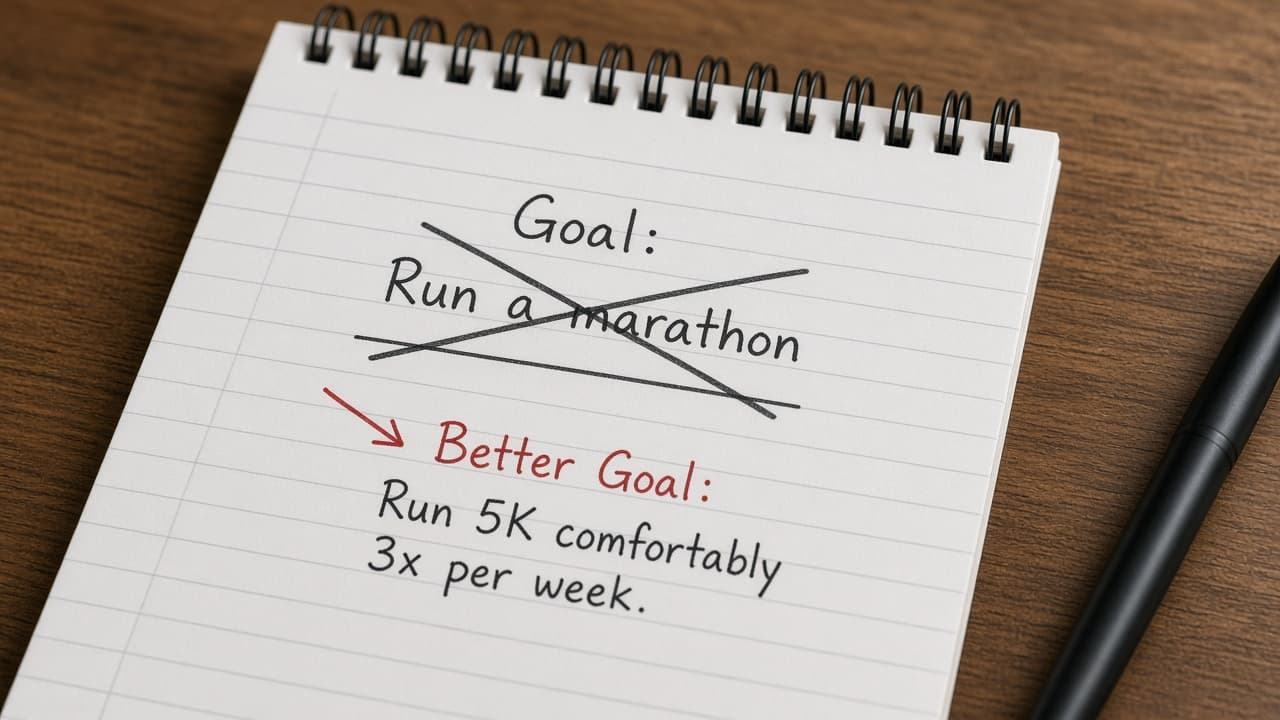
Retiring a poor fit is strategy, not personal defeat. 7d
Common mistake: using manifestation talk instead of real help
Common mistake: repeating affirmations while anxiety, low mood, legal trouble or medical issues block daily tasks. Use a clinician, therapist, financial adviser, teacher or legal professional when the obstacle needs expertise. Goal tools organize action; they do not treat illness or erase structural barriers.

Some obstacles need qualified help, not another vision board.
Done when
- Pick one specific goal with a clear done signal
- Break it into actions you control this week
- Write if-then plans for the likeliest obstacles
- Schedule those actions on the calendar
- Practice brief visualization tied to real steps
- Review progress every seven days
- Adjust or drop goals that no longer fit your values
Eagle Frame's takeaway: write a specific goal, list weekly actions you control, schedule them, review results every seven days and adjust. Treat manifesting language as focus and follow-through, not a guarantee that the universe owes you an outcome without effort.