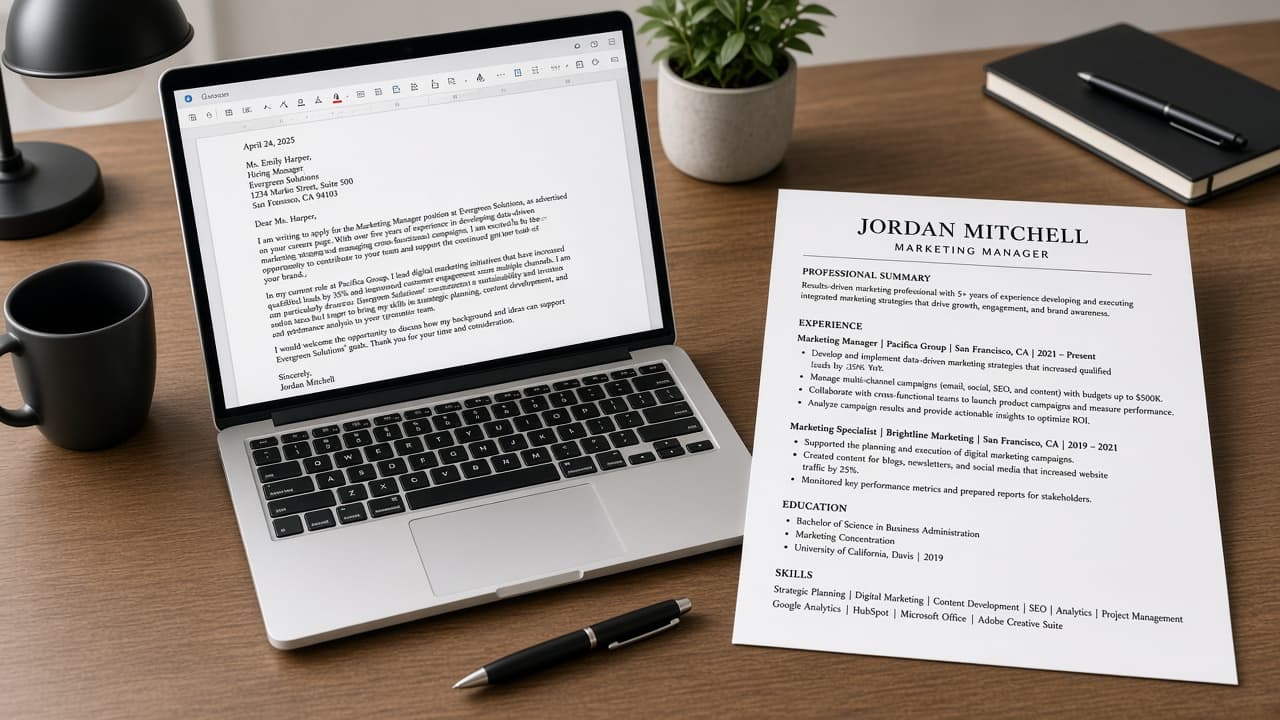
How to write a cover letter
Write a short three-paragraph letter that names the role, proves two or three matching wins and closes with a clear next step. Export a clean PDF and proofread before you send.
A cover letter is a short note that explains why you and this job fit. It is not a second resume and it is not a life story. Hiring managers skim. Three tight paragraphs usually beat a page of praise for the company.
Your job is simple: name the role, show two or three proof points that match the posting and ask for a conversation. Mirror language from the job description only when it is true. Invented passion for a product you never used is easy to spot.
Unless the employer asks for a Word file, send a text-based PDF with your name in the file name. Keep the same contact details as your resume. Use a clean font and normal margins so the letter looks careful on a phone screen.
Skip the generic opener that could fit any job on earth. Skip long salary history unless they asked for it. If the posting says no cover letter, do not force one. When they invite one, treat it as a chance to sound like a specific person with specific proof.
Step-by-step guide
Time: 45 to 90 minutes for a strong first letter; 20 to 30 minutes to tailor later
What you need
- Job description and your resume
- Word, Google Docs or another plain text editor
- Notes on two or three wins that match the role
- PDF export
Before you start
- Do not invent titles, metrics or employers. Interviews dig in.
- Do not paste the same letter into every portal. Generic openers get skimmed and ignored.
Step 01
Gather the posting and pick matching proof
You cannot write a useful letter until you know what they need and what you can prove.
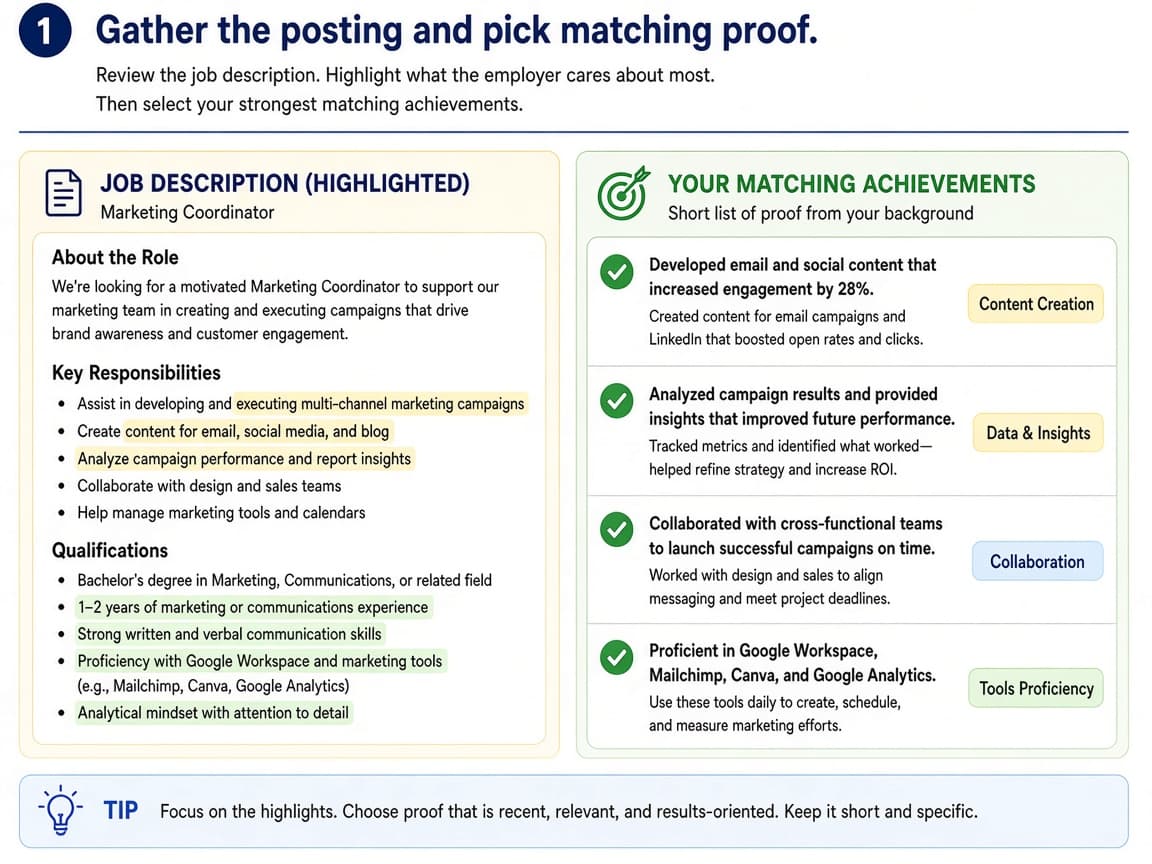
Mark real requirements first. Then choose proof you can defend in an interview. Do this step in order
1a
Read the posting for must-haves
Highlight required skills, tools and outcomes. Note the team name and any stated goals. Ignore fluff about culture until you have the hard requirements straight.
1b
List two or three wins that match
From your resume, pick results that answer those must-haves. Prefer numbers you can explain: time saved, revenue influenced, tickets closed or people trained.
1c
Note the hiring manager or team if known
If a name is public, plan to use it. If not, use Hiring Manager or the team title from the post. Avoid To Whom It May Concern.
1d
Skip inventing company love you cannot explain
Common mistake: opening with deep admiration for a brand you only googled today. Save sincerity for one concrete reason you applied.
Step 02
Write three short paragraphs
Open with the role, prove the fit in the middle and close with a clear ask.
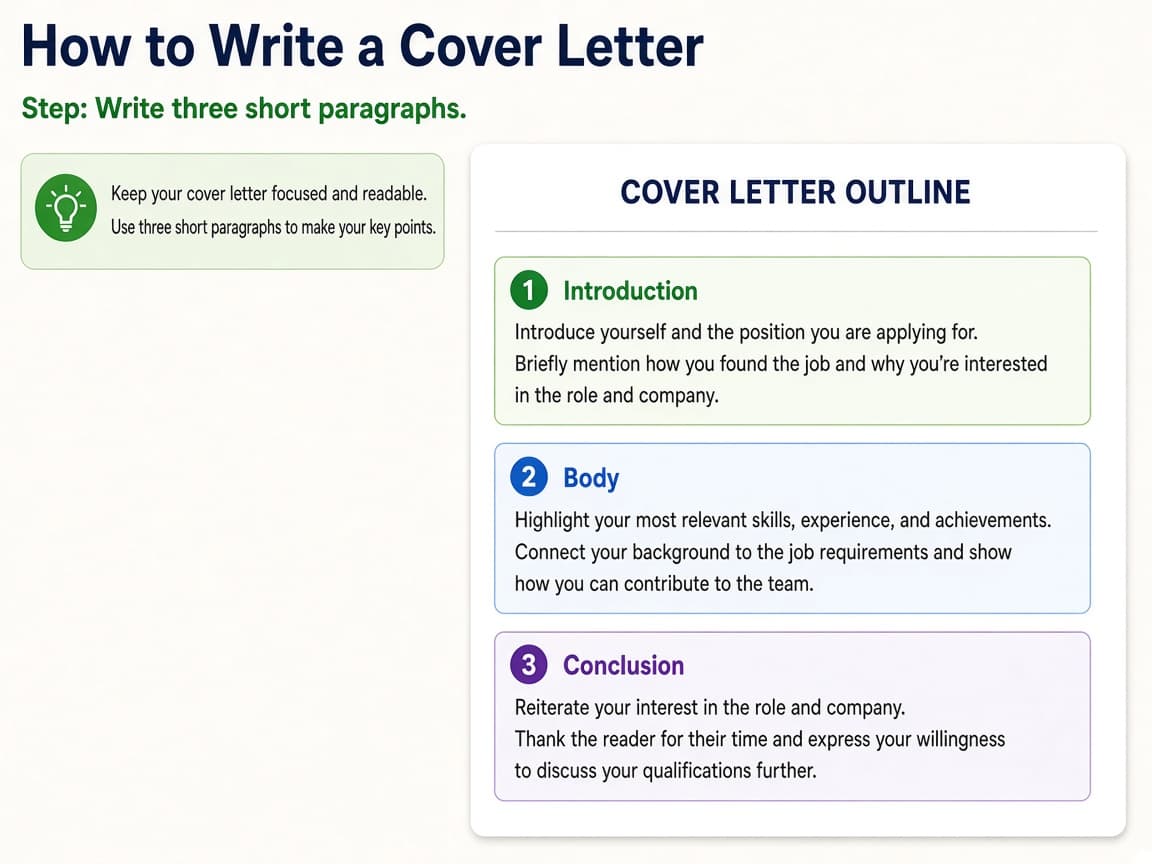
Three paragraphs is enough for most roles. Cut anything that repeats the resume line by line. Do this step in order
2a
Paragraph one: who you are and which role
State the job title, where you found it and one sentence on why you fit. Keep it under four lines. Name the company correctly.
2b
Paragraph two: proof that matches the posting
Use two or three compact examples with action and result. Connect each to a need in the posting. Do not paste your entire experience section.
2c
Paragraph three: close and invite next steps
Thank them, restate interest and say you welcome a conversation. Mention availability if timing matters. Keep the tone calm and direct.
2d
Cut the fourth paragraph of biography
Common mistake: adding a long personal origin story that does not help the hiring decision. If a detail does not support the role, delete it.
Step 03
Match tone, format and contact details
Make the letter look like it belongs with your resume and the employer's process.
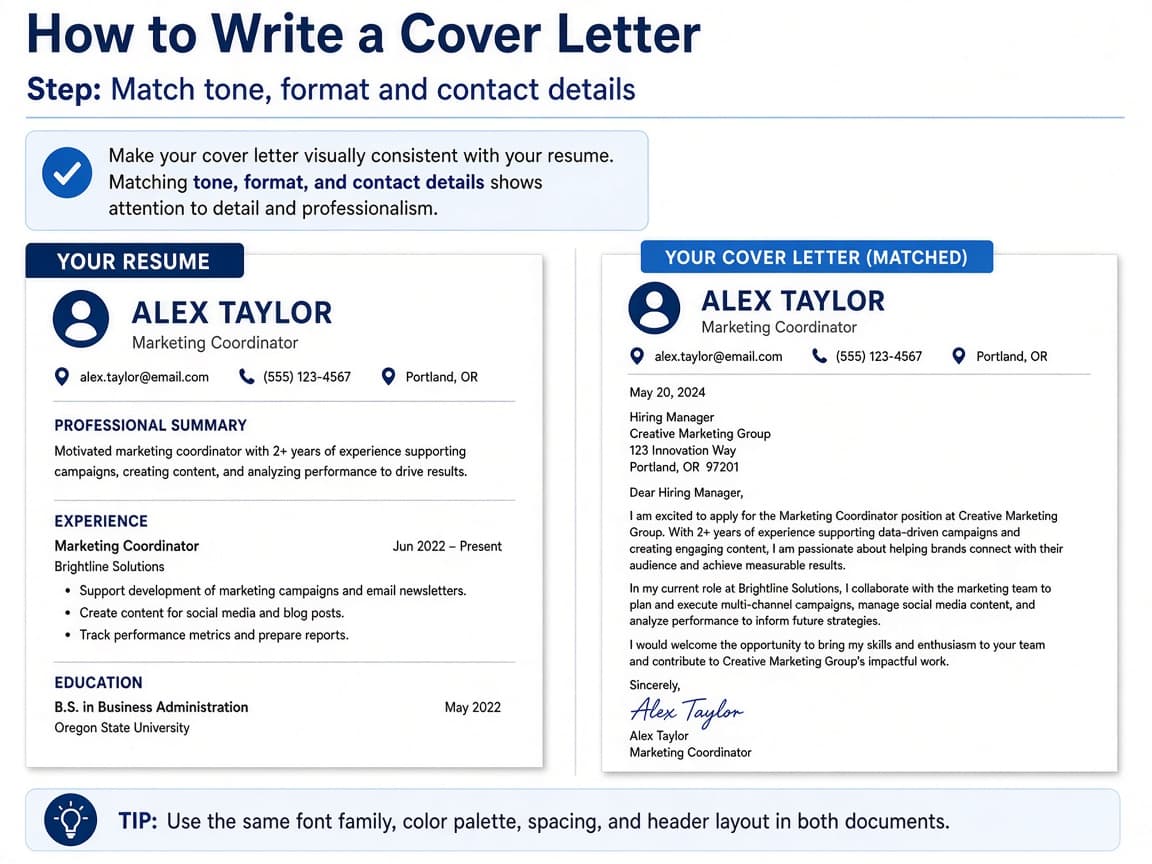
Same name, contact line and careful formatting make the packet feel intentional. Do this step in order
3a
Mirror resume contact info and naming
Use the same phone, email and city line. Sign with your full name. If you include LinkedIn or a portfolio, use the polished link from the resume.
3b
Keep length near half a page to one page
Aim for about 250 to 400 words. Use a common font and normal margins. Leave white space so the letter is readable on a phone.
3c
Follow any format the posting requests
If they ask for Word, send DOCX. Otherwise a text-based PDF is common. Name the file Firstname-Lastname-Cover-Letter.pdf.
3d
Avoid heavy design templates
Common mistake: a designed letter with sidebars and icons that scramble when pasted into a portal. Plain text that travels well beats a pretty layout that breaks.
Step 04
Proofread, tailor and send
A wrong company name or leftover placeholder ruins an otherwise strong letter.
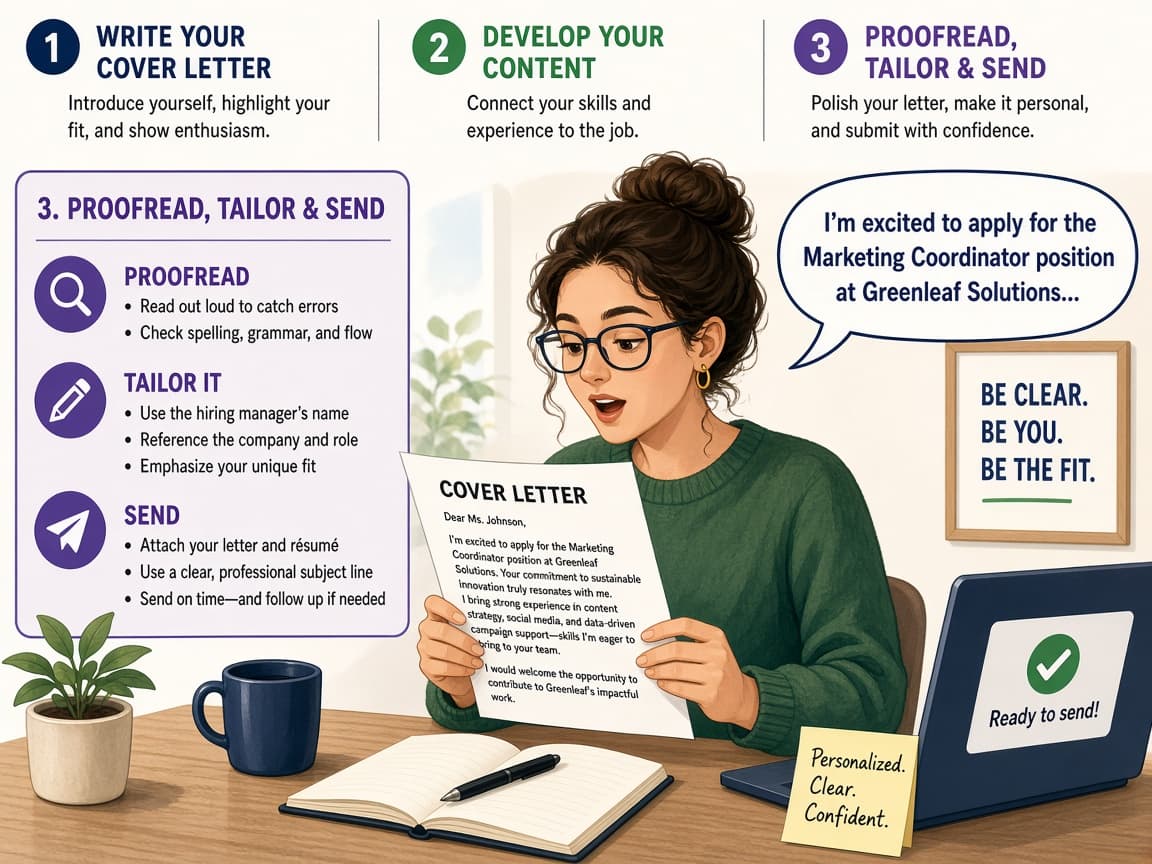
Read the letter once out loud. Catch leftover names and soft filler before you hit submit. Do this step in order
4a
Read out loud and search for the company name
Say every sentence. Search the document for the previous employer's name and for placeholders like [Company]. Fix typos in titles and product names.
4b
Swap the middle proof for the next application
Keep the skeleton. Change the role line and the matching examples. Do not send an unchanged letter to ten different teams.
4c
Submit through the channel they asked for
Upload where the portal expects it or attach as instructed. Confirm the file opened correctly after upload when the system allows a preview.
4d
Reject the spray-and-pray paste
Common mistake: mailing the same letter with only the company name swapped and proof that does not match. Busy readers notice. Better fewer tailored letters than many empty ones.
Done when
- Role and company named in paragraph one
- Two or three matching proof points in the middle
- Clear close with availability or a next step
- Contact line matches the resume
- PDF proofread and clearly named
Eagle Frame's takeaway: write three short paragraphs that name the role, prove a few matching wins and close with a clear next step. Tailor the middle to the posting, export a clean PDF and read it out loud once. A focused letter beats a long one that says everything and lands nowhere.