Lindsay Clancy: the Duxbury case that forced a hard conversation about maternal mental health
A Massachusetts labour and delivery nurse, the deaths of her three children in January 2023 and a trial that ended in a hung jury in September 2026. What the case says about postpartum psychosis and the law.
This article describes a case involving the deaths of three young children and serious maternal mental illness. It contains no graphic detail. If you are pregnant or recently gave birth and you are struggling, the National Maternal Mental Health Hotline in the United States is free and staffed around the clock at 1-833-852-6262. In an emergency, call 911 or go to the nearest emergency department.
Lindsay Clancy was a labour and delivery nurse. That single fact is what has kept the Duxbury case in public argument for more than three years. She worked at Massachusetts General Hospital helping other women through childbirth, and in January 2023 her own three children died in the family home in Duxbury, Massachusetts. She was charged with their murders. Her defence has always been that she was suffering from postpartum psychosis and was severely affected by a rapidly changing regime of prescribed psychiatric medication. In September 2026 her trial ended in a mistrial after the jury could not reach a verdict.
Clancy grew up in Massachusetts and trained as a nurse, joining the labour and delivery unit at Massachusetts General Hospital, one of the most respected teaching hospitals in the country. Colleagues who spoke publicly after the case described a careful clinician who was well liked on the ward. She married Patrick Clancy, a technology worker, and the couple had three children: Cora in 2017, Dawson in 2019 and Callan in May 2022. They moved to Duxbury, a coastal town of about 16,000 people roughly 35 miles south-east of Boston, in 2022.

By the autumn of 2022 she was in serious difficulty. Court filings and reporting have described a months-long deterioration after Callan's birth, with severe anxiety, insomnia and intrusive thoughts. She sought help repeatedly. The defence has said that in the space of roughly five months she was prescribed a long list of psychiatric medications, including antidepressants, benzodiazepines, sleep aids and antipsychotics, with doses adjusted frequently. She spent time in an inpatient programme in early January 2023 and was discharged. Her husband has said publicly that he raised alarms with clinicians about how she was responding.
On the evening of 24 January 2023 Patrick Clancy returned to the house after a short errand and called emergency services. Cora, aged five, and Dawson, aged three, died that night. Callan, aged eight months, died on 27 January. Lindsay Clancy was found seriously injured outside the house after falling from an upper window and was hospitalised with spinal injuries that left her unable to walk. She was arraigned from her hospital bed on 7 February 2023 by video link and pleaded not guilty. Prosecutors from the Plymouth County District Attorney's office charged her with murder, strangulation and assault. The murder count was later amended to three after Callan's death.

What made the case unusual in public terms was the position taken by the children's father. Patrick Clancy released a statement weeks after the deaths asking people to forgive his wife, describing her as the fourth victim and saying he believed she had been failed by the system meant to treat her. He has continued to speak in those terms. His stance removed the usual adversarial shape from the coverage and turned attention toward the medical questions instead of the family conflict that usually drives such stories.
Those medical questions are specific, and they are routinely confused in public discussion. Postpartum depression is common, affecting roughly one in seven or eight new mothers, and it involves persistent low mood, exhaustion, guilt and difficulty bonding. Postpartum psychosis is a different condition and a genuine psychiatric emergency. It is rare, occurring in roughly one to two births per thousand. It usually appears fast, often within days or the first weeks after delivery, and it can involve hallucinations, delusions, severe confusion and a loss of contact with reality that the person may partially hide. The standard response is immediate hospitalisation, because the risk to mother and baby is real and the illness is treatable.
Massachusetts law sets a specific bar for a mental health defence. Under the state's McHoul standard, a defendant is not criminally responsible if, because of mental disease or defect, they lacked substantial capacity either to appreciate the criminality of their conduct or to conform their conduct to the law. Once the defence raises the issue with credible evidence, the prosecution must disprove it beyond reasonable doubt. That is a demanding burden, and it is the reason such cases turn on duelling forensic psychiatrists rather than on the underlying events, which are usually not in dispute.
The prosecution's case argued planning and awareness. Prosecutors pointed to internet searches, the sequencing of events and statements they said showed she understood what she was doing. The defence built its case on the clinical record: the volume and speed of medication changes, documented warnings from her husband, the recognised phenomenon of medication-induced agitation in a postpartum patient and expert testimony that she was psychotic and could not conform her conduct to the law. Both sides called psychiatrists. Both sets of experts were credentialled, and they disagreed.

The trial was delayed repeatedly, in part because of her medical condition and in part because of pre-trial disputes over evidence and expert access. When it finally reached a jury, the deliberations ran for days before the panel reported that it could not agree. The judge declared a mistrial in September 2026. A mistrial is not an acquittal. It leaves the charges in place and leaves the district attorney with a decision about whether to retry the case, negotiate a resolution or, in rare circumstances, drop it. As of publication, no final disposition has been announced.
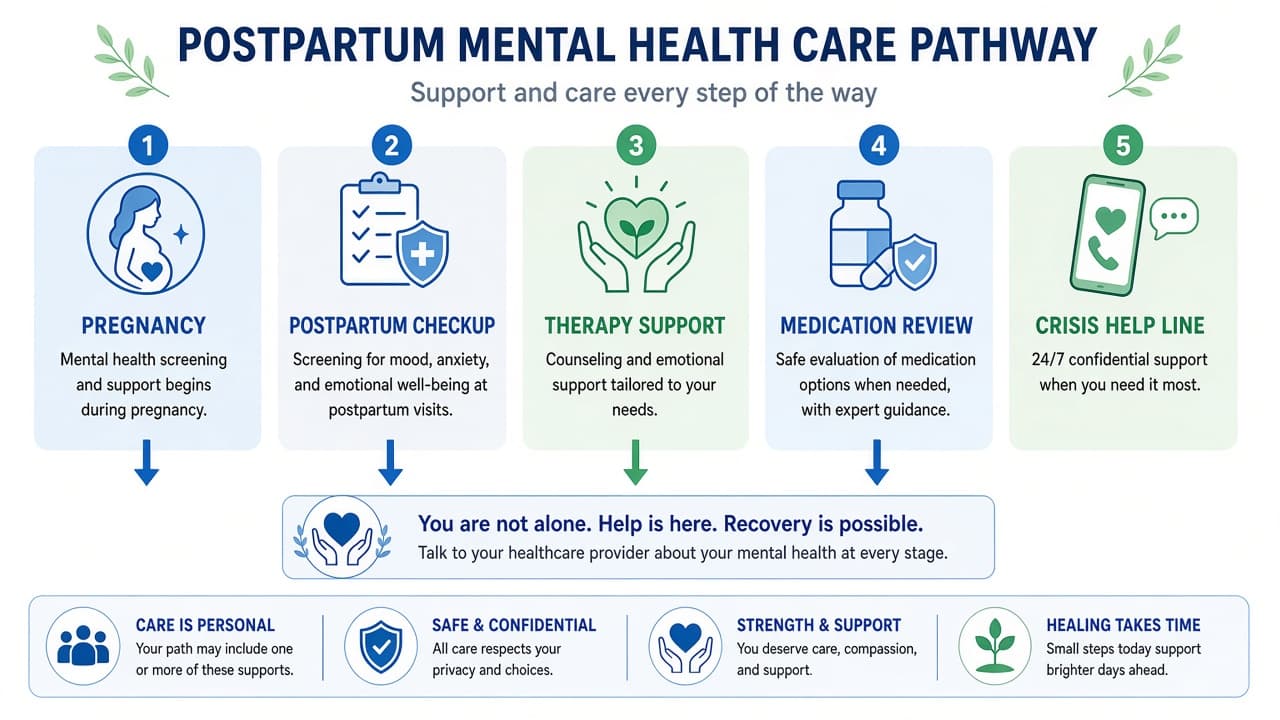
The wider consequence is already visible in policy. Advocacy groups including Postpartum Support International have used the case to press for universal perinatal mental health screening, better coordination between obstetric and psychiatric care and clearer protocols for what happens when a new mother reports intrusive thoughts. Massachusetts already runs MCPAP for Moms, a programme that gives front-line providers rapid access to psychiatric consultation, and campaigners have argued for expanding that model and for more inpatient beds where mothers and infants can be admitted together. At federal level, the approval of zuranolone in 2023 gave clinicians the first oral medication specifically indicated for postpartum depression, though it is not a treatment for psychosis.

There is no comfortable reading of what happened in Duxbury. Three children died, and their names were Cora, Dawson and Callan. A jury of ordinary people spent days trying to decide whether the woman charged was criminally responsible and could not agree, which is itself a fair measure of how hard the question is. The part that is not hard is the clinical one. Postpartum psychosis is rare, it is dangerous and it is treatable when it is caught, and the people most likely to catch it are the clinicians a new mother already sees. If you are worried about yourself or someone who has recently given birth, treat it as urgent and call 1-833-852-6262 or seek emergency care.