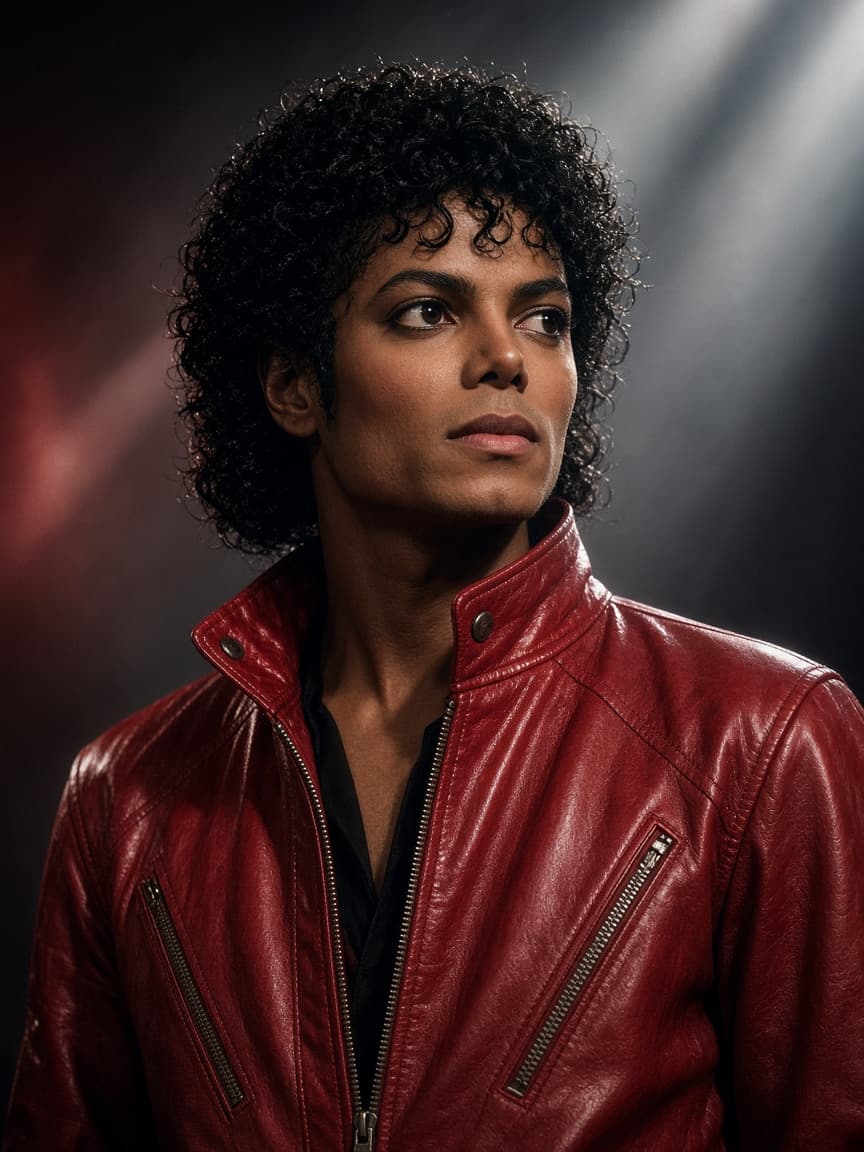
Michael Jackson: the child star from Gary who made the biggest album on earth
Motown at eleven, "Thriller" at twenty-four, the moonwalk, Neverland, the allegations and the trials. Then a death at fifty that has never stopped being argued about.
Michael Jackson made the best-selling album in recorded history and spent the last sixteen years of his life as one of the most contested public figures alive. Any honest account has to carry both. He changed how pop records sounded, how music videos were made and how a stage show was staged, and he faced serious allegations of child sexual abuse that he denied absolutely, that produced one criminal trial ending in acquittal on all counts and that remain the subject of civil litigation long after his death in 2009.
He was born Michael Joseph Jackson on 29 August 1958 in Gary, Indiana, the eighth of ten children of Joseph and Katherine Jackson. Gary was a steel town, and Joseph worked as a crane operator while playing guitar in a local band. The family lived in a two-bedroom house. Joseph drove the children's musical training with a severity that Michael described in adulthood as physical and emotional abuse, an account several siblings supported and their father partially disputed. Michael was singing lead for his brothers by five and performing in clubs by seven.
The Jackson 5 signed with Motown in 1969 and did something no group had done before. Their first four singles, "I Want You Back," "ABC," "The Love You Save" and "I'll Be There," all reached number one on the Billboard Hot 100. Michael was eleven and already the focal point, an unnervingly complete performer with a voice that carried adult phrasing in a child's range. Motown ran a parallel solo career for him almost immediately, producing "Got to Be There" and the 1972 number one "Ben." The group left Motown for Epic in 1976, renamed itself the Jacksons and began writing more of its own material.
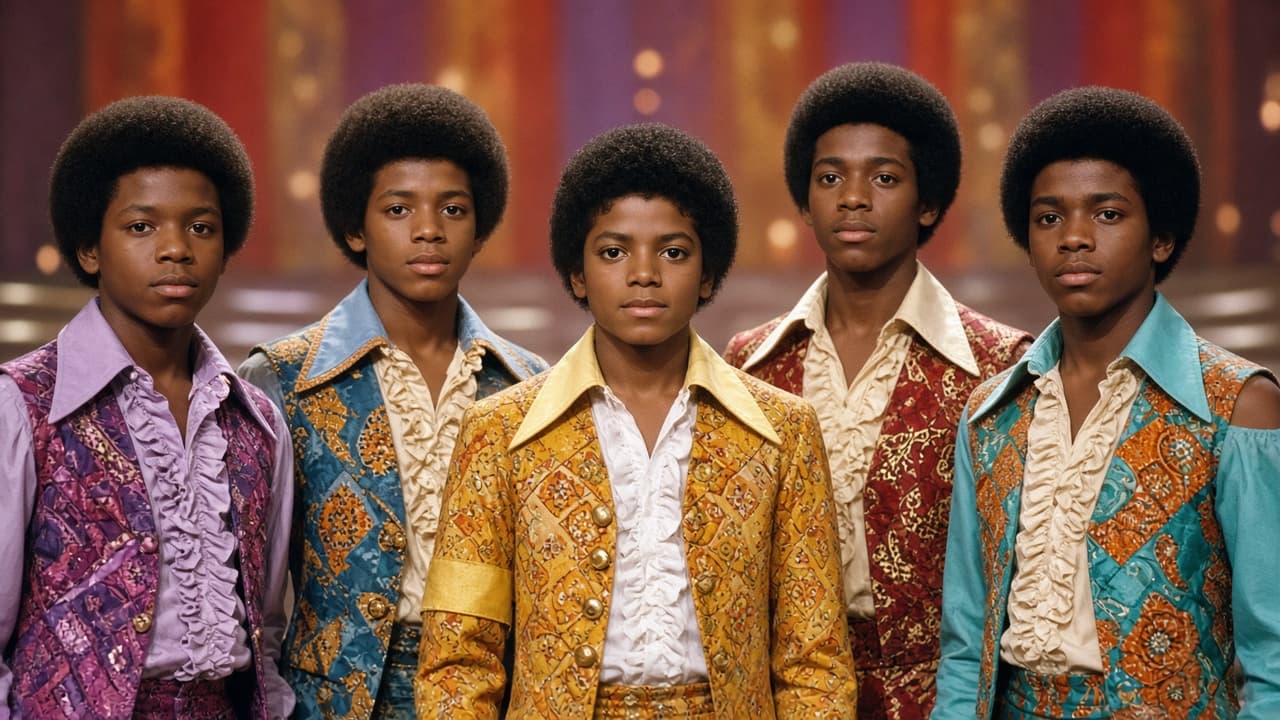
The adult career began properly in 1979. "Off the Wall," produced by Quincy Jones after the two met on the set of "The Wiz," fused disco, funk and soft soul into something sleeker than either man had made before. It sold more than twenty million copies and gave Jackson his first solo Grammy for "Don't Stop 'Til You Get Enough." He was also privately furious that the album won only one award, and he said afterwards that the disappointment drove what came next.
What came next was "Thriller," released on 30 November 1982. It is the best-selling album of all time, certified 34 times platinum in the United States and estimated at around seventy million copies worldwide. Seven of its nine tracks were released as singles and all seven reached the Billboard top ten. It won eight Grammy Awards in a single night in 1984, a record at the time. Two moments turned it from a hit into a cultural event. On 25 March 1983, taped for the "Motown 25" television special and broadcast that May, Jackson performed "Billie Jean" and executed the backslide that the world instantly renamed the moonwalk. In December 1983 came John Landis's fourteen-minute "Thriller" video, a short horror film with choreography that MTV played in rotation and that helped break the channel's resistance to Black artists.
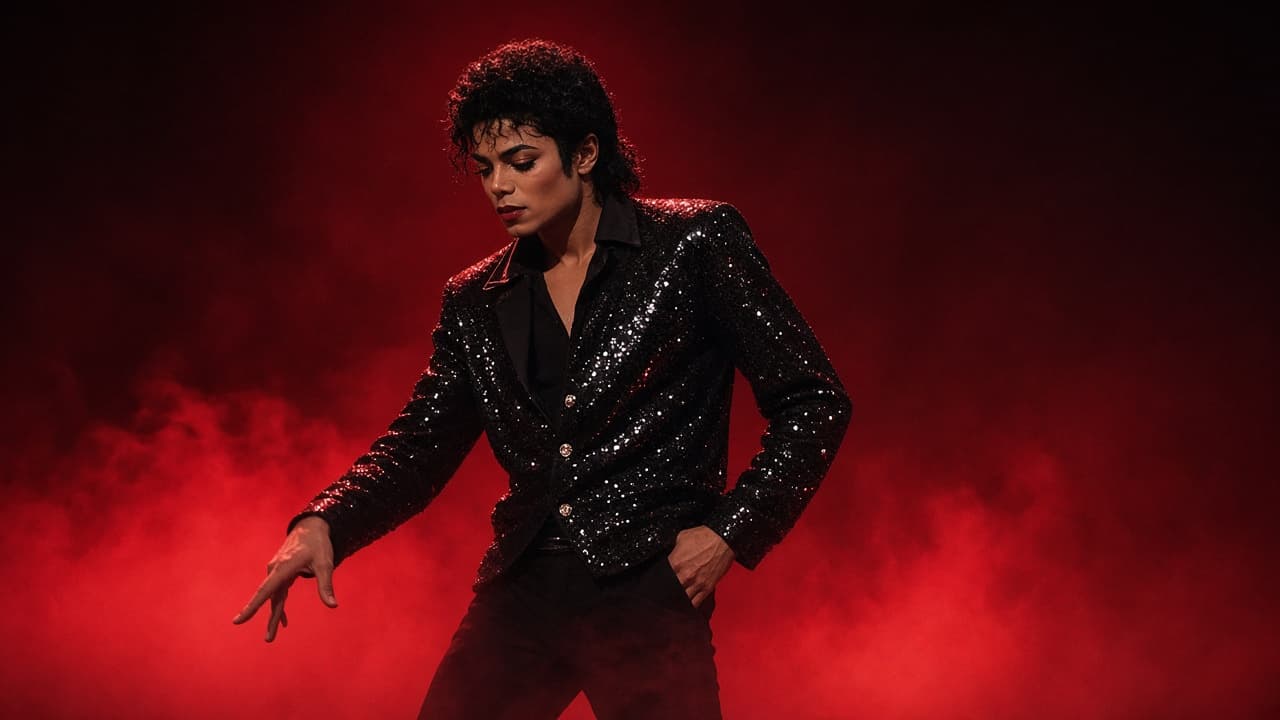
A small accident in January 1984 shaped the rest of his life. While filming a Pepsi commercial at the Shrine Auditorium, pyrotechnics ignited his hair and he suffered second and third-degree burns to his scalp. The reconstructive treatment and the chronic pain that followed began a long relationship with prescription painkillers. Around the same period his appearance began to change markedly. He acknowledged two rhinoplasties and said his skin lightening was caused by vitiligo, a diagnosis his autopsy later supported, alongside lupus.
"Bad," released in 1987, was the first album in history to produce five Billboard number one singles. The accompanying Bad World Tour ran from 1987 to 1989 across four continents, sold over four million tickets and set attendance records that stood for years. In 1988 he bought a 2,700-acre property in Los Olivos, California, and built Neverland Ranch, complete with a funfair, a zoo and a private cinema. He described it as the childhood he never had. Critics described it as a warning sign. Both readings were widely published at the time.
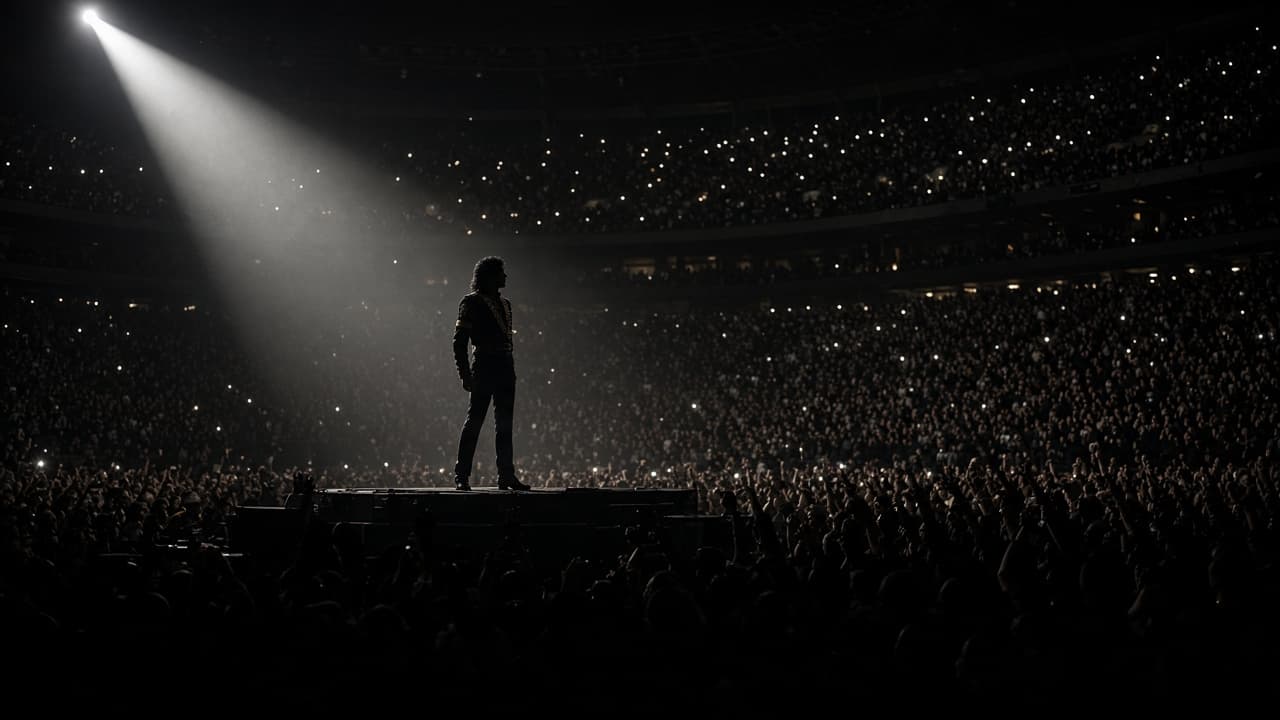
"Dangerous" arrived in 1991 with Teddy Riley's new jack swing production and sold more than thirty million copies. The "Black or White" video premiered simultaneously in dozens of countries. His halftime performance at Super Bowl XXVII in January 1993 reset the expectations for that slot permanently and is the reason the show is now a stadium concert rather than a marching band. He was, at that point, the most recognisable entertainer on the planet.
In August 1993 the family of thirteen-year-old Jordan Chandler alleged that Jackson had sexually abused the boy. Jackson denied it. A criminal investigation was opened in California, and in January 1994 a civil suit was settled out of court for a sum widely reported at more than $20 million. No criminal charges were filed, with prosecutors citing the family's decision not to testify. The settlement has been read in opposite ways ever since: as an admission by those who believe the allegation and as a pragmatic end to a ruinous news cycle by those who do not.
His personal life through the 1990s was equally scrutinised. He married Lisa Marie Presley in 1994, and they divorced in 1996. He married Debbie Rowe the same year and had two children, Prince and Paris, before divorcing in 1999. A third child, known as Blanket, was born via surrogate in 2002. That November he briefly dangled the infant over a Berlin hotel balcony in front of photographers, an incident he later called a terrible mistake. Musically the period produced "HIStory" in 1995, "Blood on the Dance Floor" in 1997 and "Invincible" in 2001, all commercially successful and none close to the scale of "Thriller."

The second reckoning came from a documentary. Martin Bashir's "Living with Michael Jackson," broadcast in early 2003, included footage of Jackson holding hands with a thirteen-year-old boy and describing sharing his bedroom with children. Santa Barbara County prosecutors opened an investigation and charged him in November 2003 with child molestation and related counts. The trial ran from January to June 2005 in Santa Maria, California, under intense global coverage. On 13 June 2005 the jury acquitted him on all fourteen counts. He never lived at Neverland again, moving first to Bahrain, then to Ireland and eventually back to Los Angeles.
He was preparing a comeback when he died. In March 2009 he announced "This Is It," a residency of fifty shows at London's O2 Arena, and rehearsals ran through the spring. On 25 June 2009 he was found unresponsive at his rented home in Holmby Hills, Los Angeles, and pronounced dead at the age of fifty. The Los Angeles County coroner ruled the death a homicide caused by acute propofol intoxication, with benzodiazepines as contributing factors. His physician, Conrad Murray, who had administered propofol as a sleep aid outside any hospital setting, was convicted of involuntary manslaughter in November 2011, sentenced to four years and released after serving two.
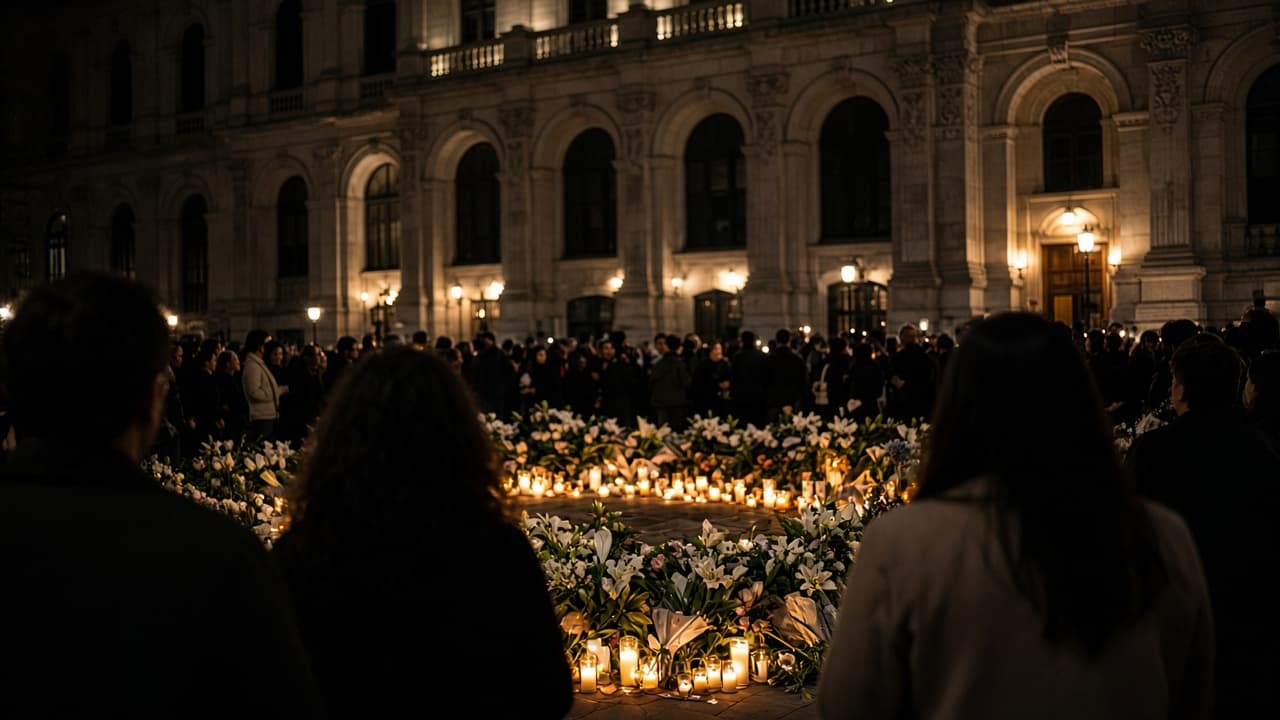
The legacy has been argued over continuously since. His estate, which was heavily indebted at the time of his death, became one of the most profitable in entertainment through catalogue sales, Cirque du Soleil productions and the Broadway show "MJ the Musical," which opened in 2022. In 2019 the documentary "Leaving Neverland" presented detailed allegations by Wade Robson and James Safechuck, both of whom had previously testified in Jackson's defence. The estate rejected the claims, disputed the film's methods and sued HBO. The men's civil lawsuits, initially dismissed, were revived on appeal and have continued through the California courts. A biographical film starring his nephew Jaafar Jackson has been in production with a planned release.
There is no way to close this cleanly, and attempts to do so are usually dishonest. The musical record is fixed: "Off the Wall," "Thriller" and "Bad" remain a run few artists have matched, thirteen solo number ones, thirteen Grammy Awards and two inductions into the Rock and Roll Hall of Fame, with the Jackson 5 in 1997 and as a solo artist in 2001. The allegations are also part of the record, as are his denials, his acquittal on all counts in 2005 and the civil cases still moving through the courts. Readers are entitled to weigh those things for themselves. They are not entitled to pretend only one half exists.