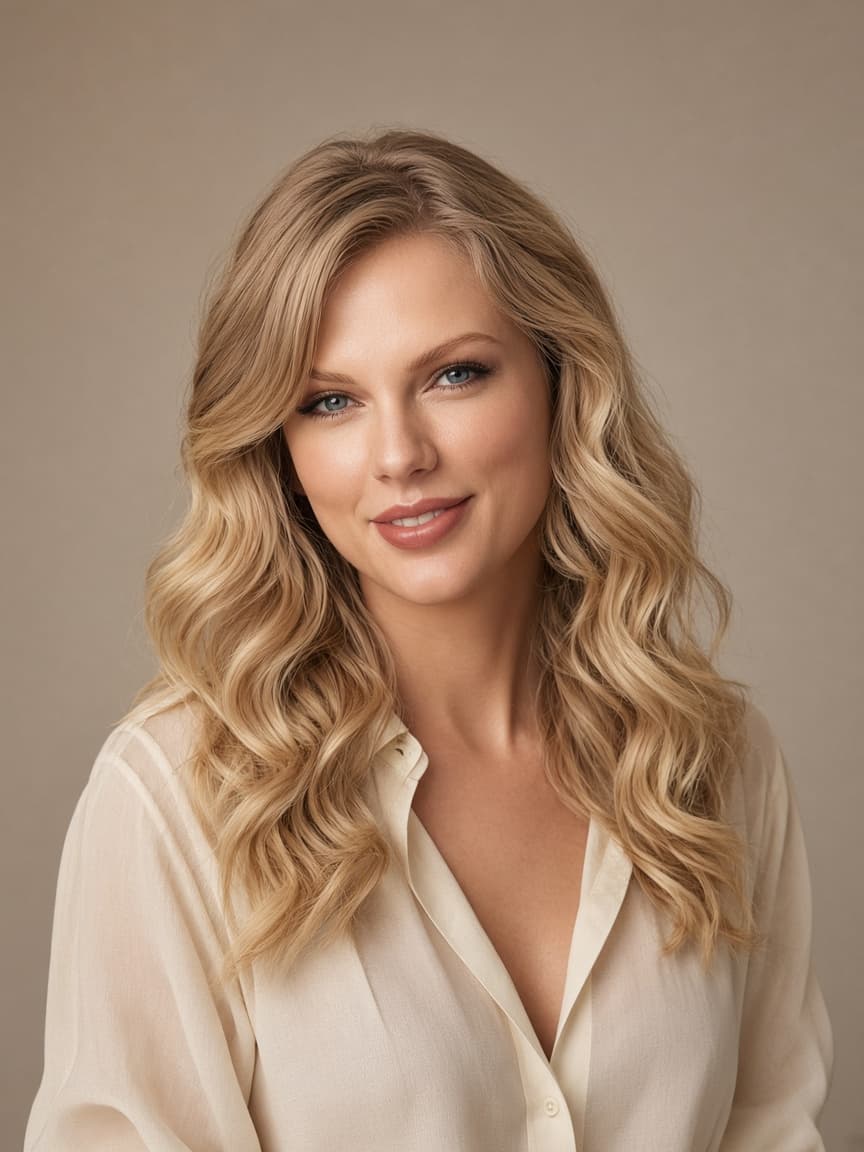
Taylor Swift: from a Pennsylvania Christmas tree farm to the Eras age
Taylor Swift from childhood to now: Nashville, the album eras, Grammy records, tour grosses and attendance, Forbes-level wealth estimates and the ownership fight that remade her catalog.
Reported box-office totals for each major headlining tour in millions of dollars (nominal, Billboard and Pollstar-style tracking)
$2078million
Eras Tour total
Tour gross. Figures shown for this story. Bars use reported box-office totals in millions of dollars.
Taylor Swift is easy to summarize badly. Call her a country kid who went pop and you miss the craft. Call her a tabloid romance machine and you miss the catalog. Call her a billionaire brand and you miss the notebooks. The useful story is simpler and stranger: a writer who treated her own life as primary source material, then built enough power to keep rewriting the terms under which that material is sold.
She was born Taylor Alison Swift on 13 December 1989 in West Reading, Pennsylvania. Her father, Scott, worked in finance. Her mother, Andrea, had worked in marketing. The family later lived on a Christmas tree farm in nearby Pennsylvania countryside, a detail Swift has returned to in interviews as both origin story and brand texture. She sang early, acted in local theater and fixated on country radio songwriting with an intensity that was unusual even for gifted kids.

By her early teens the family was making serious bets on Nashville. They spent stretches of time there so she could knock on Music Row doors with a guitar and a binder of songs. The industry pitch was familiar: pretty teenager, big voice, possible radio. What separated her was the writing. She wanted co-writes and credits, not only a vocal track on someone else's hook. In 2005 she signed with Scott Borchetta's Big Machine Records, a then-new label willing to build around a teenage songwriter.
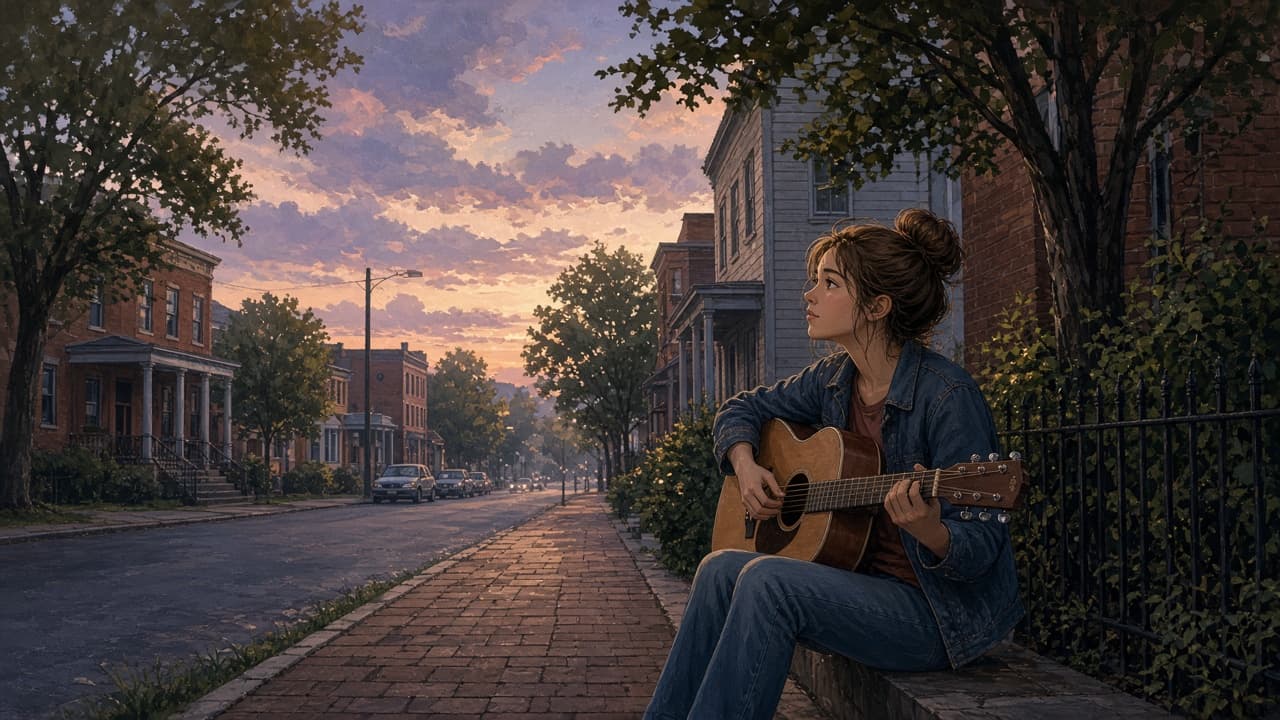
Her self-titled debut album arrived in 2006. Singles such as "Tim McGraw" and "Teardrops on My Guitar" introduced a narrator who named names, ages and small humiliations with diary clarity. Country radio took the bait. So did a young audience that heard itself in verses about hallways and almost-relationships. Awards followed fast. In 2007 the Country Music Association named her Horizon Award winner. The industry began treating her as more than a novelty teen.
Fearless, released in 2008, made the jump from promising to defining. "Love Story," "You Belong with Me" and the title track turned high-school myth into stadium choruses. At the 2010 Grammys, Fearless won Album of the Year. Swift was 20, then the youngest artist to take that prize. Speak Now (2010) pushed the self-written brand further. Red (2012) stretched toward pop rock and heartbreak maximalism. The through-line was authorship: even when producers sharpened the sound, the public story remained that Swift wrote her life in public and dared listeners to keep the receipt.
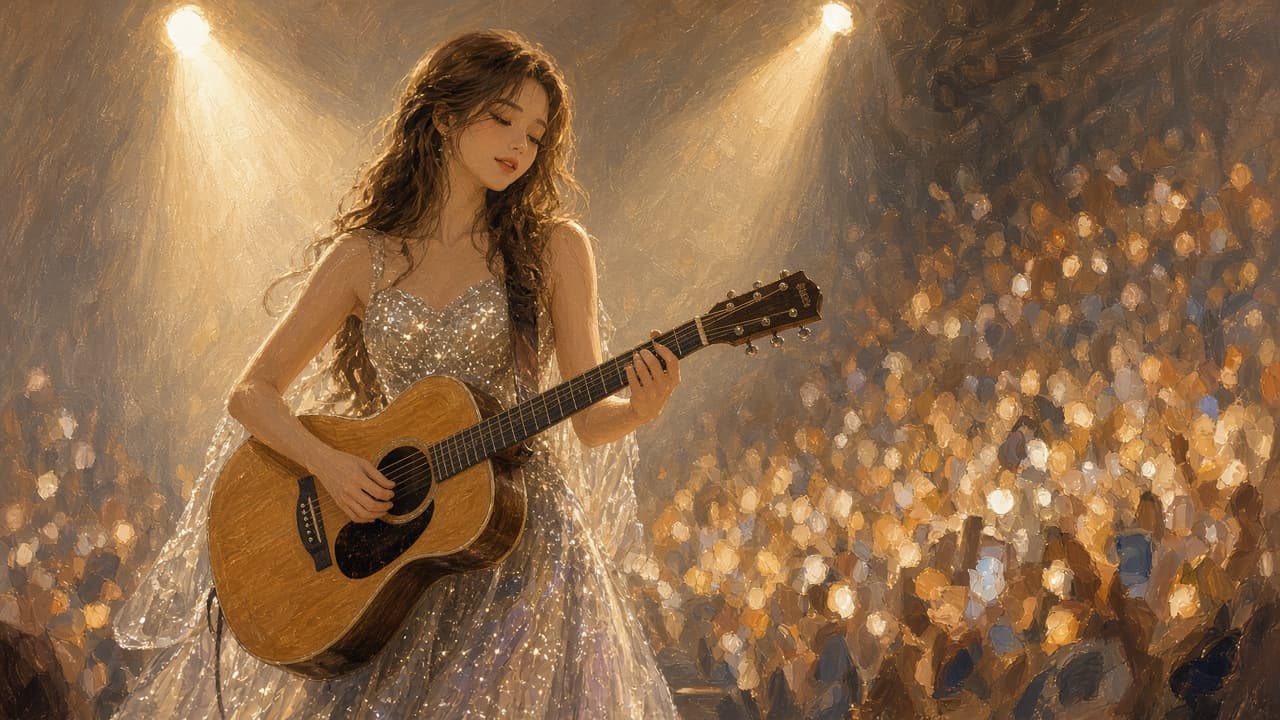
1989, released in 2014, completed the pop pivot with intent. Named for her birth year and built with Max Martin and other hitmakers, it delivered "Shake It Off," "Blank Space" and "Bad Blood" into mainstream rotation. The album won Album of the Year at the Grammys and made her the first woman to win that category twice. Critically, it also locked a new public image: sleek blonde pop star, still writing about romance and revenge, now with synths instead of banjos.
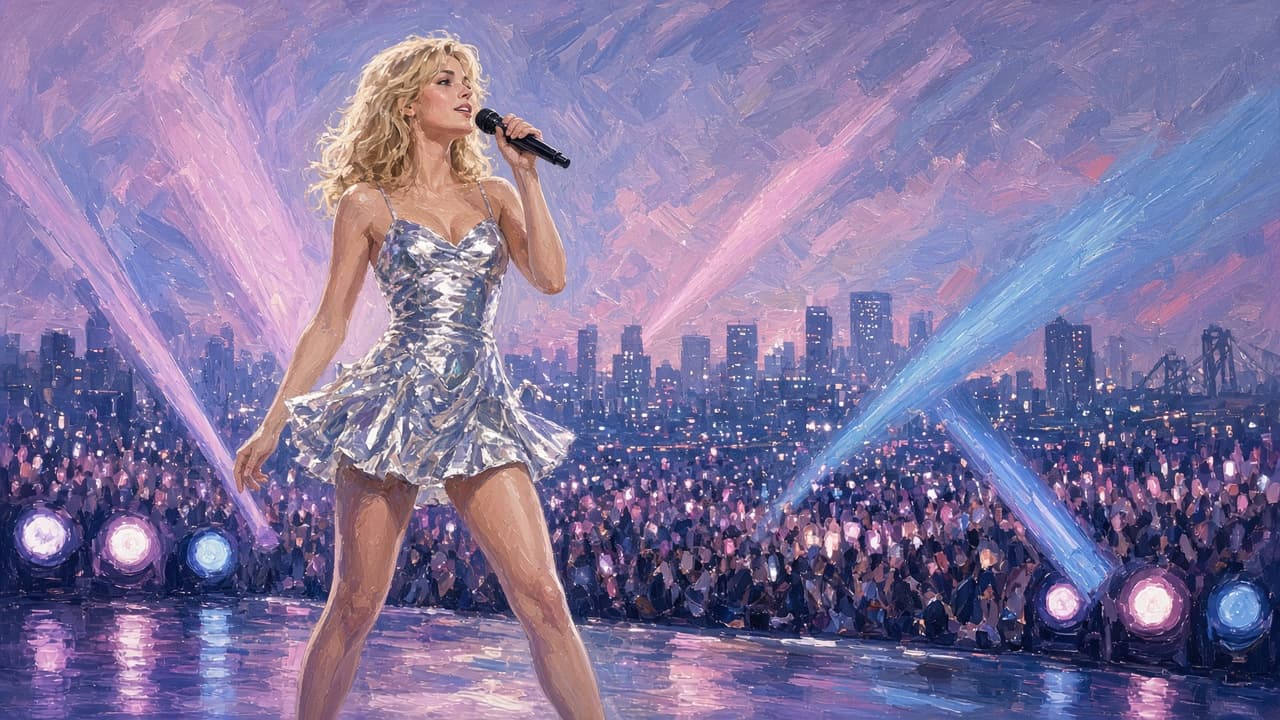
Public life never stayed in the music lane. Relationships with high-profile partners became part of the press cycle. So did feuds. The 2009 MTV Video Music Awards moment with Kanye West interrupting her acceptance speech became a founding myth of her fame. Years later, the 2016 conflict involving West and Kim Kardashian, and the fallout around the song "Famous," pushed Swift into a quieter stretch. Reputation (2017) answered with snakes, black wardrobe theatrics and a harder sonic edge. Lover (2019) softened the palette again. The pattern was deliberate: each album era arrived with a visual system fans could cosplay and critics could date.
The hardest business fight of her career was about ownership. In 2019, after she left Big Machine for Republic Records, Ithaca Holdings (led by Scooter Braun) acquired Big Machine and with it the master recordings of her first six studio albums. Swift said she had tried to buy the masters and had been blocked. She framed the sale as a loss of control over her early work's commercial use. Fans organized. The industry argued. Swift's response was structural rather than only rhetorical: she began re-recording those albums as "Taylor's Version," releasing Fearless and Red in 2021, Speak Now and 1989 in 2023, with vault tracks that made the new editions feel like more than duplicates.
The pandemic years produced a different kind of surprise. Folklore (2020) and Evermore (2020) arrived with cottagecore aesthetics, fictional narrators and collaborators such as Aaron Dessner and Jack Antonoff. Folklore won Album of the Year, her third in that Grammy category. The albums proved she could win without a traditional radio-pop campaign. Midnights (2022) returned to sleek nocturnal pop and later helped her become the first artist to win Album of the Year four times, when it took the prize at the 2024 Grammys.

Then came the Eras Tour. It opened in Glendale, Arizona, on 17 March 2023 and closed in Vancouver on 8 December 2024 after 149 shows across five continents. The show ran like a museum you could dance in: album eras staged in sequence, costumes as chapter headings, surprise songs that rewarded deep fans. Billboard-style box-office tallies put the tour at about $2.08 billion in ticket gross and about 10.17 million tickets sold, the first tour to clear both the $1 billion and $2 billion marks. A concert film followed in October 2023 and became the highest-grossing concert film on record, with worldwide theatrical takes commonly cited above $260 million. Cities measured hotel spikes and traffic jams. Friendship-bracelet culture leaked into offices and school hallways. The tour did not invent Swift's fame. It made the scale impossible to argue with.
The touring ladder that led there is worth reading as a growth chart, not a trivia list. Fearless Tour (2009-2010): about 118 shows, roughly 1.2 million fans and about $66.5 million gross. Speak Now World Tour (2011-2012): about 110 shows, roughly 1.64 million fans and about $123.7 million. The Red Tour (2013-2014): 86 shows, about 1.7 million fans and about $150.2 million. The 1989 World Tour (2015): 85 shows, about 2.28 million fans and about $250.7 million, then the year's top global tour. Reputation Stadium Tour (2018): 53 shows, about 2.94 million fans and about $345.7 million, with a North American leg that set a then-record for the region. Lover Fest in 2020 was announced and then canceled when the pandemic shut live music down. Put beside Eras, those earlier runs look like practice for a different order of magnitude.
Money outside the arena is harder to pin because private ledgers stay private. Forbes has estimated her net worth near $1.6 billion during the mid-2020s climb and around $2 billion by early to mid-2026, calling her the richest female musician on its ranking while still placing Jay-Z higher overall among living musicians. The same Forbes-style breakdowns often split the fortune into roughly $800 million accumulated from royalties and touring cash, a music catalog valued around $600 million and real estate around $110 million. Those are estimates, not tax returns. What they do show is a wealth mix that depends on songs and live shows first, not a perfume line or a tech IPO.
YouTube is part of that machine and also one of the foggiest line items. Her official channel has hovered around 60 million subscribers in recent public tallies, with individual videos and Vevo uploads adding billions of lifetime views across the catalog. Exact YouTube ad revenue is not published by Swift or by Google. Third-party estimator tools that model CPM and views often spit out rough monthly ranges that can swing from the high hundreds of thousands of dollars into low millions depending on upload pace and ad rates. Treat those model outputs as directional, not audited. The safer fact is structural: video keeps the archive warm between album cycles, and that warmth feeds streaming, ticket demand and brand power even when the paycheck itself stays opaque.
Awards are easier to count. As of the mid-2020s Recording Academy tallies, Swift holds 14 Grammy Awards from dozens of nominations and is the only artist with four Album of the Year wins: Fearless, 1989, Folklore and Midnights. She has stacked large totals at the American Music Awards and Billboard Music Awards, plus CMA and ACM hardware from the country years. Chart records keep moving with each release week, but the durable pattern is debut dominance: multiple albums opening at No. 1, record-setting streaming weeks and a fan base that treats midnight drops like civic events. In May 2025 she announced she had acquired the master recordings of her first six albums, with reporting putting the buyback near an estimated $360 million. For the first time, public coverage framed her as controlling her full recorded catalog. The Life of a Showgirl followed in October 2025, an album steeped in the aftertaste of living as a touring spectacle.
Love life remains the part of the Swift story most likely to be told stupidly. The honest version is that she has dated famous people, written about heartbreak with unusual specificity and paid for that specificity with years of invasive coverage. From the mid-2020s her relationship with NFL star Travis Kelce became a constant of sports and entertainment news. They were later engaged. The relationship's public warmth sat oddly against earlier eras when romance seemed to arrive pre-packaged with a media penalty. Fans argued about whether happiness would dull the songwriting. The better question is whether an artist who already reinvented herself several times needs misery as fuel.
Challenges sit beside trophies. Ticketmaster chaos around Eras Tour sales exposed how fragile mega-demand systems are. Political endorsements and silence both drew fire, depending on the week. Streaming economics, deepfake abuse targeting celebrities and the sheer stamina required for a multi-year stadium run are not glamorous problems, yet they shaped her working life. She has also been open about disordered eating pressures in earlier fame years and about the mental load of being endlessly interpreted. None of that cancels the privilege of her success. It does explain why the armor and the notebook both matter.
What makes the career attractive on the page is not perfection. It is escalation with craft. A tree-farm kid hustles Nashville. A country radio star writes a pop classic. A pop star loses masters and builds a second catalog in public. A pandemic writer wins Album of the Year with fictional short stories set to piano. A stadium architect turns every album cover into a live act people cross oceans to see. The fan culture (Swifties, theories, coded track lists) can look obsessive from outside. From inside it is literacy: close reading as a popular sport.
If you want a single through-line, use authorship plus leverage. Swift's early advantage was writing songs people believed. Her later advantage was turning belief into bargaining power: label deals, re-records, tour routing, film distribution experiments and finally catalog ownership. Plenty of stars are famous. Fewer change how the industry argues about who owns a life's work.
Eagle Frame's takeaway: Taylor Swift's life story is not only chart history. It is a case study in turning personal narrative into durable cultural infrastructure. Start with the Pennsylvania notebooks, keep the Nashville grind in view, mark 1989 as the pop lock-in, treat the masters fight as a labor story and see the Eras Tour's 10 million tickets and $2 billion gross as the moment the archive went on the road. Everything after that is a writer defending the right to keep revising the book.